
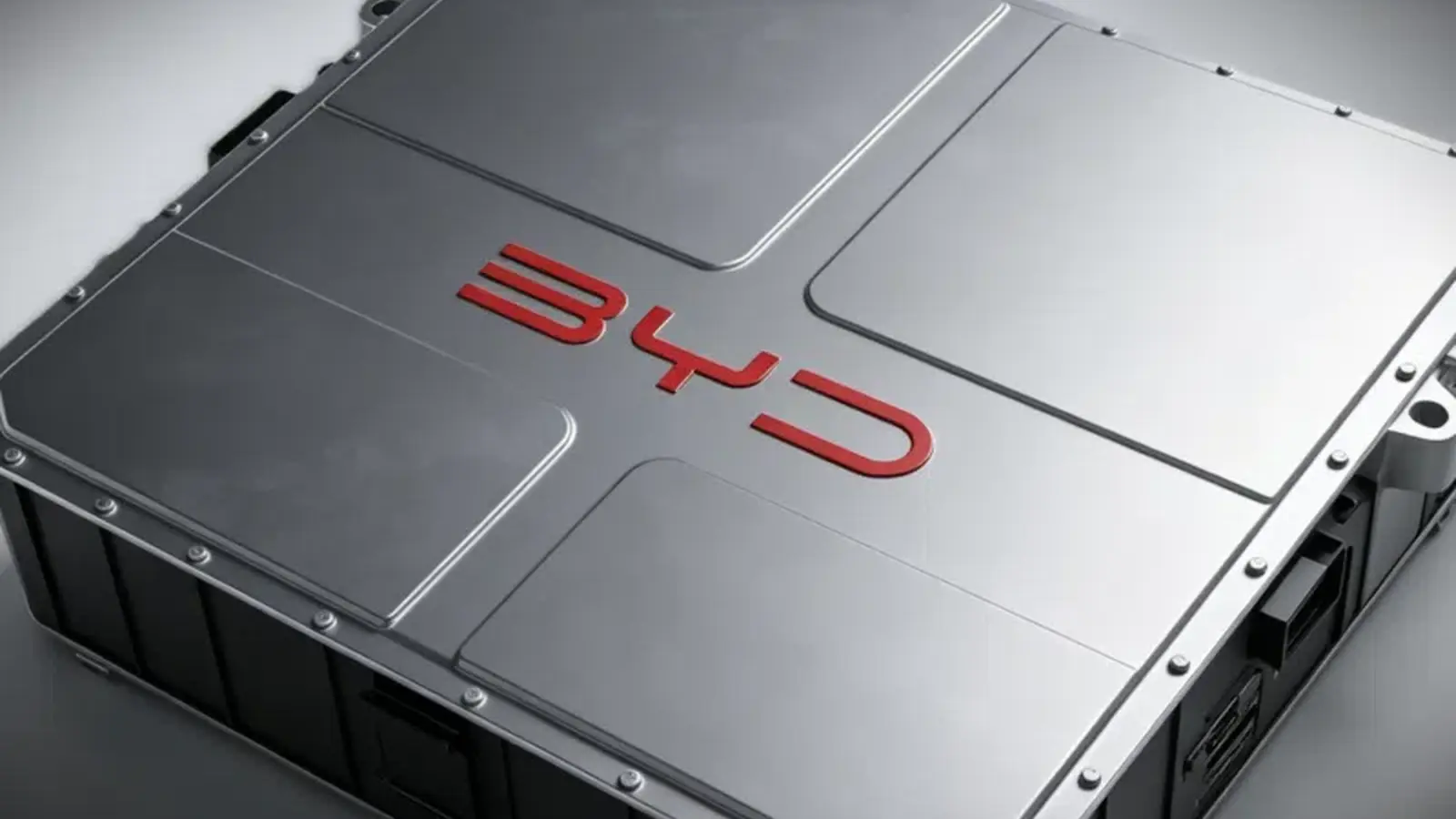
Success can create its own headache, and BYD is living that reality right now. The Chinese car giant has openly admitted that battery supply is under heavy strain as demand for its latest fast-charging electric vehicles races ahead of production.
Speaking at the 2026 Yangwang Business Research Institute conference on May 15, BYD chairman and president Wang Chuanfu said the company is still dealing with tight battery capacity, even as output is expected to improve in the coming months. In plain terms, BYD is selling into a market that wants more of its newest EVs than it can currently build.
That pressure is not coming from old stock. It is being driven by a fresh wave of models across BYD’s sprawling lineup, from Dynasty and Ocean cars to premium offerings under Denza and Yangwang. New flash-charge editions such as the Denza B5 and B8, both featuring DiSus-P suspension technology, are part of the push. So is the upcoming Atto 3, also known as the Yuan Plus, which is set to pair flash charging with a 240 kW rear motor.
The common thread is clear. Buyers want the newer generation of BYD EVs equipped with second-generation Blade Battery packs and ultra-fast charging capability. That combination has quickly become one of the company’s biggest selling points, but it is also putting real pressure on the battery pipeline.
Chinese industry chatter suggests unfilled orders for BYD flash-charge vehicles using the latest Blade Battery may already have topped 140,000 units. Names mentioned in those estimates include the Fang Cheng Bao Ti 7 EV and the Denza Z9 GT, although BYD has not confirmed that figure publicly.
Fast charging is booming, but so is scrutiny
The battery shortage story lands at an awkward moment, because BYD’s flash-charging technology is attracting attention for more than just convenience. A recent online debate in China focused on thermal management after a livestream charging test reportedly showed battery surface temperatures climbing above 76 degrees Celsius during high-rate charging.
That does not automatically signal a safety issue, but it has added another layer of public scrutiny just as BYD is turning flash charging into a key part of its brand message. In March, the company officially introduced its second-generation Blade Battery and said the system can take a battery from 10 percent to 70 percent in five minutes, and from 10 percent to 97 percent in nine minutes under the right conditions. Those are headline-grabbing numbers. They also raise the stakes.
Even with supply under pressure, BYD’s battery volume remains enormous. The company shipped 20.98 GWh of batteries in April 2026, lifting its total for the year so far to 81.2 GWh. BYD did not break down how much of that output went specifically into EVs for the domestic Chinese market, but separate data helps sketch the picture.
According to China EV DataTracker, BYD installed 10.49 GWh of EV batteries in China during April, equal to a domestic market share of 16.83 percent. Total EV battery installations across China reached 62.4 GWh in the same month, up 15.2 percent year on year. That gives a sense of the scale of the market BYD is feeding and the intensity of the competition around battery supply.
At the same time, the company is not slowing down its charging network rollout. Quite the opposite. Between May 7 and May 14, BYD added 55 new flash-charging stations, bringing its total to 5,979 stations across 312 Chinese cities. Just days earlier, on May 6, the company said it had completed 5,924 stations nationwide, while cumulative charging volume had passed 21 million kWh. Its flash-charging app has now moved beyond 1 million users, a sign that the ecosystem is growing almost as fast as the vehicles themselves.
BYD’s larger goal is ambitious: 20,000 flash-charging stations across China by the end of 2026. To make that network easier to use, the company signed a strategic agreement in April with AutoNavi, allowing flash-charging locations to appear directly inside the mapping platform. It is a practical move, but also an important one. Charging speed matters less if drivers cannot easily find the right plug.
Outside China, BYD is still looking for ways to widen its footprint. Stella Li said the company remains in talks with several European carmakers about the possible use of underutilised factory capacity in Europe. That points to a broader strategy already underway: expand exports from China while gradually localising production overseas where it makes commercial sense.
Wang also used the conference to make a bigger point about the industry. He said Chinese manufacturers are now entering what he sees as the strongest period in history for building global automotive brands. It is a confident statement, and BYD’s recent momentum gives it weight. Still, the company’s latest admission is a reminder that scaling an EV empire is not only about flashy launches and charging claims. Sometimes the hardest part is simply building enough batteries, fast enough, to keep up with your own success.

“I cover emerging technologies, digital innovation, and the intersection of tech and everyday life. My goal is to make complex trends accessible and inspiring.”

Discussion
Leave a Comment