
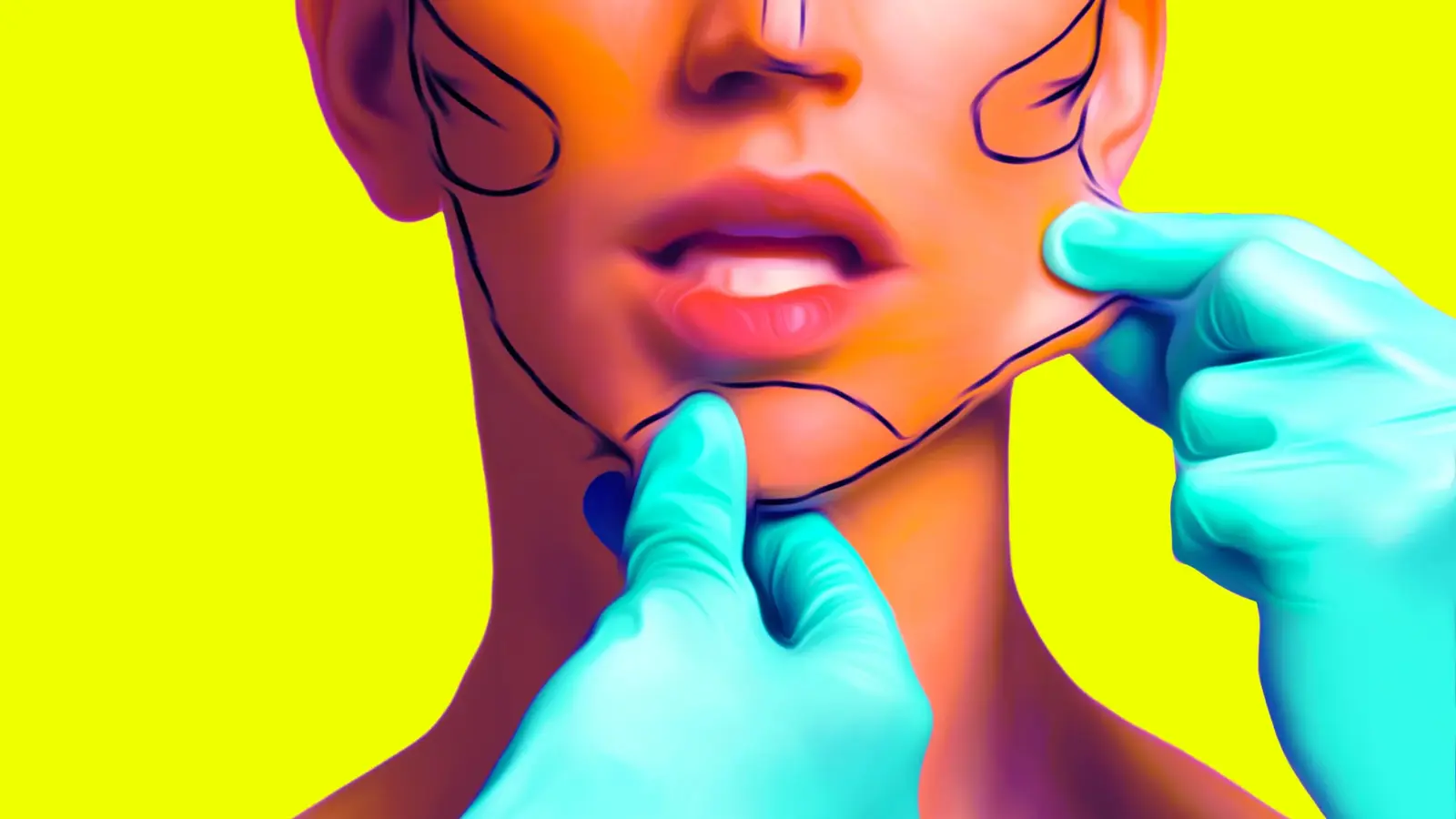
A woman walks into a cosmetic clinic carrying not an old photo, not a celebrity reference, but a polished AI portrait of herself with oversized eyes, plumped lips, and a razor-sharp jawline. That image was not a fantasy sketch in the old sense. It was presented as a plan.
Plastic surgeons and cosmetic specialists say this is happening more often: patients are asking to look like AI-generated versions of themselves, with features pushed far beyond what the human face naturally does. It is a striking new twist in the long relationship between technology and beauty anxiety, and it says a lot about how artificial intelligence is beginning to influence not just screens, but bodies.
Rachel Westbay, a cosmetic dermatologist in New York, recently described a patient who brought in a stylized image generated through ChatGPT. The face had exaggerated, doll-like proportions. Westbay compared the request to wanting to resemble a fairy tale character, and said the overall effect leaned toward a Bratz doll aesthetic, with enlarged eyes, fuller lips, and a heavily sculpted jaw.
That may sound extreme, but the cultural runway was already built. Social platforms spent years training users to see filtered faces as normal. Snapchat lenses, beauty apps, influencer edits, and face-tuning tools all helped blur the line between enhancement and distortion. AI takes that pressure and turns it up. It does not just smooth skin or brighten eyes. It can generate an entirely new version of a person, one that feels strangely personal because it still looks like them, just edited into impossibility.
That is where things get more complicated. Unlike traditional filters, AI image tools can be highly specific. A user can refine eye shape, skin texture, cheek structure, lip volume, or age, then ask a chatbot for reassurance. The result is not simply an altered photo. It can feel like a consultation, a validation loop, even a promise. For someone already insecure, that can be powerful.
The language around AI also matters. A beauty filter looks superficial. AI sounds smarter, more authoritative, more advanced. To many people, that label alone can make the output feel more legitimate, even when the image is unrealistic. The machine seems to understand them. Or at least it gives that impression.
When the consultation starts with a fantasy
Doctors are now being pulled into a new kind of negotiation. Their clinical judgment is increasingly meeting patients whose expectations have been shaped by software that flatters, exaggerates, and never says no. A study published by Beth Israel Deaconess Medical Center found that patients who used AI to alter their photos before surgery tended to have significantly higher expectations for the results.
That gap between expectation and biology is becoming harder to manage. Manhattan plastic surgeon Sachin Shridharani recalled one case involving a woman in her 70s who arrived with an AI-generated image of herself and asked for what he described as a surgical time machine. She wanted to resemble her granddaughter, who was roughly forty years younger. He explained that surgery cannot recreate youth in that way, but the request itself revealed how persuasive these AI renderings can be.
And yet the medical world is not rejecting the technology outright. Some surgeons believe AI could eventually help restore realism instead of undermining it. Justin Sacks, a reconstructive plastic surgeon at Washington University, has suggested that specialized clinical AI tools could simulate procedures more accurately and improve conversations before surgery. In the best-case version, that would mean fewer illusions, clearer boundaries, and better-informed patients.
Still, there is an obvious catch. The same technology that can help explain likely outcomes can also create false confidence. AI remains error-prone, and in medicine, even polished mistakes carry weight. Patients do not need a doctor who blindly follows software. They need someone who knows when the machine is selling a fantasy.
This is the deeper issue. AI is not inventing insecurity from scratch, but it is giving insecurity a new visual language, one that is hyper-personal, endlessly adjustable, and disturbingly persuasive. For years, beauty culture told people to chase perfection. Now the target can be generated in seconds, customized to their face, and framed as attainable.
That makes the modern cosmetic consultation feel less like a discussion about enhancement and more like a collision between anatomy and algorithm. The face in the AI image may look familiar. The expectations attached to it are anything but.

“I cover emerging technologies, digital innovation, and the intersection of tech and everyday life. My goal is to make complex trends accessible and inspiring.”

Discussion
Leave a Comment