
Nine minutes. That is the number BYD wants the auto industry to sit with.
As electric vehicles move from early adoption into the mainstream, the conversation is changing fast. Range still matters, of course, but the real pressure point now is charging speed, thermal control, and whether battery chemistry can keep up with what drivers expect from a modern EV. BYD believes it has an answer, and it is putting the second generation Blade Battery at the center of that argument.
In an interview with 36Kr Auto, Sun Huajun, CTO of BYD’s battery business, pushed back hard against criticism surrounding the company’s latest battery platform and its ultra fast charging ambitions. His message was blunt: the old assumptions about heat limits and Lithium Iron Phosphate batteries are starting to look dated.
BYD says its second generation Blade Battery can charge from 10 percent to 97 percent in just nine minutes when connected to a 1500 kW charger. That figure alone is enough to grab attention, but the company is also stressing performance in punishing weather. According to Sun, even at minus 30 degrees Celsius, charging from 20 percent to 97 percent takes only about three minutes longer than it does at room temperature.
That kind of claim naturally raises eyebrows. In battery circles, extreme charging power usually leads to one familiar concern: heat. Critics argue that pushing a pack this hard can drive temperatures into the 65 to 70 degrees Celsius range, where battery materials and the SEI layer may come under stress, potentially affecting safety and long term durability.
Sun’s response was not cautious. He called that line of thinking a relic of earlier charging eras, arguing that every major jump in charging rate has been greeted with the same warnings. First 1C looked risky. Then 5C did. Now the target has moved again.
Where BYD thinks the old playbook breaks down
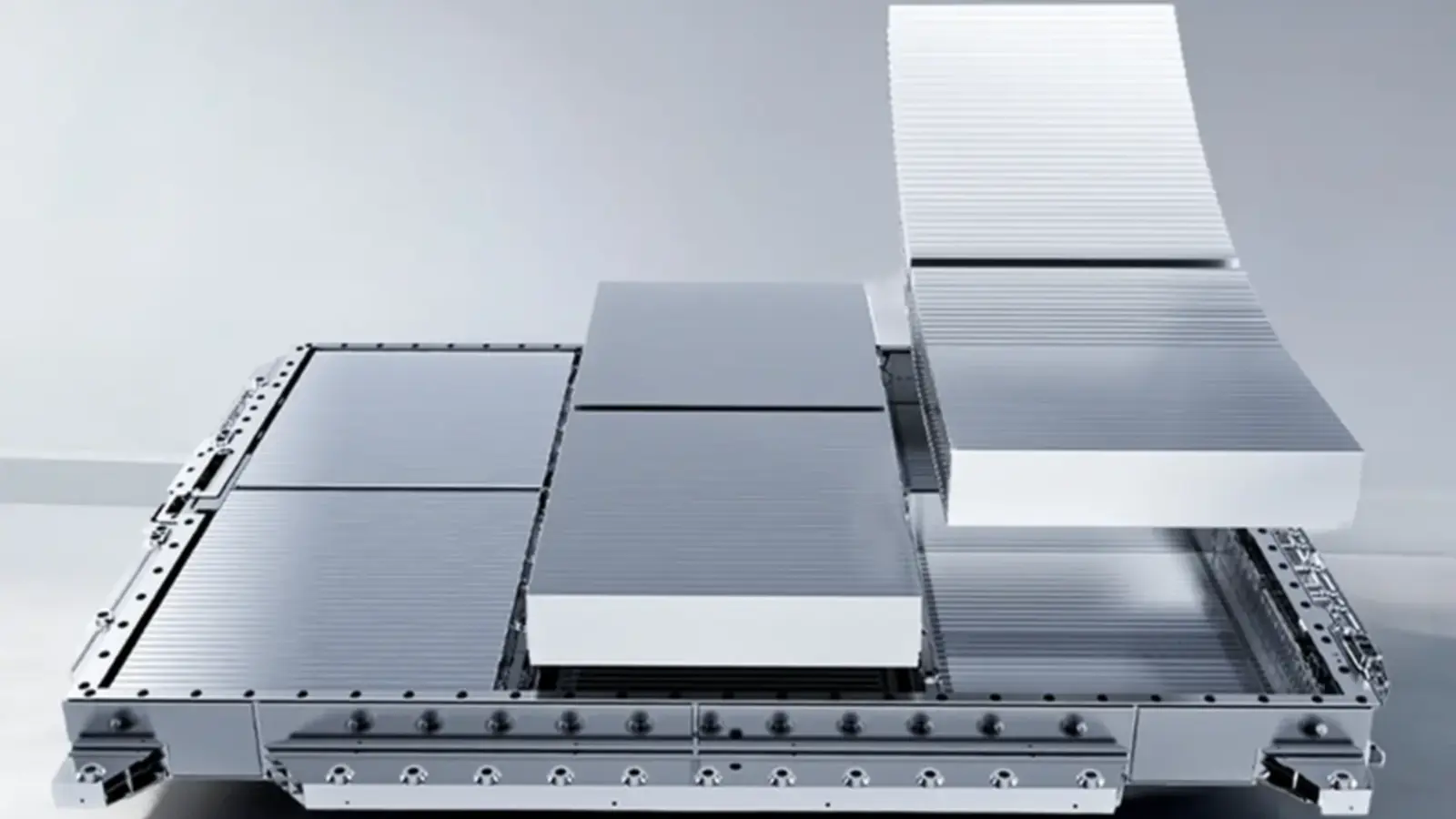
According to BYD, the Blade Battery’s physical design gives it an edge in heat management. Sun pointed to the pack’s symmetrical structure and dual sided cooling system, which are meant to spread temperature more evenly and reduce thermal hotspots. He also said the battery dimensions were optimized to lower internal resistance, a key factor when very high current starts flowing through the pack.
The company says it did not rush this to production. Sun described more than 1,000 full flash charging cycles during validation, along with simulated long distance driving scenarios designed to stress the system in the real world. One example he cited was a cross country style route from tropical Hainan to icy Harbin, essentially forcing the battery to deal with wildly different climates and charging conditions.

Behind the battery itself is a much bigger infrastructure push. BYD has launched what it calls the Flash Charge China strategy, with a goal of building 20,000 flash charging stations nationwide by the end of the year. As of May 6, the company says 5,924 stations had already been completed. That matters because breakthrough charging technology on paper means little if the network cannot support it outside a showroom demo.
The debate does not stop at charging speed. It also touches a more sensitive issue in the EV market: whether LFP batteries belong in premium vehicles at all.
Sun pushed back against the idea, often repeated by rivals, that using LFP in vehicles priced above roughly €34,000 amounts to a compromise. He pointed to the Yangwang U9, BYD’s high performance electric supercar, which uses LFP technology despite carrying a price tag above roughly €1.28 million. For Sun, that example cuts straight through the argument that battery prestige should be measured mainly by energy density.
His broader point is that high end means different things depending on who gets to define it. Is a premium EV judged by a supplier’s chemistry hierarchy, or by what drivers actually experience on the road: acceleration, handling, safety, comfort, charging convenience, and durability over time? BYD’s answer is clear, and it has repeated the same phrase often enough for it to feel like a company doctrine: safety is the ultimate luxury.
That does not mean BYD thinks LFP development is finished. Sun acknowledged that current LFP systems still sit around 130 to 140 Wh/kg in energy density, which remains lower than some competing chemistries. Even so, he argued there is still room to push the technology further. At the same time, BYD is exploring other routes, including sodium ion batteries, solid state systems, and lithium free anode concepts, all part of a wider attempt to deepen its electrochemical toolkit.
There is also a competitive subtext here. Fast charging is not just a convenience feature. It is becoming a technological moat. Sun suggested that while many companies can deliver 1C or 2C charging, dropping below the ten minute mark is a completely different challenge, one that demands tight integration between chemistry, pack architecture, cooling, software control, and charging infrastructure.
That may be the real takeaway from BYD’s latest battery pitch. This is not only about one battery pack hitting an eye catching number on a charging screen. It is about reshaping the standards by which EV batteries are judged. If BYD is right, then 70 degrees Celsius is no longer the red line many people thought it was, and LFP may have a much bigger future in high performance and premium electric cars than critics are willing to admit.

“I love exploring gadgets, apps, and trends that redefine how we connect, work, and play in a digital world.”

Discussion
Leave a Comment