
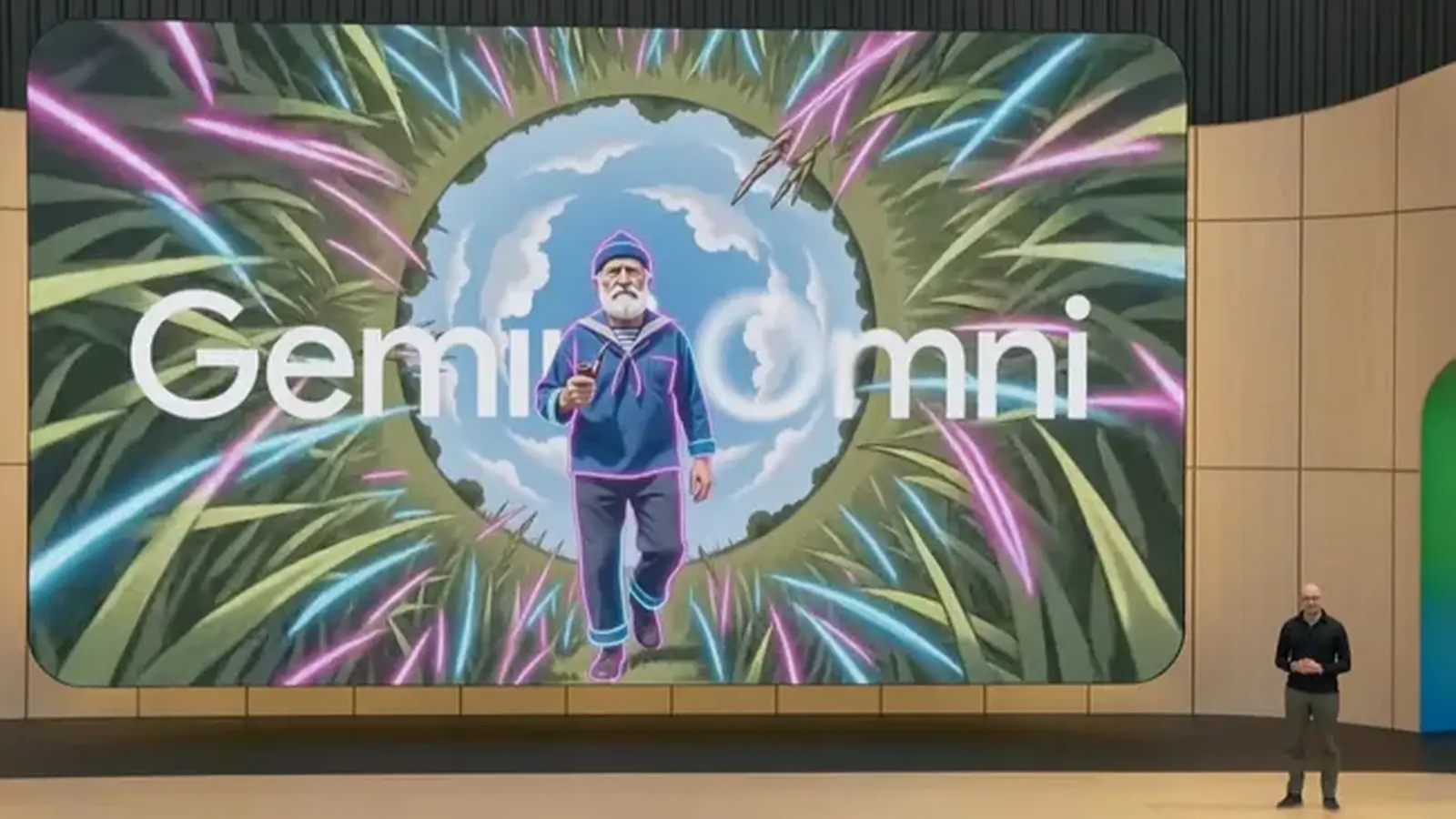
Google has a new pitch for the future of video creation, and it is not another timeline packed with layers, keyframes, and fiddly tools. It is a conversation. At Google I/O 2026, the company unveiled Gemini Omni, a new AI system built to turn almost any input into video, whether that starting point is a text prompt, a still image, a voice clip, or an existing video file.
The first version, called Gemini Omni Flash, is aimed squarely at fast, flexible video generation. Google is rolling it out across the Gemini app, Google Flow, YouTube Shorts, and YouTube Create, with wider access for developers and enterprise users expected later on. That alone makes the launch notable. This is not being framed as a niche experiment. Google is planting it inside products people already use.
What makes Gemini Omni more ambitious than a standard AI video generator is the way Google wants people to work with it. The company is positioning the tool less like software and more like a creative collaborator. Instead of editing scenes manually, users can ask for changes in plain English and keep refining the result step by step. In Google's vision, the usual friction of video production starts to fade into the background.
Editing by talking, not clicking
This is where the announcement gets interesting. Google says Gemini Omni is designed to preserve continuity as users revise a project through natural language prompts. That means characters are supposed to stay visually consistent, scenes should not fall apart between edits, and motion should remain believable rather than restarting in strange or broken ways every time a prompt changes.
It is a familiar problem in generative media. Plenty of AI tools can produce a striking clip on the first try, then unravel the moment a user asks for a second pass. Google is clearly trying to solve that weakness. The company says Gemini Omni has a stronger grasp of how objects move in the real world, including motion, gravity, and physical interaction. In practice, that could mean details like a mirror rippling like liquid when touched, or a sculpture behaving as if it were made of bubbles, without the whole scene losing coherence.
That matters because the real contest in AI video is no longer just about raw capability. It is about usability. Who can make these tools feel natural enough that ordinary creators, marketers, small businesses, and casual users actually want to come back and use them again? Google’s answer, at least for now, is simple: let people direct video the way they speak.
Gemini Omni did not appear out of nowhere. It builds on Google's earlier work in AI-generated visuals, especially the image advances introduced with Nano Banana in 2025. That model expanded Gemini’s visual toolkit and found practical use cases, from restoring old family photos to transforming rough sketches into polished concepts. Gemini Omni takes that same creative logic and stretches it into moving images.
And Google is not stopping at video. The company says future versions of Gemini Omni will support more complex projects that blend photos, written prompts, music, and reference footage into a single workflow. If that roadmap holds, the tool could evolve from a video generator into a broader AI media studio.
The trust problem is not going away
For all the creative promise, Google is also walking into the same uncomfortable territory facing every major AI company: trust. The more convincing synthetic media becomes, the harder it is to ignore the risks. Google says videos generated with Gemini Omni will include SynthID watermarking, its system for labeling AI-created content. The company also plans to extend verification tools across Gemini, Chrome, and Search as part of a wider transparency push.
There is caution elsewhere too. Early users will be able to create video avatars based on themselves, including their own voice, but more advanced voice modification features are still being evaluated. That hesitation says a lot. The technology may be moving fast, yet the social and safety questions are moving with it.
So yes, Gemini Omni is about creativity. It is also about control, authenticity, and whether AI-generated video can become useful without becoming unsettling. Google seems to understand that building a powerful model is only half the job. Getting people to trust what it makes, and trust how it is used, is the harder half.
Still, the direction is clear. Google wants video creation to feel less like operating software and more like shaping an idea in real time. If Gemini Omni delivers on even part of that promise, traditional editing tools may not disappear overnight, but they could start to feel a lot less inevitable.

“I love exploring gadgets, apps, and trends that redefine how we connect, work, and play in a digital world.”

Discussion
Leave a Comment