
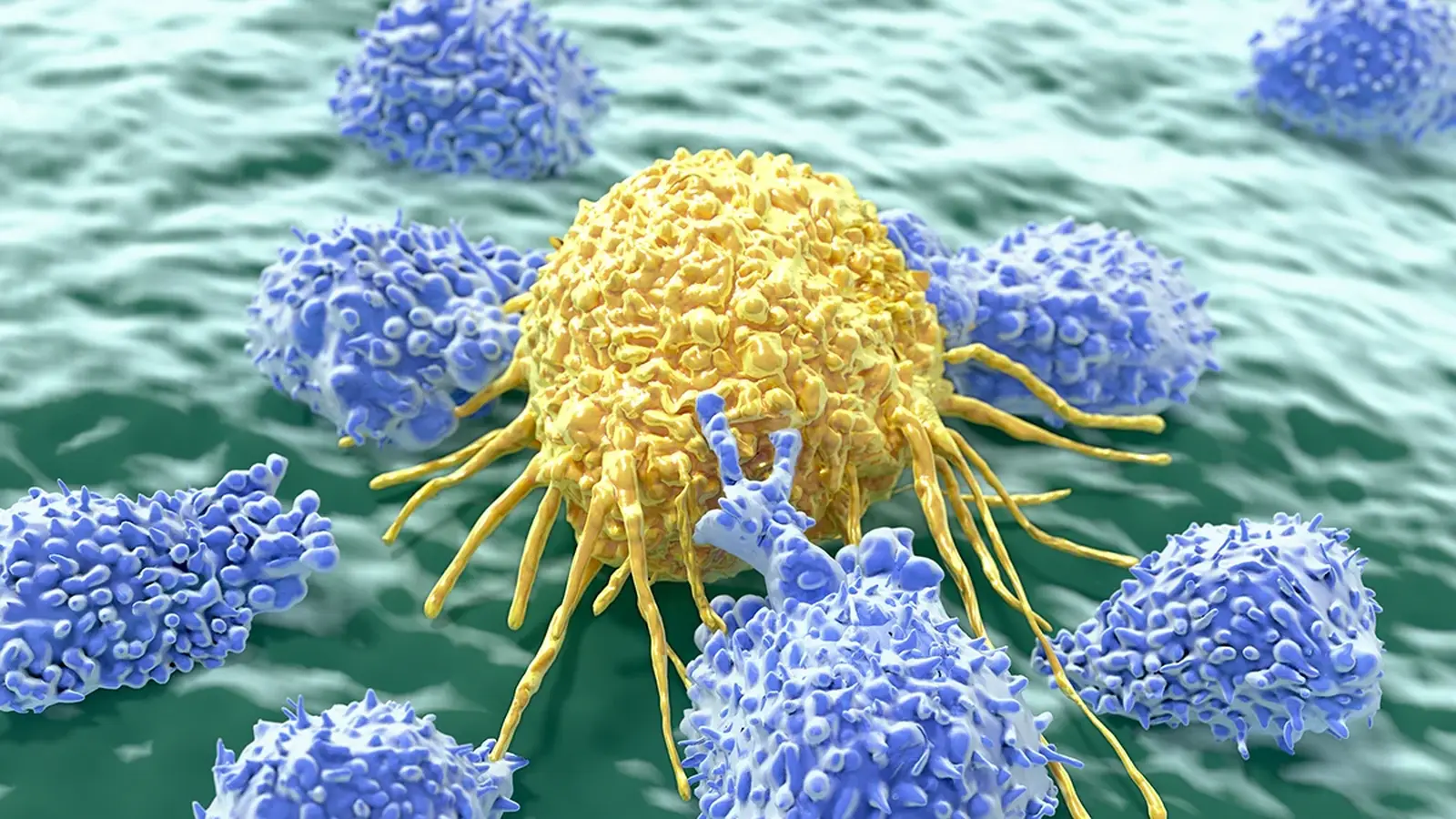
Imagine a vitamin quietly bolstering a cancer cell's armor, not by feeding growth but by helping the cell dodge one of nature's cleanup mechanisms. Strange, but true: researchers in Würzburg have traced a pathway by which vitamin B2, known as riboflavin, helps tumor cells resist ferroptosis, a form of cell death driven by iron and membrane damage.
How a simple nutrient becomes part of the defense
Ferroptosis is not the same as apoptosis. It is a chemical siege: lipids in the cell membrane oxidize, membranes break down, and the damaged cell is targeted for removal. Cells have evolved counters. One of those counters is a protein called FSP1, ferroptosis suppressor protein 1. Another is GPX4, glutathione peroxidase 4. Both help preserve membrane integrity when oxidative stress mounts.
The Würzburg team used large-scale genetic screens to look for genes that tip the balance. Their hit list included RFK, a gene involved in converting riboflavin into its active cofactor forms. The implication was unexpected: the vitamin pathway wasn’t merely nutritional background noise. It was supplying chemical fuel to FSP1.
Follow-up experiments in cell culture confirmed the link. Deprive cancer cells of riboflavin, and they become more susceptible to ferroptosis. Provide the vitamin, and FSP1 activity is sustained. As biologist Vera Skafar from the University of Würzburg puts it, riboflavin plays a key role in protecting cancer cells from this programmed, iron-dependent death.
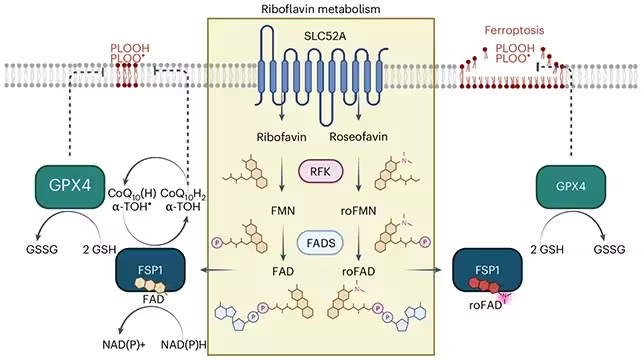
The researchers were able to break down how cancer cells use vitamin B2. (Skafar et al., Nat. Cell Biol., 2026)
Tricking the system: roseoflavin and selective vulnerability
Armed with the pathway map, the team tested whether the system could be subverted. Enter roseoflavin: a riboflavin analogue. Instead of simply blocking vitamin uptake across the board, roseoflavin is taken up by cells like the real thing but fails to support FSP1. In laboratory-grown tumor cells, exposure to roseoflavin made ferroptosis more likely.
That suggests a therapeutic window. If you can misdirect the tumor into using a vitamin mimic that undermines its membrane defense, you could sensitize cancer cells to ferroptosis without inducing systemic riboflavin deficiency in the patient. It is early-stage work, but the principle is elegant. Target the shield rather than the whole nutrient supply chain.
Translating that into a drug faces hurdles. Selectivity matters. Healthy tissues also need riboflavin for many metabolic reactions. A successful therapy would have to exploit biochemical differences between tumor and normal cells—differences in uptake, RFK dependency, or local oxidative environment—to minimize collateral damage.
Implications beyond oncology
Ferroptosis is a double-edged sword. On one hand, inducing it in tumors can remove malignant cells that evade other death pathways. On the other hand, uncontrolled ferroptosis contributes to tissue damage in conditions such as stroke, neurodegeneration, and ischemia-reperfusion injury. That dual role raises both opportunity and caution.
José Pedro Friedmann Angeli, also at the University of Würzburg, has emphasized that ferroptosis likely participates in many pathologies beyond cancer. If riboflavin availability helps determine whether cells survive oxidative stress, the new findings could reframe parts of research into neurodegenerative diseases and organ injury.
From a public-health perspective, the study does not mean people should avoid riboflavin-rich foods. Humans cannot make vitamin B2 and need it for normal metabolism. The challenge for researchers is to design interventions that selectively disrupt riboflavin usage in cancer cells while preserving its essential roles in healthy tissues.
Expert Insight
"This study opens a strategic avenue," says Dr. Mira Patel, a cancer biologist at a major research hospital. "Rather than trying to obliterate a nutrient systemically, we can aim for molecular decoys or inhibitors that disable tumor-specific uses of that nutrient. That approach could reduce side effects and combine neatly with drugs that increase oxidative pressure on cancer cells."
Pharmacologists will need to refine molecules like roseoflavin, improving their tumor selectivity and pharmacokinetic profiles. In parallel, researchers must map which cancers rely most heavily on RFK and FSP1, and which might be good candidates for ferroptosis-based therapies.
Conclusion
The Würzburg findings reframe riboflavin as more than a dietary micronutrient. In some cancers it helps operate an escape hatch from ferroptosis, and that escape hatch may be vulnerable to precise molecular intervention. The road from cell-culture experiments to approved therapies is long. Still, by revealing how a common vitamin can be repurposed by tumors, this work provides a fresh target—and a reminder that metabolism and cell-death pathways are tightly intertwined.

“My work centers on sustainability, energy, and environmental science — examining how innovation can lead to a greener future.”

Discussion
Leave a Comment