
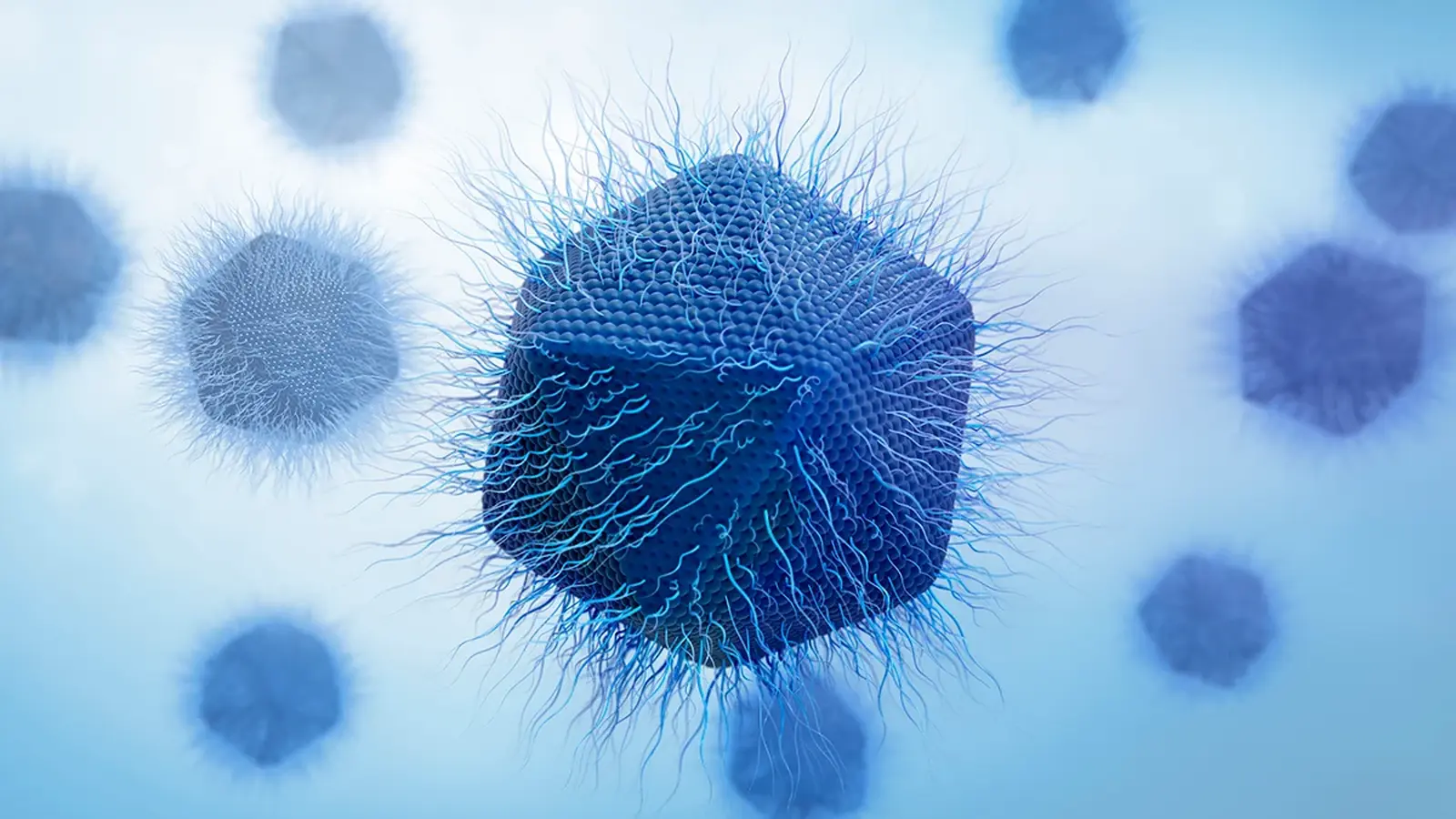
Something unusual washed up in a Japanese river sample and quietly rewrote a chapter of viral evolution. Scientists at Tokyo University of Science isolated a previously unknown giant virus from the Inasegawa River in Kamakura. They named it furtivovirus, from the Latin for stealthy, after initial difficulty extracting the organism from environmental debris. But the name understates the find. Furtivovirus behaves in a way no giant virus has before, occupying an evolutionary middle ground that may help explain how complex cellular structures developed.
Not like the others
Giant viruses are a strange category. They carry genomes far larger and more complex than those of typical viruses, sometimes encoding hundreds of genes that blur the line between viral simplicity and cellular complexity. That alone makes them fascinating. But their replication strategies differ too. Some giant viruses replicate inside an intact host nucleus. Others break the nuclear membrane and use the cytoplasm. Furtivovirus chooses a third option.
When furtivovirus infects an amoeba, imaging reveals that the viral attack dismantles the nuclear membrane yet continues replication within the residual nucleoplasm. In other words, the nucleus is damaged but not entirely bypassed; the virus leverages what remains of the nuclear interior to reproduce. That tactic had not been documented among giant viruses until now.

Imaging showed that when furtivovirus infects an amoeba (b), it destroys the host cell's nuclear membrane (c) and replicates in the remaining nucleoplasm (d). The furtivovirus genome is also shown in (e).
What this reveals about viral families and genomes
Beyond its odd replication mode, furtivovirus helps connect two previously separate groups of giant viruses. These groups differ sharply in genome size and gene content. Furtivovirus sits between them, sharing DNA features with both while showing distinct host preferences and genome architecture. Based on these patterns, the researchers propose assigning furtivovirus and similar viruses to a new family, Manesviridae.
Why does this matter? Because genome size and composition reflect evolutionary pressures. Some giant viruses expand their genomes to harbor accessory functions that may help in variable environments. Others pare down to core essentials. Furtivovirus appears to illustrate both processes: overall genomic expansion alongside a reduced set of essential genes. That duality suggests genome remodeling over long timescales, not random change.
Practically, reclassifying these viruses clarifies relationships across the virosphere. It also improves our ability to trace how replication strategies and host interactions evolved, since family-level grouping implies shared ancestry and functional constraints.

How the discovery touches a bigger question: origin of the nucleus
The cell nucleus is the defining feature of eukaryotes. Where it came from remains debated. One provocative idea is that ancient viral invasions helped shape—or even create—the nuclear compartment. Some researchers, including Masaharu Takemura and colleagues, have argued that ancestral giant viruses might have driven the development of a protected genetic compartment as hosts evolved defenses against infection.
Furtivovirus does not prove that idea. But its intermediate replication strategy provides a plausible evolutionary bridge. Imagine a timeline in which early viruses either exploited an intact nucleus or destroyed it completely. A virus that uses a damaged nucleus shows how transitions could happen stepwise. The discovery thus furnishes biological context for models that link viral behavior to cellular innovation.
There are still many unknowns. Which genes enable furtivovirus to dismantle the nuclear membrane? How do host repair pathways respond? Can related viruses switch strategies depending on host species or environmental conditions? Each question points to experiments that can test hypotheses about viral-driven cellular change.
Methods and evidence in brief
Researchers combined environmental sampling with microscopy and comparative genomics. Electron micrographs captured nuclear disruption and replication in the nucleoplasm. Sequencing revealed genome size and gene patterns that place furtivovirus between established giant virus groups. Then, deep comparative analysis showed cohesive evolutionary signals distinguishing this lineage from other orders published in the Journal of Virology, 2026.
These methods are complementary. Images show the process. Genomes reveal history. Together they allow scientists to infer both mechanism and ancestry, and to propose a new taxonomic home for these unusual viruses.
Expert Insight
"This discovery changes how we picture viral strategies at the cellular level," says Dr. Elena Marquez, a virologist and science communicator not involved in the study. "Furtivovirus occupies a logical intermediate state—one that you might predict if viruses and hosts were engaged in a long adaptive conversation. Studying it could tell us about both arms-race dynamics and the molecular tools viruses borrow to reshape cellular spaces."
Implications and the road ahead
Understanding furtivovirus matters for several reasons. It expands taxonomic frameworks, informs theories about the origin of the nucleus, and highlights viral plasticity in hijacking cellular machinery. These insights can influence how researchers interpret other environmental viruses and guide laboratory studies that manipulate host nuclear integrity.
Future work will examine gene function in furtivovirus, test replication across different host species, and explore how environmental pressures drive genome expansion or contraction. As scientists catalog more giant viruses from soils, rivers, and oceans, patterns will emerge. Some of those patterns will likely surprise us.
Conclusion
Furtivovirus is a reminder that evolution sometimes proceeds through intermediates—forms that bridge what once seemed like separate strategies. It is also a nudge: viruses remain active players in the history of life, not merely parasites on the sidelines. Whether or not this lineage ultimately rewrites the origin story of the nucleus, it gives researchers a new window into how complexity can arise from microbial conflict.

“My work centers on sustainability, energy, and environmental science — examining how innovation can lead to a greener future.”

Discussion
Leave a Comment