
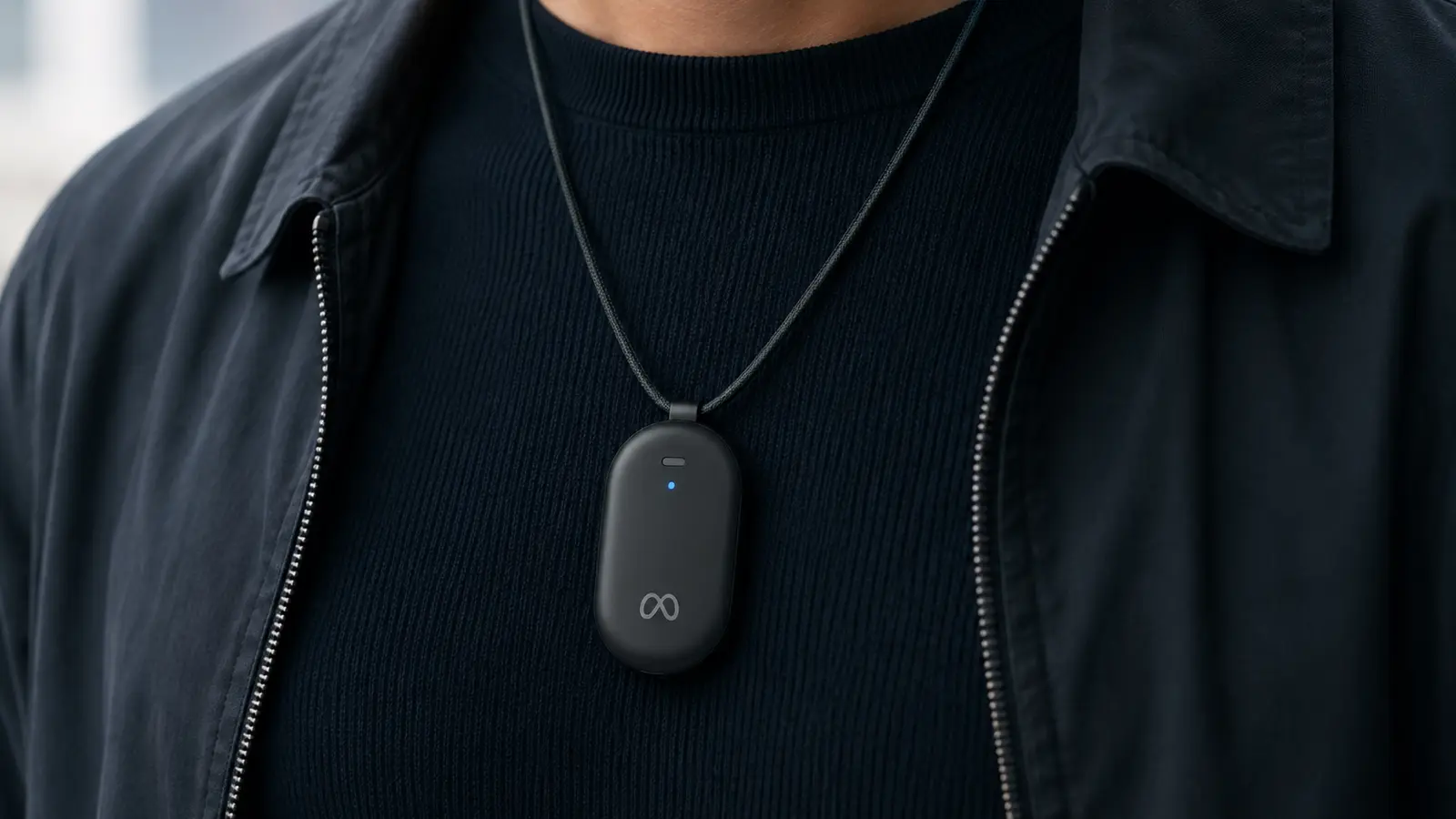
Imagine a tiny disk at your collarbone that listens like a discreet secretary, summarizing conversations and nudging you with reminders. It sounds like science fiction, but Meta appears to be moving in that direction.
Internal briefings obtained by industry reporters suggest the company is testing an AI-powered pendant that can clip to clothing or sit on a chain. The idea builds on technology Meta acquired from Limitless, a startup that built wearables able to record audio and produce short summaries. In practice, the device would act as a low-profile, always-on assistant that follows you through the day.
When a pendant becomes a pocket-sized PA
Think of it as hands-free memory. Short interactions, meeting highlights, quick ideas you mutter to yourself—captured, condensed, and presented when you need them. That convenience has obvious appeal: less frantic note-taking, fewer missed follow-ups, faster recap after meetings. But it also raises hard questions about where data lives, who can access it, and how long recordings are kept.
Meta is not stopping at pendants. The memo reportedly previews multiple new smart glasses models slated through 2026, a clear line of evolution from the Ray-Ban collaboration. Those devices will likely lean into the same AI features—real-time transcriptions, context-aware prompts, and summaries that turn audio into actionable text.
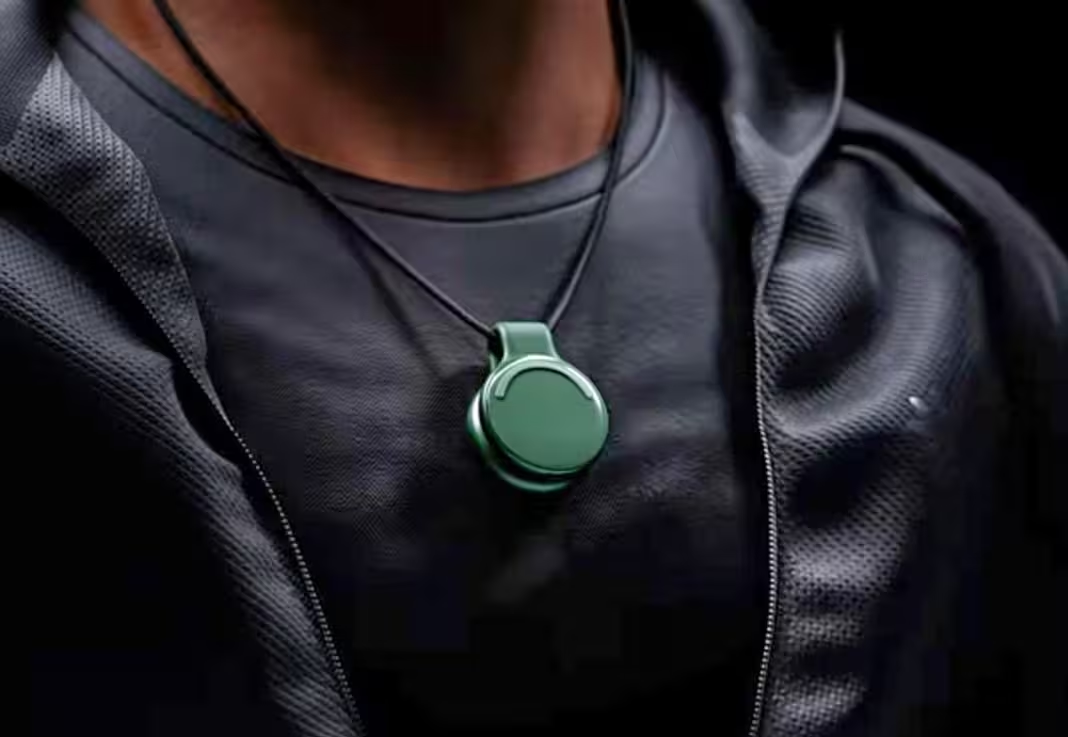
There’s a business angle too. The company is said to be experimenting with a Wearables for Work subscription aimed at enterprises. Picture a service that offers meeting transcription, automated note-taking, and hooks into calendar and collaboration tools to surface follow-ups and action items. For professionals who juggle back-to-back meetings, that could be a productivity leap.
- Meeting transcription and searchable records
- Automated summaries and to-do extraction
- Integration with workplace platforms for smoother workflows
Those features would nudge wearables from novelty toward practical office tools. Yet adoption has never been guaranteed. Previous AI pendant projects struggled to reach mainstream users. Why? The answers are part technical, part cultural. Battery life, form factor, and the brittle experience of early voice AI all matter. So does trust.
Privacy is the thorniest part. Continuous or intermittent audio capture makes people uneasy for good reasons. Who hears the recordings? How are they stored? Does the device filter sensitive content? Meta will need clear, enforceable policies and interfaces that let people control recording and sharing in real time, or adoption will stall.
For Meta, the wearable push is another chapter in a wider strategy: diversify beyond screens, embed AI into everyday objects, and create subscription services that lock in recurring revenue. Whether the pendant becomes a ubiquitous accessory or a niche gadget will depend on the product polish and, crucially, how the company answers privacy and enterprise-security concerns.
Either way, the pendulum is swinging. Wearables are no longer just fashionable tech. They are becoming ambient platforms for AI, and Meta wants a seat at that table.

“I cover emerging technologies, digital innovation, and the intersection of tech and everyday life. My goal is to make complex trends accessible and inspiring.”

Discussion
Leave a Comment