
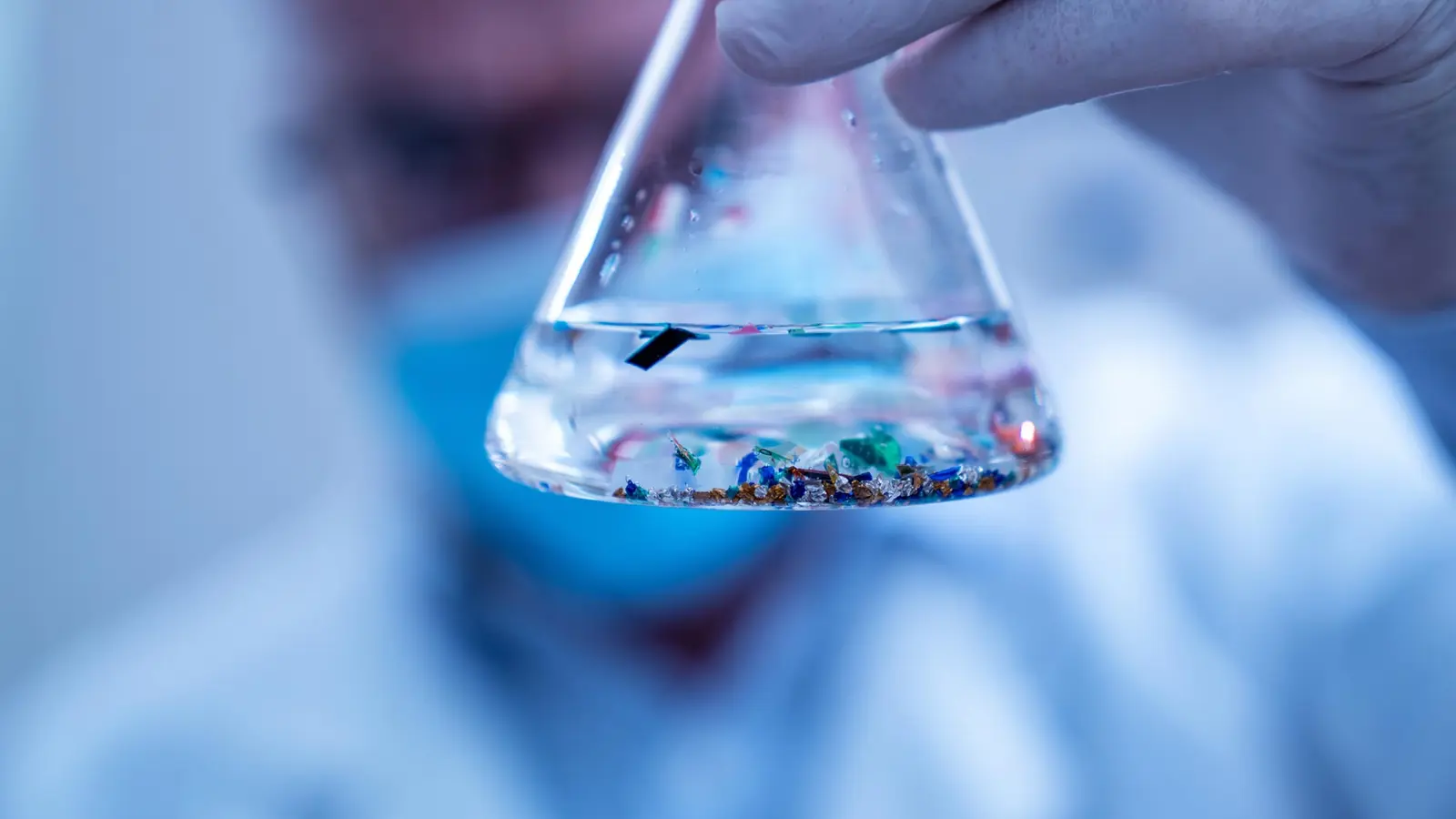
Built-in biology, activated on command
Researchers have taken a radical tack on plastic waste: instead of hoping discarded items will someday degrade, they built degradation into the material itself. The idea is straightforward and elegant. Embed microbes or the enzymes they produce into a polymer so that the object behaves like any other plastic while in use and then, when triggered, the embedded biology wakes up and dismantles the material into its molecular parts.
In a paper in ACS Applied Polymer Materials, scientists led by Zhuojun Dai report precisely that. They engineered Bacillus subtilis to produce two cooperating enzymes that cleave a common polymer, polycaprolactone, in sequence. One enzyme makes cuts along the long polymer chains, creating shorter fragments. The second enzyme then chews those fragments down to monomers from the chain ends. Working together, the pair turns durable plastic back into its chemical building blocks, and fast.
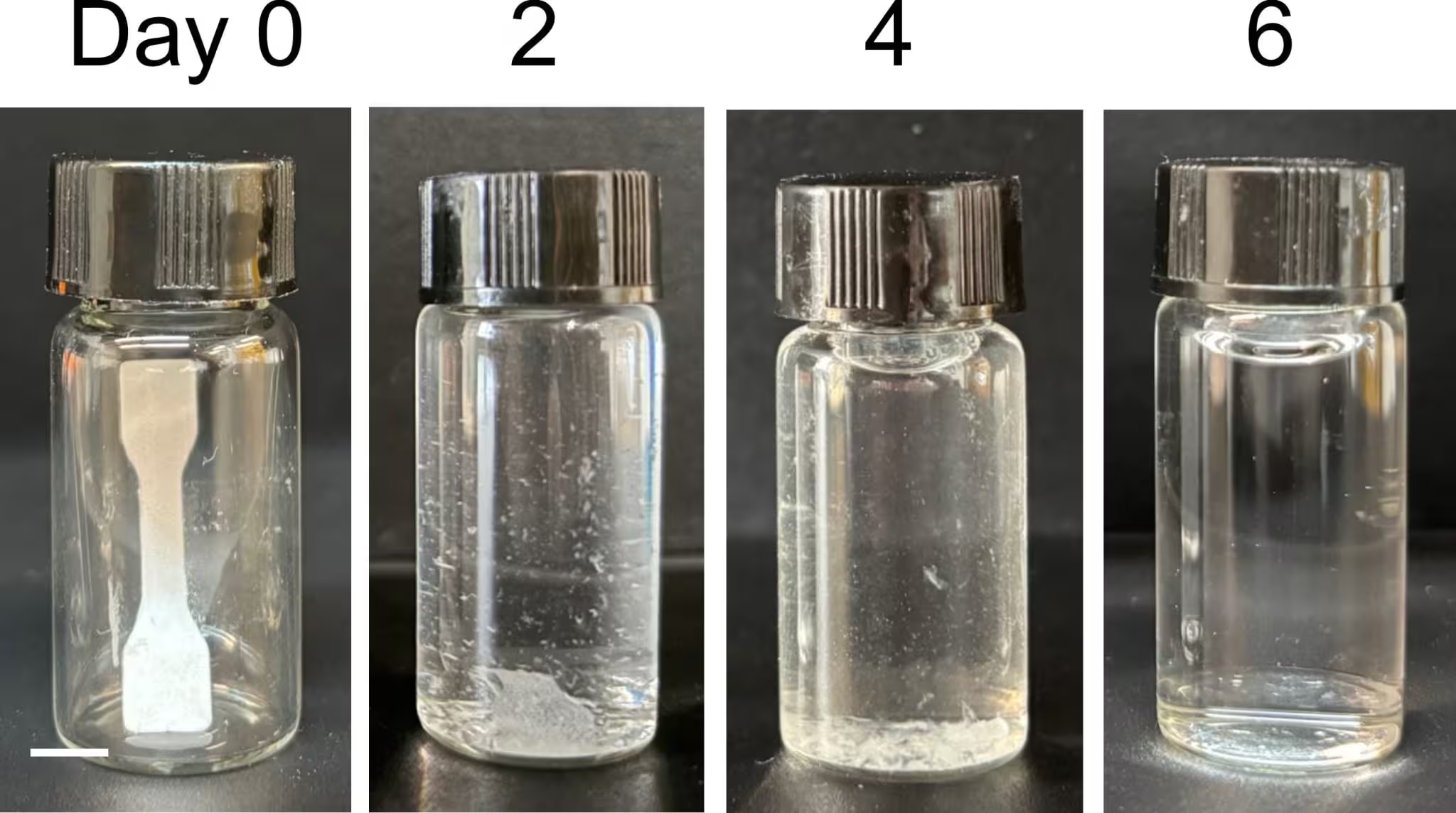
A living plastic with a pair of cooperative, plastic-busting enzymes degraded the material completely within six days.
How the experiment worked and what it showed
The team mixed dormant B. subtilis spores into polycaprolactone during fabrication. Spores are a smart choice; they survive harsh conditions and wait quietly until the right cues arrive. The composite looked and handled much like ordinary polycaprolactone film, a polymer used in 3D printing and some medical sutures, so the material’s mechanical performance was not sacrificed.
Activation came when researchers warmed the material with a nutrient solution to 50 degrees Celsius, the temperature at which the spores germinated and enzyme production began. Within six days the dual-enzyme system had fully depolymerized the film into its monomers. Crucially, because the enzymes worked in a cooperative, sequential fashion, the breakdown did not leave behind microplastic fragments, a frequent concern for mechanical and partial chemical degradation methods.
As a practical demonstration the team fashioned a wearable plastic electrode from the living composite. The device performed as expected, then degraded fully in about two weeks under activation conditions.

Implications and next steps
Embedding programmed biodegradation could change how designers think about disposability. Packaging that self-erases when heated in a controlled facility. Medical devices that dissolve on schedule. That is the promise. But several hurdles remain before living plastics scale: activation methods suitable for environmental contexts such as rivers and oceans, regulatory and safety assessments for releasing engineered microbes, and adaptation of the strategy to the wide variety of polymers used in consumer products.
"The realization that traditional plastics persist for centuries, while many applications, like packaging, are short-lived, led us to ask: Could we build degradation directly into the material’s life cycle?" Zhuojun Dai said, summarizing the motivation behind the work.
Future work will try to trigger spores in aqueous environments and extend the approach beyond polycaprolactone to polymers used in single-use items. If those technical and societal hurdles can be managed, programmable, enzymatic plastics could become a powerful tool against plastic pollution and microplastic generation.

“The cosmos has always fascinated me. I write about space missions, astronomy, and the technologies pushing humanity beyond Earth.”

Discussion
Leave a Comment