
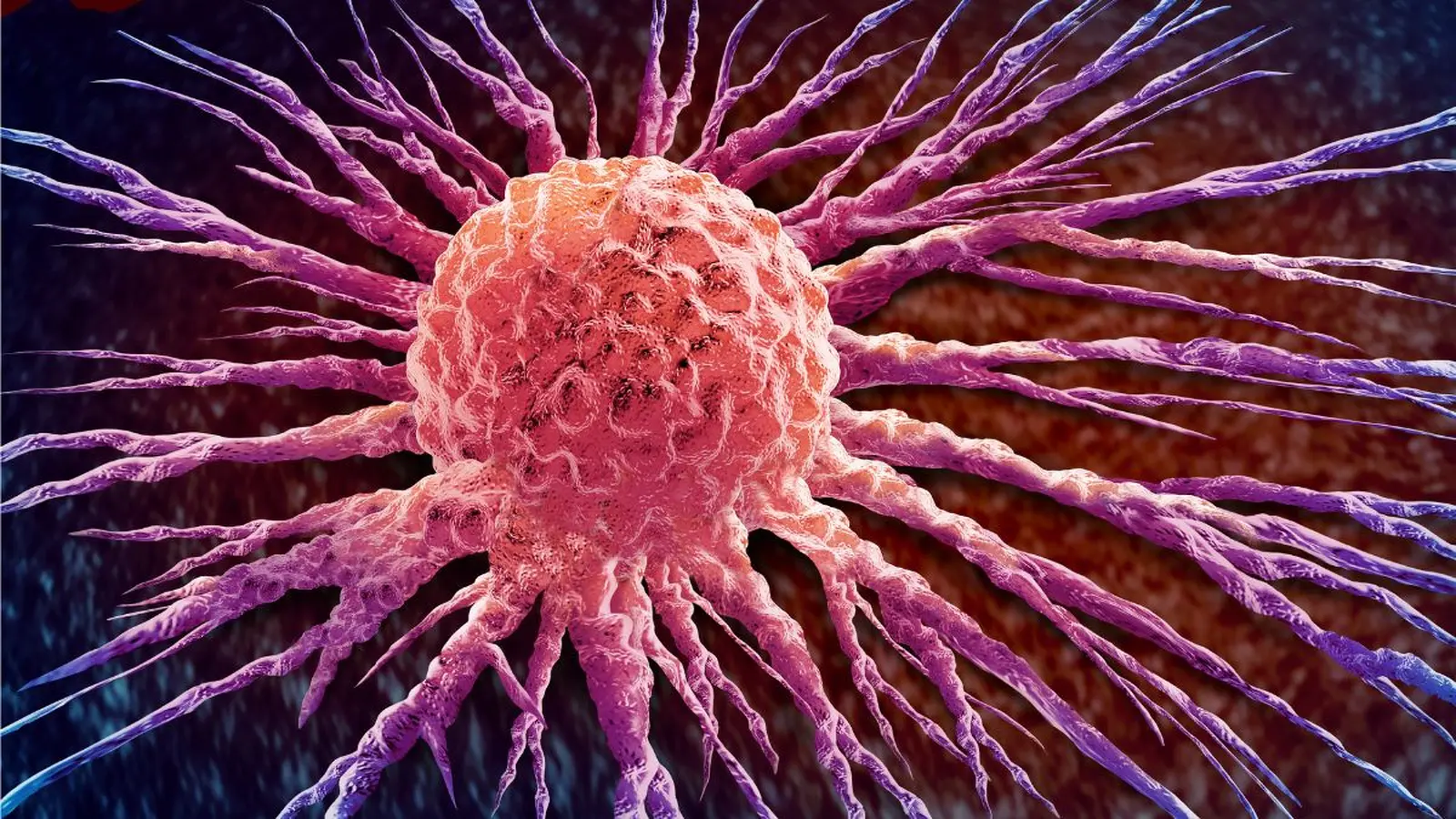
For decades pancreatic cancer has been the definition of stubborn. Patients often get a diagnosis only after the disease has already spread. Treatments help sometimes, but progress has been agonizingly slow. Now a daily pill—daraxonrasib—has produced results that feel like a genuine turning point.
In a randomized clinical trial of about 500 people whose metastatic pancreatic tumors had stopped responding to standard therapy, patients who took daraxonrasib lived a median 13.2 months, compared with 6.7 months for those given more chemotherapy. That near doubling of median survival is not a small statistical quirk. It is the first time a drug has shown a clear and substantial survival advantage over chemotherapy in this setting.
The reason this compound matters is biological. More than 90 percent of pancreatic cancers are driven by mutations in the RAS family of genes, often the KRAS subtype. For years KRAS was labeled "undruggable" because its mutated protein lacks obvious pockets for traditional drugs to latch onto. Daraxonrasib takes a different tack: it acts like molecular glue, attaching to several KRAS variants and blocking the signals that tell cancer cells to grow.
Clinical findings and what patients experienced
The trial enrolled patients with metastatic disease that had progressed after prior lines of therapy. Participants were randomly assigned to receive either daraxonrasib pills each day or additional chemotherapy. Not only did the pill group live longer on average, they also stayed on their assigned treatment for more time, reported less pain, and experienced a better quality of life as tumors shrank or stabilized.
Side effects were present, as with any targeted therapy. The most common problems affecting continued use were a sometimes-severe skin rash and painful mouth sores. Still, clinicians at the American Society of Clinical Oncology meeting in Chicago described seeing durable benefit across many patients and noted that many were still on daraxonrasib when the data analysis closed, suggesting the survival advantage could grow with longer follow-up.
The study was funded by Revolution Medicines. The Food and Drug Administration has said it will expedite review and is permitting expanded access for qualifying patients while regulators evaluate the full dataset.
Daraxonrasib received public attention recently after former U.S. Senator Ben Sasse spoke about reduced pain while taking the drug. That publicity has led oncologists to field an influx of requests for access through special programs.

Daraxonrasib nearly doubled survival time.
Why this could change treatment and what comes next
If regulators approve daraxonrasib for patients whose disease has progressed on standard regimens, physicians expect it to become a new standard of care in that setting. But researchers are thinking bigger. Could the drug work earlier in the disease course? Could shrinking tumors allow more patients to become candidates for potentially curative surgery? Trials to answer those questions are already planned or underway.
Other RAS-focused approaches are in development too. Some labs are designing drugs that target particular KRAS subtypes more selectively. Vaccines that train the immune system to recognize KRAS-mutant cells are also being tested, aiming to prevent recurrence after surgery. Together, these strategies mark a shift in how oncologists approach pancreatic cancer—from largely palliative chemotherapy to precision-first tactics that aim to block the cancer’s engine.

Illustration of the pancreas in the human body.
Expert Insight
"This result is the kind of clinical advance we've been waiting for," says Dr. Elaine Morgan, a medical oncologist who treats gastrointestinal cancers. "The magnitude of benefit is meaningful. For patients, that can translate into extra months of life when those months are also of better quality. Our next task is to refine who benefits most and how to combine this agent safely with others."
Dr. Morgan points out practical questions researchers must address: which KRAS subtypes respond best, whether response can be predicted with biomarkers, and how to manage the drug’s dermatologic and mucosal toxicities so patients can stay on therapy longer. "We now have a concrete target and a tool that works against it. That opens the door to smarter combinations and to moving therapy earlier, where the potential for cure is higher," she adds.
Conclusion
Pancreatic cancer remains a formidable disease, with a five-year survival rate that is low compared with many other cancers. But daraxonrasib’s performance in this trial offers a clear inflection point: a targeted oral therapy that extends life and preserves quality of life for people whose cancers had exhausted standard options. Regulators will weigh the evidence, clinicians will refine use, and scientists will continue to explore next-generation KRAS inhibitors and immune strategies. For patients and doctors, the mood is cautiously hopeful—this is progress with real consequence.

“My work centers on sustainability, energy, and environmental science — examining how innovation can lead to a greener future.”

Discussion
Leave a Comment