
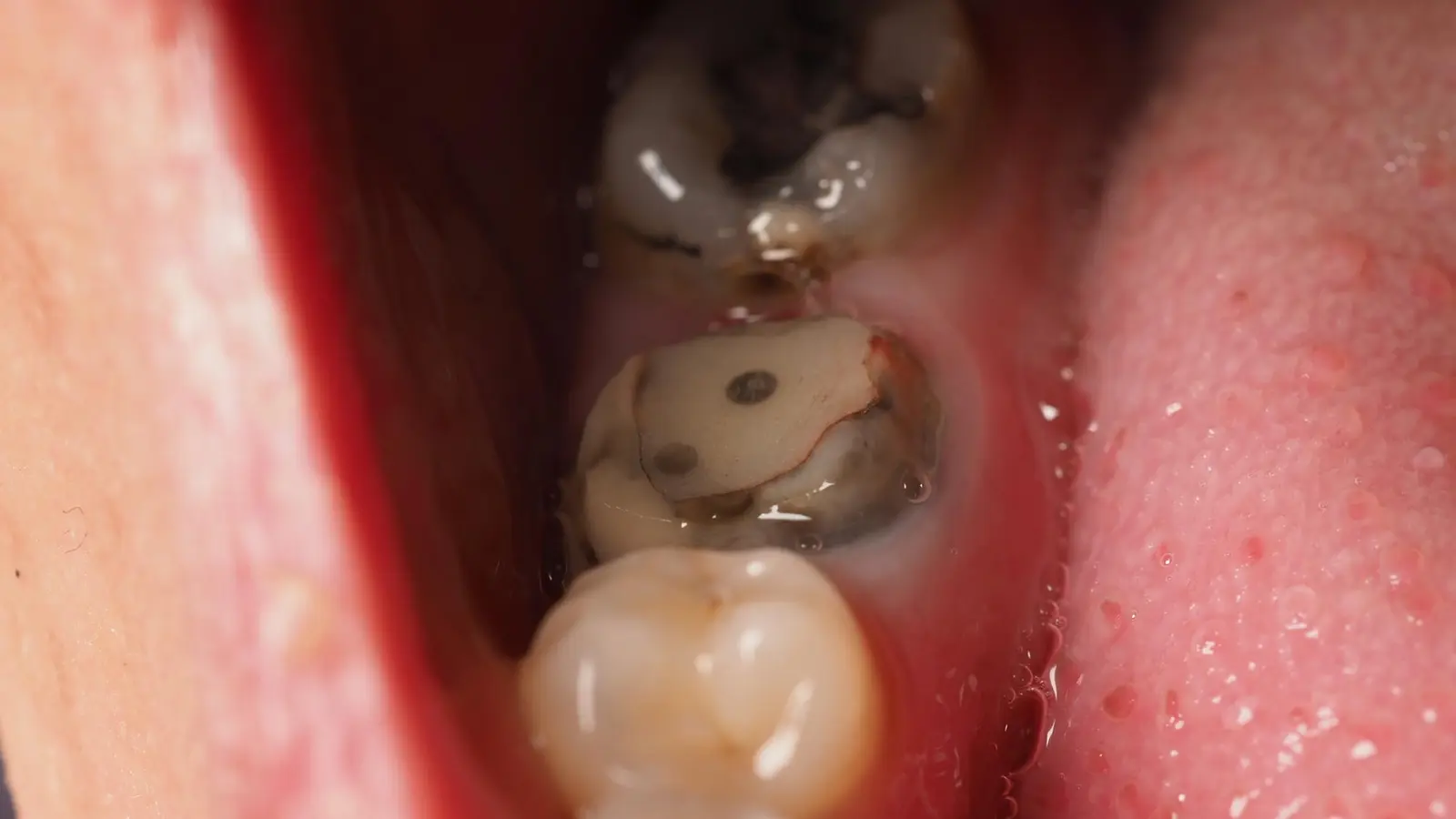
A fruit that can weigh as much as a toddler has become the unlikely inspiration for a fresh approach to an age-old dental problem. In laboratories in São Paulo, researchers have taken jackfruit latex and turned it into a sticky scaffold that could deliver medicine directly to damaged gum and bone tissue.
Periodontitis is a severe form of gum disease caused by bacterial infection and chronic inflammation. It develops when plaque and bacteria accumulate around the teeth, triggering an immune response that gradually damages the gums, periodontal ligaments, and underlying bone that support the teeth. If left untreated, periodontitis can lead to gum recession, tooth mobility, and eventually tooth loss.
From market stall to mucoadhesive matrix
The research team at the Faculty of Medical and Health Sciences of the Pontifical Catholic University of São Paulo investigated a single question: can a naturally sticky plant secretion be repurposed to stick medicine where it matters? Jackfruit latex, a milky sap normally discarded or overlooked, has an intrinsic adhesiveness. That made it an attractive candidate for a platform meant to remain in contact with the gums despite saliva and movement.
Instead of relying on systemic pills that circulate through the liver and dilute before reaching the mouth, the researchers built a local delivery system. They blended purified jackfruit latex with pomegranate peel extract, valued for its antimicrobial compounds, and added simvastatin, a drug commonly known for lowering cholesterol but also recognized for anti-inflammatory and bone-promoting properties when applied directly to tissues.
.avif)
Jackfruit (Artocarpus heterophyllus) is a tropical tree native to South and Southeast Asia and is best known for producing the world’s largest tree-borne fruit.
What the lab tests revealed
The experimental gel was tested in a sequence of physicochemical and biological assays. The team varied simvastatin concentration and examined how the composite behaved on human stem cells derived from fat tissue. Formulations with 0.3 percent, 0.6 percent, and 1.2 percent simvastatin all retained the gel structure and passed basic safety checks in vitro.
More notable was the biological response. Across every tested concentration, the material stimulated osteoinduction, the program by which stem cells differentiate into bone-forming cells. Signs of this transition were visible at two weeks and became more pronounced at three. For a disease that erodes the periodontal ligament and jawbone, nudging local stem cells toward bone production is a major advantage.
The rationale is straightforward. Oral dosing of simvastatin subjects most of the drug to first-pass metabolism in the liver, limiting the amount that reaches peripheral tissues. Topical application concentrates the effect at the injury site and reduces the need for systemic dosing, which can carry risks such as muscle toxicity. The mucoadhesive nature of jackfruit latex helps keep the drug in position long enough to act.
Scientific context and next steps
Periodontitis affects hundreds of millions globally and remains a leading cause of adult tooth loss. Current clinical strategies focus on removing bacterial deposits and controlling inflammation. Rebuilding the lost supporting tissues is harder. Bone grafts, guided tissue regeneration, and growth-factor therapies can help, but outcomes vary and the burden on patients and clinicians is high.
This jackfruit-based biomaterial is an early-stage, biomimetic attempt to combine antimicrobial, anti-inflammatory, and regenerative cues in a single, locally retained matrix. The study, coordinated by Professor Eliana Aparecida de Rezende Duek and supported by FAPESP, appeared in Polymer Bulletin. Duek and colleagues emphasize that these are promising preclinical results and that extensive safety and efficacy testing remains necessary before human trials.
Expert Insight
Dr. Marina Costa, a biomaterials scientist not involved in the study, commented on the approach: 'Local drug delivery is the most sensible way to amplify desired effects where tissue is failing. Using a natural adhesive like jackfruit latex is clever because it solves a mechanical problem that many gels face in the oral cavity. The real test will be how predictable and reproducible the material is in animal models and, later, in patients.'
The research also raises practical questions worth watching. How will the gel handle chewing forces and saliva flow in a living mouth? Can manufacturing scale while maintaining purity and consistent performance? And what regulatory pathway will a hybrid natural-drug product follow? Answers will determine whether the material moves from bench to clinic.
Conclusion
Jackfruit latex, pomegranate peel extract, and simvastatin together form a compact example of translational creativity: a low-profile natural product reimagined as a technical adhesive for targeted therapy. Early laboratory studies show the composite can promote markers of bone formation while providing local antimicrobial and anti-inflammatory activity. The results do not guarantee a clinical breakthrough, but they point to a promising new direction in periodontal therapy where regeneration is performed in place, not just encouraged from afar.
This material has the potential to change how clinicians approach tissue loss in periodontitis, but careful animal and clinical studies lie ahead.

“My work centers on sustainability, energy, and environmental science — examining how innovation can lead to a greener future.”

Discussion
Leave a Comment