
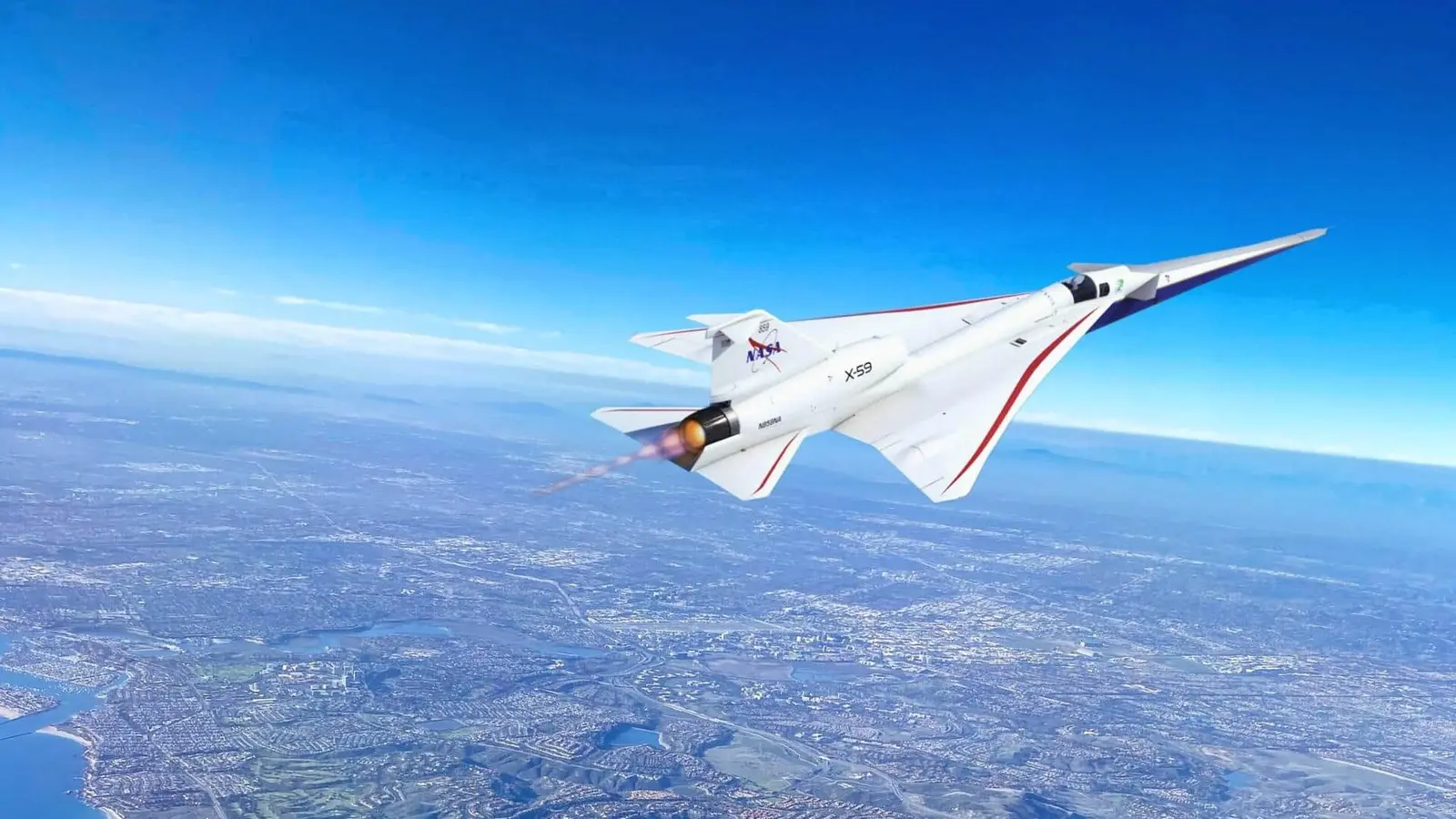
Lockheed Martin Skunk Works and NASA marked a milestone in aviation when the X-59 low-boom supersonic demonstrator completed its first flight over California's Mojave region. The subsonic test sortie sets the stage for later transonic and supersonic trials designed to tame the sonic boom.
A carefully planned first flight
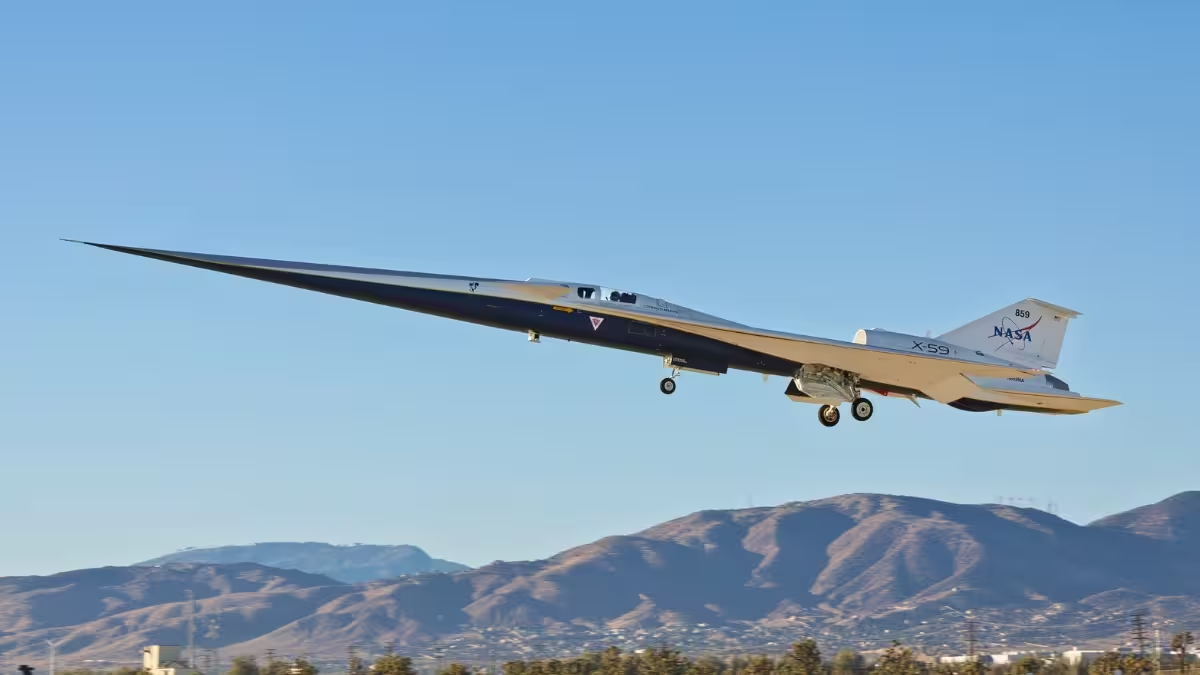
The prototype lifted off from Lockheed Martin's Palmdale facility on the morning of October 28, climbing to approximately 12,000 feet and flying for 1 hour and 7 minutes before landing at Edwards Air Force Base. Pilot Nils Larson conducted handling checks and air data verification at speeds up to 250 knots while the aircraft performed exactly as engineers predicted, according to Lockheed Martin.
Skunk Works leadership described the milestone as the product of sustained collaboration. Acting NASA leadership framed the X-59 as more than an experimental jet: it is a testbed for technology that could reshape commercial aviation by making supersonic travel quieter and more publicly acceptable.
How the X-59 is engineered to be 'quiet'
Unlike conventional supersonic designs, the X-59 sports a very long, needle-like nose, a streamlined fuselage shaped to smooth shockwave formation, and a top-mounted engine configuration. Those features work together to reshape the pressure waves produced at supersonic speeds so that, rather than a sharp sonic boom, ground observers would experience a much softer sound often described as a thump.
Technically, the goal is not to eliminate shockwaves but to control their pattern and intensity. The X-59 is roughly 99.7 feet long (30.4 meters) with a wingspan near 29.5 feet (9 meters) and is expected to reach speeds close to Mach 1.4 in later tests. Designers and NASA engineers will measure the aircraft's acoustic footprint in later phases of the program to quantify noise levels and to assess public response in communities exposed to the flight paths.
Why this matters: from policy to passengers
Supersonic flight over U.S. land was effectively banned for commercial aircraft in 1973 because sonic booms produced unacceptable noise at ground level. That regulatory posture has been under reconsideration: a presidential executive order issued in June called for lifting aspects of the ban, clearing the way for testing and, potentially, future passenger operations if noise remains low and communities accept overflight.
For airlines and aircraft manufacturers, a low-boom solution would unlock shorter routes and faster travel times across continents. For communities, the priority is predictable, low-intensity sound that does not disrupt daily life. NASA plans to operate the X-59 in community-overflight trials to gather both objective acoustic data and subjective public feedback — a combination aimed at guiding regulators on whether to permit routine supersonic services over land.
Industry momentum and competing approaches
The X-59 is one of several projects pursuing quieter supersonic travel. Boom Supersonic tested its XB-1 subscale demonstrator and is targeting a 2027 first flight for its full-scale Overture jet, which aims to cruise at altitudes where sonic signatures would be much less noticeable on the ground. Spike Aerospace is developing the S-512 Diplomat, a low-boom business jet concept targeting a niche luxury market. Meanwhile, other startups such as Aerion and Exosonic previously pursued similar goals but ceased operations due to funding shortfalls.
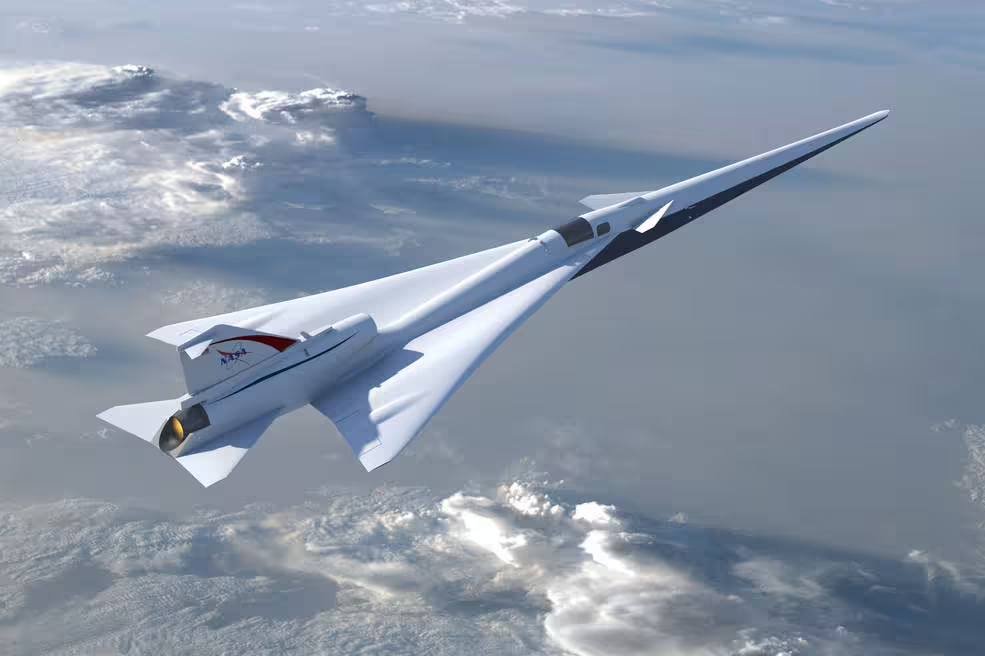
Together, these efforts signal a renewed commercial and technological push to reconcile high-speed flight with environmental and community constraints. The X-59's role is primarily scientific and regulatory: to produce trustworthy data that can shape aviation policy and industry practice.
Next steps for the X-59 test program
Skunk Works will continue the initial test campaign, expanding the X-59's flight envelope to include transonic and supersonic regimes. After the contractor-led phase, NASA will take the lead in acoustic measurement flights and in community engagement campaigns designed to record real-world reactions to the aircraft's sound signature. Those steps will determine whether the faint thumps the X-59 produces can pave the way for a new era of faster, quieter air travel.

“My work centers on sustainability, energy, and environmental science — examining how innovation can lead to a greener future.”

Discussion
Leave a Comment