

Apple closed a blockbuster quarter with $102.5 billion in revenue, but CEO Tim Cook warned the company is juggling supply issues, rising tariffs and a delayed overhaul of Siri — even as Apple doubles down on AI partnerships.
Strong quarter, but supply bottlenecks persist
Speaking with CNBC after Apple reported robust Q4 results, Cook emphasized that demand remains healthy: Apple posted $102.5 billion in revenue and expects that momentum to extend into the holiday season, forecasting December-quarter growth of roughly 10%–12%.
Still, the upside is tempered by manufacturing limits. Apple confirmed supply constraints affecting several iPhone 17 models and some units from the iPhone 16 lineup, a reminder that even market-leading brands can be throttled by component shortages and production timing.
AI strategy: more partners, broader ambitions
Apple is moving beyond a single-provider approach. After the high-profile OpenAI partnership in 2024, Tim Cook said Cupertino plans to onboard additional AI collaborators for its Apple Intelligence suite. He didn’t name vendors, but made clear the company intends to forge multiple relationships to strengthen its AI features and services.
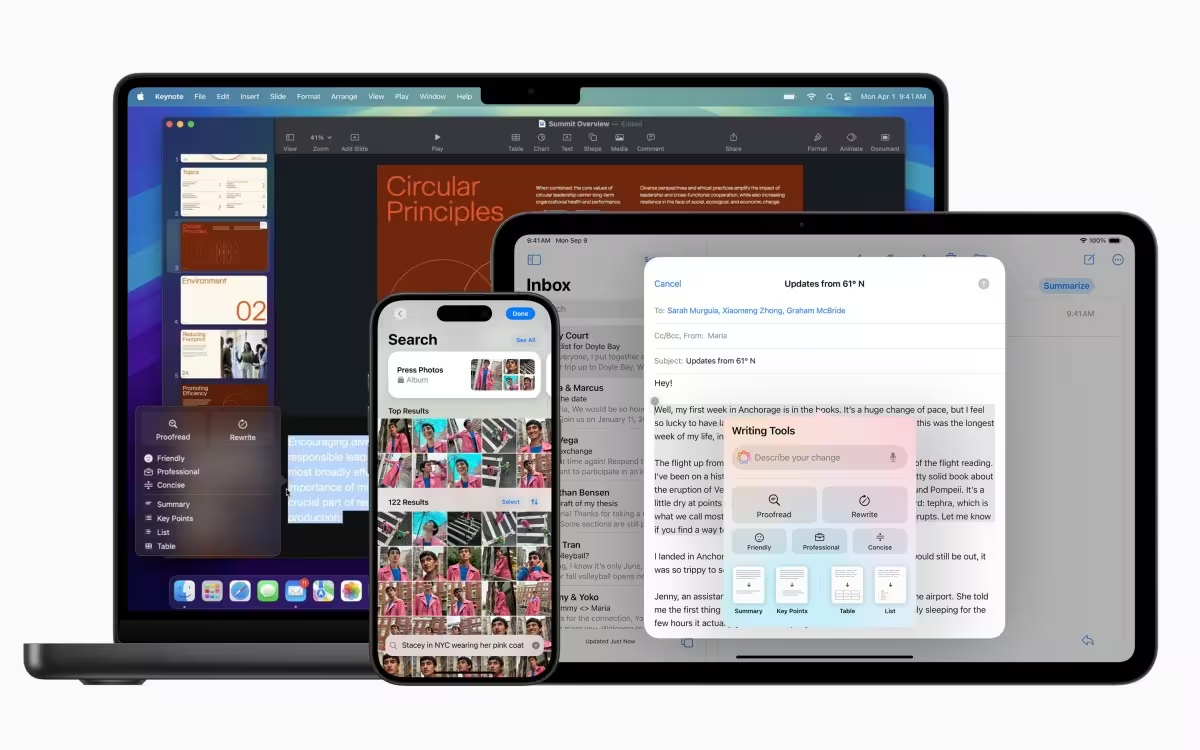
Why it matters: diversifying partners can speed feature rollouts, improve model capabilities, and reduce reliance on any single provider — all critical as Apple integrates AI across devices and services.
Siri’s reboot delayed — March 2026 now the likely target
Apple’s long-promised, AI-overhauled Siri has been postponed repeatedly. Cook confirmed the overhaul is still coming and recent reports point to a March 2026 launch window. For users, the new Siri aims to be more conversational and context-aware, tapping the broader Apple Intelligence stack and its third-party model partners.
Imagine a Siri that understands follow-up questions and personal context across apps — that’s the goal Apple is describing, but the company is clearly taking extra time to refine performance and privacy protections before shipping the update.

Tariffs are biting into profits
Trade policy is leaving a measurable mark: Apple reported $1.1 billion in additional tariff expenses in the September quarter and expects roughly $1.4 billion more in the December quarter. Those incremental costs are cutting into margins even as revenue grows.
For investors and supply-chain watchers, tariffs add another layer of complexity to forecasting: higher costs, potential price adjustments, and ongoing negotiations with suppliers and governments will influence Apple’s near-term financial picture.
What to watch next
- Official rollout date and capabilities for the AI-driven Siri.
- Announcements of new AI partnerships and how they tie into Apple Intelligence.
- Resolution or mitigation of iPhone 17/16 supply constraints ahead of the holidays.
- Any shifts in tariff exposure or supply-chain arrangements that affect costs.
As Apple balances record revenues with logistical snafus and geopolitical costs, its expanding AI strategy will be a key storyline into 2026 — particularly when the revamped Siri finally arrives.

“I love exploring gadgets, apps, and trends that redefine how we connect, work, and play in a digital world.”

Discussion
Leave a Comment