
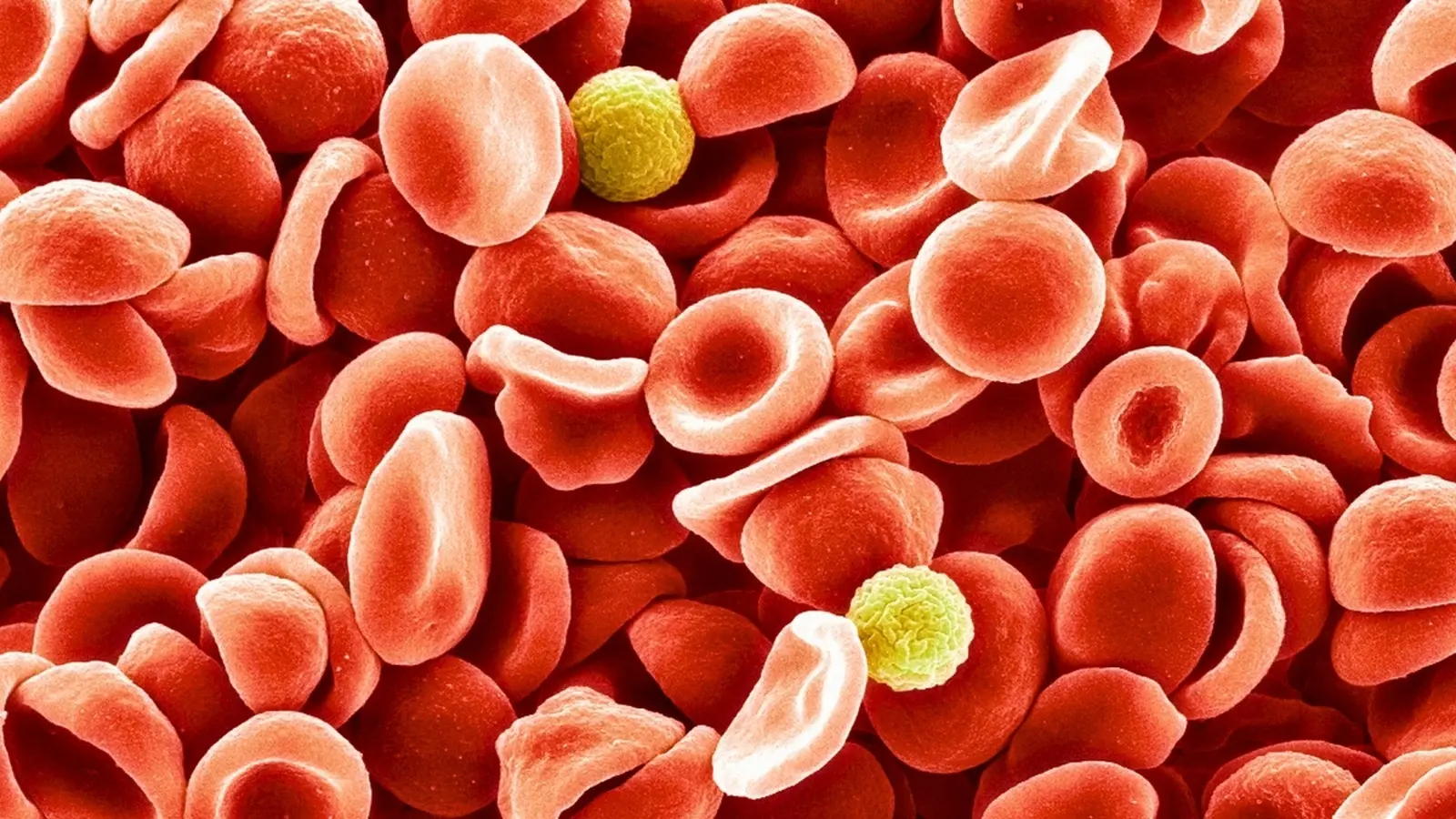
In 1972, clinicians noticed something strange: a pregnant woman's blood sample lacked a surface molecule that all other known red blood cells carried. For more than five decades that absence was an unresolved oddity. In 2024, a team of researchers from the UK and Israel finally traced the cause and described a previously unrecognized human blood group system tied to that missing marker.
How a single missing molecule reopened a 50-year case
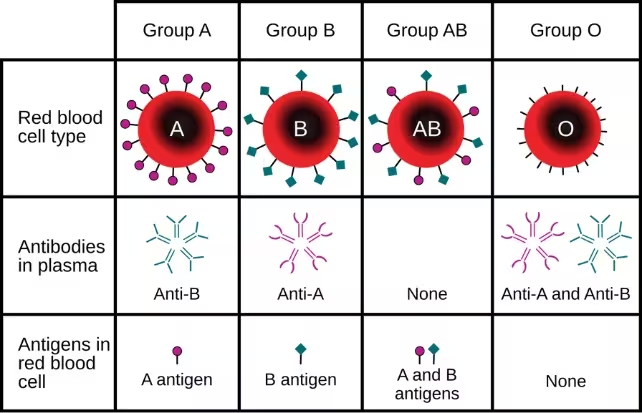
When most people hear "blood type" they think of ABO and Rh. But human red blood cells wear a wide assortment of proteins and sugars on their surface that act as antigenic ID tags. These antigens tell the immune system which cells are "self" and which are foreign, a distinction that becomes critical during blood transfusion.
In routine testing, more than 99.9% of people carry an antigen known as AnWj. The 1972 patient's erythrocytes lacked that marker, and for years researchers wondered whether this was a laboratory anomaly, a transient condition or the hint of a rare inherited trait.
From genetic sleuthing to naming a new system
Decades of blood-bank records, case reports and painstaking lab work ultimately revealed the molecular culprit: mutations in the MAL gene. MAL encodes a small membrane-associated protein involved in stabilizing cell membranes and facilitating cellular transport. Because the AnWj antigen sits on that protein, the team named the newly defined classification the MAL blood group.
Hematologist Louise Tilley from the UK National Health Service, who led much of the long-term investigation, described the result as "a huge achievement" and a culmination of years of collaborative effort that will improve care for rare patients. Cell biologist Tim Satchwell of the University of the West of England emphasized the practical difficulty: "MAL is a very small protein with some interesting properties which made it difficult to identify and meant we needed to pursue multiple lines of investigation to accumulate the proof we needed to establish this blood group system."
How researchers proved the gene was responsible
To move beyond correlation, the team used functional genetics. They introduced a normal MAL gene into blood cells that were AnWj-negative and observed that these cells began displaying the AnWj antigen. This restoration experiment provided decisive evidence that MAL — and not an unrelated factor — determines the presence of the AnWj antigen.
All patients identified with the AnWj-negative phenotype in the study shared the same MAL mutation when both copies of the gene were affected. Intriguingly, the researchers also found three people who lacked AnWj without carrying the mutation, indicating that some blood disorders or regulatory mechanisms can suppress antigen expression.
Clinical implications: why this matters for transfusions
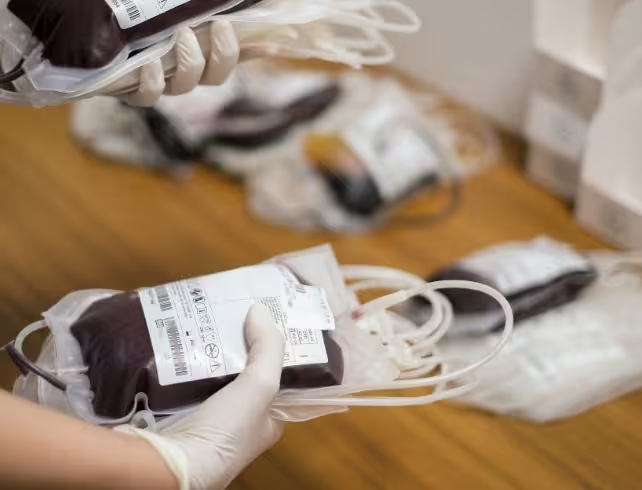
Blood transfusion depends on matched antigens. If donor and recipient antigen profiles mismatch, antibody reactions can range from mild to life-threatening. Transfusion reactions can be severe.
Although the MAL/AnWj system will affect only a tiny fraction of transfusions — it is extremely rare — identifying it matters because rare mismatches have caused disastrous outcomes historically. Now that the genetic markers underlying the AnWj-negative state are known, laboratories can test whether a patient's phenotype is inherited or the result of antigen suppression. That distinction can flag other underlying medical conditions and guide transfusion strategy for those individuals.
What we still need to learn
Key questions remain. Why does the AnWj antigen appear only after birth? Does the MAL mutation confer any subtle physiological effects beyond changing antigen display? In the cohort studied, no consistent disease or other cell abnormalities were linked to the mutation, but the sample size is small because such cases are so rare.
Future work will address population prevalence, the mechanisms that suppress antigen expression in non-mutated patients, and the best ways to incorporate MAL screening into blood-bank workflows without creating unnecessary testing burdens.
Expert Insight
"Discoveries like this remind us that human biology still holds surprises," says Dr. Amelia Hart, a fictional but realistic transfusion medicine specialist. "For blood services, the challenge is practical: identify those who need special care, make compatible blood available, and do so cost-effectively. Knowing the gene behind a rare antigen lets us develop precise genetic tests that can be used when serology is inconclusive."
For patients who are AnWj-negative due to inherited MAL mutations, genetic testing now offers clarity: inheritance vs. suppression, personalized transfusion planning, and early warning of possible complications. For researchers, the MAL discovery highlights how careful archival data, modern molecular techniques and international collaboration can solve puzzles left unresolved for generations.

“The cosmos has always fascinated me. I write about space missions, astronomy, and the technologies pushing humanity beyond Earth.”

Discussion
Leave a Comment