
5 Minutes
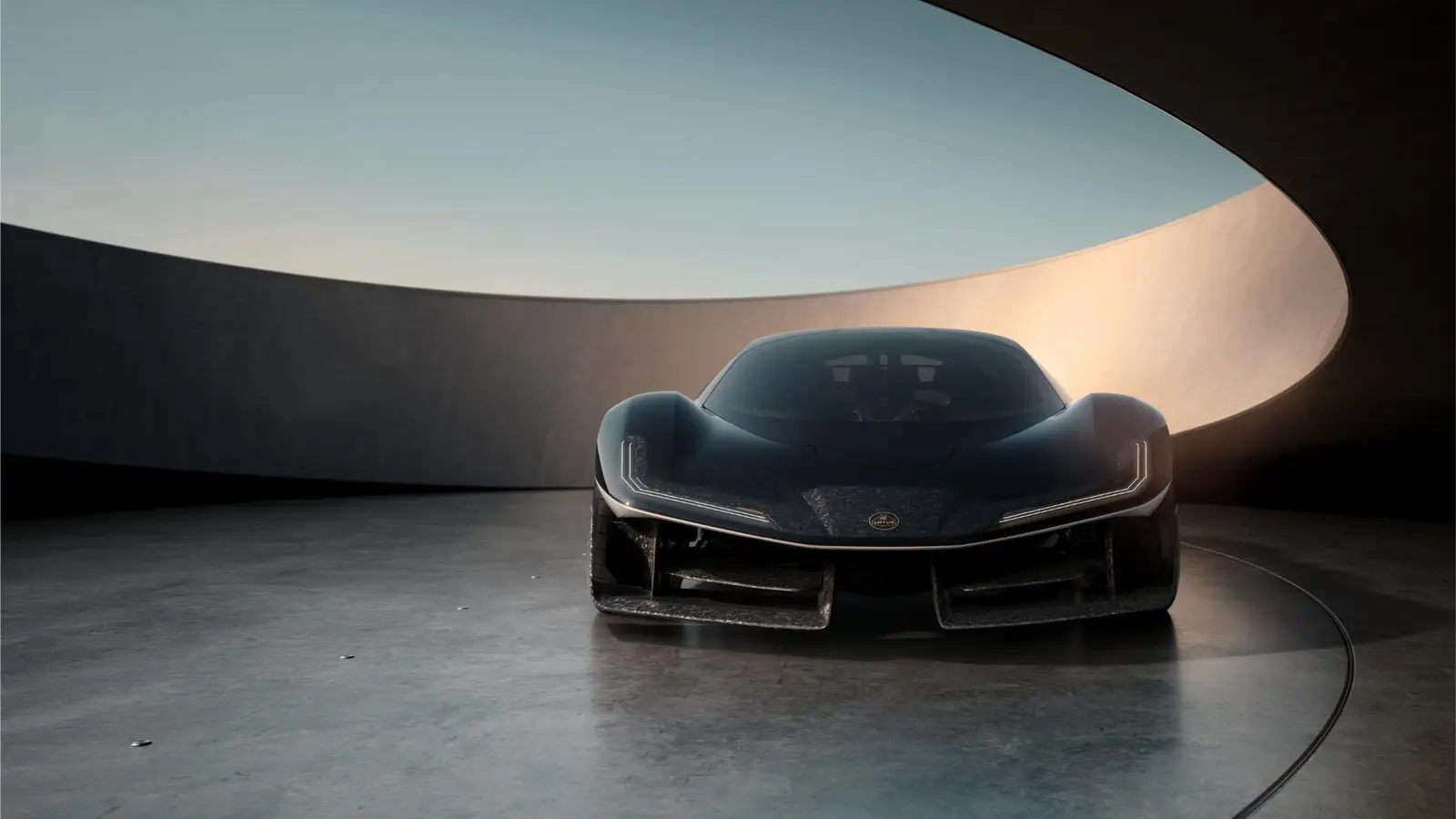
Picture a wedge slicing through silence—sharp, purposeful, impossible to ignore. That image is the one Lotus desperately needs right now: an Esprit reborn as a mid-engine hybrid with more than 1,000 PS on tap.
Why a V8 matters more than badge nostalgia
Under Geely since 2017, Lotus chased a brave but brittle all-electric future. The investments were real. The ambitions were Porsche-sized. And the result was expensive. After losing more than €2.8 billion across recent years, management has rewritten the playbook.

Focus 2030 is not a victory lap. It is damage control with purpose. Lotus will move to a roughly 60 percent plug-in hybrid and 40 percent full-electric output for the next phase, trim annual volume targets to something realistic, and bring internal combustion engines back into the fold as a deliberate, customer-led step toward full electrification.
Which brings us to the Type 135, the car that must prove the strategy. Leaks and a teased rear image suggest the old Esprit name may return. If true, that name carries weight—and a demand to pair classic character with modern engineering. Lotus says the Type 135 will be a hybrid V8 supercar built in Europe and tuned to deliver north of 1,000 PS.

So what will that powertrain look like? Lotus has confirmed the engine comes from Horse Powertrain, the Geely-Renault joint venture. Horse already impressed with compact three- and four-cylinder units and a featherlight, hot-vee 3.0-liter V6 called the W30. That V6, with a 90-degree bank angle, an 8,000 rpm redline, and a weight of about 160 kilograms, hints at the engineering route for the V8: add two cylinders, keep the compact layout, and tune it aggressively.
The plan appears to be an electrified V8 where the internal combustion core supplies the lion's share of power—roughly 700 hp alone—while one or two electric motors add the remaining push to reach the 1,000-plus PS headline. Lotus will opt for a hybrid-electric vehicle architecture rather than a heavy plug-in package, which should keep mass down and preserve the brand's obsession with lightness.

Lightness matters. Lotus has always traded on Colin Chapman’s creed: simplify, then add lightness. The original Esprit flirted with sub-1,300 kilogram kerb weights late in its life. This new Esprit is targeting around 1,600 kilograms, ambitious but plausible when you consider a compact bespoke V8, small battery pack, and modern materials. The result could be an extraordinary power-to-weight ratio—and a driving experience that roars rather than hums.
There are hints that Lotus will pair that hardware with axial-flux electric motors—the same type praised by the CEO and quietly adopted by other supercar makers for their power density. Two motors up front, a single motor integrated at the gearbox, torque vectoring, an 8,000-plus rpm V8 at the rear: it is a recipe that reads like a modern reinterpretation of a classic mid-engine supercar.
Practical reality intrudes, of course. Lotus cut hundreds of jobs and paused local production as it grapples with losses around €2.9 billion to date. One halo car cannot fix that on its own. But a successful Esprit would do more than sell examples. It could restore faith in the brand, validate Horse Powertrain as a serious engine-maker, and show dealers and buyers that Lotus still understands how to make a proper sports car.

The design language reportedly draws from Lotus’ Theory 1 concept of 2024, with a wedge feel and clean geometry that nods to the original Esprit without becoming a pastiche. Seating may be conventional two-seat, though the idea of a three-seat central driving position remains tantalizing—a podium-worthy flourish that would turn heads and headlines.
There are obvious rivals in the works: Ferrari and Lamborghini have their own hybrid V8 programs, and each Italian contender mixes combustion and electric assistance in different ways. Lotus is betting on a lighter, more driver-focused approach. Smaller battery, bespoke V8, razor-edged chassis tuning. That is the gamble.
If Lotus pulls this off, the Esprit could prove the company still knows how to build cars that feel alive—machines that reward a skilled hand and a hungry smile, not just spec comparisons on a spreadsheet.
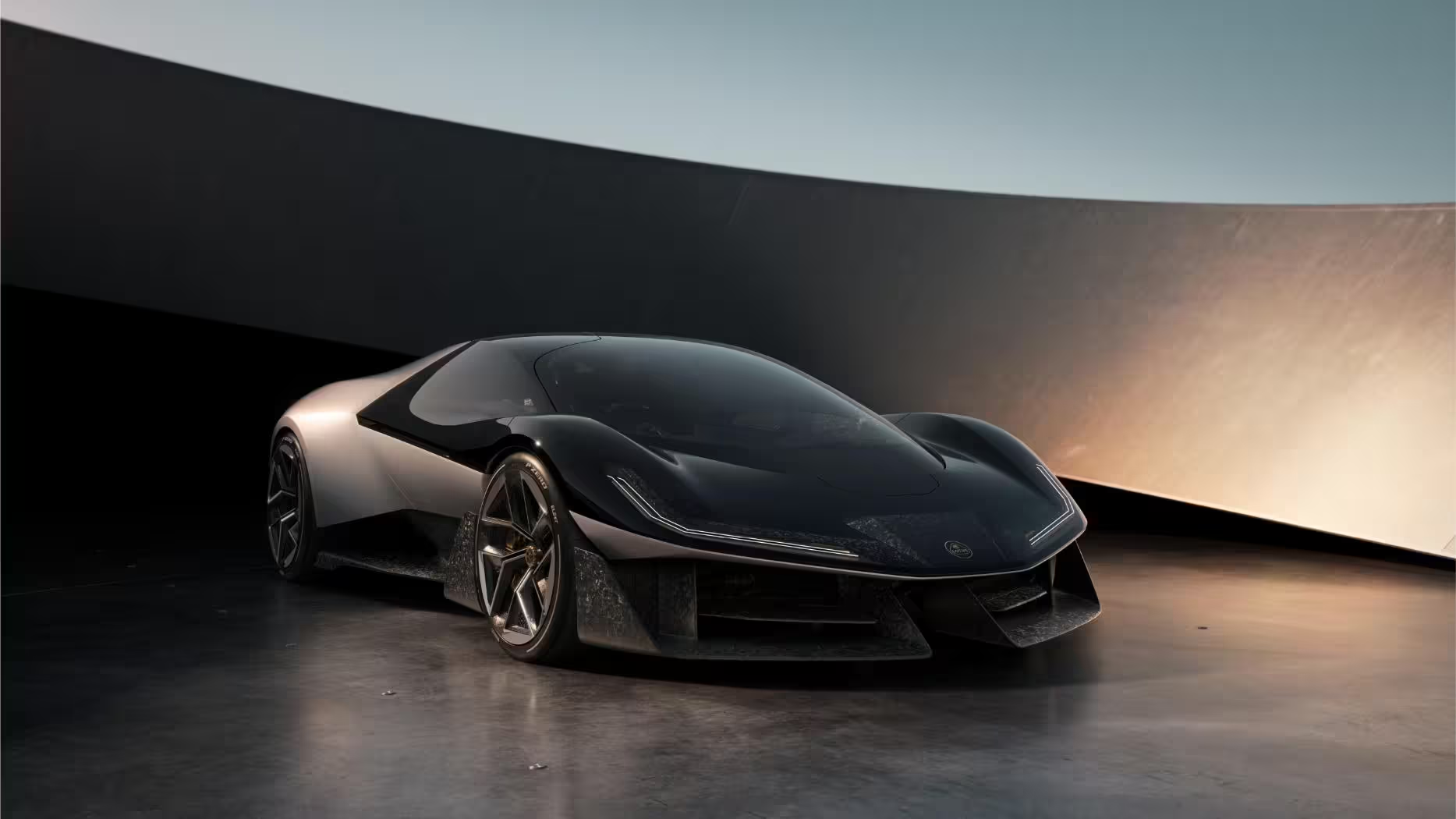
The road to 30,000 annual sales the company now targets will require a lineup, not a single star. Expect refreshed Emira variants, a likely Elise revival with a Horse four-cylinder, and Eletre X iterations that blend range-extender tech with performance. But the Esprit sits at the heart of the narrative: a symbol that Lotus wants to remember its roots even as it pushes forward into a hybrid future.
Will it be enough? Time will tell. For now, the wedge returns, louder and heavier than before but carrying the promise of genuine drama behind the wheel.
Source: autoevolution



Leave a Comment