

Have you ever poured a beer into a clear glass, left it in the sun for a few minutes and come back to a strange, skunky smell? That unpleasant aroma has a precise chemical origin — and it’s the reason breweries, designers and packaging engineers have been waging a century-long debate over bottle color. This article unpacks the chemistry behind "lightstrike" (or skunking), the historical forces that pushed amber, green and clear glass into the marketplace, and the modern fixes — from photostable hop extracts to aluminum cans — that finally shifted the balance.
A skunk in the bottle: how lightstrike (skunking) actually happens
Lightstrike — commonly called skunking by brewers and drinkers — is a photochemical reaction that converts certain hop-derived molecules into foul-smelling sulfur compounds. It isn’t a vague form of spoilage. It’s a specific chain of molecular events triggered by light, particularly the blue and near-UV wavelengths between roughly 350 and 500 nanometers.
From hops to MBT: the molecular storyline
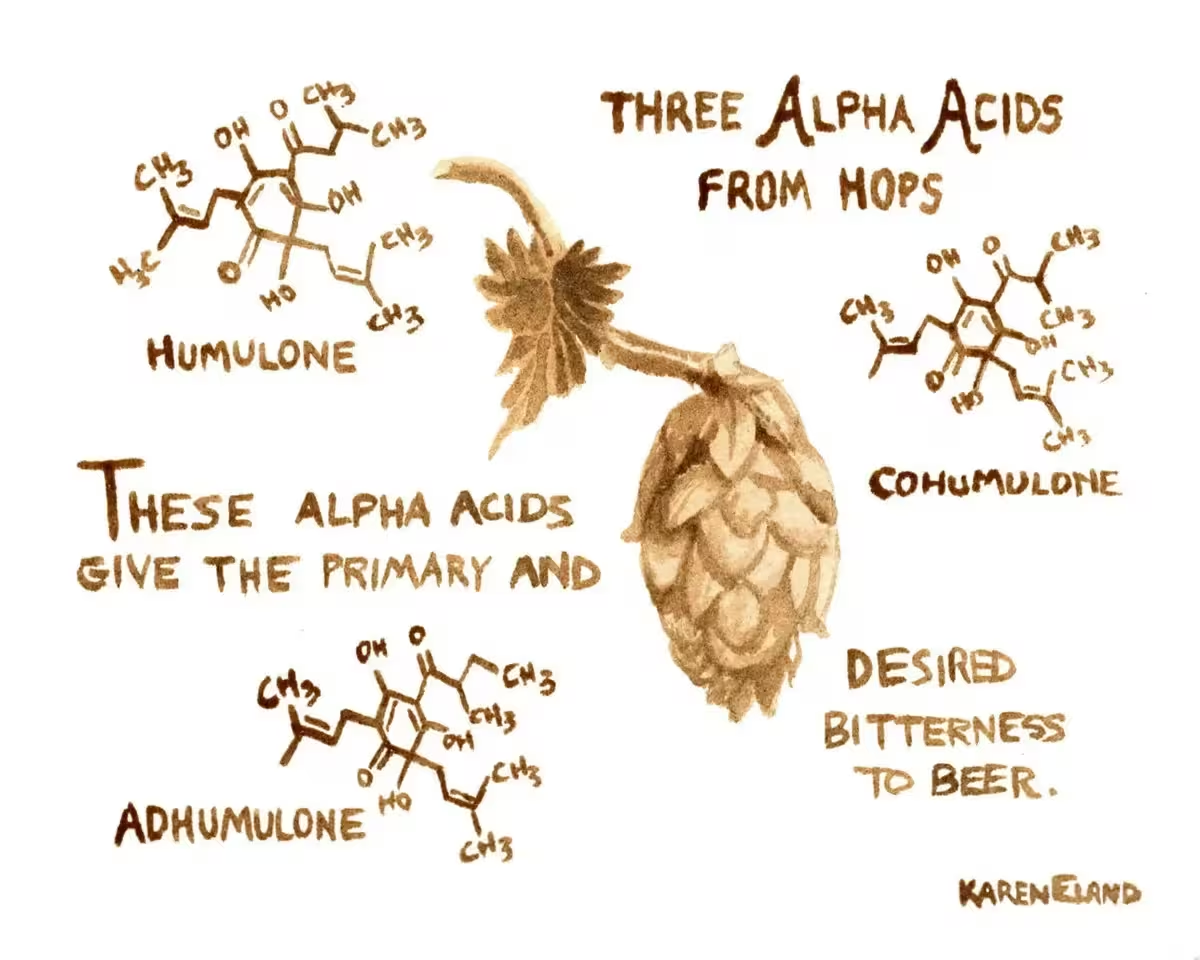
- Hops contain bitter compounds called alpha acids. During brewing, these alpha acids are transformed into iso-alpha acids (or iso-humulones), the molecules that give beer its bitterness and contribute to aroma complexity.
- When photons in the blue/near-UV range hit these iso-alpha acids, the energy can break chemical bonds — a process known as photolysis. That generates short-lived radical fragments.
- Riboflavin (vitamin B2), present in many beers, acts as a photosensitizer. It absorbs light efficiently and catalyzes the formation of reactive radicals, accelerating the reaction.
- Those radicals react with trace sulfur-containing compounds naturally present in beer to form 3‑methyl‑2‑butene‑1‑thiol (MBT). MBT is extraordinarily odorous and chemically similar to the compounds that make skunk spray so pungent.
What makes MBT remarkable (and infuriating to brewers) is the human nose’s sensitivity: people can detect MBT at concentrations as low as a few parts per trillion. A few seconds of sunlight on a clear-bottled beer can be enough to make MBT and ruin the sensory profile irreversibly.
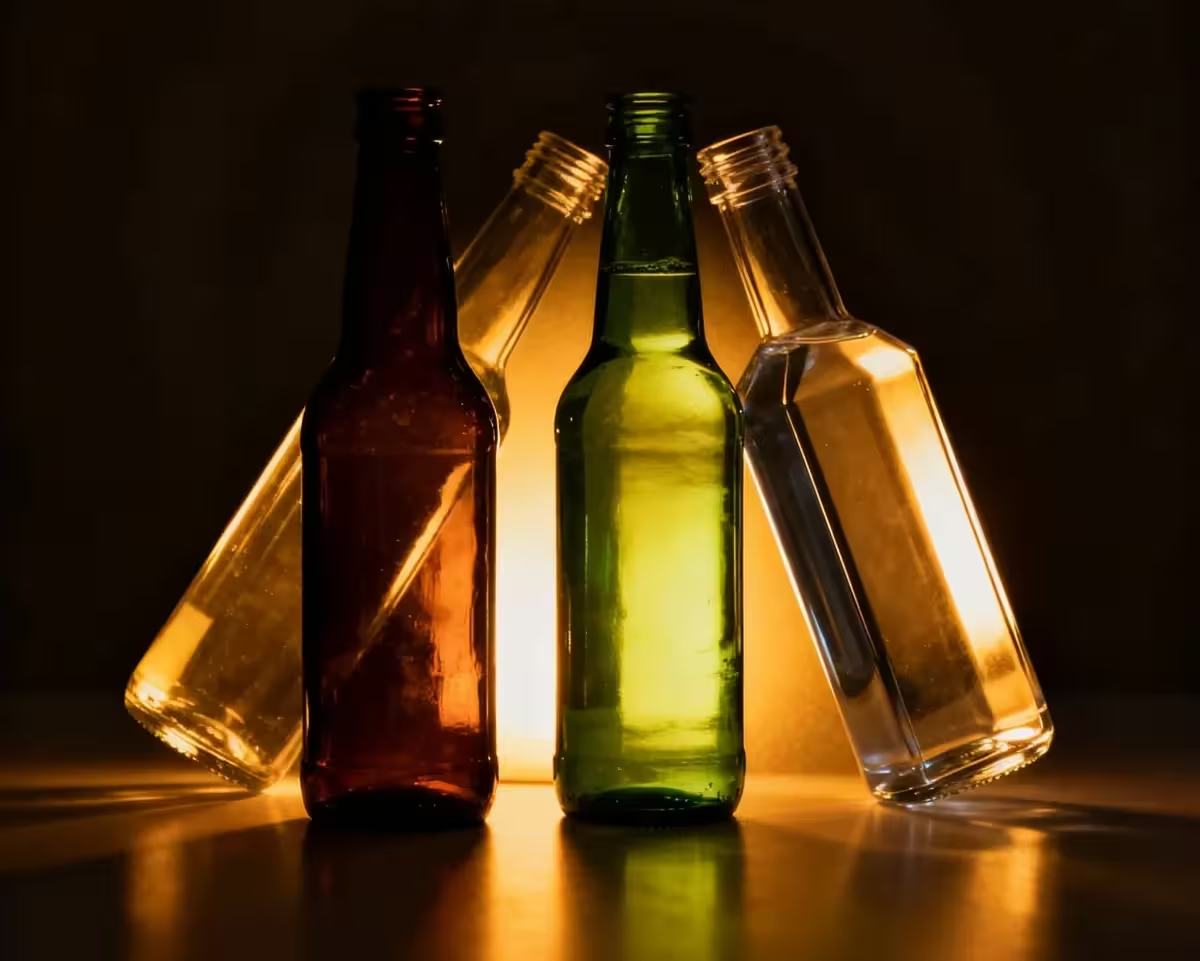
Amber glass: an ancient fix with scientific muscle
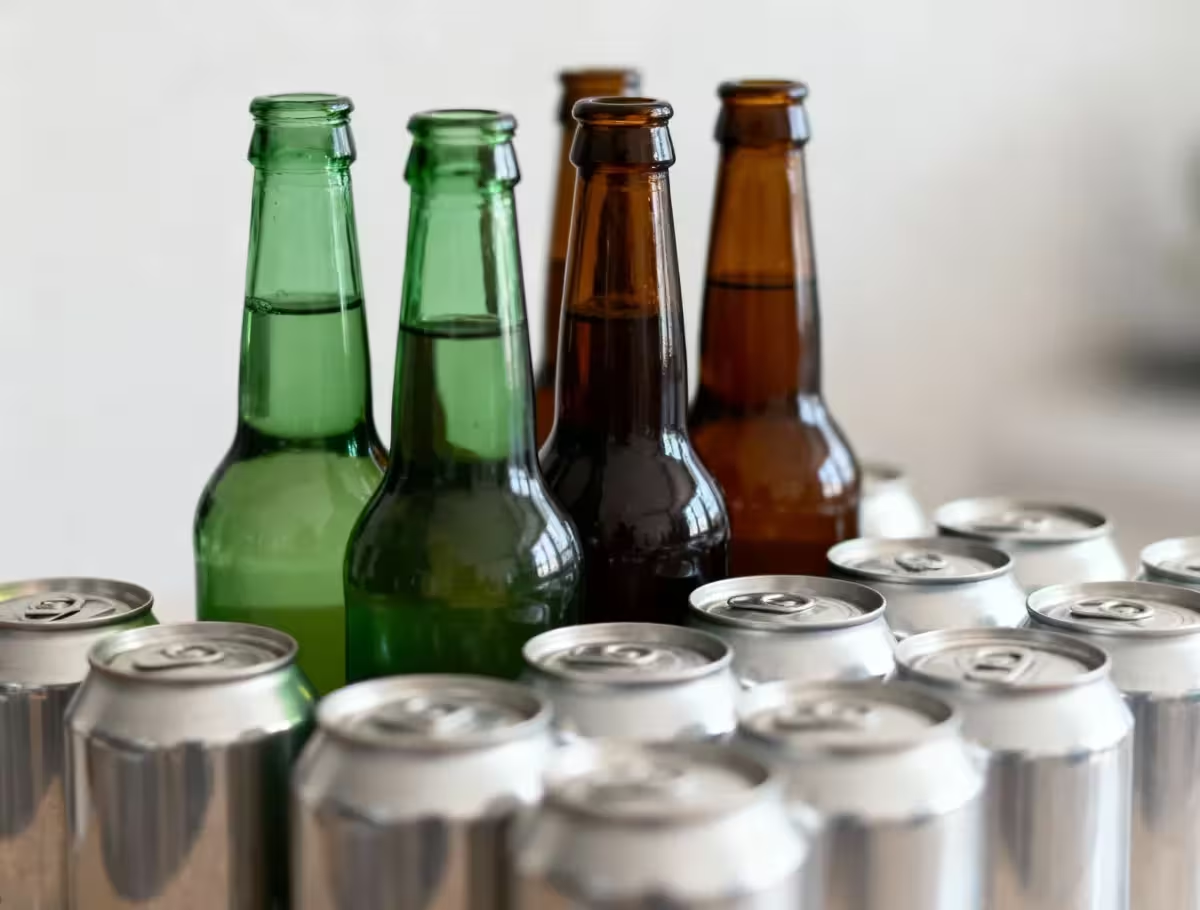
Amber (brown) glass long ago became the pragmatic gold standard for beer. The reason is simple: composition. Amber glass is produced by adding iron, sulfur and carbon (or other coloring oxides) to the molten glass. That mixture strongly absorbs UV and the blue visible wavelengths that trigger photochemical degradation.
Amber glass typically blocks most wavelengths below ~450–500 nm — precisely the light that starts the lightstrike cascade. Some modern amber formulations can filter out over 99% of harmful UV. The result is a straightforward, passive defense: less damaging light reaches the hop molecules, so far fewer radicals and less MBT are produced.
Historically, the dominance of amber glass had another ingredient: early glassmaking. In the 16th through 19th centuries, impurities in sand and fuel produced naturally darker glass, and brewers noticed those bottles preserved beer better. As glassmaking industrialized, amber glass became both a protective technology and an industrial standard.
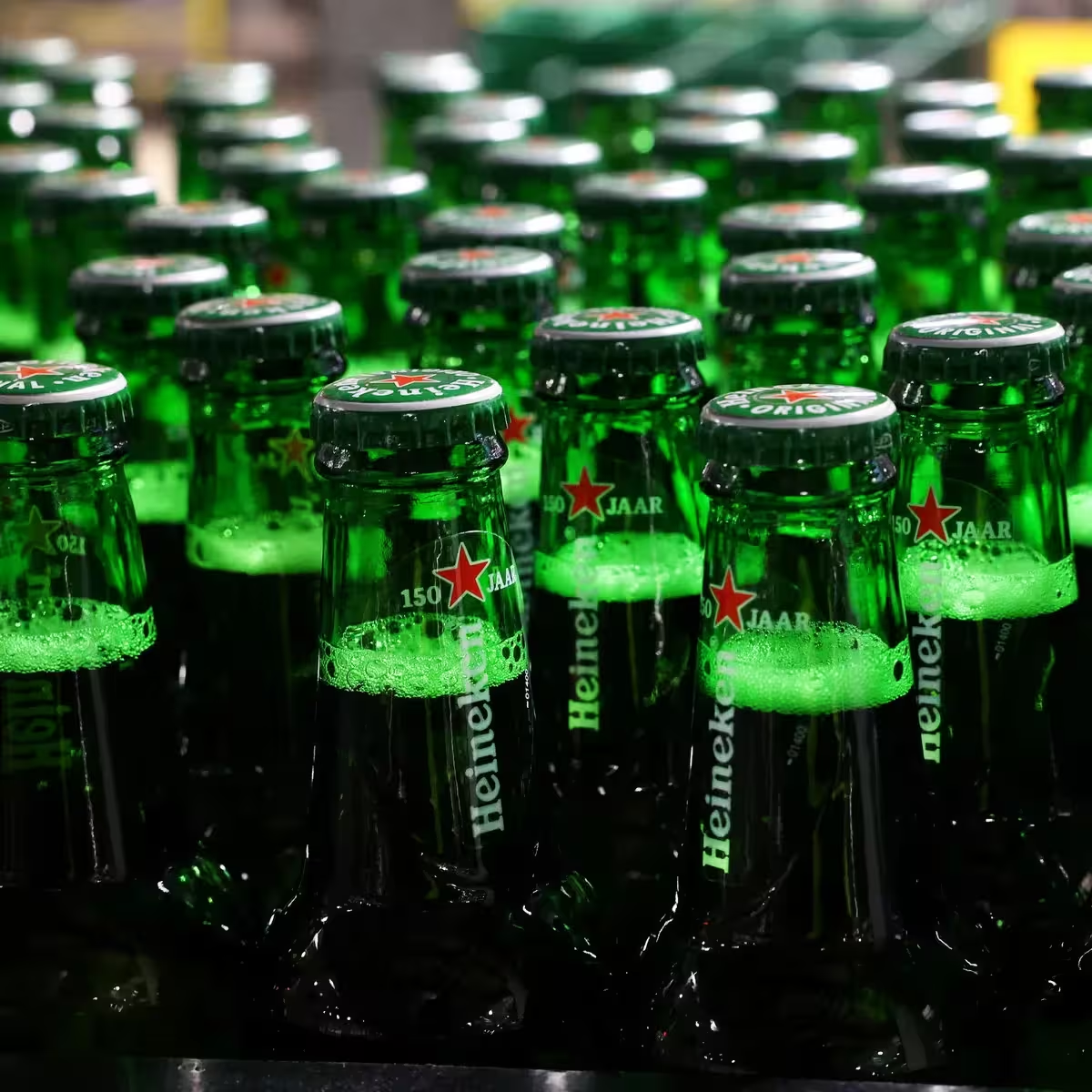
Green bottles: a wartime compromise that became style
Green bottles sit between amber and clear in terms of protection. They filter some UV, but permit more blue light than amber, leaving the beer more vulnerable to lightstrike. So why are so many iconic, expensive beers packaged in green glass?
The short answer is history and marketing. During World War I and II, the specific raw materials and furnace conditions needed for amber glass were diverted to war industries or became scarce. Producers switched to green glass, which could be made with more commonly available oxides like iron and sometimes chromium or copper traces. After the wars, import markets — especially in the U.S. — associated green bottles with European, premium beers. The green color became a visual cue for quality and prestige.
Over time, several major brands embraced green as part of their identity. That left a cultural imprint: to many consumers, the green bottle signalled imported sophistication, even though it provided less photoprotection than amber.
Clear bottles: selling sunlight and the marketing trade-off
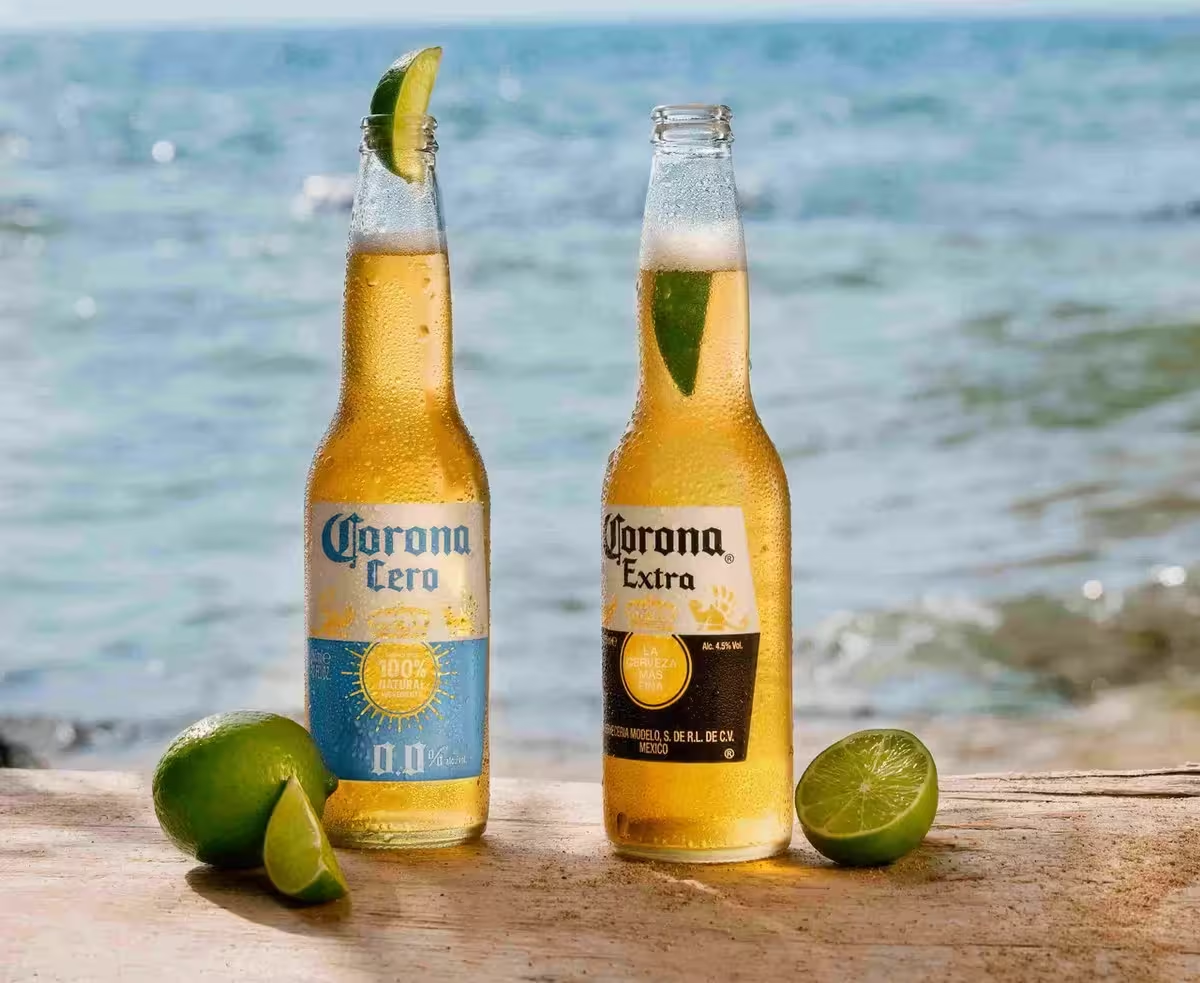
Clear, or flint, glass offers no photoprotective filtering: all visible and UV wavelengths pass through. That makes clear bottles the most prone to lightstrike. Yet some brands deliberately choose transparency. Why? For marketing — the visual appeal of the beer’s color, the "golden" glow in sunlight and the immediate shelf attraction.
Brands like Corona built an identity around the idea of sun, sand and a cold, clear bottle. To manage the risk, brewers used complementary strategies: adding citrus aroma and acidity (lime wedge ritual), optimizing supply-chain lighting, and, more recently, using photostable hop extracts. But those are mitigations, not cures: MBT can still form if enough light reaches sensitive hop molecules.
Modern chemistry and packaging: real fixes for lightstrike
Recent decades brought two parallel solutions: alter the hops-derived chemistry, or alter the bottle’s interaction with light. Both approaches significantly reduced the number of beers ruined by light.
Photostable hop extracts
Chemical engineers developed modified hop bittering agents that resist photolysis. These include rearranged iso-alpha acid derivatives — often marketed with trade names such as "light-stable" hop extracts or RIAA (rearranged iso-alpha acids). By changing the molecular structure, they reduce the formation of radical species upon light exposure, cutting MBT yields dramatically.
These photostable bittering agents allow brewers to use clear or green glass more safely while preserving bitterness. Many large-scale brewers now use them in formulas where packaging transparency or brand identity is essential.
Coatings, liners and invisible UV filters
Another technical fix is applying transparent, anti-UV coatings to glass. These layers block the harmful portion of the spectrum while leaving the bottle visually clear. Inside, inert liners prevent metal uptake (in cans) from altering flavor. Deploying UV-blocking lacquer or exterior coatings allows some brands to preserve the look of clear glass without conceding full vulnerability.
The aluminum can revolution
If amber glass is the traditional technical winner and photostable hops the chemical workaround, aluminum cans are the comprehensive solution. Metal cans are opaque to all light, preventing photochemical reactions entirely. They also provide excellent barriers against oxygen — a second major agent of flavor degradation over time.
Beyond protection, cans are lighter, cheaper to ship, chill faster and are highly recyclable. Those technical advantages have shifted market share rapidly: in many countries, cans now account for a growing majority of packaged beer sales. But cans trade tactile experience for convenience — and many drinkers still prize the heft and sound of a glass bottle.
Expert Insight
“Photochemistry is often invisible to consumers, but it has huge consequences for flavor,” says Dr. Martin Keller, a sensory chemist and packaging scientist. “By understanding which wavelengths trigger reactions and why certain hop molecules are susceptible, breweries can choose a combined strategy: packaging that limits light exposure, photostable bittering agents, and supply chains that control lighting conditions. With those three levers, you effectively eliminate the risk of skunking without sacrificing brand identity.”
Dr. Keller adds, “It’s an interdisciplinary problem that sits at the junction of organic chemistry, materials science and sensory perception. That’s why gardeners, historians and engineers all played roles in the century-long evolution from dark, heavy bottles to the aluminum cans dominating shelves today.”
Packaging science and the trade-offs that shape choices
Choosing a container is a strategic decision that balances protection, cost, sustainability and brand image. Key considerations include:
- Photoprotection: Amber glass and cans minimize lightstrike risk; green glass provides partial protection.
- Oxygen barrier: Cans and properly capped bottles limit oxygen ingress better than some packaging alternatives.
- Supply-chain exposure: Retail lighting, warehouse windows and transport conditions can subject bottles to damaging wavelengths.
- Consumer perception: A clear bottle may increase impulse buys due to visual appeal; an amber bottle conveys tradition and technical prudence.
- Sustainability: Aluminum is highly recyclable and lightweight, reducing carbon footprint in distribution; glass recycling rates and lifecycle impacts vary regionally.
When breweries evaluate packaging, they weigh sensory risk (skunking and oxidation) against marketing goals and environmental targets. The modern landscape reflects a blend of science and craft: many small brewers still prefer glass bottles for sensory or aesthetic reasons and adopt mitigations such as photostable hops or controlled lighting, while large-volume brands increasingly favor cans for efficiency and protection.
Where research and technology are heading
Future advances are likely to continue along three lines: smarter materials, better hop chemistry and supply-chain sensing. Promising developments include transparent materials that selectively block blue light while remaining crystal clear, improved hop breeding and extraction that reduce sulfur precursors, and IoT-based storage monitors that flag excessive light or oxygen exposure during transport and on-shelf display.
Academic groups and industry consortia are also studying sensory thresholds in more detail, mapping how very low concentrations of MBT interact with other aroma compounds. That helps brewers quantify acceptable exposure levels and design blends that mask or resist off-notes without sacrificing the beer’s character.
From a consumer perspective, the practical takeaways are simple: keep bottled beer out of direct sunlight, minimize exposure to bright retail lighting when possible and, if you prize consistent sensory quality, consider canned formats for beer that will spend time in bright environments.
Packaging design once reflected raw material shortages, tradition and aesthetic choice. Today it’s governed by photochemistry and materials science. The century-long contest among brown, green and clear bottles tells a larger story about how chemistry, history and marketing shape even the smallest pleasures — like a cold beer on a sunny afternoon.
Whether you prefer the heft of a glass bottle or the convenience of a can, an understanding of lightstrike and packaging science makes that choice more informed. Next time you reach for a cold one at midday, you’ll know exactly what’s at stake: a few photons can alter a complex brew in an instant.

“The cosmos has always fascinated me. I write about space missions, astronomy, and the technologies pushing humanity beyond Earth.”

Discussion
Leave a Comment