
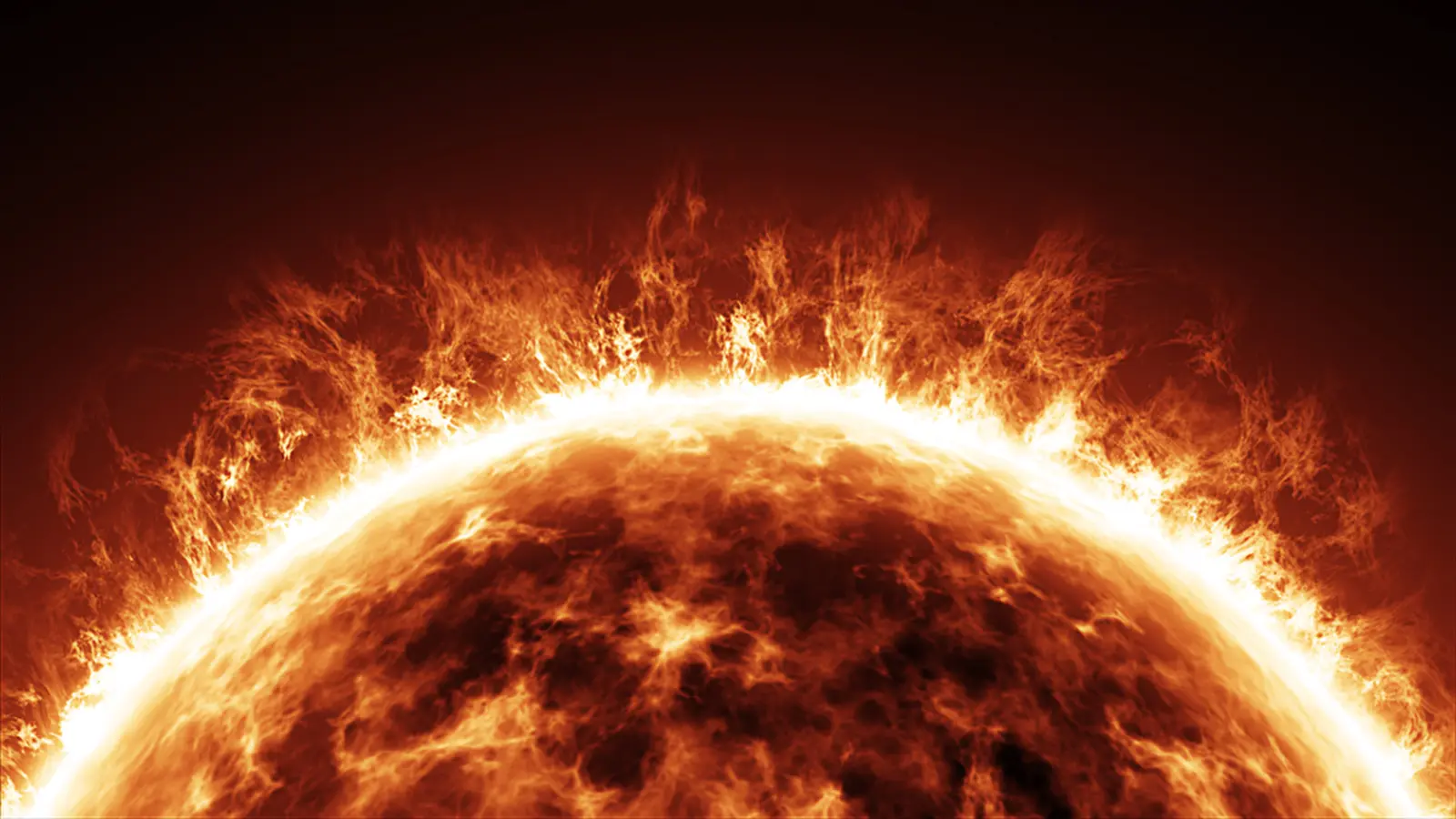
Scientists have identified small-scale torsional Alfven waves in the Sun's corona that appear to help both heat the outer atmosphere and push the solar wind away from the Sun. These subtle twisting waves offer a new piece of the puzzle behind corona temperatures and the forces that launch charged particles toward Earth.
Small waves, big effects
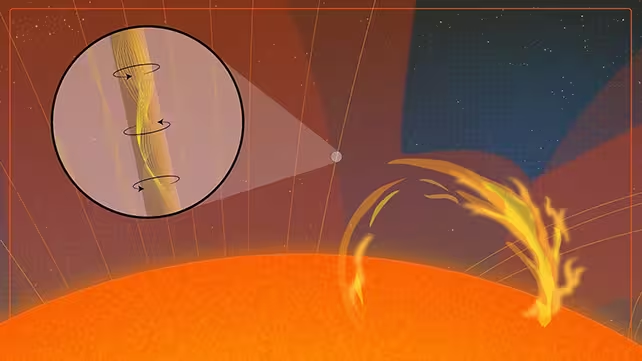
Alfven waves are magnetized oscillations that travel along magnetic field lines. In the corona, researchers observed tiny torsional variants — think of them as miniature twisting motions along a magnetic strand. Although individually weak, collectively these waves may transfer enough energy to heat the corona to millions of degrees and add momentum to the plasma, helping the solar wind escape the Sun's gravity.
How researchers detected them
Using high-resolution solar imaging and spectroscopic data, teams tracked the telltale signatures of torsional motion in coronal structures. The new detections let scientists compare live behavior with theoretical models of Alfven wave turbulence. According to lead researchers, having direct observations is a major step: it allows models that predict how turbulence converts wave energy into heat and bulk flow to be tested against reality.
Why this matters for Earth
Solar wind streams and sudden bursts from the Sun drive space weather. Strong geomagnetic storms can disrupt satellite communications, navigation systems and even terrestrial power grids. Improving models of how the corona is heated and how the wind is accelerated can sharpen space weather forecasts and give operators more lead time to protect infrastructure.
Looking ahead: testing theories across the corona
Now that small torsional Alfven waves have been detected, follow-up studies will map their occurrence across larger coronal regions, measure how much energy they carry, and evaluate competing heating theories. As one researcher noted, these observations provide a crucial validation point for models tying Alfven wave turbulence to coronal heating and solar wind acceleration.
Implications for missions and technology
Better physics in models feeds into operational space weather forecasting used by satellite operators, airlines, and power-grid managers. Future solar observatories and coordinated spacecraft campaigns will refine our picture of coronal turbulence and help quantify risks from geomagnetic storms.

“My work centers on sustainability, energy, and environmental science — examining how innovation can lead to a greener future.”

Discussion
Leave a Comment