
6 Minutes
Imagine opening your refrigerator and getting a simple alert: eat the broccoli tonight, the chicken tomorrow is risky. That small notice could save a stomachache, or worse. Food-borne illness quietly sickens hundreds of millions each year; a sharper sniff could prevent many of those cases.
Globally, more than 850 million people fall ill each year after consuming contaminated food, and over 1.5 million deaths are attributed to food-borne disease, according to the World Health Organization. Yet in most homes, our primary test for spoilage remains the human nose — a tool that is fast, free, and profoundly unreliable.
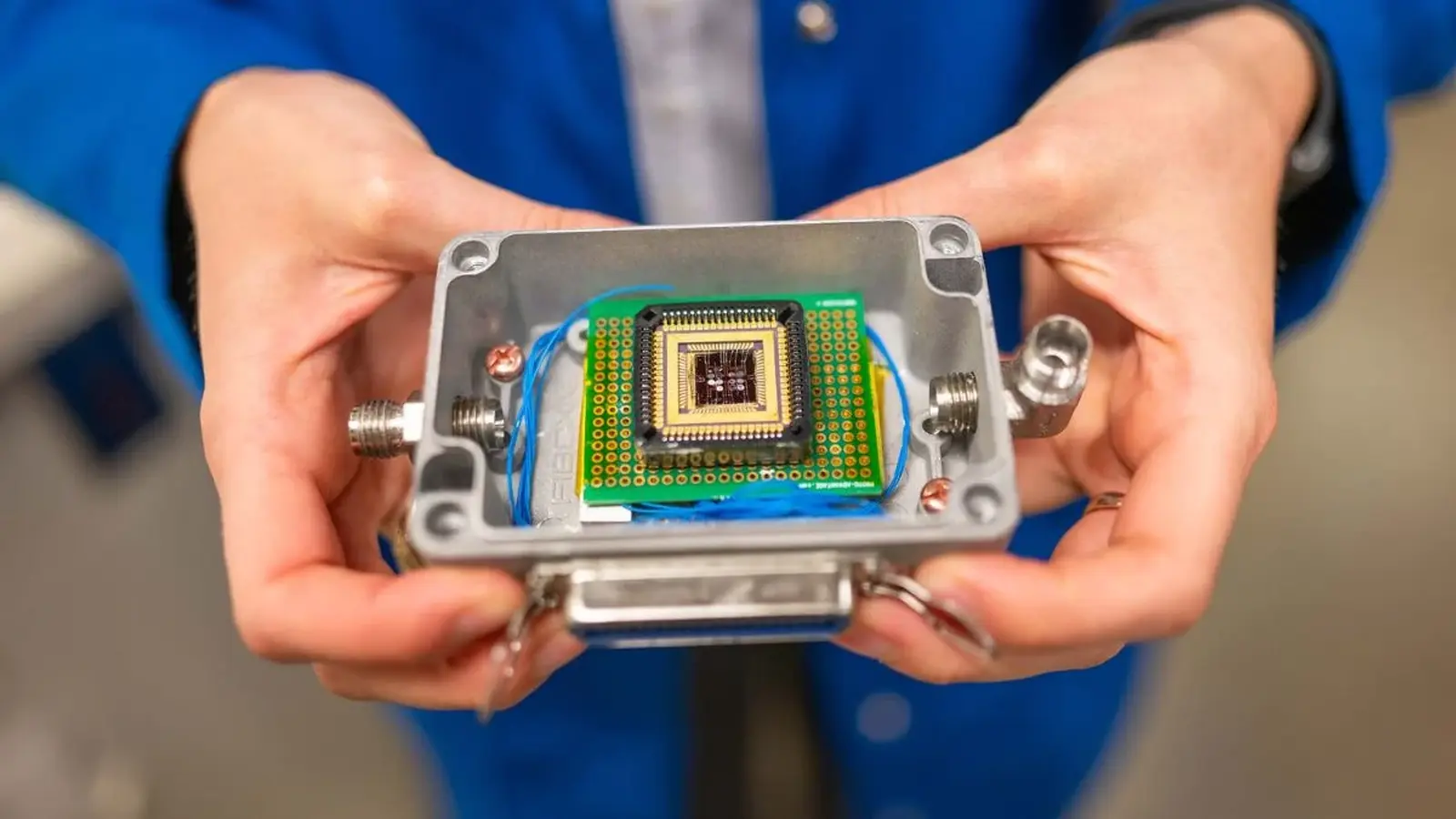
Engineers at the University of California, Berkeley decided to replace that guesswork with instruments. Their answer is an electronic nose, or e-nose: a compact chip outfitted with multiple chemical sensors, trained by machine learning to recognize the scent signatures of common foods, spoilage gases, and even trace allergens.

The electric nose, developed at UC Berkeley, can improve food safety by detecting gases associated with spoiled food or common food allergens.
Inside the electric nose
Think of the device as a bank of digital taste buds. Sixteen distinct sensors sit on a single chip. Each one is coated with a different sensing film that reacts electrically when certain volatile molecules pass by. Those electrical signals form a pattern. Pattern recognition algorithms then translate that pattern into an identification: milk, eggs, walnuts, peanuts, raw chicken left out overnight, and so on.
The team reports an overall prediction accuracy near ninety-three percent across sixteen food types. That figure includes tricky targets like tree nuts versus peanuts — a medically important distinction because peanuts are legumes and both categories rank among the most common causes of life-threatening allergic reactions in the United States. Detecting a scant 0.05 grams of isolated walnut, or roughly one-hundredth of a nut, demonstrates the system's sensitivity in controlled tests.
Two materials and two manufacturing choices give the design practical advantages. First, the sensors operate at room temperature thanks to semiconducting films built from carbon nanotubes. These nanomaterials offer exceptional surface area and robust electrical response without needing heat. Second, the sensing films can be deposited by a simple drop-casting step: a nanoparticle-rich solution is placed on the chip, rinsed, and dried, a workflow that scales more easily than many microfabrication techniques.
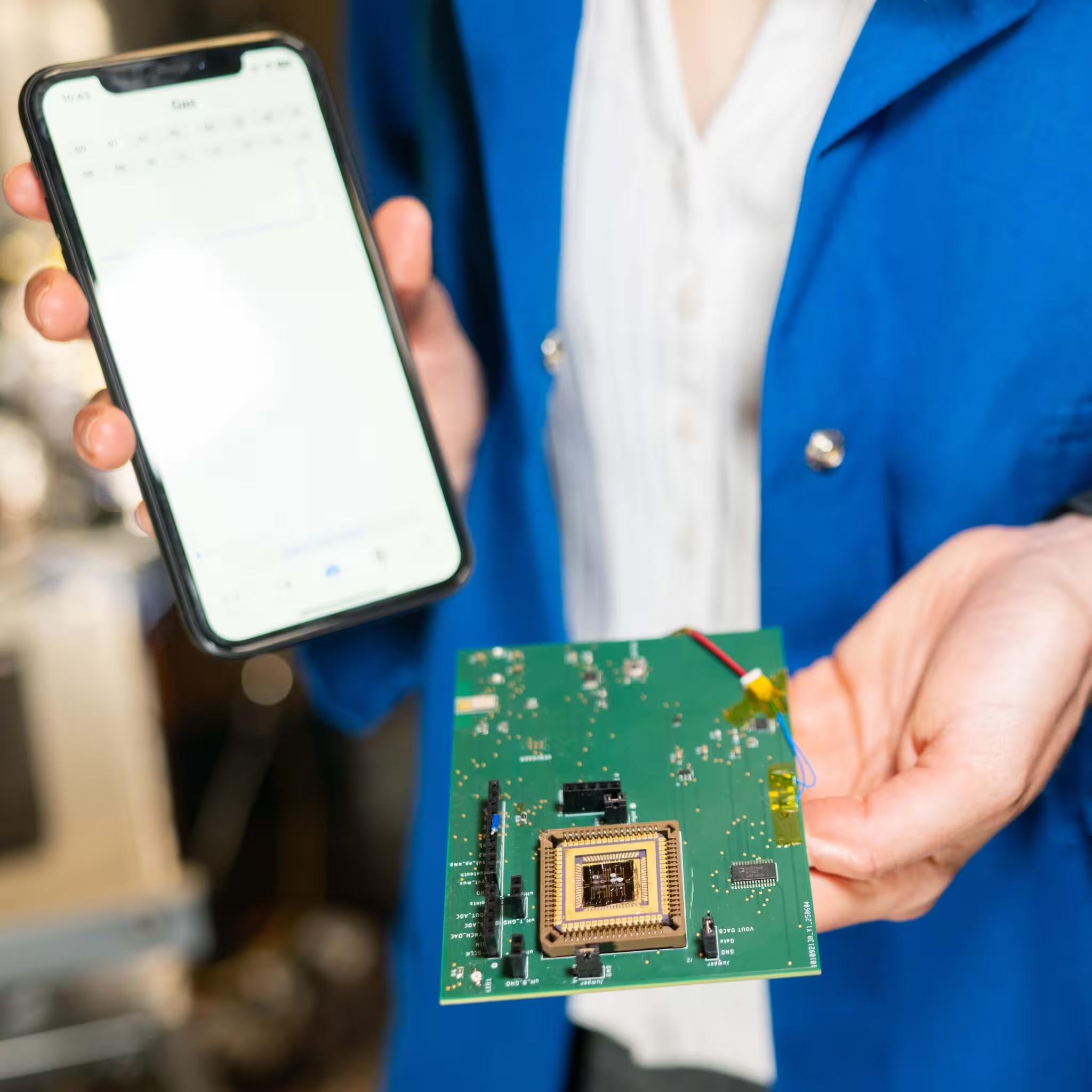
The portable e-nose that may one day allow on-the-go food safety detection.
Why this matters
Food safety is not only about avoiding a night on the sofa with a queasy stomach. It is a public-health challenge that intersects supply chains, storage infrastructure, and consumer behavior. The e-nose could be embedded into refrigerators, storage units, or packaging to provide continuous, automated checks for spoilage and allergens. Imagine a smart fridge that flags expiring produce or warns when a forgotten container hovers at unsafe temperatures.
Practical hurdles remain. Controlled lab conditions are not the same as the crowded, aromatic environment of a family refrigerator or a commercial kitchen. Detecting a single spoiled item among many, or teasing out baked-in nut traces from other ingredients, is substantially harder than recognizing an isolated sample. Likewise, effective deployment in low-resource settings will depend on addressing refrigeration gaps, intermittent power, and cost constraints.
The team is also pursuing a portable version that pairs with a smartphone app. Picture a diner swiping a handheld sensor near a sushi plate or a traveler checking a takeout container at a night market. There is clear consumer appeal, but price, robustness, and regulatory acceptance will determine whether such devices become commonplace.
Expert Insight
"What makes this approach promising is the combination of sensitive nanomaterials and modern pattern recognition," says Dr. Elena Marquez, a food-safety engineer not involved in the study. "Sensors alone are noisy. Machine learning turns that noise into a usable signal. But field testing is essential. Performance in the lab does not always translate to the real world where mixtures, humidity, and temperature vary."
The researchers themselves highlight the flexibility of the platform. You can re-train the e-nose on a new set of targets, tailoring it to regional diets or specific supply-chain risks. Beyond food, potential applications include noninvasive health monitoring: exhaled breath contains biomarkers for conditions such as diabetes and respiratory infections, and the same sensing principles could be adapted for biomedical screening.
Machine learning makes pattern recognition tractable; carbon nanotube films make it energy efficient; drop casting makes it manufacturable. Combined, these elements create a plausible pathway from bench to product. Still, large-scale validation, regulatory pathways, and the economics of consumer devices must be solved before the technology can reduce the burden of food-borne disease at scale.
Conclusion
The UC Berkeley e-nose is a practical advance in sensor design and applied machine learning. It does not promise a panacea, but it does offer a credible step toward automated, affordable detection of spoilage and allergens. If integrated thoughtfully into appliances and supply chains, such sensors could help prevent many avoidable illnesses and add a new layer of trust to how we store and consume food.
Source: sciencealert


Comments
atomwave
Wow, a fridge that tells me to eat the broccoli? Genius! If it actually works in real kitchens, could save so many food-poisoning cases. curious about price tho

Leave a Comment