
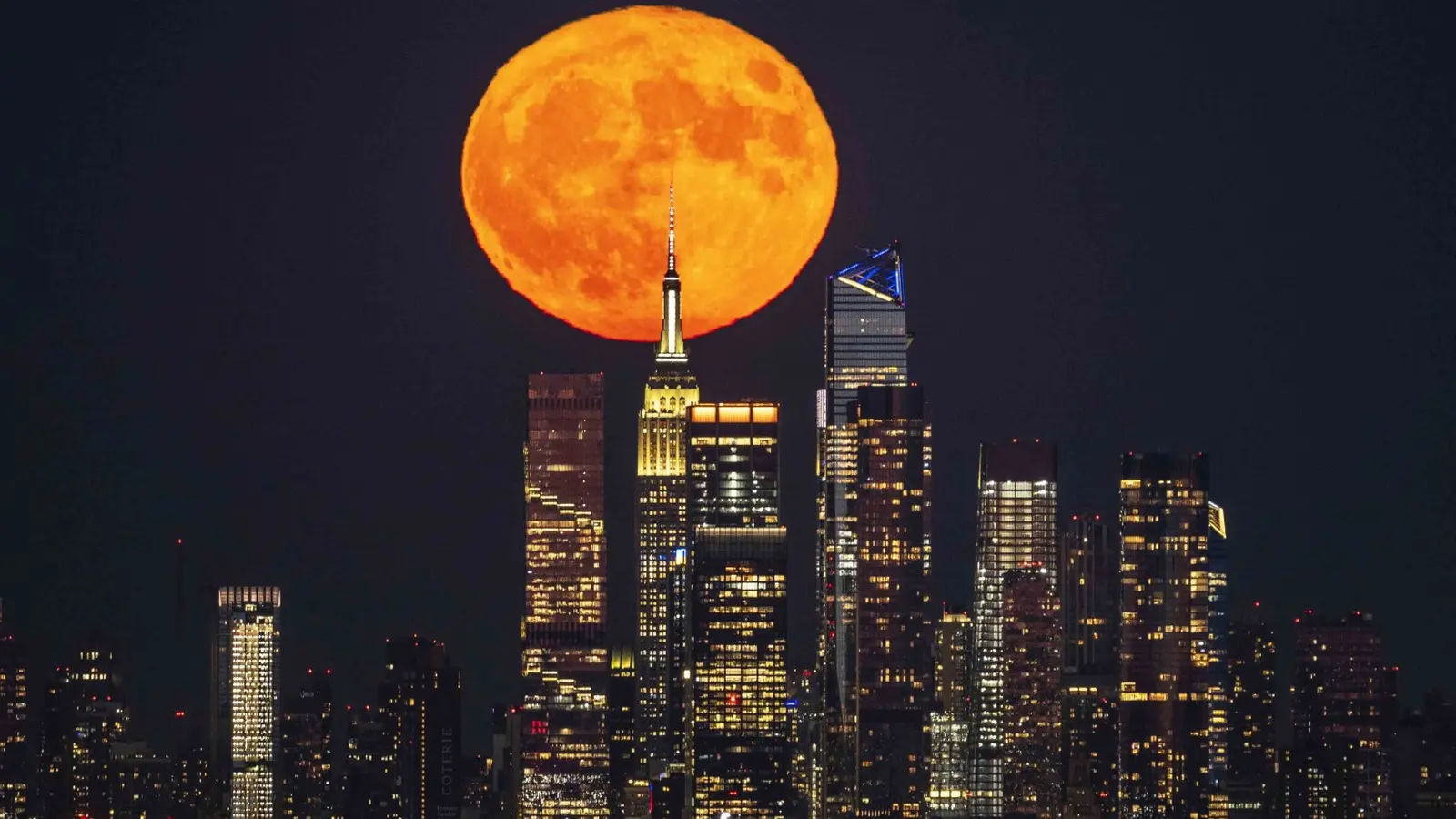
The full Moon on November 5, 2025, will be the brightest and closest of this year's three supermoons — a striking lunar spectacle many skywatchers won't want to miss. With the Moon near its perigee, the illuminated face we see from Earth will appear a touch larger and brighter than a typical full Moon, creating excellent conditions for Moon-gazing and astrophotography.
Why this Beaver Supermoon looks bigger
A "supermoon" happens when a full or new Moon coincides with lunar perigee — the point in the Moon's slightly elliptical orbit when it is closest to Earth. Because the Moon's orbit is not a perfect circle, that distance varies. The average distance at perigee is about 363,396 kilometers (225,623 miles), while at apogee it averages roughly 405,504 kilometers (251,932 miles).
The Beaver Supermoon on November 5 will come within approximately 356,980 kilometers of Earth, making it the closest full supermoon since February 2019 (when perigee was about 356,846 kilometers). That proximity translates into a modest but noticeable increase in apparent size and brightness — a delightful detail for observers and photographers alike.
When and how to watch: simple tips for skywatchers
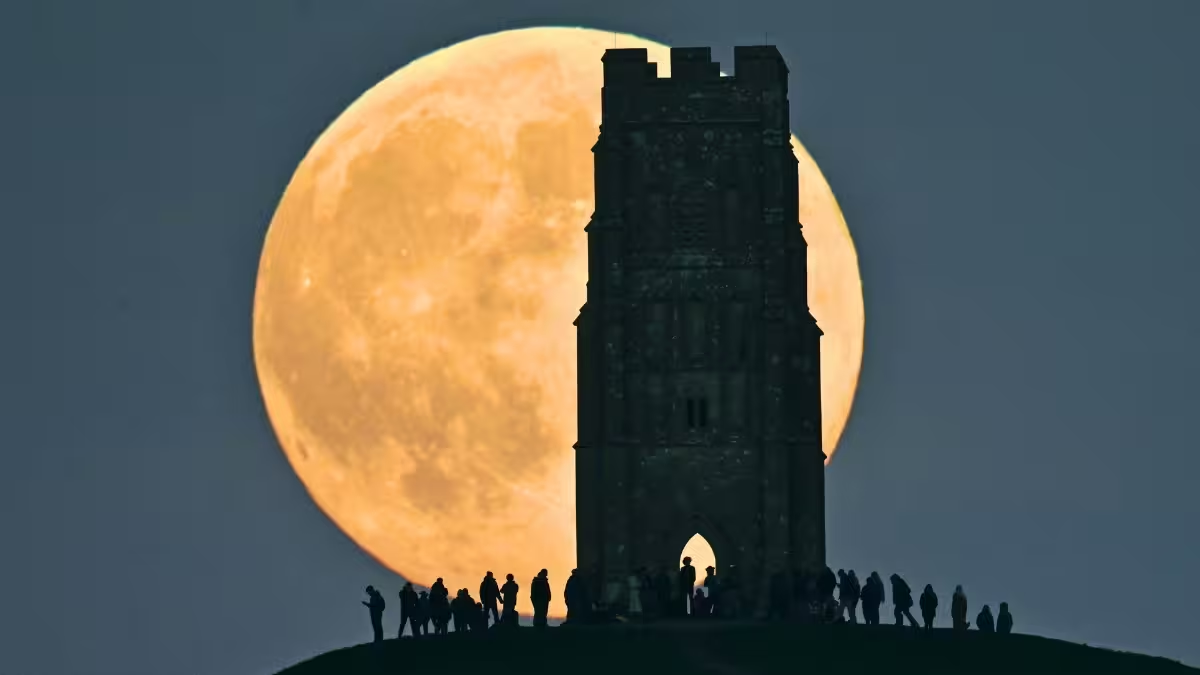
The full Moon typically rises as the Sun sets, so plan to step outside around local sunset to catch the dramatic rising Moon near the horizon. A few practical tips:
- Find a clear western horizon and a safe, dark location away from bright city lights for the best contrast.
- Bring binoculars or a small telescope to reveal lunar craters and maria on the bright face.
- If you plan to photograph the event, use a tripod, a telephoto lens (200mm or greater) and shoot in RAW; bracket exposures and try a longer focal length to capture apparent size and surface detail.
Names, timing and what comes next
Traditionally called the Beaver Moon, November's full Moon earned the name from North American colonial-era calendars tied to seasonal behaviors of beavers. If you miss this showing, don’t worry: December will also host a full supermoon — the Cold Supermoon — though it will be slightly farther away at about 357,219 kilometers.
There isn't a strict scientific definition for "supermoon"; the term is popular and descriptive rather than formal. Astronomers typically use it to mean a new or full Moon occurring near perigee, producing a larger-than-average apparent diameter and a brighter appearance.
Why it matters beyond the photo
Aside from the aesthetic appeal, supermoons offer public engagement opportunities for science education and spark curiosity about orbital mechanics. Observing such events can help people connect with basic celestial dynamics: gravity, orbital eccentricity, and how small changes in distance alter appearance and brightness.
So set an alarm for sunset, grab a coat and some warm drinks, and take a moment to appreciate living on a planet where a familiar neighbor can still surprise us.

“My work centers on sustainability, energy, and environmental science — examining how innovation can lead to a greener future.”

Discussion
Leave a Comment