
Poor oral health may do more than ruin a smile. A long-term study now links the combination of periodontal disease and dental cavities to a substantially higher risk of ischemic stroke and other major cardiovascular events — even after accounting for traditional heart-disease risk factors.
What the researchers tracked over two decades
Researchers from the University of South Carolina followed 5,986 adults (average age 63) for roughly 21 years, excluding anyone with prior ischemic stroke, coronary heart disease or certain dental histories. The team specifically compared three groups: people with good oral health, those with periodontal (gum) disease only, and those with both periodontal disease and dental caries (tooth cavities).
The differences were striking. Just 4.1% of people with good oral health experienced a stroke during follow-up. Among those with gum disease alone the incidence rose to 6.9%, and for people with both gum disease and cavities it reached 10%.
Adjusted risks: inflammation and bacteria under the microscope
After adjusting for body mass index, smoking and other cardiovascular risk factors, the researchers reported a 44% higher risk of stroke for people with periodontal disease alone, and an 86% higher risk for those who had both gum disease and cavities. Looking at broader outcomes, individuals with both conditions had a 36% higher risk of major cardiovascular events — including fatal heart disease and fatal heart attacks.
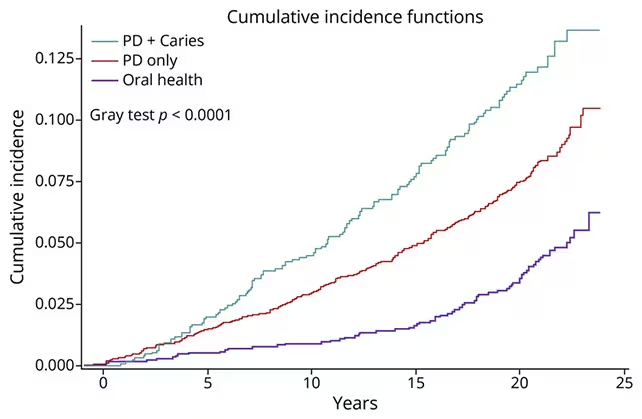
Worse oral health was associated with a greater risk of stroke
These results come from an association study, so cause and effect can’t be proven yet. Still, the team — led in part by Souvik Sen, chair of neurology at the University of South Carolina — points to plausible biological mechanisms: chronic inflammation and oral bacteria that can enter the bloodstream and contribute to arterial plaque. Earlier work has even detected oral microbes within atherosclerotic plaques, a potential pathway to clot formation and ischemic stroke.
Prevention is straightforward — and measurable
Beyond the headline numbers, the study underscores the protective role of routine dental care. Participants who reported regular dental visits were 81% less likely to have both gum disease and cavities, and 29% less likely to have gum disease alone. In other words, regular checkups and basic oral hygiene may offer measurable cardiovascular benefits.
"These findings suggest that improving oral health may be an important part of stroke prevention efforts," Sen says. He adds that patients showing signs of gum disease or cavities should seek prompt dental treatment — not just to save teeth, but possibly to reduce stroke risk.
How solid is the evidence?
The study was published in Neurology Open Access and benefits from a large sample size and long follow-up, both strengths for detecting long-term links. But there are limitations: observational data can be confounded by unmeasured lifestyle or socioeconomic factors, and the study cannot prove that oral bacteria directly caused strokes in these participants. Still, the cumulative evidence from multiple studies — including microbiological findings in arterial plaques — makes the biological connection plausible.
What this means for public health
Cardiovascular prevention campaigns focus on blood pressure, cholesterol, smoking cessation and diabetes control. This research suggests oral health deserves a clearer place in that list. For clinicians and public-health planners, simple measures such as promoting regular dental visits, improving access to preventive dentistry, and educating patients on flossing and brushing could become part of multi-layered strategies to lower stroke risk.
Practical tips for patients
- Schedule regular dental checkups and cleanings — the study links routine visits to substantially lower rates of combined gum disease and cavities.
- Pay attention to gum symptoms: persistent bleeding, swelling, or bad breath warrant prompt dental evaluation.
- Maintain daily brushing and flossing, and manage other risk factors such as smoking, high blood pressure, and diabetes.
Expert Insight
Dr. Maria Alvarez, an epidemiologist specializing in chronic disease prevention, commented: "We already know inflammation is a shared driver in many conditions. This study strengthens the case that oral inflammation can have systemic consequences. Integrating dental care into broader cardiovascular risk assessments could yield real benefits — especially for older adults or those with existing heart risk factors."
As research continues to unpack the oral-systemic connection, the message for most readers is simple: look after your teeth and gums. Good oral hygiene and regular dental care are low-cost actions that might help protect your heart and brain decades down the line.

“The cosmos has always fascinated me. I write about space missions, astronomy, and the technologies pushing humanity beyond Earth.”

Discussion
Leave a Comment