
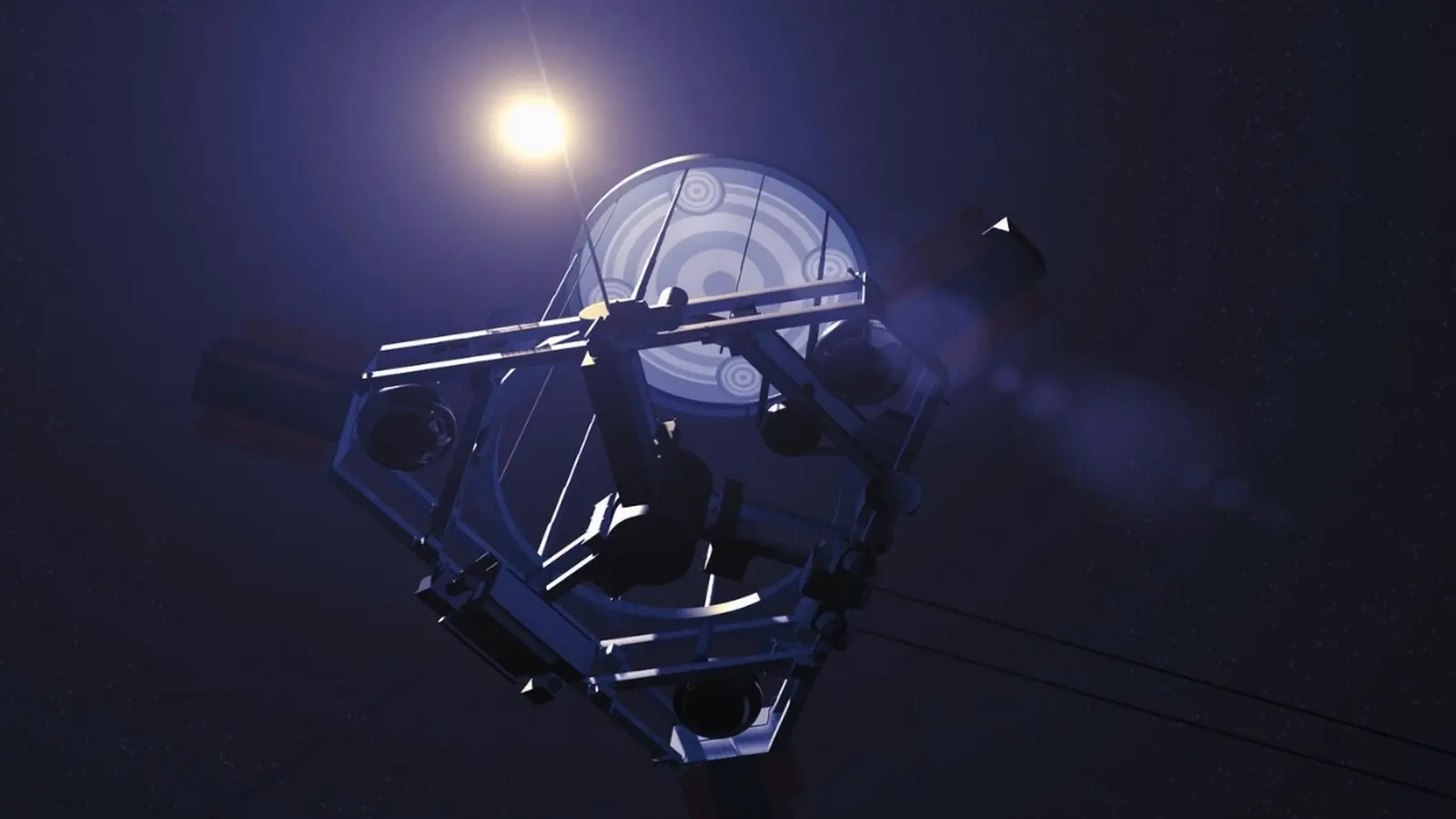
Could tiny, self-replicating probes sent by an extraterrestrial civilization already be operating inside our Solar System? New analysis by Professor Alex Ellery suggests this is plausible — and that the best place to search may be much closer than most SETI efforts assume. Below we unpack the science, the potential technosignatures, and how future missions could look for evidence of engineered visitors within our own celestial backyard.
From von Neumann’s idea to interstellar machines
The idea of a self-replicating machine goes back to John von Neumann, who in 1949 described a theoretical “universal constructor” capable of building copies of itself given raw materials. Those ideas were collected and expanded in his posthumous 1966 volume, Theory of Self-Reproducing Automata. Since then, scientists and thinkers in the Search for Extraterrestrial Intelligence (SETI) community have considered how a sufficiently advanced civilization might use such “von Neumann probes” to explore, map, and harvest the galaxy.
Unlike biological explorers, robotic probes could tolerate extreme acceleration, operate without life support, and harvest local materials — from asteroids to cometary ices — to construct replicas and other infrastructure. The result, many models show, is exponential spread: a single seeded probe could conceivably spread copies across a galaxy in a timescale far shorter than the age of most stars.
Why Professor Ellery thinks they might already be here
Professor Alex Ellery of Carleton University revisited these ideas in a recent preprint, arguing that the Solar System is a likely target for visiting probes and a prime location to search for technosignatures. Ellery — an engineer at the Centre for Self-Replication Research (CESER) — has published on how technologies like additive manufacturing (3D printing), autonomous robotics, and self-replication could make von Neumann probes feasible sooner than we might expect.
His central point is practical: self-replicating probes need raw materials and energy. Asteroids, moons, and small rocky bodies offer abundant, easily accessible feedstock: metals, silicates, volatiles, and other elements essential for fabrication. The Solar System is therefore an attractive pit stop for probes en route to other systems — and a potential site for long-term bases, sensors, or mining operations.
Motivations: survival, resources, reconnaissance
Ellery frames interstellar probing not as a purely scientific or curious endeavor, but as a response to practical drivers. Advanced societies might deploy probes to ensure species survival — for instance, by spreading beyond a star that will eventually leave the main sequence, or by building redundancy against existential threats. Probes could also perform reconnaissance and resource acquisition in anticipation of later colonization or as defensive measures.
“ET probes would be driven by survival of their local environment, be it main-sequence star lifetime, tectonic activity, etc., plus military reconnaissance to assess threats and alliances,” Ellery writes. He emphasizes that motivations like greed, escape, or strategic advantage often underlie exploration, a pattern that could shape where and how probes behave.
How a visiting probe would likely behave
From motivations follow predictable actions. Ellery outlines a six-step operational pattern for self-replicating probes that offers practical search targets for astronomers and planetary scientists:
- Target and extract raw materials from asteroids, moons, and small bodies.
- Construct surveyor probes to map resource distribution and assess habitability.
- Establish resource-rich bases — for example, in stable orbits, craters, or subsurface environments.
- Replicate additional probes and infrastructure, including sentinels or communications relays.
- Conduct long-term scientific and industrial operations, exploiting local materials.
- Execute mission-specific tasks such as habitat construction or, controversially, directed panspermia.
Each step could generate technosignatures — measurable anomalies that differ from natural geologic or astrophysical processes. Recognizing those signatures is the practical objective of Ellery’s proposal: a focused, local SETI search could be more effective at detecting engineered artifacts than traditional radio or optical searches.
Technosignatures to look for in the Solar System
Ellery argues that certain technosignatures would be particularly distinctive and accessible to investigation as we expand human activity beyond Earth. Among the most promising are:
Isotopic anomalies from nuclear reactors
Industrial-scale manufacturing and high-density power generation would likely use compact nuclear reactors. Ellery suggests Magnox-style reactors — gas-cooled, using natural uranium and graphite — could be built from local lunar or asteroidal materials. The operation of reactors leaves telltale isotope ratios (for example, unusual levels of thorium-232 decay products, neodymium-144, or barium-137) that could be detected in surface samples or via remote spectroscopy.
Buried artifacts and metallic anomalies
Probes using asteroidal metals could leave both visible debris and deliberately hidden artifacts. Ellery raises the provocative idea that a visiting probe might have left a “gift” — a universal constructor or other machine — buried among asteroidal deposits. Such artifacts might be detectable only once human exploration reaches an appropriate technological threshold capable of mining or probing the lunar subsurface.
Magnetic and structural anomalies
Large-scale manufacturing and the presence of reactors or metallic infrastructure would alter local magnetic fields and subsurface density distributions. Magnetometer surveys and ground-penetrating radar — tools used in planetary science and upcoming lunar missions — could reveal anomalies inconsistent with known geologic processes.
Where to search first: Moon, Asteroid Belt, Kuiper Belt
Ellery recommends prioritizing the Moon and small-body populations because of their composition, accessibility, and economic value to human explorers. The Moon, with its high concentration of silicates and metallic deposits delivered by impacts, is particularly attractive as a construction base for operations that could support self-replication.
Likewise, the Asteroid Belt and Kuiper Belt contain hundreds of millions of objects — many small, many largely unexplored. Ellery notes that the Kuiper Belt alone hosts an enormous population of bodies, yet humanity has observed only a handful. One observed object, 1I/ʻOumuamua, fueled speculation for being anomalous; elliptic shapes and unexpected trajectories invite careful examination. If probes are small and stealthy, they could be hiding in craters, in subsurface voids, or camouflaged by regolith in locations we have not yet sampled.
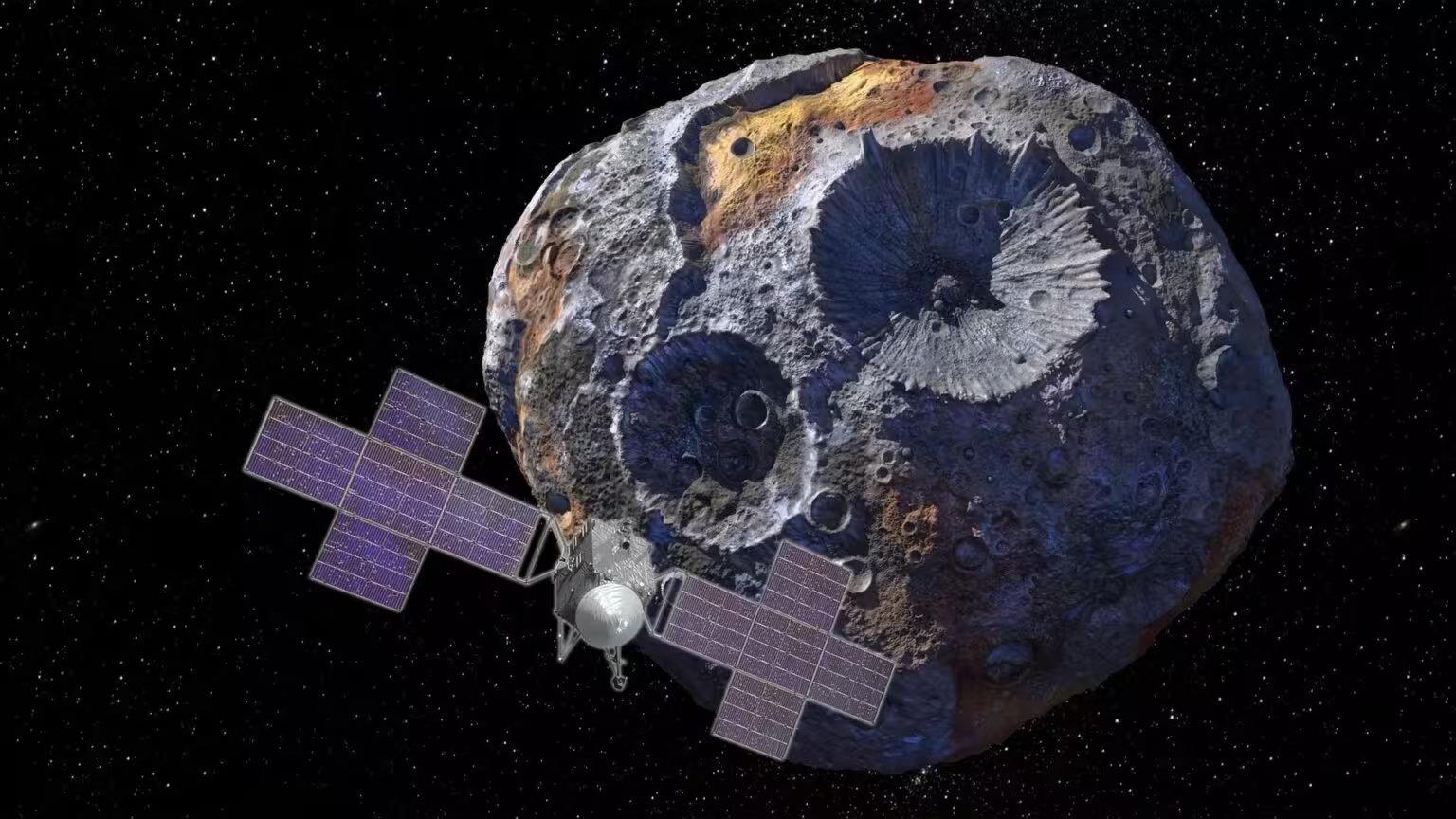
NASA's Psyche mission to a distant metal asteroid will carry a revolutionary Deep Space Optical Communications (DSOC) package
Why the Moon is a strategic search site
Beyond being nearby and accessible, the Moon offers operational advantages for both human and hypothetical alien manufacturing. Regolith and impactor-delivered metals create a resource base. The lunar surface is also largely static on human timescales, preserving historical deposits and making it easier to spot anomalies against a relatively unchanging backdrop.
As human missions under Artemis and commercial ventures begin sustained operations in cislunar space, they will deploy the instruments needed to locate and characterize resources: orbital spectrometers, ground-penetrating radar, and sample return systems. Ellery urges that these missions incorporate targeted technosignature searches into their science suites — because the necessary measurements overlap closely with resource prospecting objectives.
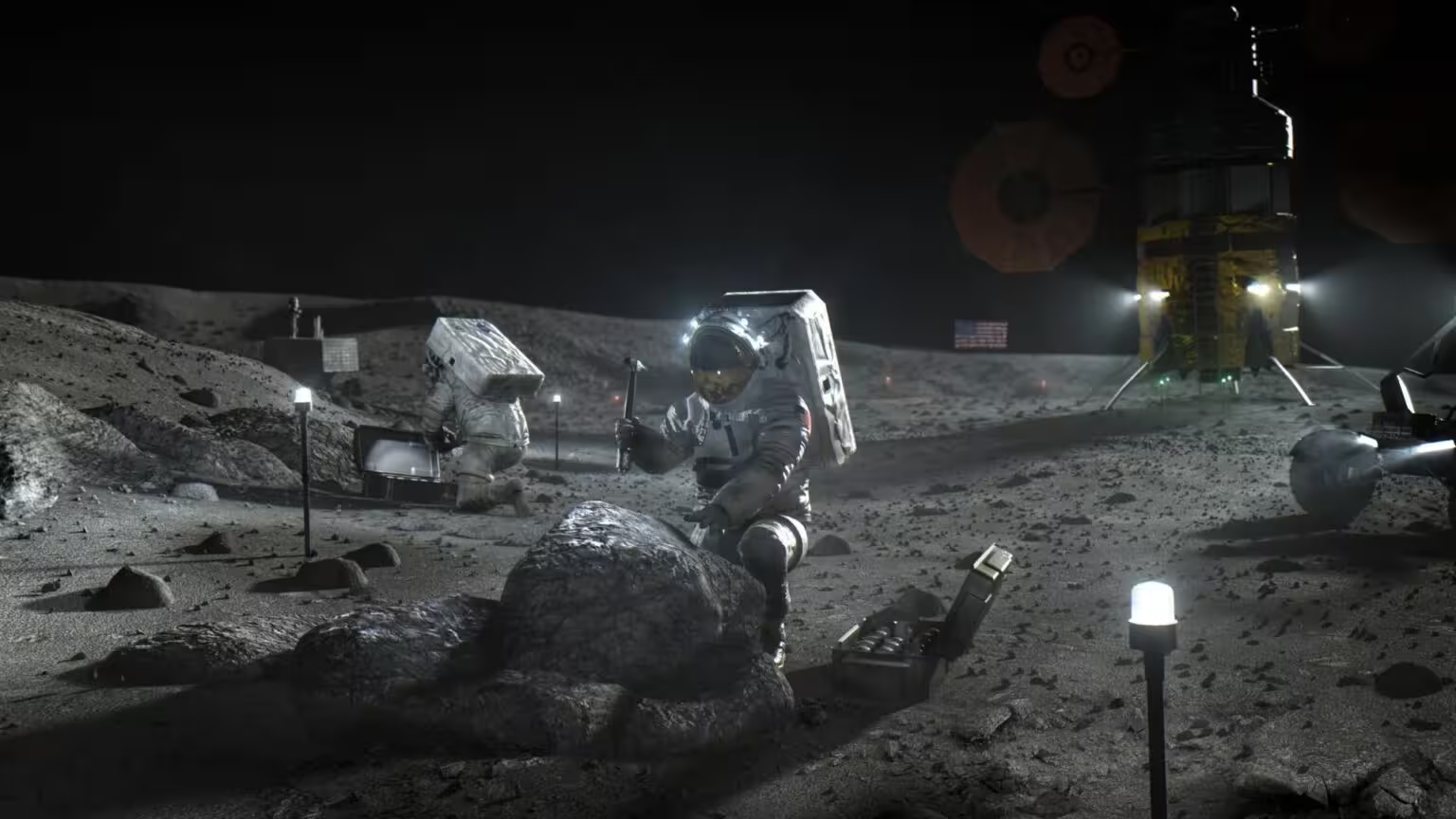
Artist's impression of Artemis astronauts operating on the lunar surface. (NASA)
Implications for SETI and space policy
If evidence of engineered artifacts were found, the consequences would be profound for science, philosophy, and policy. Ellery suggests that searching for local technosignatures should be a complementary priority to conventional SETI, not a replacement. A combined approach increases the odds of detection: radio searches probe active transmissions and beacon strategies, while technosignature hunts look for durable, long-lived artifacts.
Practically, Ellery’s proposal also intersects with commercial and governmental interests. Resource prospecting drives many planned missions, and the instruments needed for asteroid mining assessments also serve a technosignature search. Integrating SETI-minded objectives into resource exploration could be cost-effective and scientifically productive.
Searching strategy: what instruments and missions can do
Concrete steps for implementing Ellery’s recommendations include:
- High-resolution isotopic analysis of returned lunar and asteroidal samples, searching for reactor-era signatures.
- Global magnetometer and gravity surveys of the Moon and selected asteroids to detect subsurface structures inconsistent with natural geology.
- Targeted, high-cadence optical and thermal surveillance of near-Earth objects and Kuiper Belt objects to spot anomalous albedos, shapes, or non-gravitational accelerations.
- On-site prospecting missions that prioritize areas of unusual metallic concentration for careful excavation and analysis.
Many of these activities overlap with established exploration goals: finding water ice, mapping mineral resources, and planning future bases. By explicitly including technosignature criteria in mission objectives, researchers can maximize scientific return while keeping costs down.
Expert Insight
"The idea that self-replicating probes could leave lasting, detectable marks in our own Solar System is not science fiction — it’s an observational strategy," says Dr. Elena Márquez, a planetary geophysicist at the Lunar and Planetary Institute. "We already plan magnetometer surveys and isotopic sampling for resource mapping. With modest additions to instrument suites and data analysis pipelines, those datasets could also reveal anomalies worth investigating further."
"Even if we find nothing, the search sharpens our understanding of local geology, helps prioritize landing sites for human exploration, and prepares us for discovery scenarios that would be game-changing," she adds.
Broader scientific context and caveats
Ellery and others caution against sensational claims. Distinguishing engineered structures from natural processes is difficult and requires high-quality, repeatable evidence. Many proposed technosignatures — unusual isotopic ratios, magnetic anomalies, or peculiar shapes — have plausible natural explanations, especially given the complexity of impact processes and space weathering.
Yet the same is true for radio SETI: ambiguous signals and noise complicate interpretation. The advantage of searching the Solar System lies in proximity. Unlike distant exoplanetary signals, local anomalies can be revisited, sampled, and analyzed in situ. That physical access makes confirmatory science possible in ways that long-range observation does not.
What discovery would mean for humanity
Finding an artificial artifact or an operational probe in the Solar System would be one of the most consequential scientific discoveries of all time. It would confirm that technological intelligence has arisen elsewhere and that at least some civilizations pursue long-term, material-based exploration strategies. That knowledge would reshape SETI priorities, drive new international policy discussions about cultural heritage and planetary protection, and accelerate investment in space infrastructure.
But even in the absence of discovery, Ellery’s recommendations improve the scope of planetary science. A technosignature-aware exploration program strengthens our ability to detect unusual phenomena, better characterizes local resources for human use, and expands the scientific returns from missions already planned for the next decades.
Ultimately, the search for von Neumann probes asks a practical question: if advanced visitors came this way, where would they leave traces that we could plausibly detect? According to Ellery, the Solar System — and especially the Moon and small-body reservoirs — offers a high-probability answer. As humans prepare to return to the Moon and push further, integrating technosignature searches into exploration plans is a low-cost, high-value scientific investment.

“My work centers on sustainability, energy, and environmental science — examining how innovation can lead to a greener future.”

Discussion
Leave a Comment