
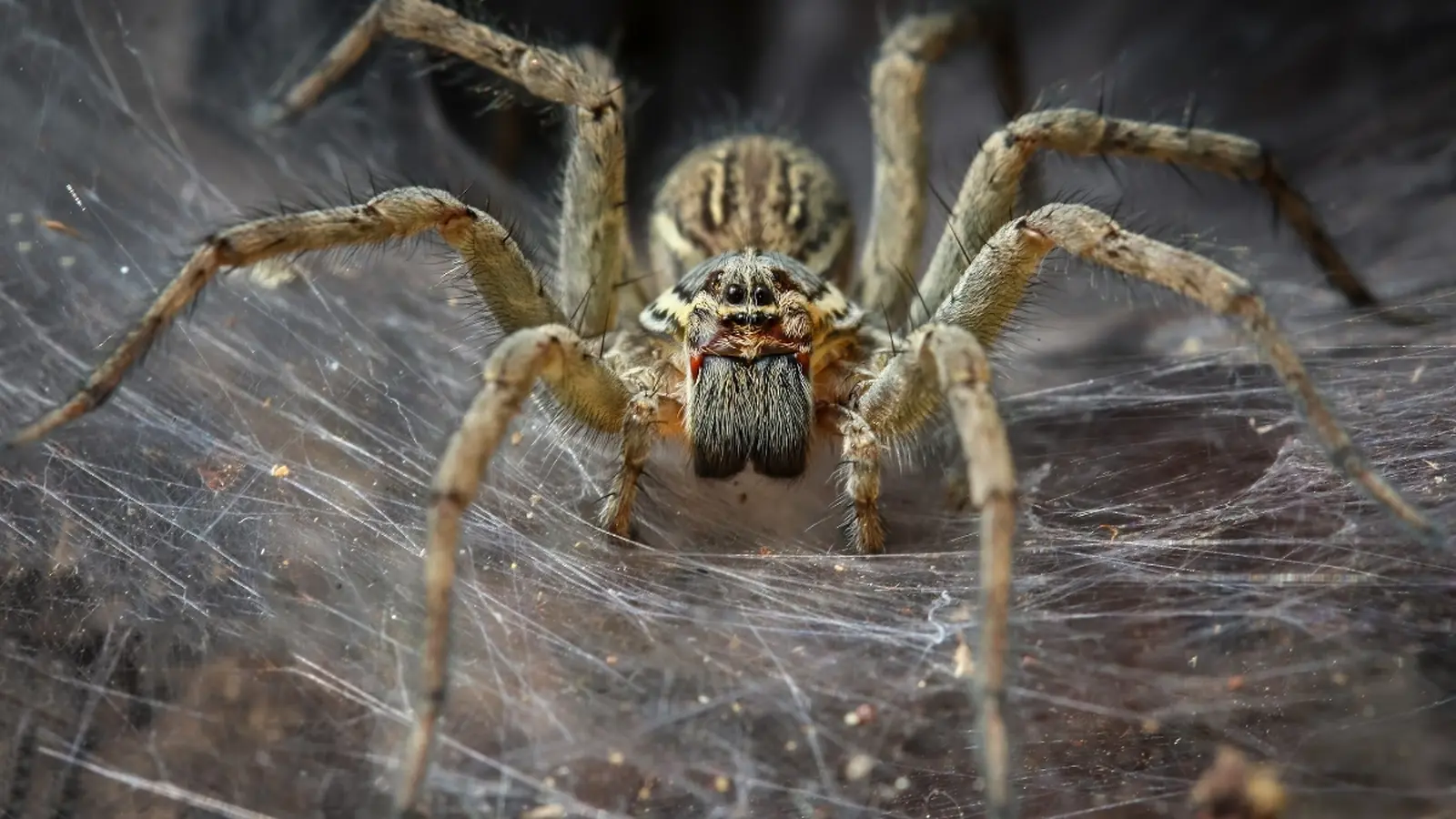
Deep inside Sulfur Cave, a limestone system that crosses the Greece–Albania border, scientists have uncovered a silken wonder: a single, shimmering sheet of webbing covering more than 100 square meters and housing an estimated 111,000 spiders. This extraordinary find challenges assumptions about spider social behavior and reveals how life can reorganize to thrive in a lightless, sulfur-rich world.
A subterranean metropolis of silk
In 2022 recreational cavers first spotted the vast pearlescent expanse, then alerted researchers. Subsequent scientific visits confirmed an astonishing ecosystem: a continuous webbed sheet stretching across cave walls and ceilings, composed of thousands of individual funnel-shaped webs that overlap and interconnect into a single, functional fabric. Photographs included in the study show massive areas of cave wall coated in silk — a true spider megacity.
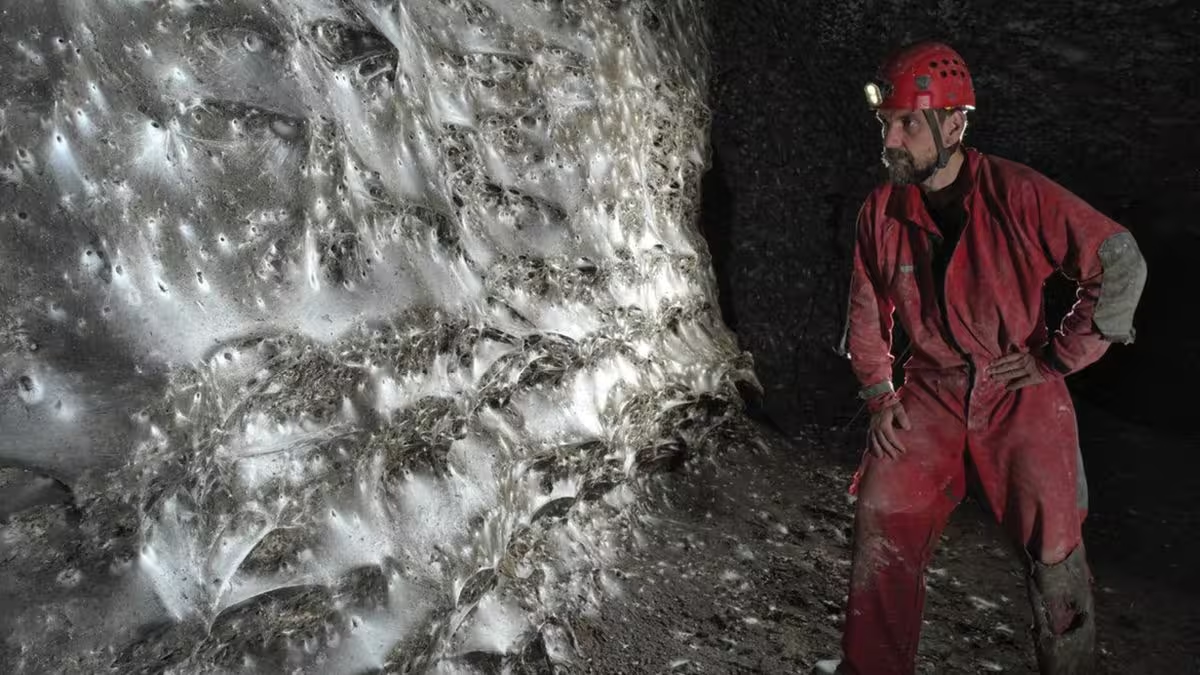
Part of the giant colonial web in Sulfur Cave
Two species dominate this megacity: Tegenaria domestica, commonly known as the barn funnel weaver (about 69,000 individuals), and Prinerigone vagans, a sheetweb spider (about 42,000 individuals). Both are widespread on the surface, but neither species had previously been documented forming true colonial webs—much less cohabiting peacefully at this scale.
Why this web is unusual — and important
There are three linked surprises in this discovery. First, the scale: the silken sheet exceeds 100 square meters (roughly 1,077 square feet), which may make it the largest known spider web. Second, social behavior: these normally solitary or loosely grouped species appear to be exhibiting facultative coloniality, meaning they form dense communal webs in response to specific environmental conditions. Third, the food web: isotope and gut-microbiome analyses show the spiders are feeding on insects born inside the cave ecosystem, not occasional visitors from the surface.
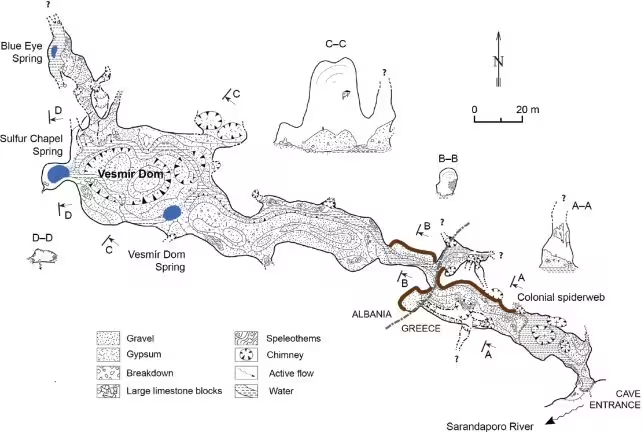
The layout of Sulfur Cave
Genetic tests paint an even clearer picture of long-term isolation. Cave-dwelling lineages of both species are genetically distinct from nearby surface populations, and microbiome profiles differ as well. Isotope signatures indicate the trophic base of this community is chemoautotrophy—microbial life that derives energy from sulfur chemistry rather than sunlight-driven photosynthesis. In short: the cave sustains its own internal food web, and the spiders are entrenched members of that system.
Chemoautotrophic life feeds a subterranean chain
Sulfur Cave contains abundant sulfur compounds that fuel chemoautotrophic microbes. These microbes form mats that support a cascade of consumers: isopods and springtails graze microbial films, midges and other small insects feed on those detritivores, and predators—centipedes and spiders among them—feed on the midges. The researchers observed that the most densely silked portions of wall corresponded with the greatest midge abundance, indicating a direct link between local prey density and web construction.
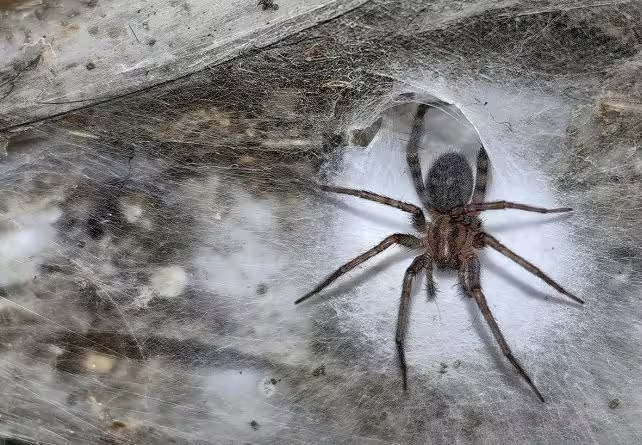
A female of the species Tegenaria domestica in one of the web's funnels.
Detailed behavioral notes from the team suggest that barn funnel weavers did much of the structural construction of the sheet: they created the overlapping funnels and anchoring threads. The sheetweb spiders, meanwhile, appear to have exploited this ready-made architecture, inserting themselves into the communal fabric and benefitting from the prey-rich environment. This kind of interspecific tolerance in permanent communal webs is rare and biologically noteworthy.
Implications for evolution and conservation
Beyond its immediate fascination, this discovery raises questions about how surface-dwelling species adapt to subterranean chemoautotrophic habitats. Isolation appears to be reshaping genes and gut microbiomes, which may be the early stages of ecological speciation. The site also highlights that sulfidic caves can harbor complete, self-sustaining food webs independent of sunlight—ecosystems that are fragile and poorly represented in conservation planning.
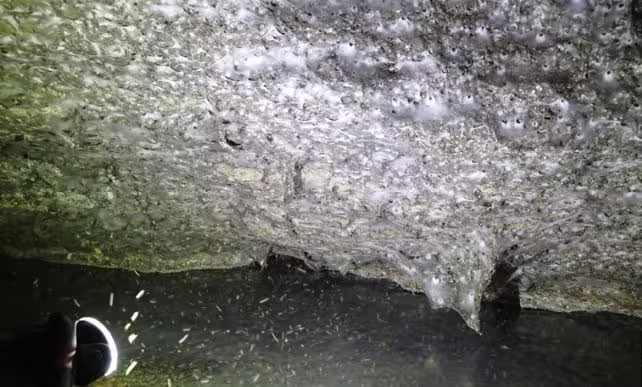
The web and a swarm of midges
For scientists studying adaptation, trophic integration, and the limits of social flexibility, Sulfur Cave is a living laboratory. It provides a rare example of how ecological opportunity—abundant prey derived from chemosynthetic microbes—can drive behavioral shifts in otherwise solitary organisms.
Expert Insight
"Discoveries like this force us to rethink how flexible animal societies can be," says Dr. Karen Liu, an evolutionary ecologist not involved in the study. "When resources are plentiful and stable, even species that are usually solitary may adopt collective strategies. This cave shows both behavioral plasticity and early genetic divergence—two ingredients for rapid evolutionary change."
The discovery has been published in Subterranean Biology, and the case of Sulfur Cave adds an extraordinary chapter to our understanding of life in extreme environments. In the darkness, spiders have not only survived—they have built an entire city of silk.

“My work centers on sustainability, energy, and environmental science — examining how innovation can lead to a greener future.”

Discussion
Leave a Comment