
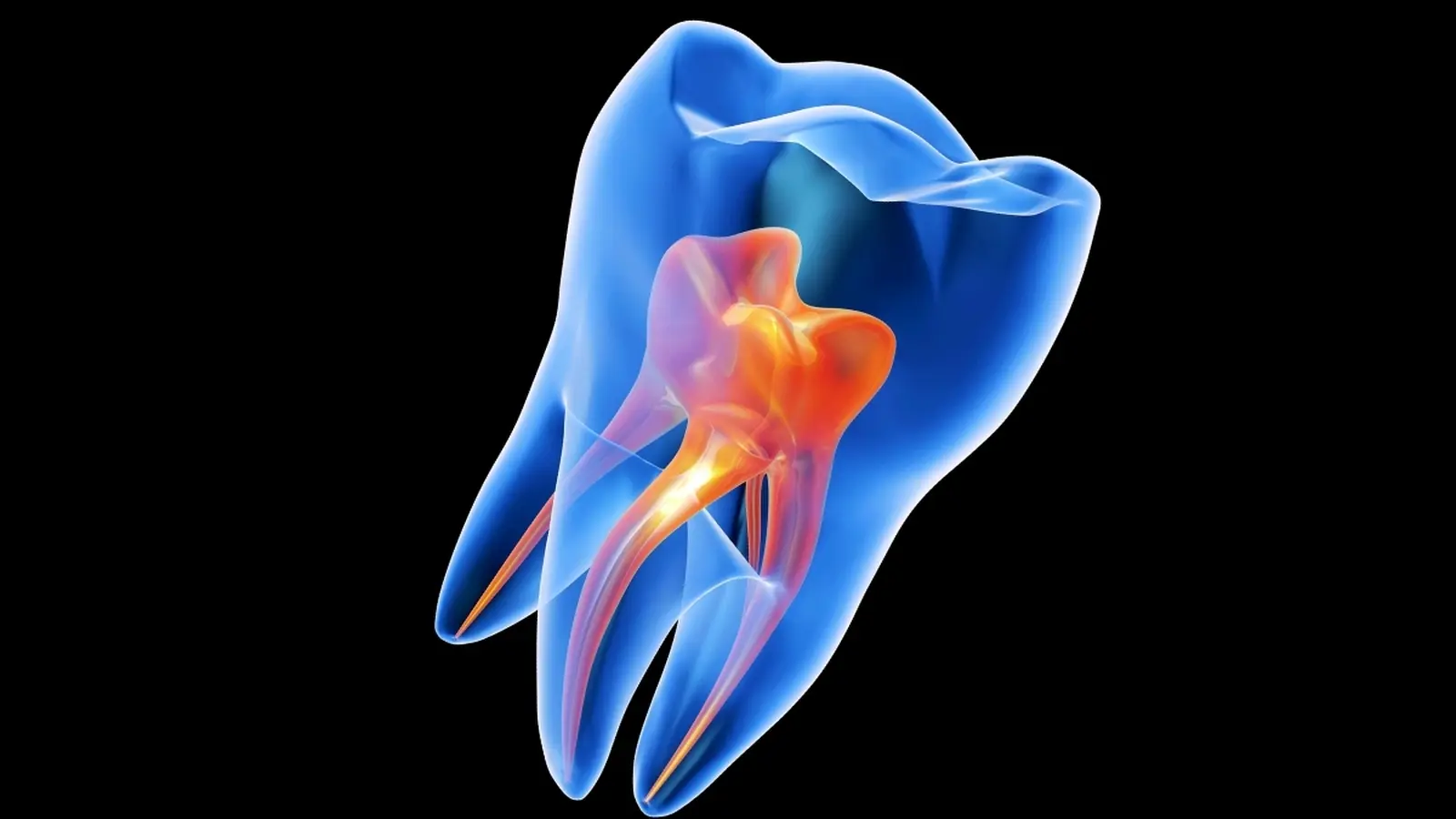
Tooth decay could be easier to treat in the near future thanks to a new bioengineered gel that helps teeth rebuild their protective enamel. Developed by an international team led by the University of Nottingham, the treatment aims to restore enamel architecture rather than merely patching damage — a potential shift from traditional fillings toward regenerative dental care.
How the gel rebuilds enamel at the microscopic level
Tooth enamel cannot regrow naturally after it is lost. The Nottingham-led team copied the way enamel forms during development. In the body, enamel mineralizes on a protein scaffold made by amelogenin. The researchers created a synthetic scaffold using elastin-like recombinamers (ELRs), proteins engineered to mimic the structural role of natural enamel proteins.
Once the ELR scaffold is applied to a demineralized surface or exposed dentine, it directs a process known as epitaxial mineralization: new calcium‑phosphate crystals nucleate and grow in alignment with the remaining tooth structure. In lab experiments on extracted teeth the researchers supplied mineral ions in solution and observed crystals forming in an ordered, integrated layer that replaces the original enamel architecture.
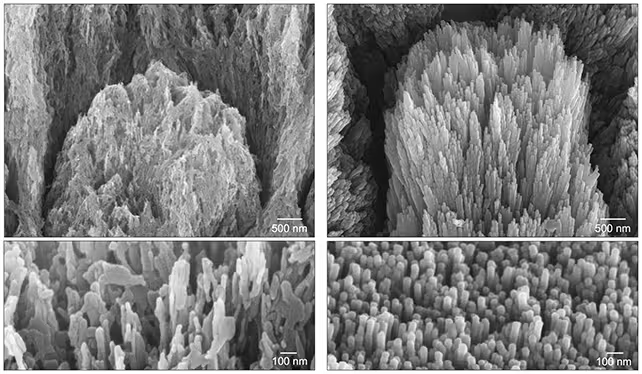
Electron microscope images showing the protective coating on teeth with demineralized enamel (left) can be restored after two weeks with the new treatment (right). (Hasan et al., Nat. Commun., 2025)
Strength, durability and real-world testing
Replacing enamel is only useful if the new material withstands everyday challenges. The team measured mechanical properties under simulated conditions — brushing abrasion, chewing forces, and exposure to acidic foods. The regenerated enamel layer performed comparably to healthy natural enamel in these tests, suggesting the repair is not only cosmetic but functional.
Pharmaceutical scientist Abshar Hasan, co-leader of the study, says the engineered scaffold ‘‘promotes the growth of crystals in an integrated and organized manner, recovering the architecture of healthy enamel’’ — in other words, it encourages new mineral to line up with existing crystal structures rather than forming a weak, mismatched patch.
Context: how this compares to other approaches
Researchers have tried many strategies to tackle enamel loss: remineralizing pastes, peptide-based scaffolds, and even lab-grown whole teeth. Compared with earlier liquids and peptides, the ELR gel is notable for its simplicity and speed. The team reports it is easy to apply and could be administered during a routine dental visit, a practical advantage for clinical translation.
The researchers have also formed a start-up to advance the technology toward patient trials — an important step because laboratory success on extracted teeth does not guarantee safety and efficacy inside living mouths, where saliva, bacteria and immune responses complicate outcomes.
Implications for dental care and public health
If validated in human studies, an enamel-regenerating gel could reduce the need for drilling and fillings, slow the progression of decay, and offer a less invasive option for early erosion. For populations with limited dental access, an easy-to-apply, long-lasting treatment could help reduce global oral disease burden.
There remain unanswered questions: how long regenerated enamel lasts under years of chewing and acidic diets, how the material interacts with the oral microbiome, and whether repeated applications are safe. The team is planning further tests in living tissues to address these points.
Published in Nature Communications in 2025, the work represents one of the most promising steps yet toward functional enamel regeneration. For patients and clinicians, the prospect is straightforward: instead of filling holes, dentists might one day help teeth rebuild themselves.

“The cosmos has always fascinated me. I write about space missions, astronomy, and the technologies pushing humanity beyond Earth.”

Discussion
Leave a Comment