
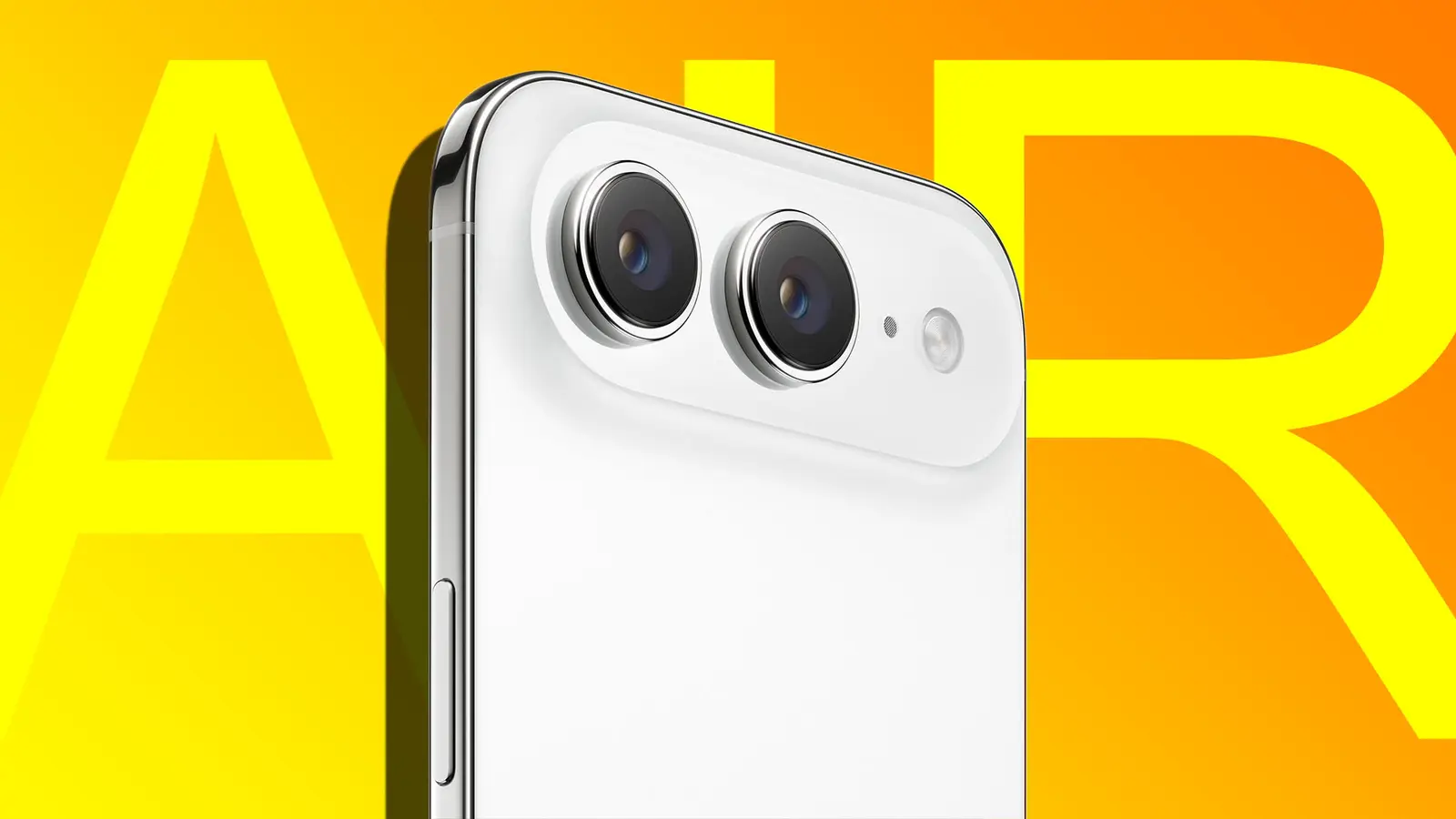
Rumors suggesting the iPhone Air 2 would ship with two rear cameras gave fans hope for a proper telephoto upgrade. New reporting now suggests otherwise: Apple appears set to expand its ultrawide capabilities but will still rely on digital cropping for zoom, not a dedicated telephoto lens.
What the latest leaks say — and why it matters
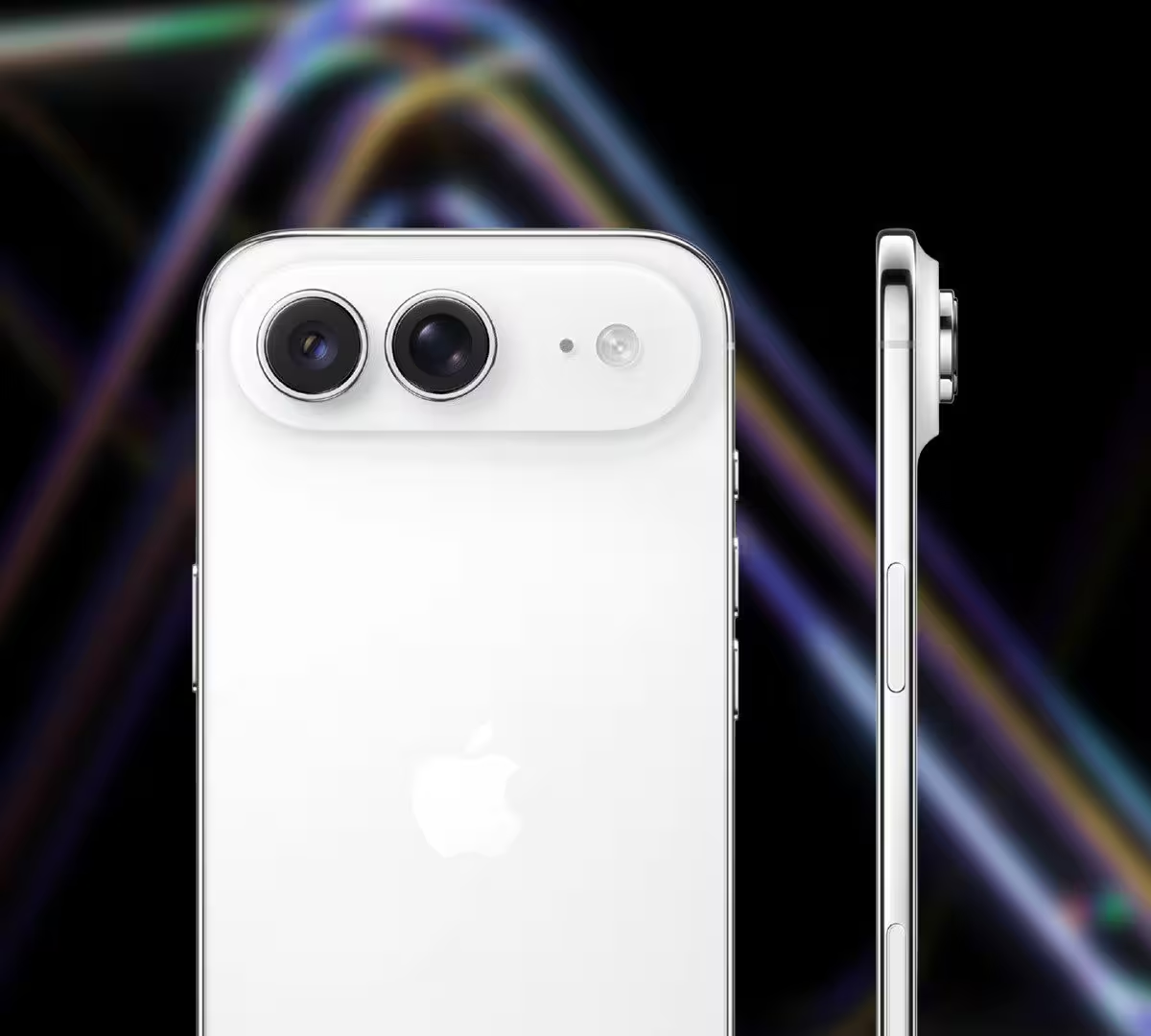
Multiple sources, including a Korean outlet citing a Weibo tipster, point to a dual-camera setup for the iPhone Air 2 that pairs the existing 48MP Fusion main sensor with a second 48MP ultrawide module. That’s a meaningful boost for wide-field stills and video, but don’t expect a tetraprism-based telephoto system like the one found on Apple’s Pro flagships.
Instead, Apple is reportedly sticking with the same digital-crop trick used on the first-generation iPhone Air. The 48MP sensor can crop down to a 12MP area to simulate 1x or 2x optical-equivalent zoom without a separate lens. It’s a clever space-saving compromise, but one with clear bounds.
Why Apple is avoiding a physical telephoto lens
- Internal space limitations: A true telephoto needs extra prism hardware (often a tetraprism) that increases module thickness. The slim chassis of the iPhone Air leaves little room for that component.
- Design trade-offs: Adding a telephoto kit would force Apple to alter the phone’s internal layout and exterior footprint — a move the Air series, aimed at thinness, likely won’t accept.
- Product segmentation: Apple can preserve a feature gap between Air and Pro models, where the latter keep the more advanced lossless zoom tech.
How digital cropping works — and its limits
The trick relies on the 48MP Fusion sensor capturing far more detail than a standard 12MP image. By cropping a central 12MP portion of that large sensor, the phone can emulate a closer framing without changing focal length. Software then processes the cropped result to match the look and exposure of a zoomed shot.
That approach is practical for ultra-slim phones: you get a telephoto-like framing without extra optics. But the compromise is obvious — image quality starts to degrade past roughly 2x magnification. That’s where Pro models with tetraprism lenses pull ahead, offering lossless zoom up to about 5x.
Will the iPhone Air 2 still look better than before?
Possibly. Even if the Air 2 sticks to digital cropping, improvements to the Image Signal Processor in Apple’s rumored A20 and A20 Pro chips could enhance processing, noise reduction, and detail retention. Put differently, software and ISP upgrades may narrow the quality gap, but they won’t reproduce true optical telephoto performance.
In short: expect a meaningful ultrawide upgrade and smarter digital zoom — but don’t count on a dedicated telephoto lens if thinness remains a design priority.

“I love exploring gadgets, apps, and trends that redefine how we connect, work, and play in a digital world.”

Discussion
Leave a Comment