

BitMEX Co‑founder Urges ZEC Holders to Self‑Custody
Arthur Hayes, co‑founder of BitMEX, has again put privacy coins in the spotlight, urging Zcash (ZEC) holders to withdraw tokens from centralized exchanges (CEXs) and move them into shielded, self‑custodial wallets. Hayes’ call reinforces a familiar privacy‑focused message: custody equals control, and keeping ZEC on exchanges can strip away the confidentiality that privacy coins promise.
Why Hayes Wants Users to "Shield" Their ZEC
Hayes recommended that anyone holding ZEC on a CEX should "withdraw it to a self‑custodial wallet and shield it." Shielding converts a transparent ZEC balance into a shielded balance on the Zcash network, leveraging zk‑SNARKs (zero‑knowledge proofs) to obscure sender and receiver details. The appeal is simple for privacy advocates: shielded addresses (z‑addresses) restore transaction anonymity that exchanges typically cannot provide.
Zcash's privacy model supports two address types: transparent t‑addresses, which behave like standard public wallets, and shielded z‑addresses that enable private transfers. Most exchanges only support t‑addresses, meaning tokens kept on CEXs remain fully traceable onchain. By moving ZEC into a self‑custodial wallet that supports shielded transactions, users can reclaim the privacy features Zcash was built to offer.
Price Volatility and Market Context
Hayes’ comments coincided with intense price swings for ZEC. The token surged to roughly $723 on Saturday, then dropped to around $504 on Sunday, climbed again to about $677 on Monday, and later retraced — trading near $450 at the time of reporting. This represents roughly a 37% decline from the weekend high. Analysts pointed to an overbought RSI (relative strength index) as a likely catalyst for the violent correction.
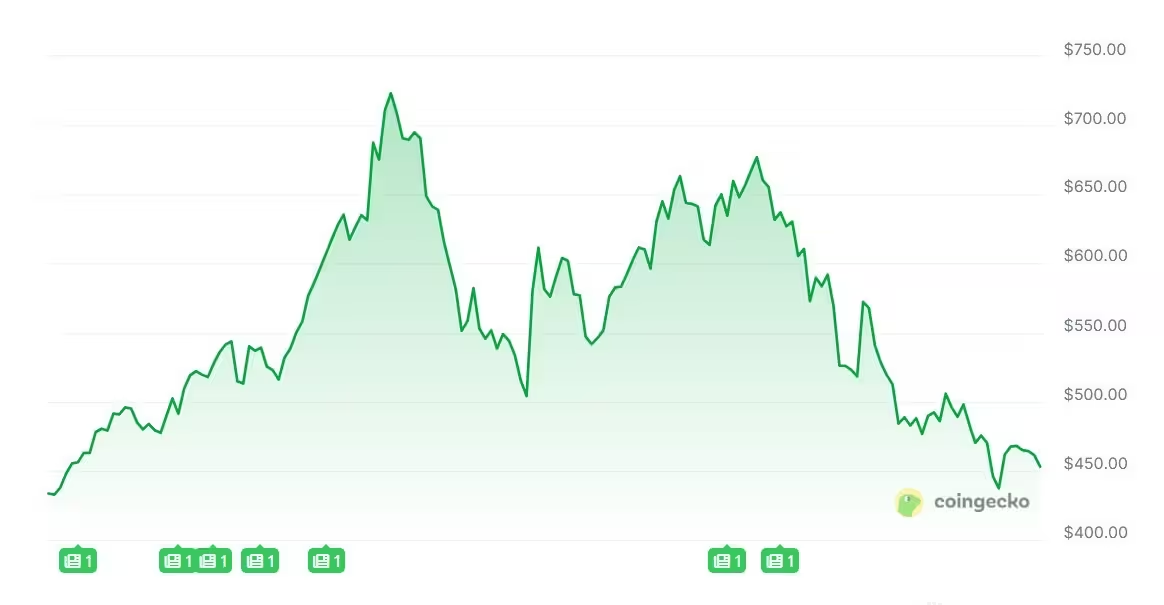
Zcash's seven-day price chart
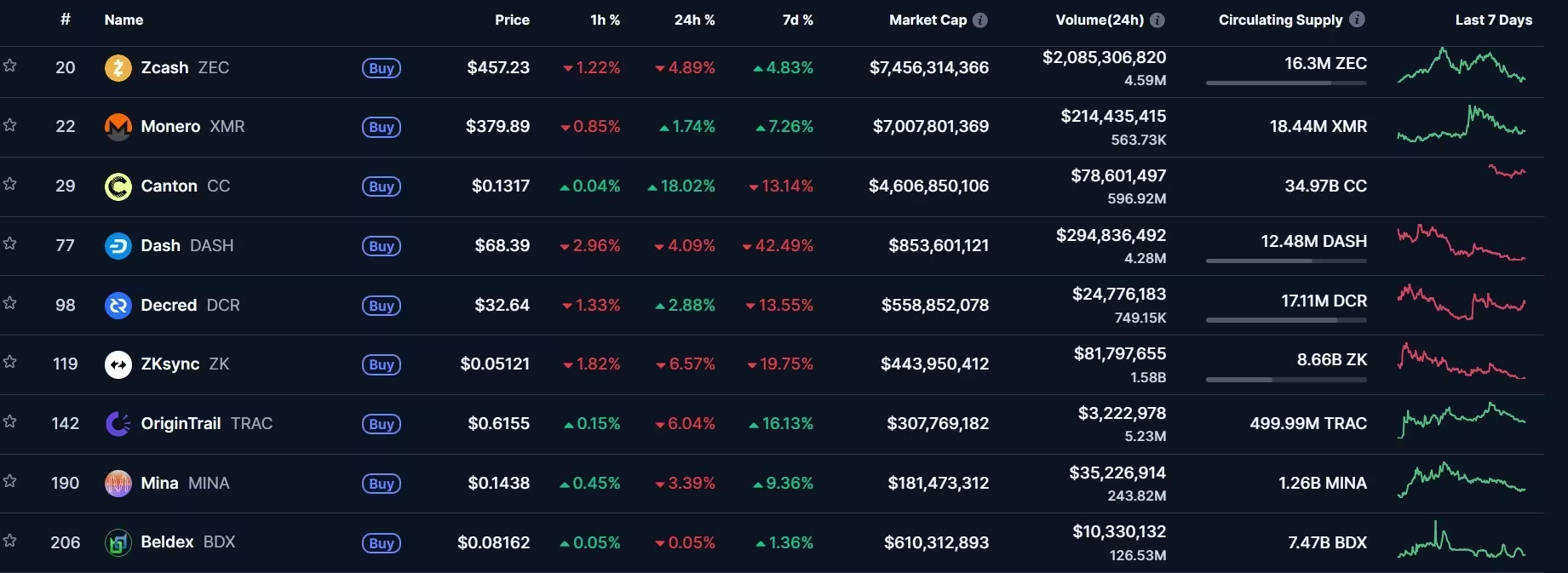
Despite recent volatility, ZEC remains central to the privacy coin narrative and holds a significant market capitalization. CoinMarketCap data show ZEC up about 5% over the past seven days from some reference points, while other privacy tokens have produced mixed results. Monero (XMR) remains another pillar in this niche, and alternative privacy projects such as Dash and Decred have experienced notable volatility as well.
CEX Risks, Self‑Custody Responsibilities
Hayes’ warning underscores a broader trade‑off: convenience versus sovereignty. CEX custody can expose ZEC holders to withdrawal freezes, Know Your Customer (KYC) restrictions, regulatory delistings, and counterparty insolvency — risks observed with privacy tokens like Monero in recent years. When you keep funds on an exchange, you forfeit cryptographic control and much of the privacy that shielded transactions provide.
However, self‑custody and shielding are not without obligations. Users must secure private keys, maintain backups, and use well‑verified wallets that support zk‑SNARK operations. Mistakes in key management can be irreversible, so the sovereignty that self‑custody provides comes with heightened personal responsibility.
What This Means for Privacy Token Adoption
The renewed attention to Zcash—and Hayes’ public recommendation—highlights an ongoing debate in crypto circles about privacy, compliance, and user autonomy. Institutional interest in privacy tools is growing alongside improved privacy technologies, but the regulatory landscape remains uncertain. For retail users, shielding ZEC in self‑custody is the most direct way to preserve onchain privacy, while storing ZEC on exchanges offers ease of use at the cost of anonymity.
For traders and long‑term holders, the message is twofold: understand the technical differences between t‑addresses and z‑addresses, and weigh the risks of keeping assets on centralized platforms versus the responsibilities of self‑custody. As privacy coins continue to swing in value, protecting both capital and privacy will remain a top priority for many in the crypto community.

Discussion
Leave a Comment