

As the U.S. federal shutdown heats down and lawmakers move to reopen government operations, global markets have responded with a wave of risk-on buying. That relief rally lifted equities and major cryptocurrencies alike, but beneath the surface renewed funding and liquidity pressures may leave Bitcoin exposed to heightened volatility. This article breaks down the macro developments returning to the market, why liquidity matters for digital assets, and what to watch next for BTC, Ethereum and crypto markets.
Table of contents
- Federal shutdown relief sparks risk-on rally
- Crypto joins the broader market rebound
- Reopening restores macro drivers for crypto
- Why the Treasury General Account (TGA) matters
- Derivatives, open interest and technical outlook for Bitcoin
- What traders and investors should watch
Federal shutdown relief sparks risk-on rally
On Nov. 10 the Senate passed a bipartisan funding bill to reopen the federal government through late January, a move that pushed the proposal to the House and helped erase some headline-driven uncertainty. Returning staff and the prospect of resumed economic data releases encouraged investors to rebuild exposure to growth assets.
U.S. equity benchmarks reacted positively to the news: the Nasdaq led gains as tech stocks climbed, the S&P 500 advanced, and the Dow posted modest increases. Treasury yields nudged higher after bond prices slipped, consistent with a market rotation out of safe-haven cash and Treasuries and back into equities and higher-yield assets.
Markets had been deprived of key macro inputs during the prolonged shutdown. Critical data from agencies such as the Labor Department, the Census Bureau and the Bureau of Economic Analysis were delayed or canceled, including two monthly employment reports and intermittent Consumer Price Index updates. With the government reopening, those data flows will return to guide expectations for growth, inflation and Federal Reserve policy — all of which materially influence crypto market liquidity and investor appetite.
Crypto joins the broader market rebound
Cryptocurrency markets broadly participated in the risk-on bounce. Bitcoin rallied from weekend lows near $99,000 to a seven-day high around $106,500 before consolidating around $103,500. Ethereum followed a similar path, climbing from roughly $3,100 to highs near $3,650 and later stabilizing in the mid-$3,000s.
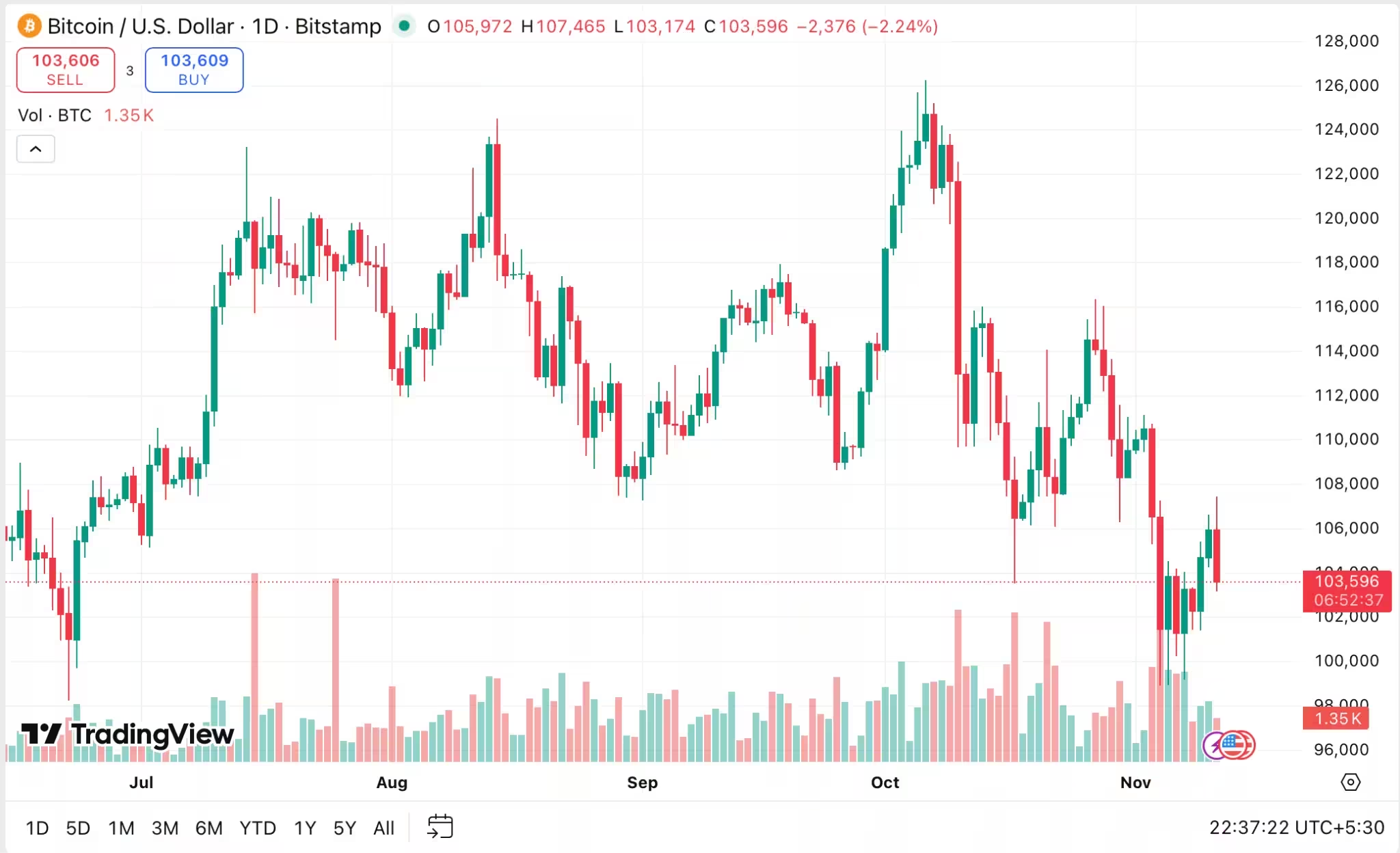
BTC price chart
Sentiment improved on renewed hopes for short-term liquidity and on fresh accumulation by major institutional holders. Notably, this move did not appear to be driven by spot Bitcoin ETF inflows — CoinShares data pointed to another week of outflows totaling about $1.17 billion. The divergence between ETF redemptions and rising spot prices suggests the bounce was fueled by direct spot buying and derivatives market repositioning rather than by fund inflows.
In previous episodes of political gridlock, many traders fled to cash and U.S. Treasuries, sidelining speculative assets. This time, the reduction in headline risk allowed investors to re-enter growth-sensitive pockets of the market, including technology and digital assets. Gold also rallied alongside Bitcoin, showing investor willingness to hold treasury-sensitive hedges and crypto simultaneously.
Reopening restores macro drivers for crypto
With normal reporting set to resume, the next major catalysts for crypto will come from U.S. economic data and Treasury financing plans. The October Consumer Price Index will be closely watched: a hotter-than-expected CPI print or persistent services inflation could push bond yields up quickly and dampen risk appetite.
Inflation and yields
A surprise rise in CPI or resilient labor-market readings risks keeping real yields elevated and delaying market expectations for central bank easing. Higher yields increase the opportunity cost of holding volatile assets and can compress valuations for growth-oriented instruments — a dynamic that frequently correlates with moves in Bitcoin and other digital assets.
Treasury borrowing and supply
Treasury financing plans are another critical element. Early November Treasury updates revealed plans for coupon issuance and buybacks that will shape debt supply once auctions fully resume. Even modest shifts in issuance preference — toward short-term bills or longer-term notes — can alter the yield curve and the cost of leverage across capital markets. Crypto funding rates and dollar liquidity are sensitive to these swings.
Monetary policy expectations
Market-implied policy paths remain uncertain. CME FedWatch still priced in potential rate cuts toward the end of 2025 as of Nov. 11, but a hotter inflation reading could push those expectations back. A delay in easing or a higher-for-longer outcome would support cash and Treasuries over risk assets, increasing the potential for volatility in crypto markets.
Why the Treasury General Account (TGA) matters
A key structural liquidity concern is the rapid growth of the Treasury General Account (TGA) at the Federal Reserve. The TGA recently topped $900 billion — a level not seen since 2021 — after expanding roughly $666 billion since June. When the Treasury accumulates large cash balances at the Fed, it effectively withdraws reserves from the banking system, tightening short-term funding conditions.
That reduction in available bank reserves has already shown up in the repo market, where daily transactions have climbed to about $3 trillion — roughly three times the level of three years ago. Tighter reserves can make repo funding more expensive and increase volatility in short-term interest rates. If these pressures persist, the Federal Reserve may find itself forced to expand its balance sheet again to stabilize funding markets.
For Bitcoin and other crypto assets, the implications are indirect but powerful: tighter funding and higher short-term rates typically reduce the capacity and willingness of leveraged participants to carry large risk positions. That dynamic can amplify price swings when liquidity is already stretched.
Derivatives, open interest and technical outlook for Bitcoin
Despite the spot price rebound, derivatives markets have remained muted. Glassnode data indicated that Bitcoin futures open interest stayed low following October’s deleveraging, with minimal new speculative positioning across major exchanges. Low open interest during macro uncertainty can be healthy — it means less excess leverage needs to be unwound — but it also signals a fragile base of speculative demand.
Technically, many trading desks have pointed to the $110,000 area as critical resistance for BTC. Charts show Bitcoin sitting below its 200-day moving average and approaching long-term resistance zones that previously served as support. A decisive breakout above $110,000 could confirm renewed momentum and attract fresh buyers, while repeated failures at that level could trigger another leg down as liquidity thins and sellers reassert control.
With open interest subdued, any large directional flows — whether from institutional accumulation, ETF arbitrage activity, or big liquidations — could move prices aggressively. Until broader funding conditions improve or clear new demand arrives, price stability will remain contingent on steady liquidity rather than sentiment alone.
What traders and investors should watch
Several watchpoints will help market participants gauge whether the recent rebound can sustain itself or if Bitcoin is truly headed into a liquidity squeeze:
- October CPI and subsequent inflation prints — unexpected strength could lift yields and hurt risk assets.
- Treasury auction demand and new issuance patterns — weak demand or shifts in issuance mix can raise borrowing costs and tighten liquidity.
- TGA trajectory — continued accumulation at the Fed further drains reserves and pressures short-term funding markets.
- Repo activity and secured financing rates — high repo utilization signals tighter funding and higher costs for leverage.
- Derivatives open interest and funding rates — a return of leverage would support rallies, while persistently low activity suggests fragile conviction.
- Technical levels around $110,000 and the 200-day moving average for BTC — these are key decision points for bullish continuation or bearish reversal.
Conclusion — navigate liquidity risk, not just sentiment
Reopening the federal government has temporarily eased headline risk and allowed a rebound in both equities and crypto. Yet that short-term optimism sits alongside structural liquidity pressures driven by an elevated TGA, firming Treasury yields and stretched repo activity. These factors create an environment where Bitcoin could face outsized volatility if funding conditions deteriorate again.
For traders and long-term investors in Bitcoin and Ethereum, the immediate path forward will be driven more by liquidy flows, Treasury financing and inflation prints than by headline sentiment alone. A measured approach — monitoring macro data, funding rates and on-chain indicators — remains essential. As always, risk management matters: avoid overleveraging, set clear stop levels, and size positions relative to your financial tolerance. Trade wisely and never invest more than you can afford to lose.

Discussion
Leave a Comment