
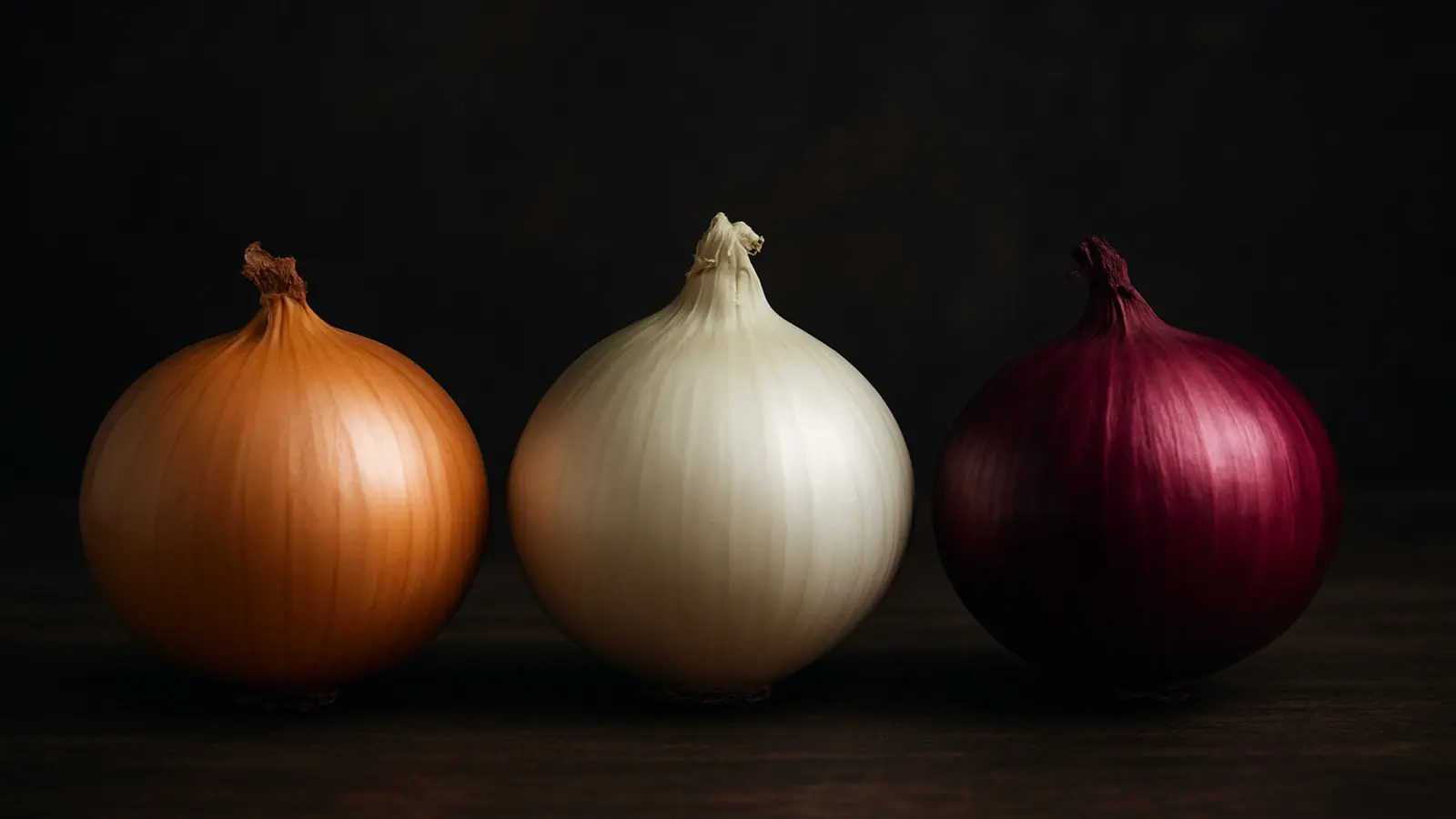
Onions are a kitchen constant around the world, but not all onions are interchangeable. Red, yellow, and white onions differ in chemistry, taste, and culinary role. Understanding those differences—rooted in sulfur compounds, pigments, and sugar content—lets cooks choose the variety that best supports a recipe's flavor profile.
Why onions taste and smell different: a quick chemistry primer
All onions belong to the Allium genus, the same plant family as garlic and leeks. Their distinctive bite comes from sulfur-containing molecules stored inside intact cells. When you slice an onion, cell walls rupture and enzymes such as alliinase react with amino acid sulfoxides to form volatile sulfur compounds. One well-known product of this cascade is syn-propanethial-S-oxide, the lachrymatory factor that irritates eyes and gives raw onion its sharp aroma.
But the concentration and balance of these compounds vary by onion type. Yellow onions generally contain higher levels of sulfur derivatives, producing a stronger, more pungent raw flavor. White onions have a cleaner, sharper bite but usually less overall sugar. Red onions carry more anthocyanin pigments—natural antioxidants that make their flesh purple-red—and tend to be milder and sweeter when raw.
Yellow onions: the flavor backbone for cooking
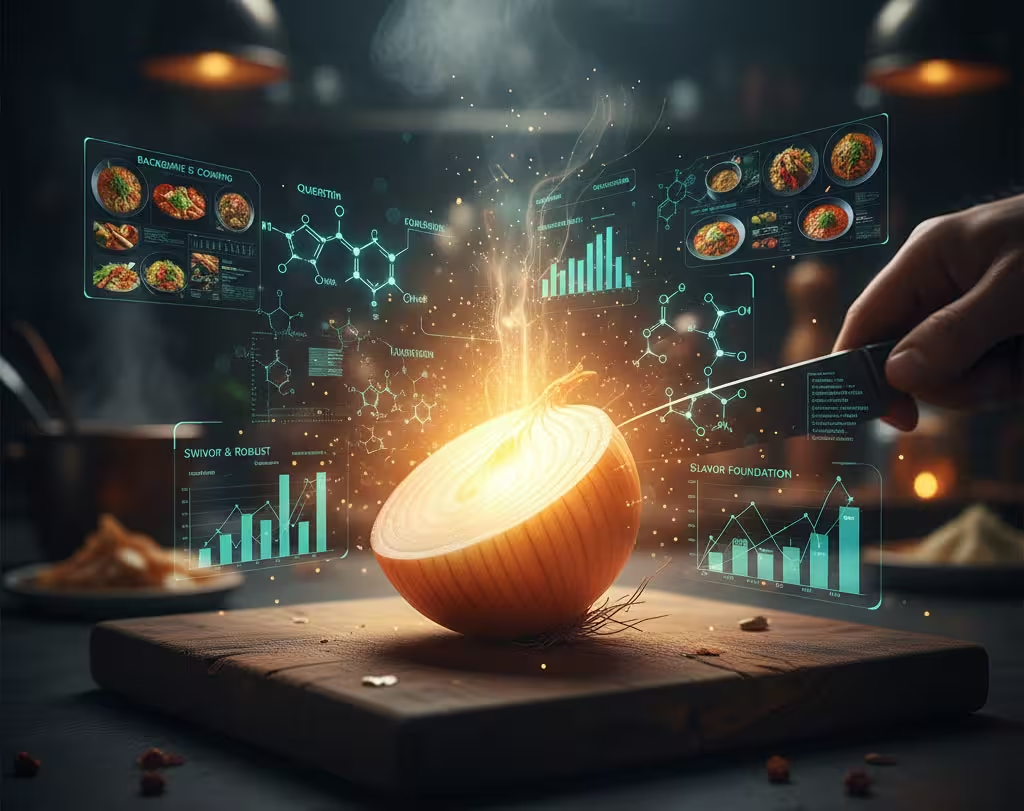
In professional and home kitchens, yellow onions are often the default for long-cooked dishes. Their combination of high sulfur content and appreciable total sugars makes them ideal for browning: as heat breaks down proteins and carbohydrates, the Maillard reaction develops deep, savory aromas and a golden color.
Key characteristics
- Skin color: golden-brown to tan; flesh: creamy white.
- Taste: initially pungent and sulfur-forward; mellows and sweetens when cooked.
- Chemistry: relatively high volatile sulfur compounds and moderate sugars, enabling strong caramelization and Maillard reaction.
- Storage: long shelf life in a cool, dry place.
Where yellow onions shine
Use yellow onions in soups, stews, braises, sauces, and any recipe that benefits from sustained heat and deep flavor development—think classic beef stew, caramelized-onion tart, or soffritto bases. Their sulfur compounds add savory depth that supports slow-cooked proteins and rich sauces.
White onions: crisp, bright, and fast-cooking

White onions have thinner, glossy skins and a clean, sharp bite. They often contain less sugar than yellow onions, so they won’t caramelize as deeply, but their juicier, crisper texture makes them perfect for preparations where a pronounced onion presence is desired.

Key characteristics
- Skin: thin and white; flesh: bright white.
- Taste: sharper and more immediate than yellow onions; can taste more pungent when raw.
- Chemistry: moderate sulfur compounds and lower sugars; cell turgor makes them more succulent.
- Storage: shorter shelf life; best used fresh.
Where white onions are useful
White onions are common in Mexican and some Asian cuisines where a pronounced, clean onion flavor is desirable—salsas, guacamole, tacos, pickles, and quick stir-fries. They soften quickly under heat, which makes them suitable for short sautés and pressure-cook dishes where you want the onion to remain noticeable rather than fully integrating into a sauce.
Red onions: color, antioxidants, and raw-friendly sweetness
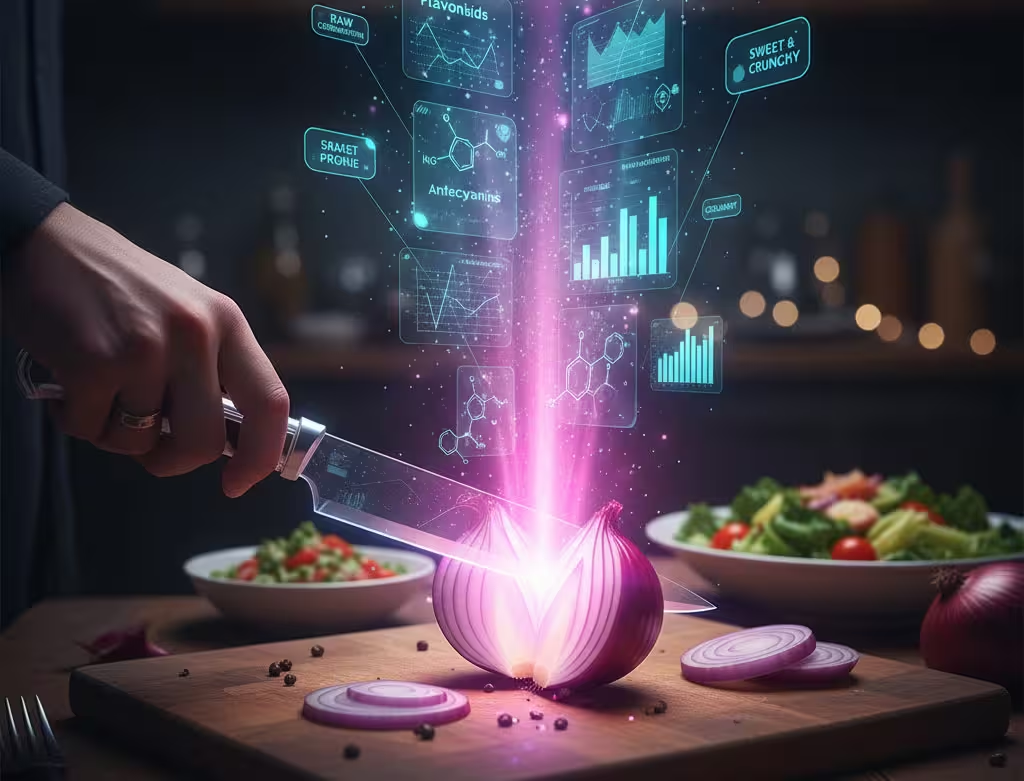
Red onions are instantly recognizable by their purple-red skins and rings. Their color comes from anthocyanins, pigments shared with blueberries and red cabbage that carry antioxidant properties. Red onions generally taste milder and sweeter when eaten raw and emit less tear-inducing vapor than yellow onions.
Key characteristics
- Skin and flesh hues: purple-red to magenta; color fades with prolonged cooking.
- Taste: milder and often perceived as sweeter raw due to higher soluble sugars.
- Chemistry: lower overall volatile sulfur compound levels compared with yellow varieties; significant anthocyanin content.
- Storage: moderate shelf life; refrigeration can alter color.
Where red onions excel
Because of their attractive color and gentler flavor, red onions are ideal for salads, pickles, burgers, and any dish where raw onion will be a visible component. A quick toss with acid—lemon juice or vinegar—softens their bite, highlights sweetness, and preserves the color, making them a popular garnish in Mediterranean and Middle Eastern plates.
Practical comparisons and culinary choices
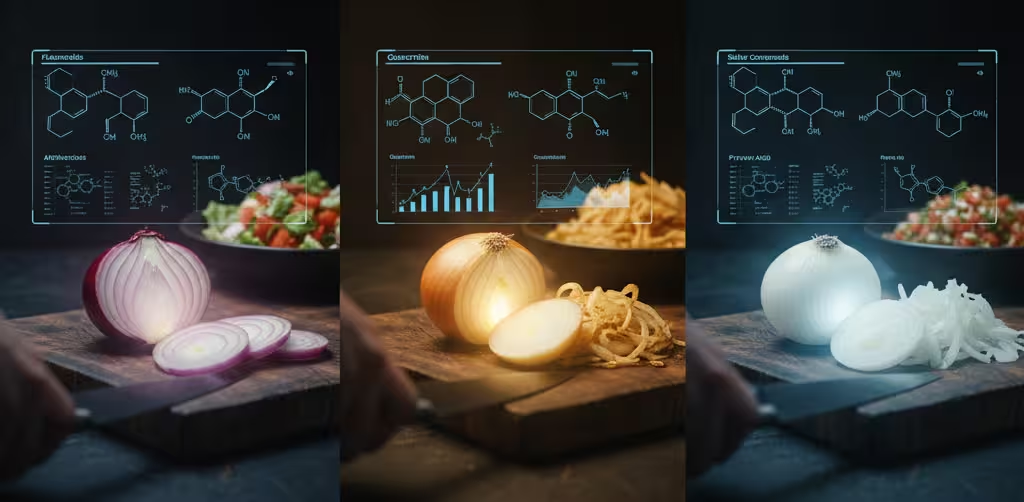
Choosing an onion should be intentional. If a recipe calls for long simmering or deep browning, reach for yellow. When you want a crisp, pronounced onion note or are preparing a short sauté, choose white. For raw applications, color, mildness, and a touch of sweetness make red onions the top pick.
Here’s a concise practical guide to match onion type with culinary need:
- Long stews, caramelized bases, soups, and sauces: Yellow onion.
- Raw salads, pickles, and visually striking garnishes: Red onion.
- Fresh salsas, tacos, and quick-cook recipes: White onion.
Science in the kitchen: experiments you can try

Want to observe the chemistry yourself? Try these simple kitchen experiments to see how onion types behave:
- Slicing test: Slice equal amounts of red, yellow, and white onion and smell them raw. The yellow should smell strongest; the red the mildest.
- Soak test: Soak thin slices in cold water or salt water for 10 minutes and note the decrease in pungency as volatile sulfur compounds diffuse away.
- Heat test: Sauté equal weights of each onion in neutral oil and monitor color and smell. Yellow will brown and sweeten most reliably due to higher sugar plus sulfur interactions in the Maillard reaction.
Storage, shelf life, and best practices
Onions store best in a cool, dry, well-ventilated place away from direct sunlight. Avoid storing onions next to potatoes; ethylene released by potatoes accelerates sprouting and decay. Yellow onions are the most forgiving for pantry storage, whereas white onions require quicker use. Red onions tolerate moderate storage but can lose surface color in refrigeration.
Expert Insight
"Understanding an onion's chemical profile lets cooks use it like an instrument: choose the strain that complements the dish," says Dr. Lina Morales, a food chemist and science communicator. "Yellow onions bring savory depth through sulfur-derived flavors; white onions deliver brightness and texture; red onions contribute color and a milder sweetness. If you treat selection as part of flavor design, a simple swap can transform a recipe."
Nutrition, antioxidants, and health notes
Beyond flavor, onions carry nutritional value. Anthocyanins in red onions act as antioxidants and are linked to reduced oxidative stress in lab studies. Sulfur compounds, despite their strong aroma, are associated with potential cardiovascular and antimicrobial benefits in some research. However, most health effects stem from overall dietary patterns rather than a single ingredient—so include onions as part of a balanced diet.
How culinary science links to broader research
The study of onion chemistry crosses food science, plant biology, and even sensory neuroscience. Researchers analyze volatile profiles with gas chromatography and mass spectrometry to quantify sulfur compounds and aroma molecules. Sensory panels correlate those chemical signatures with human perceptions of pungency and sweetness, which helps breeders and growers optimize varieties for taste and storage. Food technologists also study how acid, salt, and temperature modulate volatile release—knowledge that powers techniques like quick-pickling and flavor masking.
Choosing the right onion is a small decision with outsized impact. Whether you want the deep, caramelized base only yellow onions can provide, the sharp, fresh bite of a white onion, or the color and gentle sweetness of a red onion, matching variety to method is a simple, scientific way to lift everyday cooking.

“My work centers on sustainability, energy, and environmental science — examining how innovation can lead to a greener future.”

Discussion
Leave a Comment
Comments (3)
I've been swapping yellow for everything, but after this I’ll actually reach for red in salads. Quick test: lemon really brightens em up, who knew lol
is this even true about refrigeration fading the color? seems odd that cold would do that, anyone tried keeping red onions in fridge overnight and saw color go
wow, did not know the lachrymatory factor had that name, syn-propanethial-S-oxide... ok i geek out. Yellow for stews, red for salads, noted! gonna test the soak trick later