
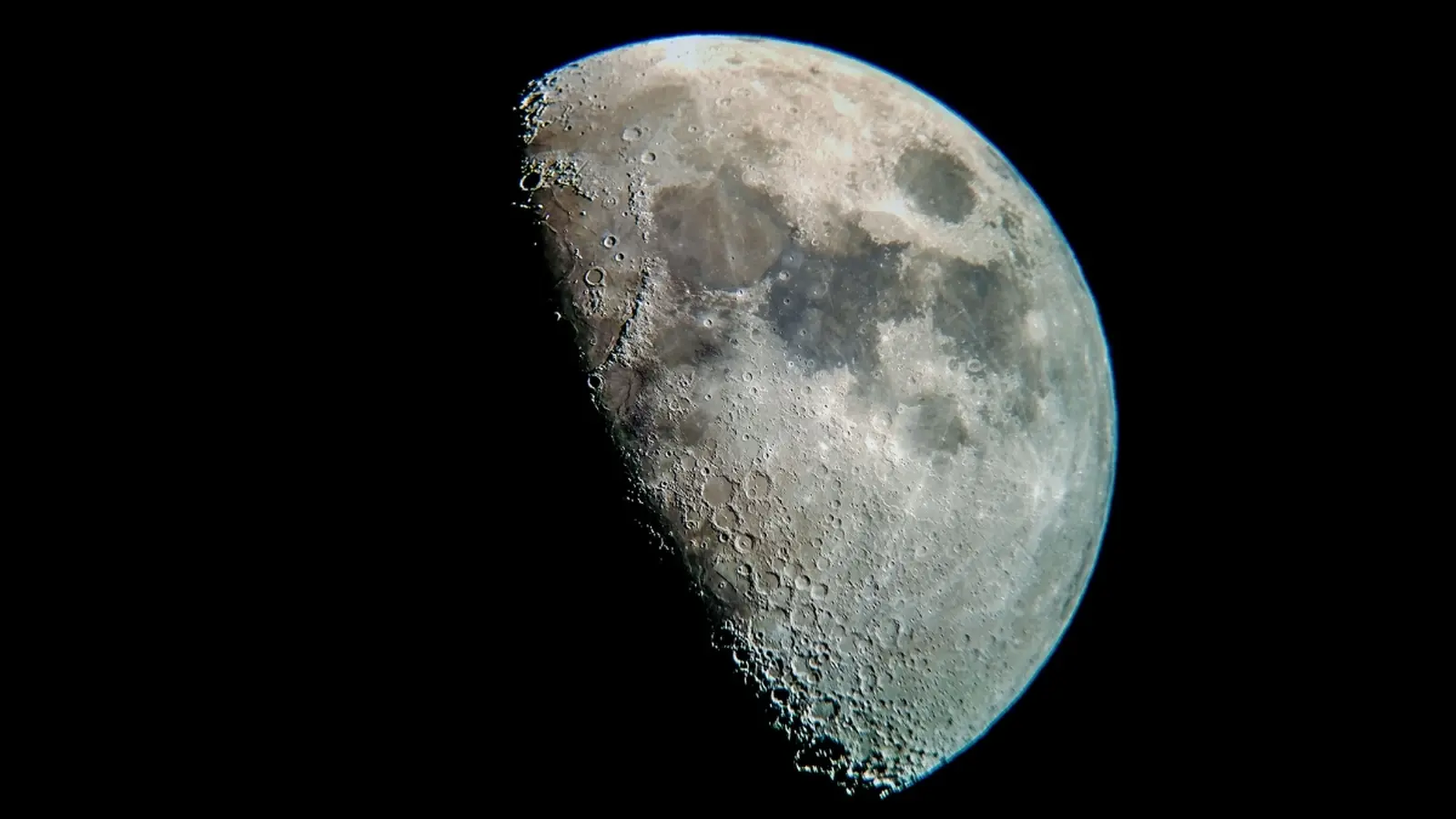
A new analysis of lunar measurements confirms what seismology and re-examination of old data had been hinting at: the Moon contains an iron-rich, solid inner core beneath a liquid outer shell. This finding refines our picture of how the Moon formed and evolved, and helps explain the early history of its magnetic field.
Why probing the Moon's interior matters
Understanding the internal structure of the Moon is more than academic curiosity. The distribution of solid and liquid layers governs thermal evolution, volcanic activity, and the magnetic field. That magnetic field, which the Moon possessed billions of years ago, affects how the lunar surface was altered by the solar wind and how volatile elements were retained or lost. Knowing whether the lunar heart is solid or molten helps piece together the Solar System's early violent period and the timeline of lunar bombardment.
How scientists reached the new verdict
Seismic waves are the best tool for peering inside planets and moons. On Earth, earthquakes allow geologists to map core and mantle layers. For the Moon, Apollo-era seismometers produced useful but limited data. Those instruments showed evidence for a fluid outer core, but their resolution left room for two possibilities: an entirely molten core, or a layered core with an inner solid ball and a surrounding fluid shell.
To break that tie, a team led by astronomer Arthur Briaud at the French National Centre for Scientific Research combined multiple, independent measurements instead of relying solely on Apollo seismology. They compiled datasets from spacecraft tracking, lunar laser-ranging experiments, measurements of the Moon's tidal deformation caused by Earth, and variations in the Moon's rotation and distance. These observables constrain mass distribution and material properties.
With that observational suite in hand, the researchers built physics-based models of the Moon containing different core configurations. Each model produced predictions for how the Moon should wobble, deform, and respond to tidal forces; the team compared those predictions to the measurements and identified which internal structure best matched reality.
What they found: a small iron heart
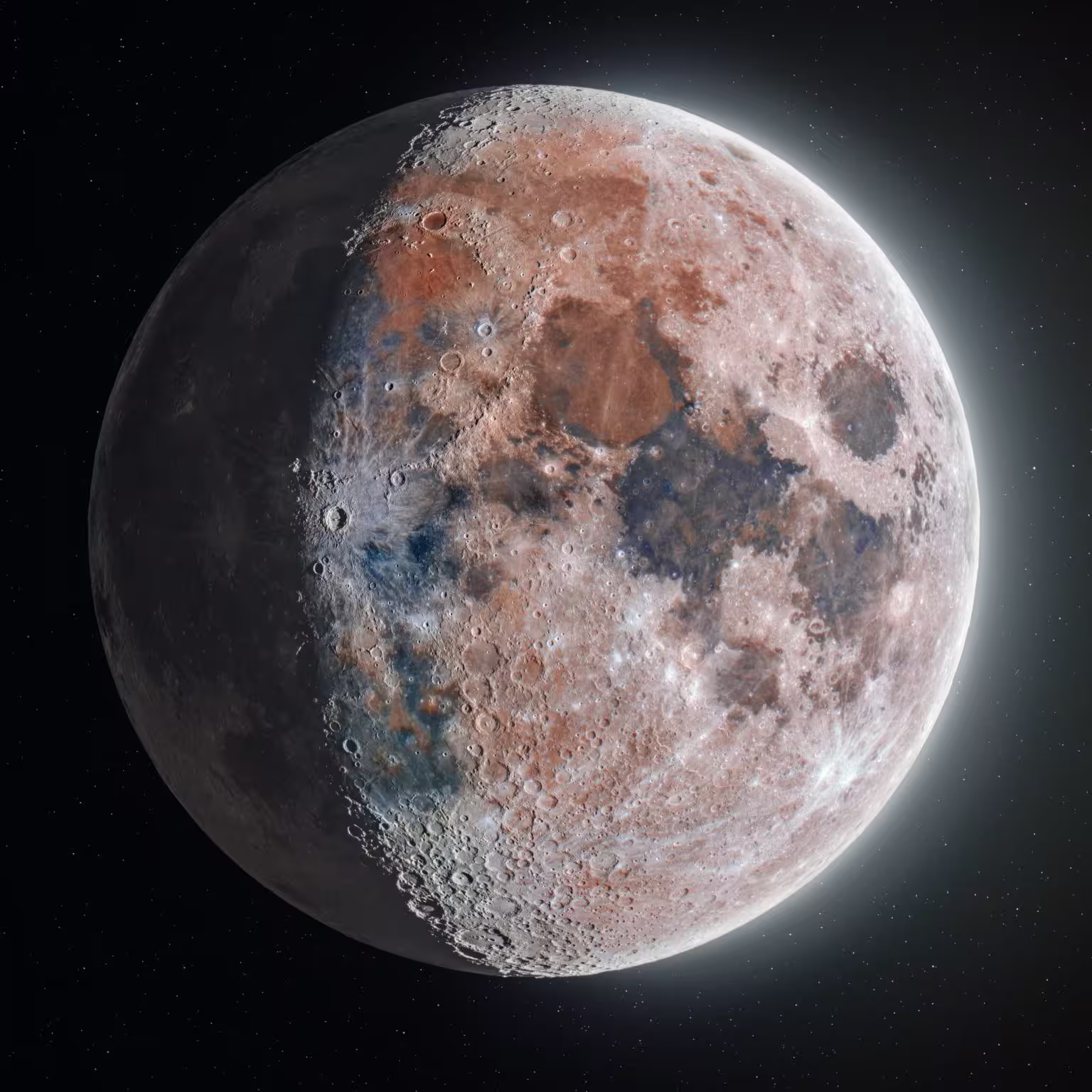
The models that fit the observational data most closely included a convecting mantle with active overturn and a two-part core: a liquid outer core and a solid inner core. Their best-fit numbers describe an outer core radius of roughly 362 kilometers (225 miles) and an inner core radius near 258 kilometers (160 miles) — about 15 percent of the Moon's total radius. The inferred density of the inner core is approximately 7,822 kilograms per cubic meter, very close to pure iron.
These results confirm earlier 2011 work led by NASA Marshall scientist Renee Weber, who reanalyzed Apollo seismic records with newer techniques and reported a solid inner core around 240 kilometers in radius with a density near 8,000 kilograms per cubic meter. Briaud and colleagues treat this agreement as independent confirmation: different methods and datasets point to an Earth-like core structure in miniature.
Why mantle overturn matters
Another outcome of the modeling is evidence for deep mantle overturn inside the Moon. Mantle overturn describes denser material sinking toward the center while lighter material rises. On Earth, mantle convection drives plate tectonics and volcanism; on the Moon, overturn can explain the chemical anomalies in some volcanic regions, such as elevated concentrations of incompatible elements brought to the surface. Briaud's team argues that mantle overturn played a key role in lunar evolution, particularly during the first billion years after formation when heavy bombardment and internal differentiation were most active.
Implications for the lunar magnetic field and history
We know the Moon once generated a strong magnetic field, which waned about 3.2 billion years ago. A dynamo powered by fluid motion inside a metallic core is the standard explanation for such ancient fields. If the Moon has a liquid outer core surrounding a solid inner core, that geometry supports dynamo action early on and helps explain why the field later decayed as the interior cooled and convection slowed. Pinning down core size and composition therefore limits the range of plausible dynamo histories.
The findings also refine models of the Moon's thermal budget and how long residual heat and radioactive elements could sustain internal activity. Those models feed into broader scenarios about how rocky bodies lose heat and evolve in the first stages of the Solar System.
Expert Insight
Dr. Elena Moretti, a planetary geophysicist (fictional) who studies small-body interiors, comments: 'This convergence of independent datasets is compelling. It shows how a combination of laser ranging, spacecraft tracking, and careful physical modeling can reveal interior structures that older seismic networks alone could not resolve. The Moon's small solid core has big implications for how and when its dynamo died out.'
What comes next: missions, measurements, and human return
The ultimate test of these models will be new seismic measurements on the lunar surface. Future robotic landers and crewed missions could deploy updated seismometers with higher sensitivity and better global coverage than Apollo provided, directly measuring core-reflected waves and constraining core radius, density, and state with much higher precision. China, NASA, and other space agencies are planning renewed activity on the Moon; targeted geophysical stations would settle remaining uncertainties within years rather than decades.
In the meantime, the new work published in Nature tightens the narrative of lunar evolution. It makes the Moon less of an isolated relic and more of a close cousin to Earth — similar internal architecture, divergent surface histories. For researchers reconstructing the Solar System's early chapters, that similarity is a powerful constraint.

“The cosmos has always fascinated me. I write about space missions, astronomy, and the technologies pushing humanity beyond Earth.”

Discussion
Leave a Comment