
Research into “quantum rods” — elongated nanocrystals that can be directionally aligned — is gaining momentum and could reshape tomorrow’s TV screens. Scientists say these tiny rods promise brighter images, punchier HDR and significantly better energy efficiency than current quantum-dot approaches.
Tiny rods, big efficiency gains
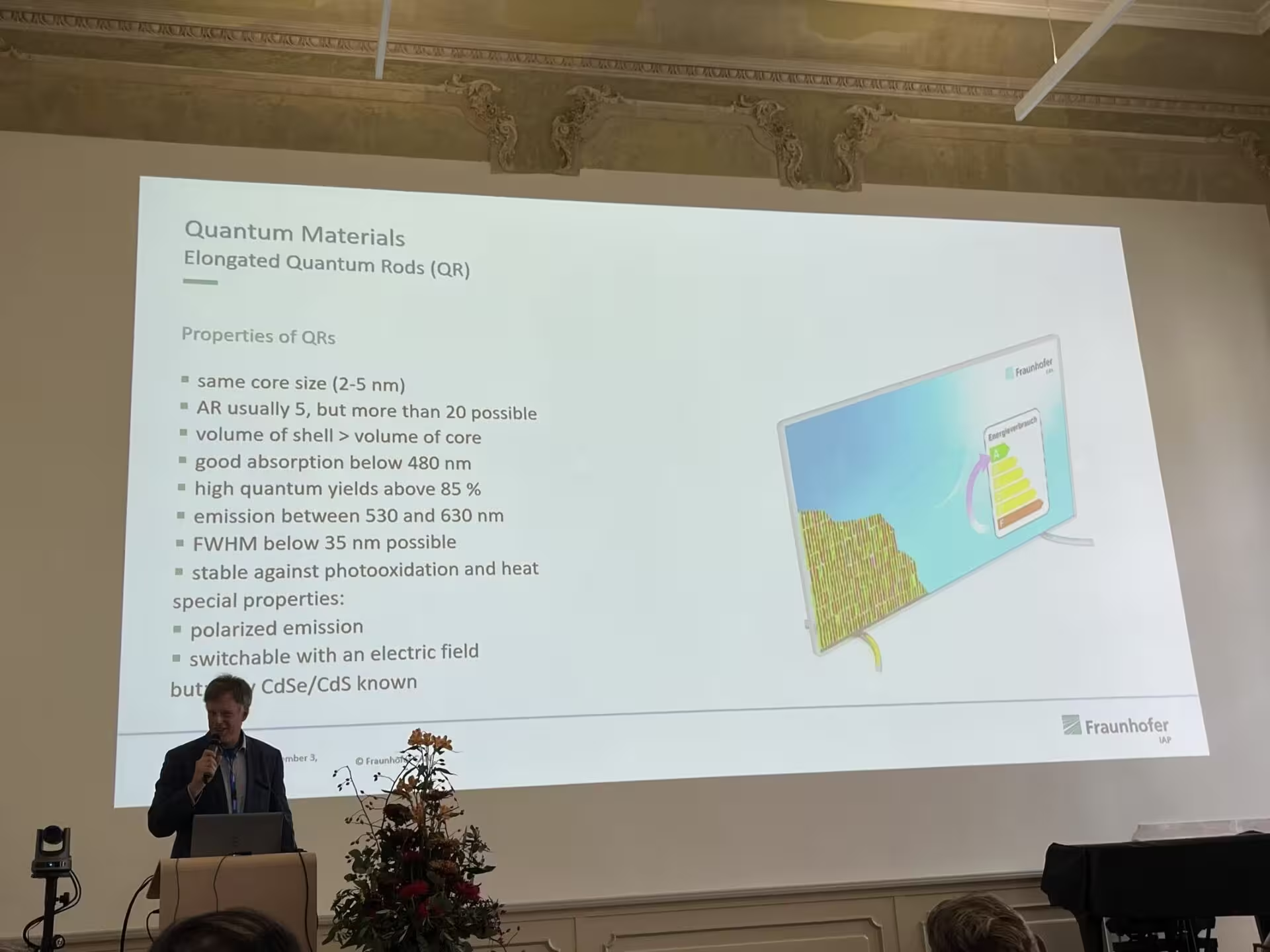
At the SID-MEC conference in Germany, Jan Niehaus of Fraunhofer IAP-CAN shared new experimental progress that moves quantum rods (QRs) out of pure theory and into practical testing. Unlike spherical quantum dots, quantum rods have a lengthwise orientation that engineers can align inside a display stack. That ordered alignment helps channel light more efficiently — meaning displays could produce the same or greater brightness while using less power.
Why alignment matters
Imagine thousands of microscopic light emitters all pointing the same way. When QRs are aligned, more of the generated light passes through the panel instead of scattering away. The immediate benefits are clear: higher brightness-per-watt, improved HDR headroom and potentially lower heat generation — all important for large-screen TVs and battery-powered devices alike.
From lab layers to living rooms
Fraunhofer’s team has already managed to transfer a full quantum-rod layer onto a test substrate that withstands high temperatures, an encouraging sign for manufacturing stability. Niehaus says the basic feasibility is now clearer, but cautions that consumer-ready products remain some distance off. The work shows QRs can survive key processing steps — a major milestone for any emerging display material.
Where quantum rods might appear first
- As an upgrade to current QLED LCDs that use a backlight plus a quantum-dot filter.
- Or, more ambitiously, inside self-emissive quantum-dot panels (branded variously as EL-QD, QED or QE) where aligned rods could boost light output per watt dramatically.
Branding, standards and the road ahead
One practical hurdle is naming. The display industry already argues over labels for quantum-dot-based technologies; quantum rods will only complicate that landscape if they reach commercialization. Beyond marketing, engineers must still prove long-term reliability, scalable deposition methods and cost-effective production.
Potential and pitfalls
- Advantages: improved energy efficiency, stronger HDR performance, higher peak brightness and lower power consumption.
- Challenges: scaling lab processes, ensuring material stability over time, and integrating rods into existing panel architectures.
If quantum-rod technology matures, the next generation of TVs could be noticeably brighter and richer in color while sipping less power. Researchers will also be watching whether the same approach can be adapted for mobile displays, where efficiency gains translate directly into longer battery life.
For now, QRs remain a promising lab-stage innovation — one to watch as companies and research institutes move from proof-of-concept to pilot production. The real question is not whether quantum rods are interesting, but how quickly the tech can cross the gap from experiments to store shelves.

“I love exploring gadgets, apps, and trends that redefine how we connect, work, and play in a digital world.”

Discussion
Leave a Comment