
Robot vacuums in 2025 are no longer quirky gadgets; they’re serious smart home workhorses. From machines that empty their own bins and scrub hardwood floors to ultra-powerful bots that rival stick vacuums, there’s now a robo-cleaner for almost every home, budget and floor type.
Best robot vacuums for 2025: top picks by category
Below is a curated look at the best robot vacuums and robot mop combos for 2025, based on real-world performance, smart features and overall value.
Best robot vacuum for most homes: Shark AI Ultra with Clean Base
The Shark AI Ultra Voice Control Robot Vacuum with Clean Base hits the sweet spot for most people. It combines strong suction, accurate home mapping and a genuinely useful self-emptying base, without the eye-watering price tag of some flagship models.
Setup is straightforward: unbox the robot and base, plug the base into power, and use the companion app to connect it to Wi‑Fi. Once online, you can control it remotely from your phone or via Alexa and Google Assistant voice commands.
The first mission the Shark runs is an “Explore” pass. During this run, it maps your home and generates a floorplan you can edit in the app. You can label rooms, define zones and mark off no-go areas you want it to avoid. There’s even a “re-explore” option in case you rearrange furniture or the initial map isn’t quite right.
With a runtime of up to 120 minutes, the Shark AI Ultra can comfortably cover larger spaces. It’s noticeably quieter than many competing robot vacuums: you’ll hear it if it’s in the same room, but it quickly fades into the background once it moves down the hall.
Obstacle avoidance is solid. Shark claims it can detect objects around four inches in size, and in practice it handled larger items like cat tunnels and toys well, though very small objects can still get nudged. Crucially, it rarely needs human intervention mid-clean — once you hit Start, it quietly patrols, steers around most obstacles and returns to its dock on its own.
Its self-emptying Clean Base is one of the standout features. Unlike many rivals, Shark’s base is bagless, so you’re not locked into buying proprietary dust bags every few months. When you’re ready to empty it, the canister pops off, opens to release debris and then clicks back into place. That design cuts long-term ownership costs and reduces waste.
Shark offers closely related models that differ mostly in color, base capacity (30 days vs 60 days of debris) and a few minor details. If you want a set-and-forget experience, the 60-day base is worth the upgrade.
- Pros: Strong suction; bagless self-empty base; intuitive mobile app; good for pet hair.
- Cons: Noticeable noise when vacuuming on higher power levels.
Best robot vacuum and mop combo: iRobot Roomba Combo j9+
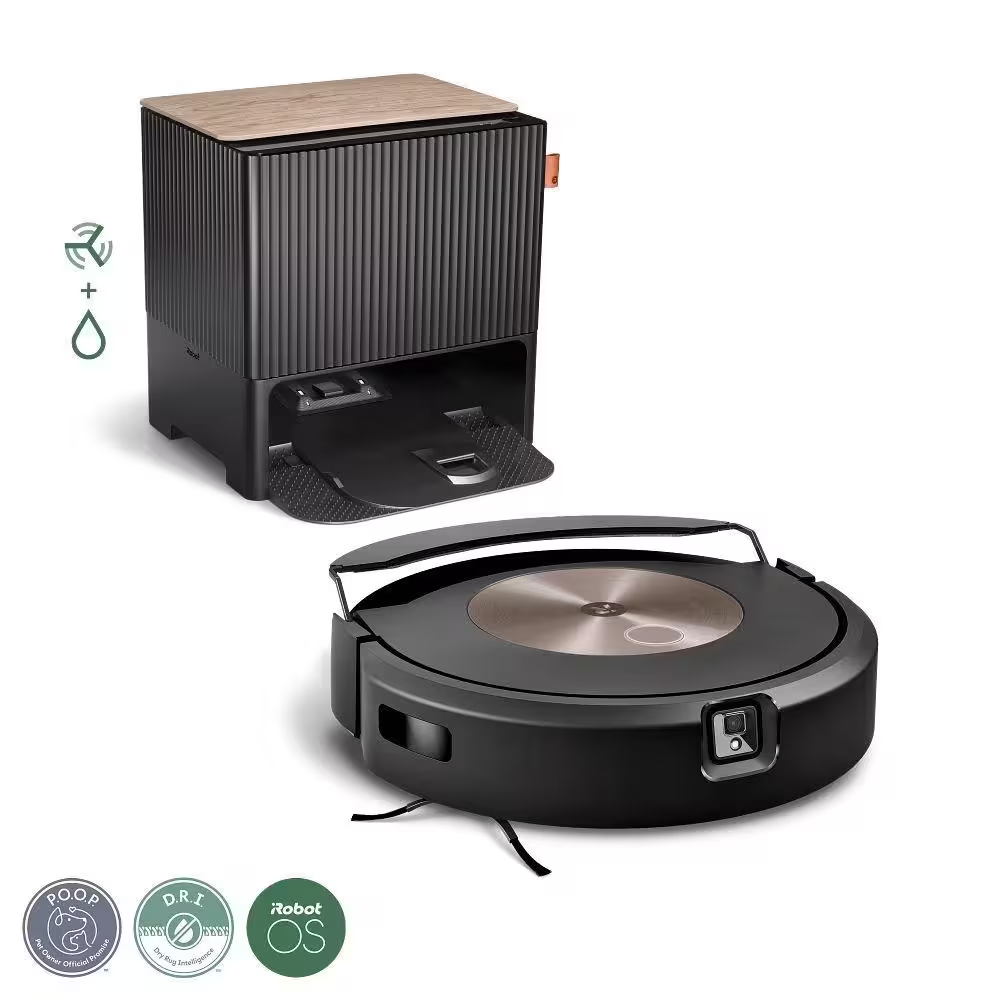
If you want one robot to vacuum and mop your entire home with minimal input, the iRobot Roomba Combo j9+ is the premium option to beat in 2025. It pairs powerful suction with effective floor scrubbing and sharp obstacle avoidance — including detecting and avoiding pet waste.
Compared with the popular Roomba Combo j7+, the j9+ improves on both cleaning power and convenience. Its redesigned Clean Base doesn’t just collect dust; it can also automatically refill the robot’s onboard water tank, cutting down on manual top-ups. For busy households, that’s a genuine quality-of-life upgrade.
For pet owners, the Combo j9+ is particularly compelling. It’s engineered to spot and steer around cat and dog poop, reducing the risk of the kind of nightmare messes that early robot vacuums were infamous for. iRobot even offers a one-year guarantee: if the j9+ spreads solid cat or dog waste and ruins the robot, they’ll replace it.
On the smart home side, the Combo j9+ maps your home quickly and accurately. Using the iRobot app, you can divide rooms, set virtual boundaries, build custom cleaning routines and label areas by function (for example, “kitchen”, “kids’ play area” or “under the dining table”). It also integrates with Alexa and Google Assistant, so you can trigger cleanups with voice commands.
The j9+ is not completely hands-free — you’ll still get the best results if you pick up clutter and cables before longer runs — but it’s as close as current consumer tech gets to a fully autonomous whole-home vacuum and mop.
- Pros: Excellent vacuum performance; capable, automated mopping; strong obstacle and pet-poop detection; well-designed base; good battery life.
- Cons: High price; mopping pad struggles with very sticky spills.
Best robot vacuum & mop combo (runner-up): Shark PowerDetect NeverTouch Pro
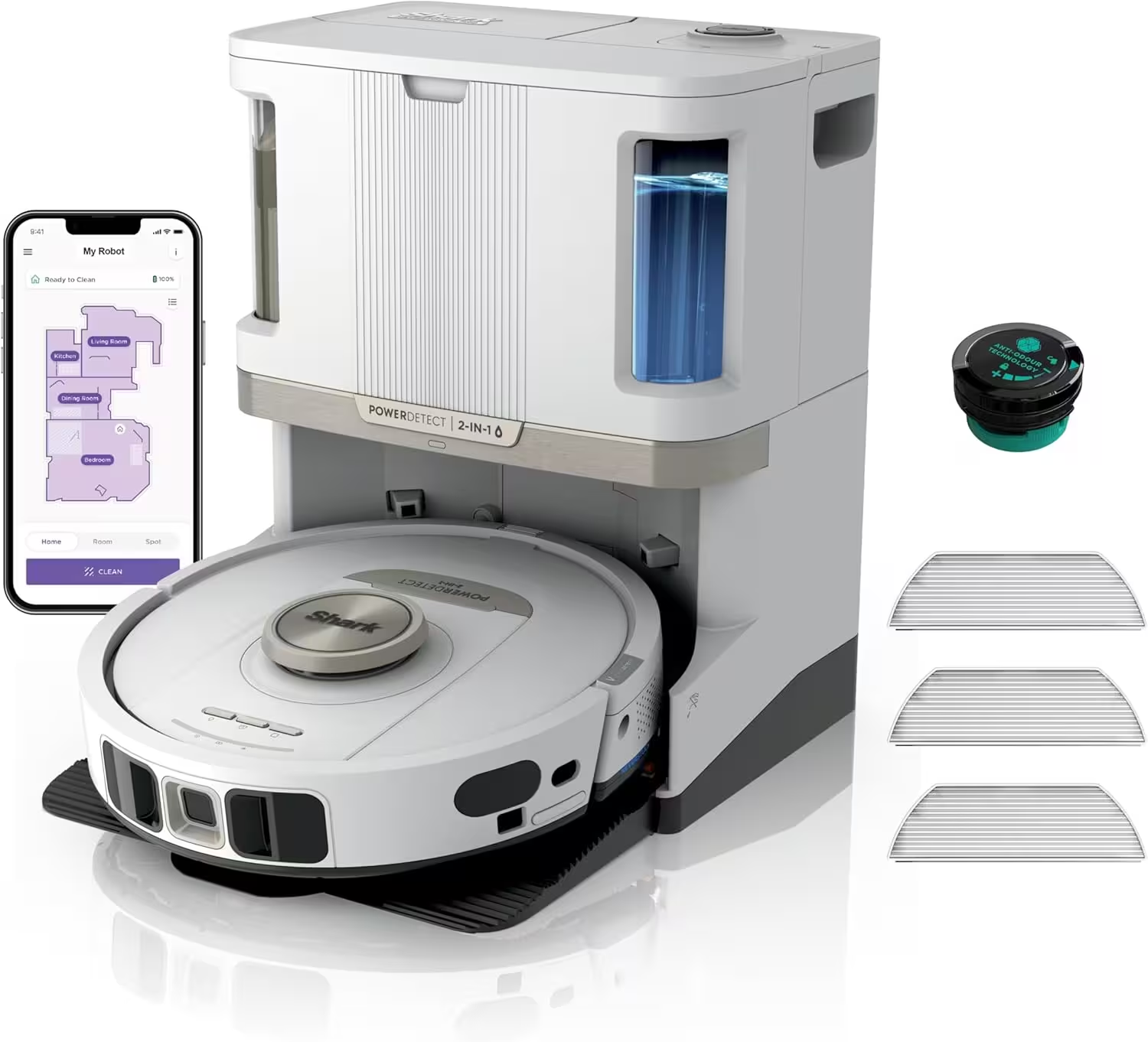
Shark’s PowerDetect NeverTouch Pro Robot Vacuum & Mop Combo is a strong alternative to iRobot’s high-end combo robots. It delivers great suction, efficient mopping and a smart base that handles both debris emptying and water refilling.
The PowerDetect works a little differently from the Roomba Combo j9+. Instead of a mop arm that lowers and raises automatically over hard floors, Shark’s model has a mop pad built into the underside. During setup, you use the app to mark which areas of your map are hard floors and which are carpet. From then on, the robot knows when to mop and when to avoid using water.
Once the initial mapping run is complete, you can choose between vacuuming only, mopping only, or a combined cycle where it vacuums first and then mops the freshly cleaned surfaces. Performance on hardwood and tile is strong, and obstacle avoidance is reliable — the robot rarely gets trapped on door thresholds or tangled in stray cables.
The NeverTouch Pro Base lives up to its name. After you fill its clean water tank and install a debris container, you can largely ignore it for weeks. The base can store up to 60 days of vacuumed dirt and around 30 days of liquid for refilling the mop tank, depending on how often you run it. For people who hate floor chores or travel frequently, this “minimal touch” design can be a real selling point.
- Pros: Strong suction and effective mopping; auto-empty base; automatic water refill; flexible scheduling and zone cleaning.
- Cons: Premium pricing compared to basic robot vacuums.
Best high-suction robot vacuum: Dyson 360 Vis Nav
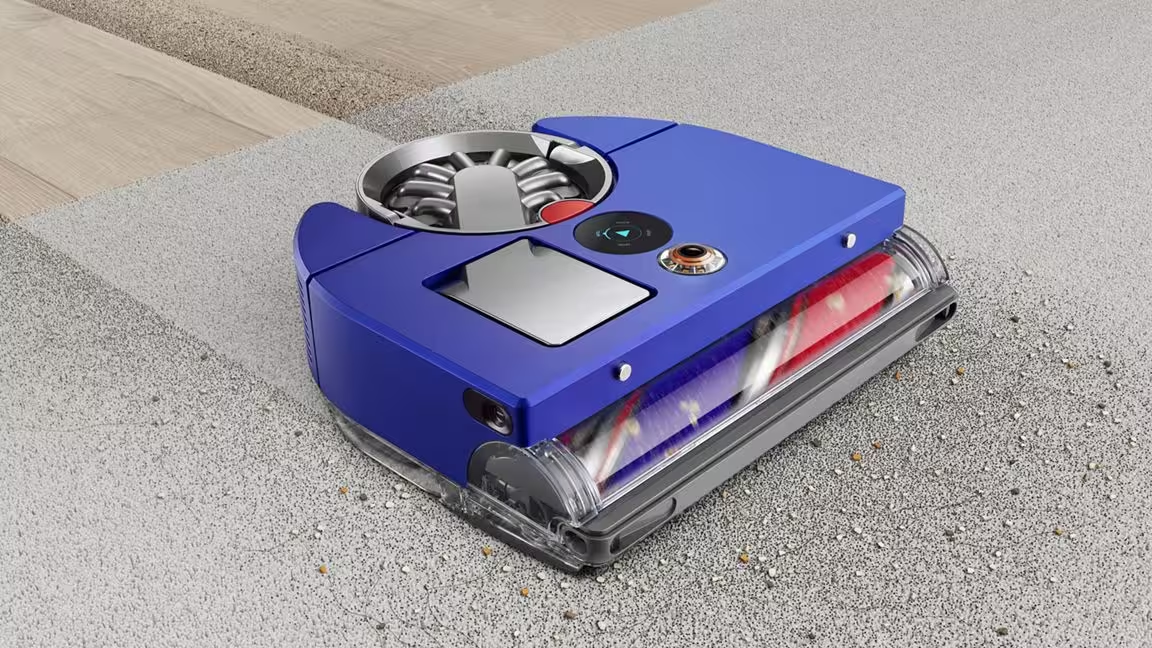
The Dyson 360 Vis Nav is built for one thing above all else: raw cleaning power. If you want a robot vacuum that gets as close as possible to a premium Dyson stick vacuum in suction performance, this is the model to look at.
In testing, the 360 Vis Nav pulled an impressive amount of embedded pet hair and fine dust from carpets without immediately filling its bin. Its suction is among the strongest available in any consumer robot vacuum, making it ideal for homes with thick rugs, shedding pets or high-traffic areas that standard bots can’t quite deep clean.
Navigation is aided by a 360-degree vision system that uses a camera and LEDs to detect furniture, map rooms and track where it has already cleaned. While no robot vacuum is perfect at avoiding every chair leg, the Dyson bumps into obstacles far less often than many competitors and rarely gets stuck to the point of needing rescue.
However, there are trade-offs. The Dyson 360 Vis Nav does not include a self-emptying dock, nor does it offer any mopping function. At a price point around $1,000, that lack of extras will be a deal-breaker for some shoppers, especially as many rival models at lower prices offer both a clean base and mop module.
If you care about suction performance above all else and are comfortable emptying the bin yourself, the 360 Vis Nav is one of the most capable standalone robot vacuums you can buy.
- Pros: Class-leading suction; excellent for pet hair and carpets; strong obstacle avoidance; detailed mapping.
- Cons: Very expensive; no self-emptying base; no mopping mode.
Best robot vacuum for first-time buyers: iRobot Roomba Vac
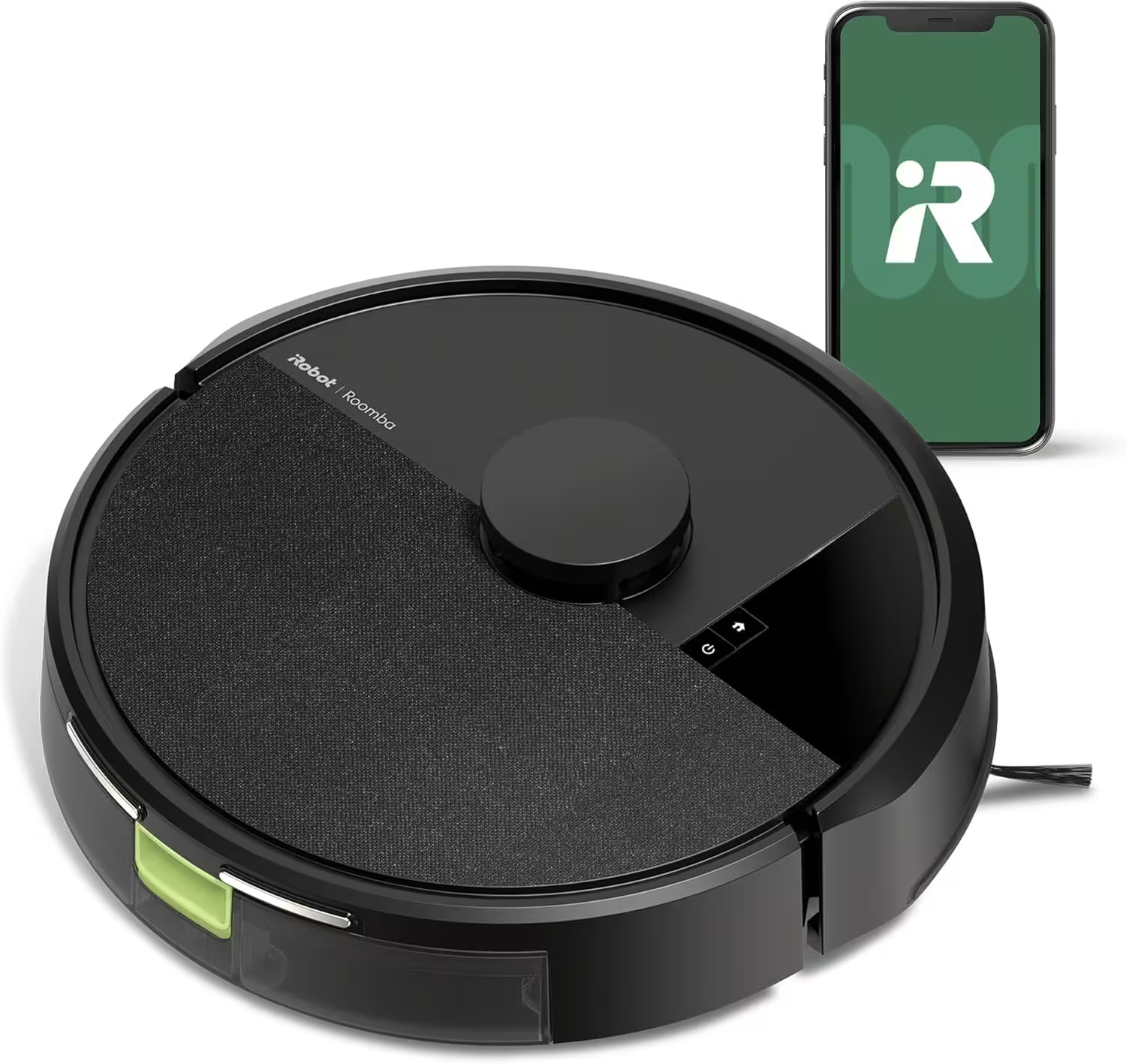
If you’re new to robot vacuums and want something simple, reliable and reasonably priced, the iRobot Roomba Vac Robot Vacuum is a smart entry point. It focuses on core features instead of bells and whistles, but still delivers solid day-to-day cleaning.
The Roomba Vac provides Wi‑Fi connectivity and app control, so you can start and schedule cleanings from your phone or integrate it with Alexa and Google Assistant. Its suction power is good for its compact size, and it handles the usual mix of dust, crumbs and pet hair on both hard floors and low- to mid-pile carpets.
While it skips premium extras like a self-emptying base or mopping pad, that also helps keep costs down and reduces complexity. For many first-time buyers, that trade-off is worth it.
- Pros: Clean, straightforward design; good suction for everyday messes; user-friendly app; strong brand support.
- Cons: Can’t reach under very low furniture; no self-emptying or mopping.
Most versatile 3‑in‑1 system: Anker Eufy E20 robot vacuum
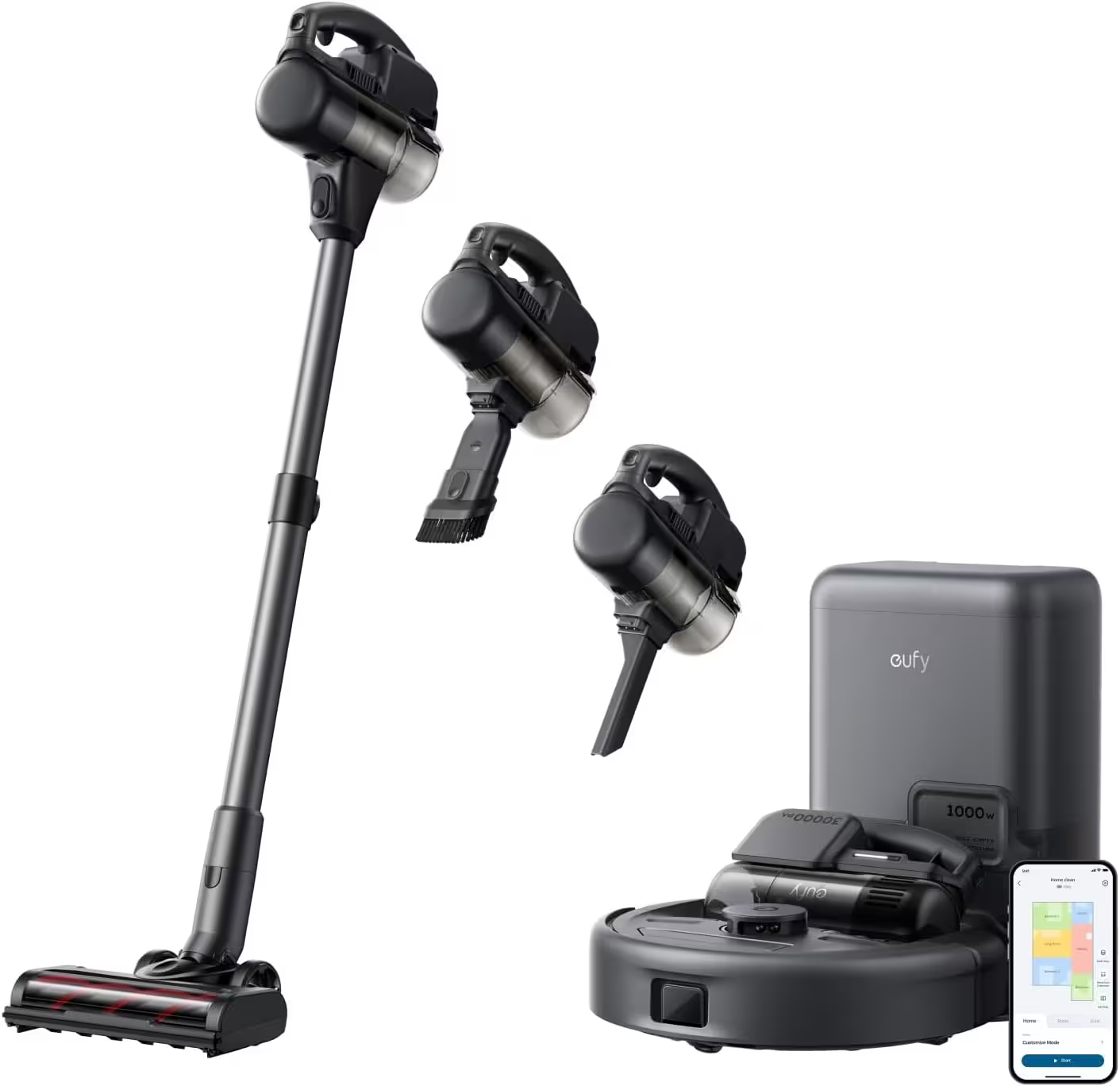
The Anker Eufy E20 3‑in‑1 robot vacuum is one of the most flexible cleaning systems on the market. It’s primarily a robot vacuum with a self-emptying base, but the same core unit can also transform into a cordless stick vacuum and a handheld cleaner using the included attachments.
As a robot vacuum, the E20 leans on Eufy’s years of experience in this category. It offers reliable home mapping, good obstacle avoidance and strong performance on dust, crumbs and pet hair. It’s also smart enough to recognize when its onboard dustbin is nearly full and will periodically return to the base to empty itself mid-clean.
When you need to tackle stairs, upholstery or car interiors, you can detach the main cleaning module from the robot and attach the stick or handheld components. As a stick vacuum, suction is best on the highest power mode, and the build quality feels more budget than premium, but the compact size makes it easy to wield and store.
For households that want both a robot vac and a lightweight cordless vacuum without buying two separate devices, the E20 offers strong value.
- Pros: True 3‑in‑1 system (robot, stick, handheld); strong robo-vac performance; self-empty base with generous capacity; upgraded Eufy Clean app; competitive pricing for the feature set.
- Cons: Lower suction in most stick modes; stick vacuum construction feels basic; wall mount sold separately.
How to choose the best robot vacuum for your home
The best robot vacuum for you depends heavily on your space, flooring and habits. Here are the key factors to weigh before you buy.
Floor type and suction power
Start with your floors. Do you mostly have hardwood, tile and vinyl, or thick carpet and rugs?
- Carpeted homes: Look for higher suction power and performance on embedded dirt and pet hair. Some brands specify suction in Pascals (Pa) — generally, higher Pa means stronger suction — while others simply compare to their own previous models.
- Hard floors: Almost any decent robot vac will do fine on bare surfaces, but if you like spotless floors, consider a model with integrated mopping and adjustable water flow.
Because there’s no universal suction standard, pay close attention to independent tests and user reviews that mention performance on surfaces similar to your own home.
Wi‑Fi connectivity and app control
Wi‑Fi may sound like a nice-to-have, but in practice it’s one of the key features for modern robot vacuums. A connected bot lets you:
- Start and stop cleaning from anywhere.
- Set schedules and cleaning routines.
- View maps of your home and cleaning history.
- Use voice commands via smart assistants.
Some budget models drop Wi‑Fi to save cost, so double-check specs if app control is important to you.
Mapping, zones and object detection
Move up into the mid-range and you’ll find mapping and smarter navigation. The robot learns your layout, then uses that data to clean more efficiently and let you target specific spaces.
- Home mapping: Enables room-by-room cleaning, virtual “keep-out” zones and more precise scheduling.
- Object detection: Sensors and cameras help avoid chair legs, toys and cables. High-end models go further with specialized algorithms to spot and dodge hazards like pet poop.
Better mapping and detection doesn’t just improve cleaning patterns; it also cuts down on how often you have to rescue the robot from tight spots.
Self-emptying bases
Self-emptying bases are now common in mid- and high-end robot vacuums. After each run, the robot docks, and a powerful vacuum in the base pulls debris from the small onboard bin into a larger container.
Benefits include:
- Far fewer manual bin empties (often every 30–60 days instead of every day or two).
- Better for allergy sufferers, as dust stays enclosed.
Most bases use proprietary disposable bags, which are convenient but add an ongoing cost. That’s why bagless systems, like Shark’s, can be attractive over the long term.
Robot vacuums with mopping features
Mopping has gone from rare extra to mainstream feature in just a few years. Robot vacuums with mopping usually include:
- A removable or built-in water tank.
- A washable mop pad or rotating pads.
- Multiple modes for vacuum-only, mop-only or combined runs.
However, mopping still requires some human work. You’ll typically need to:
- Fill and occasionally rinse the water tank.
- Swap or wash mop pads.
- Add compatible cleaning solution if supported.
Only the most premium systems automate refilling and pad cleaning. For sticky kitchen spills and dried-on messes, a traditional mop or spot clean is still more effective than any current robot.
Robot vacuum maintenance: get the most from your bot
To keep your robot vacuum performing like new, a little regular maintenance goes a long way.
- Empty the dustbin: If your model doesn’t have a self-empty base, empty the bin after every cleaning run. Occasionally wipe it out with a dry cloth to remove fine dust.
- Clean the brush rolls: Hair and threads can wrap around the main brush and side brushes. Pop them out, pull off any tangles and snap them back in place. Check them every week or two in homes with pets or long hair.
- Replace filters: Most robot vacuum filters aren’t washable. Follow the manufacturer’s recommended replacement schedule, usually every couple of months, to maintain suction and air quality.
- Check sensors and wheels: Lightly wipe cliff sensors and front casters from time to time so the robot can navigate safely and smoothly.
How we test robot vacuums
Performance claims are one thing; real homes are another. To see how each robot vacuum behaves in the wild, tests are carried out in mixed environments that include hard floors, rugs and high-traffic areas, plus common household messes.
Each model is set up according to the manufacturer’s instructions and then used for at least one to two weeks. During this period, testers evaluate:
- How well it picks up dust, crumbs, pet hair and larger debris.
- Navigation around furniture, rugs, doormats and cables.
- Noise levels while cleaning and while emptying the bin.
- Mapping speed and accuracy.
- Effectiveness of mopping functions on hardwood and tile, if available.
- Ease of use and reliability of the mobile app.
- How often the robot gets stuck or needs human help.
For models with self-empty bases, those features are used exclusively to gauge how well they handle debris transfer and how long the base can go between empties. For mop-capable robots, testers also assess how well they tackle dried spills and how quickly tanks and pads need attention.
The end result is a clearer picture of which robot vacuums are worth your money in 2025 — and which are better left on the shelf.

“I love exploring gadgets, apps, and trends that redefine how we connect, work, and play in a digital world.”

Discussion
Leave a Comment