
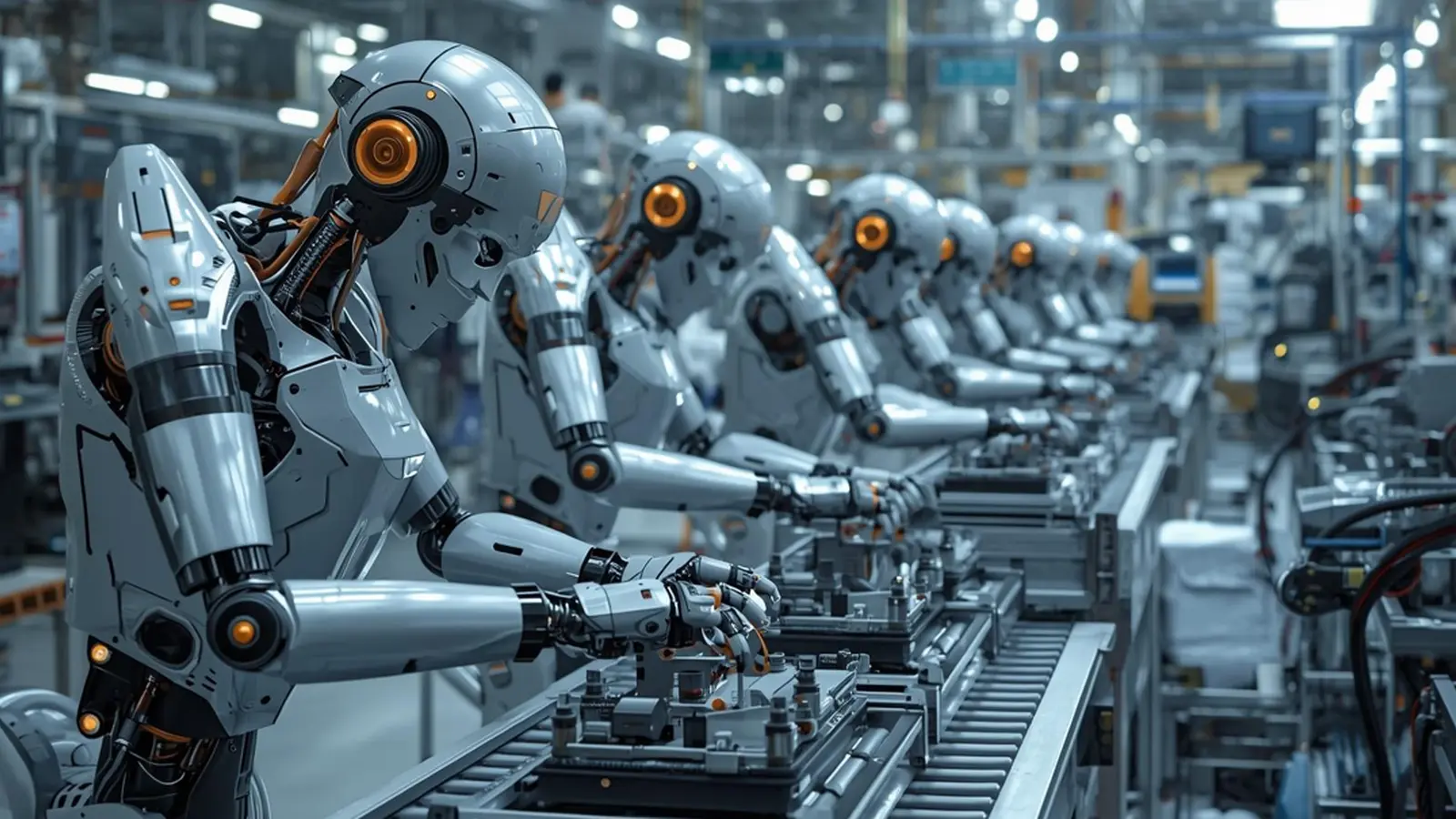
China installed a record number of industrial robots in 2024—more than half of all new global deployments—cementing its role as the planet's dominant automation hub. From sprawling "dark factories" to eldercare humanoids, the scale and ambition of China's robotics push are reshaping manufacturing and service sectors worldwide.
A robot superpower: scale, fleet and real factory impact
In 2024 China added roughly 295,000 industrial robots, contributing to 542,000 new units globally—a 9% increase from 2023. That surge pushed China's active robot fleet to about 2.03 million machines, dwarfing Japan (450,000), the United States (400,000) and South Korea (392,000).
These robots are not toys. They perform welding, move heavy materials, handle repetitive precision assembly and accelerate logistics. In sectors like automotive and electronics, automation has become the backbone of high-efficiency production lines, reducing dependency on manual labor for repetitive tasks and raising throughput.
Automation as an answer to a demographic crunch
China's robotics boom coincides with a shrinking population—the country lost about 1.39 million people in 2024—creating pressure on the labor pool. Many companies see robots as a practical solution to sustain output with fewer workers. As Professor Gao Xudong from Tsinghua University points out, routine tasks will increasingly be automated, while creative and complex roles remain human-led.

But automation brings its own workforce needs. Analysts estimate China could face a shortfall of roughly 50 million high-skilled blue-collar workers by 2030 for roles like robot operation, programming and maintenance. That makes vocational training and upskilling critical components of the next manufacturing wave.
From consumer to manufacturer: China builds the robots it buys
China is no longer just the world's biggest buyer of robots; it became the largest producer of industrial robots in 2024. Domestic output rose from 25% of global production in 2023 to about one-third in 2024. Local suppliers now produce key components—motors, sensors, gears and controllers—helping manufacturers scale robotics at lower cost.
Examples are already visible on the factory floor. Companies such as Xiaomi and BYD operate fully automated "dark factories," where lighting and human presence are minimal and machines run continuous, tightly orchestrated production cycles.
Humanoids: from labs to elderly care and service
Robotic innovation in China is moving beyond arms and cobots. Guangdong-based Tiantai Robot secured an order for 10,000 humanoid robots in 2024 aimed primarily at elderly care—an early sign that human-like robots are transitioning from research projects to commercial service deployments.
Humanoids offer different value propositions than industrial robots: they can navigate social environments, assist with care tasks and interact with people directly. For societies with aging populations, those capabilities are especially attractive.
Global ripple effects: data, scale and competitive pressure
China's mass deployment creates a "flywheel effect": more robots in operation generate huge volumes of usage data, which in turn accelerates improvements in AI, predictive maintenance and robotic control systems. That data advantage can multiply productivity gains over time.
The gap is visible numerically: the United States installed about 34,200 robots in 2024. Experts argue that to remain competitive, countries with strong AI software ecosystems must invest more aggressively in physical robotics, local manufacturing and workforce training.
China's dominance in industrial robotics is the result of coordinated investments across manufacturing, component supply chains and training programs. The technology is already changing how goods are made and services delivered—now the question is how other economies will respond, and whether policy and education systems will keep pace with the physical automation wave.

“I cover emerging technologies, digital innovation, and the intersection of tech and everyday life. My goal is to make complex trends accessible and inspiring.”

Discussion
Leave a Comment