

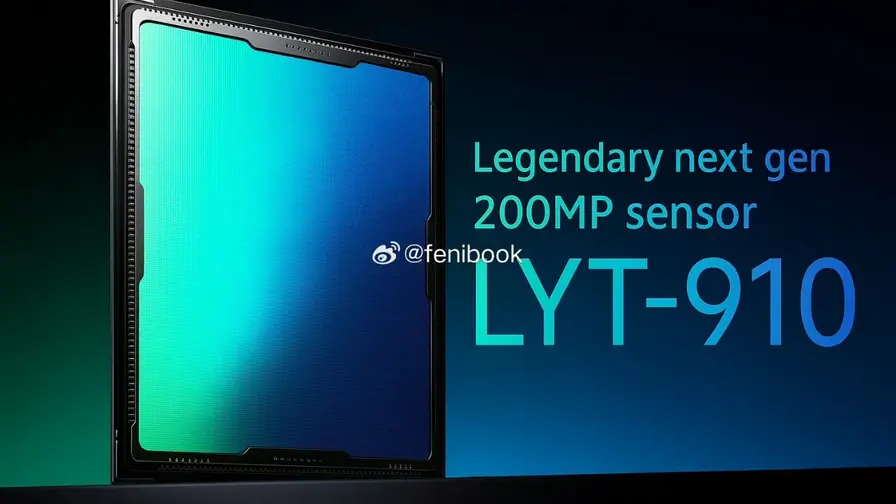
Sony has finally stepped into the 200MP smartphone camera arena, and it’s not doing it quietly. With the new LYTIA 901, the company is betting big on a single, large sensor packed with AI-driven imaging and powerful in-sensor zoom, rather than the multi-camera stacks that dominate today’s flagships. Samsung, meanwhile, is doubling down on its modular strategy with the ISOCELL HP2, HP5, and HP9, giving phone makers more freedom to mix and match camera setups.
A Bigger Sensor vs. A Flexible Camera System
.avif)
The LYTIA 901 is built around a 1/1.12-inch optical format with a 14.287 mm diagonal — currently the largest sensor in the 200MP smartphone class. It uses 0.7 μm pixels arranged in a Quad-Quad Bayer Coding (QQBC) pattern, which groups pixels of the same color to pull in more light and preserve detail in tricky lighting. Sony’s idea is clear: deliver flagship-level zoom and image quality with one main camera instead of relying on extra telephoto lenses.
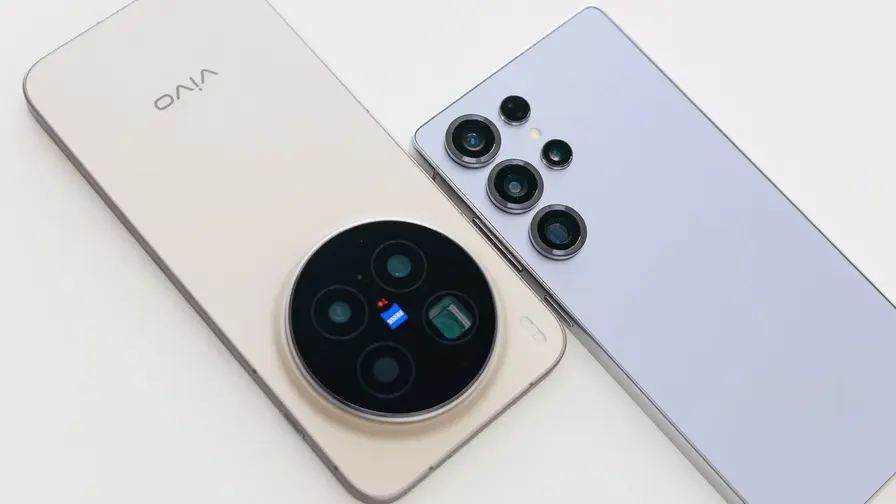
Samsung takes a different path. Its 200MP family spans multiple sizes and roles. The ISOCELL HP2, used in devices like the Galaxy S25 Ultra, comes in a 1/1.3-inch format with 0.6 μm pixels and is tailored for primary cameras. The HP5, found in phones such as the Vivo Y500 Pro, is smaller at 1/1.56 inches with 0.5 μm pixels, while the HP9 sits in between at 1/1.4 inches with 0.56 μm pixels and is specifically tuned for telephoto and periscope modules in models like the Vivo X100 Ultra and Xiaomi 15 Ultra.
By prioritizing compact designs and modular camera layouts, Samsung enables slimmer phones and more flexible hybrid-zoom systems. Sony, on the other hand, tries to replace complexity with one ultra-capable sensor.
Pixel Binning, AI, and the Race for Better Zoom
.avif)
At the heart of Sony’s approach is the QQBC structure, which clusters 16 adjacent pixels of the same color. In low light, the LYTIA 901 outputs 12.5MP images by combining pixels for cleaner results, and it can also operate in 2×2 binning mode for 50MP shots. When users zoom in or demand full detail, the sensor switches to a remosaicing process to tap into the full 200MP resolution.
What makes the LYTIA 901 stand out is its integrated AI remosaicing engine. Instead of dumping heavy processing tasks onto the phone’s ISP or main SoC, the sensor itself performs AI-enhanced remosaicing and image reconstruction. This enables up to 4x in-sensor zoom for photos and 4K video, while keeping noise, artifacts, and sharpness under tighter control. For users, that means more natural zoom transitions and less reliance on digital tricks that often soften the image.

Samsung leans on its Tetra²pixel binning technology. Depending on ambient light and shooting mode, its 200MP sensors can operate as 50MP (1.0 μm) or 12.5MP (2.0 μm) cameras by intelligently grouping pixels. The ISOCELL HP5 and HP9 also support 2x or 4x in-sensor zoom, which phone makers can combine with dedicated telephoto lenses.
When paired with, for example, a 3x optical telephoto lens, Samsung’s 200MP sensors can reach up to 12x hybrid zoom by blending in-sensor cropping with optical magnification. This plays perfectly into multi-camera designs where each module covers a specific focal length, from ultra-wide to long-range telephoto.
HDR, Color Depth, and Real-Time Processing

Dynamic range and color accuracy are now as important as raw resolution, and here Sony and Samsung are both pushing advanced HDR stacks — but with slightly different philosophies.
The LYTIA 901 includes multiple HDR layers: DCG-HDR (Dual Conversion Gain HDR) and Fine12bit ADC support richer tonal gradation and maintain dynamic range even when zoomed in up to 4x. Sony’s Hybrid Frame HDR (HF-HDR) combines short-exposure and high-gain frames, achieving over 100 dB performance in additive mode. In practice, that means better preservation of bright highlights and subtle shadow textures in high-contrast scenes, such as sunsets, city nights, or interiors with strong window light.
Because Sony runs AI-based remosaicing directly on the sensor, it can perform real-time tone mapping and edge reconstruction with minimal latency. That can be particularly valuable in use cases like document scanning, text capture, or pattern recognition, where every line and contrast edge matters.
Samsung’s HDR toolkit is equally sophisticated. Technologies like Smart-ISO Pro, staggered HDR, and dual-slope gain (DSG) are present in sensors such as the HP2 and HP9. The HP9 goes up to 14-bit color depth, enabling trillions of color combinations and very fine gradation in skies, skin tones, and soft backgrounds. For content creators and power users, this means more flexibility in editing and a better base for HDR video workflows.
Where Sony focuses on sensor-level AI to refine the raw image, Samsung builds a flexible HDR foundation that can be tuned by each OEM depending on their image pipeline and color science.
8K Video, High Frame Rates, and Slow Motion

Video is another key battleground in the 200MP race. Sony’s LYTIA 901 can shoot at 10 fps in full 200MP RAW, 30 fps at 50MP (binned), and 60 fps at 12.5MP. For video, it supports 8K at 30 fps and 4K at up to 120 fps, while still enabling in-sensor 4x zoom with AI-assisted remosaicing. This makes it highly attractive for phones that rely heavily on a single main camera for both photography and video, covering wide, mid, and zoomed perspectives without constant lens switching.
Samsung pushes harder on frame rates, especially for slow motion. The ISOCELL HP2 can reach 15 fps at 200MP, while the HP5 and HP9 support up to 480 fps at Full HD, 120 fps at 4K, and 30 fps at 8K. At 12.5MP output, the HP5 and HP9 can hit up to 90 fps, offering a clear edge for devices that want to highlight slow-motion video and ultra-fluid shooting modes in their marketing.
For users, that translates into a subtle choice: Sony’s LYTIA 901 favors versatility and high-quality zoom in 4K, while Samsung’s stack can deliver more extreme frame rates and specialized modes in multi-camera flagships.
Different Strategies for the Next Wave of Flagships
The way these sensors are being positioned says a lot about where the smartphone camera market is heading.
Sony’s LYTIA 901 is aimed squarely at premium flagships that want to reduce the number of rear cameras without compromising reach or depth. Its large format, AI-driven in-sensor zoom, and advanced HDR make it ideal for phones that prefer a cleaner camera island with fewer lenses doing more work. Models like the Oppo Find X9 Ultra and Vivo X300 Ultra are expected to leverage this approach, using the LYTIA 901 as a do-it-all main sensor for stills and video.
Samsung’s 200MP portfolio is broader. The ISOCELL HP2 targets top-tier primary cameras in devices such as the Galaxy S25 Ultra. The HP5 caters to upper mid-range and premium phones that need a balance of size, cost, and performance. The HP9 is fine-tuned for telephoto and periscope roles in multi-camera flagships, where a compact but high-resolution sensor is essential for long-range magnification.
In short, Sony is betting on consolidation — one big, smart sensor that does almost everything — while Samsung is betting on specialization, with different 200MP sensors optimized for different jobs. For consumers, that means the next generation of phones could look very different: some with a single, dominant main camera relying on powerful in-sensor zoom, others with a full array of wide, telephoto, and periscope lenses built around Samsung’s modular 200MP ecosystem.

“I love exploring gadgets, apps, and trends that redefine how we connect, work, and play in a digital world.”

Discussion
Leave a Comment
Comments (3)
Feels overhyped but okay. Sony's sensor tech sounds impressive, yet Samsung's modularity gives real-world flexibility, slimmer phones win sometimes
Is this even real? Sony's in-sensor zoom sounds neat but won't it still lose detail past 4x, or is the AI magic?
wow, Sony going big with one 200MP sensor? kinda bold move, curious how it handles night shots, hope AI isnt overdoing sharpening...