

As people age, nights of deep, restorative sleep can become elusive. Chronic insomnia is the most common sleep disorder among middle-aged and older adults and often persists for years. A new randomized trial from Hong Kong suggests that tai chi—a gentle, low-impact practice—may match the long-term benefits of cognitive behavioral therapy for insomnia (CBT-I), the current first-line treatment.
How the trial was run and the immediate results
The study, led by exercise physiologist Parco M. Siu and colleagues and published in the BMJ in 2025, enrolled 200 ethnic-Chinese adults over age 50 living in Hong Kong who had been diagnosed with chronic insomnia. Participants were randomly assigned to one of two group interventions: 24 one-hour sessions of CBT-I, or 24 one-hour sessions of the 24-form Yang-style tai chi. Both programs ran twice weekly for three months, with 100 people in each arm.
Researchers measured symptom changes using the Insomnia Severity Index (ISI), a seven-question screening tool commonly used in sleep research. At the end of the three-month intervention, the CBT-I group showed a larger reduction in insomnia symptoms than the tai chi group. That outcome aligned with expectations: CBT-I is a structured, evidence-based psychotherapy designed specifically to target insomnia symptoms by changing thoughts and behaviors related to sleep.
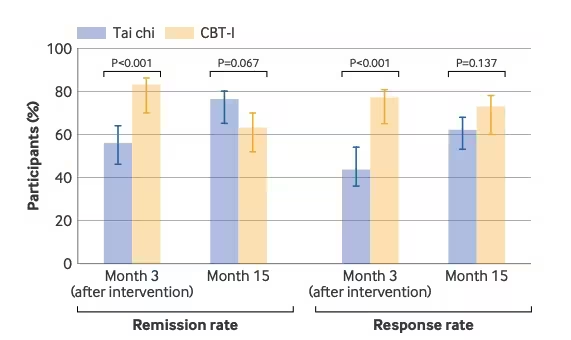
Insomnia remission rate and treatment response rate for CBT-I and tai chi.
Long-term follow-up: tai chi catches up
Where the study surprised many clinicians was in the 15-month follow-up. Participants who returned for assessment showed that the tai chi group had "caught up"—their improvements in sleep duration, sleep quality, mental health, and overall quality of life were comparable to those in the CBT-I group. Objective measures of physical activity also favored sustained improvement in the tai chi cohort.
Behavioral persistence appears to be a key factor. Of the 85 tai chi participants who attended the 15-month check-in, 31 reported that they had continued practicing tai chi after the intervention period, albeit less frequently. By contrast, only 13 of 82 returning CBT-I participants said they were applying the CBT skills they had learned in the months after therapy ended.
Those retention differences suggest a practical advantage for tai chi: it is affordable, widely taught, low-risk, and easy to integrate into daily life. Tai chi combines gentle aerobic exercise, balance training, mindful breathing, and focused attention—elements that can influence arousal levels, stress, mood, and the sleep–wake cycle. These mechanisms, working together, may explain why benefits persisted and even widened over time.
Clinical context and what the findings mean
Chronic insomnia is more than an annoyance. Longstanding sleep disturbance is associated with higher risks of cardiovascular disease, mood disorders, impaired cognition, and reduced quality of life. CBT-I remains the gold-standard, evidence-based therapy with minimal side effects and the strongest immediate impact on insomnia symptoms. Yet access to trained CBT-I therapists can be limited by wait lists, geographic barriers, and cost.
This trial does not replace CBT-I as the recommended clinical therapy, but it does highlight tai chi as a pragmatic complementary or alternative approach—especially where CBT-I is unavailable or when patients prefer a low-impact, movement-based practice. For older adults seeking nonpharmacological options to improve sleep, tai chi offers a scalable path with additional benefits for balance, strength, and mental well-being.
Expert Insight
"The value of any behavioral intervention depends on whether people keep doing it," says Dr. Laura Martinez, a sleep researcher and clinical psychologist who studies behavioral treatments for insomnia. "Tai chi’s combination of light exercise, rhythmic breathing, and social engagement makes it a durable habit for many older adults. That sustained practice appears to be what narrows the gap with CBT-I over time."
Practical takeaways
If you or a loved one has chronic insomnia: consult a healthcare professional to rule out treatable medical causes and to discuss CBT-I, which is proven to work. If immediate access to CBT-I is limited, or if you prefer an activity-based approach, joining a tai chi class could be a useful and safe strategy to improve sleep over the long term. Combining approaches—formal CBT-I where available, plus ongoing physical activity such as tai chi—may deliver the best outcomes for sleep, mood, and physical health.

“My work centers on sustainability, energy, and environmental science — examining how innovation can lead to a greener future.”

Discussion
Leave a Comment