

How often you have a bowel movement can say more about your body than you might expect. A large observational study of generally healthy adults found a clear "Goldilocks" zone: people who poop once or twice a day tend to show the healthiest biological signatures. Too few or too many bowel movements were linked to distinct metabolic and microbial patterns with potential implications for long-term health.
Study design and who was included
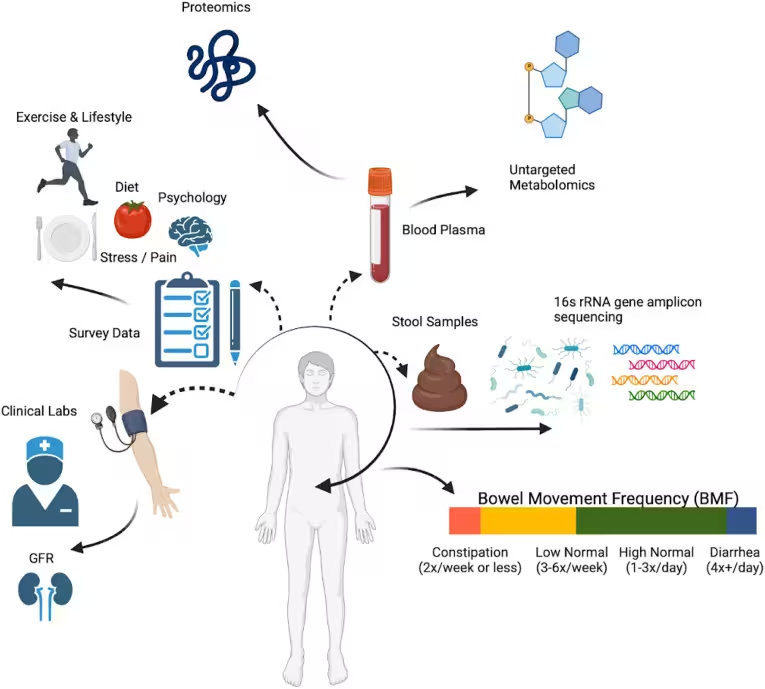
The research, led by teams at the Institute for Systems Biology (ISB) and published in Cell Reports Medicine, tracked bowel movement frequency in 1,425 adults who reported no diagnosed kidney or chronic gut disease such as Crohn's or irritable bowel syndrome. Participants self-classified their typical bathroom habits and were grouped into four categories: constipation (one to two stools per week); low-normal (three to six per week); high-normal (one to three per day); and diarrhea (four or more watery stools per day).
Beyond a simple questionnaire, the study combined multiple layers of data: stool microbiome profiles, blood plasma metabolomics and chemistry, genetics, and detailed diet and lifestyle surveys. Participants provided samples of blood plasma and stool, in addition to filling out extensive diet, health, and lifestyle questionnaires. (Johnson-Martínez et al., Cell Reports, 2024)
What the researchers found: microbes, metabolites and risk signals
Across the cohort, the most robust markers of good health clustered with the high-normal group — people who passed stool once or twice a day. Those participants reported higher fiber intake, greater water consumption and more frequent exercise. Their stool microbiomes were enriched in bacteria known to ferment dietary fiber into beneficial short-chain fatty acids such as butyrate, which support gut barrier function and systemic metabolic health.
At the extremes, patterns diverged in telling ways. People who reported constipation had stool communities dominated by microbes that favor protein fermentation. When transit time through the gut is slow, resident bacteria exhaust available fibers and switch to degrading protein, creating metabolites that can be toxic at higher concentrations. The researchers detected higher blood levels of several of these byproducts — notably indoxyl sulfate, a protein-fermentation metabolite linked to kidney stress.
Conversely, participants in the diarrhea group showed a higher presence of bacteria normally associated with the upper gastrointestinal tract appearing in their stool. Their blood chemistry also displayed markers consistent with liver stress and altered bile acid metabolism, hinting at a link between rapid transit, microbial location shifts and organ-level changes.
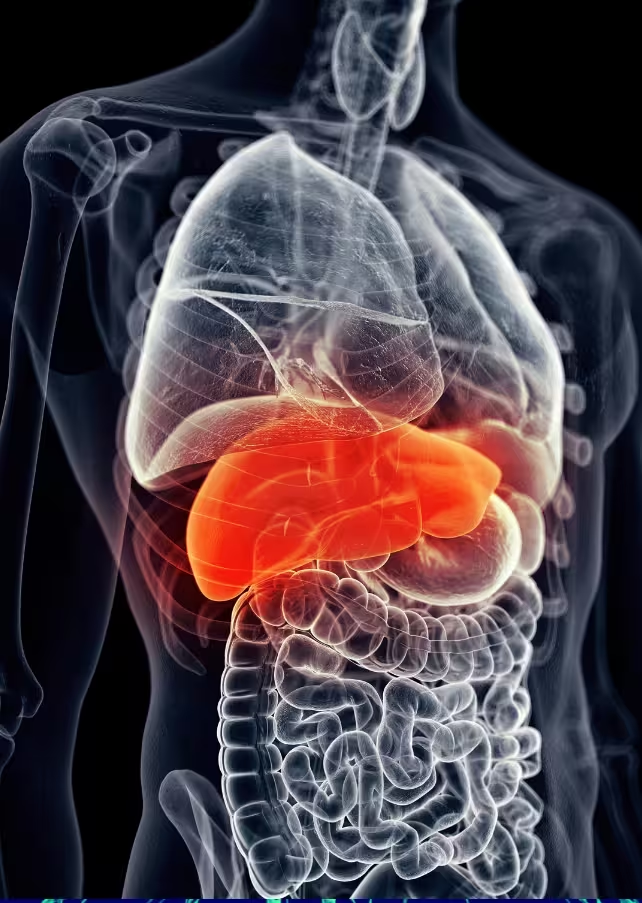
The liver usually recycles bile acid to dissolve and absorb dietary fats
Interpreting associations and possible causality
Because the study used cross-sectional, observational data, it cannot prove that bowel frequency directly causes disease. However, the integrated metabolomic and microbial signatures strengthen the case for a biologically plausible pathway: altered transit time changes microbial activity, which in turn changes circulating metabolites and may influence organ function over time.
Lead authors emphasize that these associations persisted even after adjusting for common confounders such as age, sex and body mass index. "This study shows how bowel movement frequency can influence all body systems, and how aberrant bowel movement frequency may be an important risk factor in the development of chronic diseases," said ISB microbiologist Sean Gibbons, the corresponding author on the report.
Can you change your microbiome — and your pooping pattern?
There is growing evidence that the gut microbiome responds quickly to lifestyle changes. The study notes that people in the 1–2 stools-per-day group tended to consume more dietary fiber and exercise more, and their gut bacteria reflected a fiber-fermenting community. Experimental research supports the idea that microbiomes shift with diet and activity: for example, a 2025 preprint from Germany found resistance training altered gut bacterial composition in previously inactive adults within eight weeks.
Those shifts suggest practical interventions: increasing dietary fiber, staying well hydrated, and regular physical activity can move some people toward the healthier range of bowel-movement frequency. But the team also highlights individual variability: a U.S. clinical trial in 2025 found that people with a high abundance of methane-producing microbes are particularly efficient at converting fiber into short-chain fatty acids, meaning the same diet can yield different outcomes in different guts.
Stool samples from people with less frequent bowel movements had higher levels of bacteria associated with protein fermentation. This is a known hazard from constipation.
Expert Insight
"Bowel movement frequency is a simple, measurable behavior that offers a window into complex host–microbe interactions," says Dr. Maya Patel, a gastroenterologist and translational microbiome researcher. "Clinicians should pay attention to changes from a patient's baseline — even modest shifts in routine can reflect underlying metabolic or microbial changes that are actionable through diet and lifestyle."
Clinical and public-health implications
The study reinforces the idea that routine bowel habits are not merely a private inconvenience but can be meaningful biological signals. For clinicians and public-health practitioners, integrating questions about bowel frequency into screening and preventive advice could help identify individuals who may benefit from dietary counseling or further metabolic assessment.
That said, the study does not replace clinical evaluation. Acute changes in stool frequency, presence of blood, severe pain, unexplained weight loss or other red flags should prompt medical evaluation to rule out infection, inflammatory disease, or other treatable conditions.

A more plant-dominant diet can have health benefits
What to take away
Regularity matters. For many people, a daily bowel movement — roughly once per day — aligns with microbial and metabolic markers tied to better health. If you're consistently at the extremes, modest lifestyle changes such as boosting fiber, hydrating, and moving more may help shift your gut ecology and metabolites toward a healthier state. As always, discuss persistent changes or concerning symptoms with your healthcare provider.

“The cosmos has always fascinated me. I write about space missions, astronomy, and the technologies pushing humanity beyond Earth.”

Discussion
Leave a Comment