
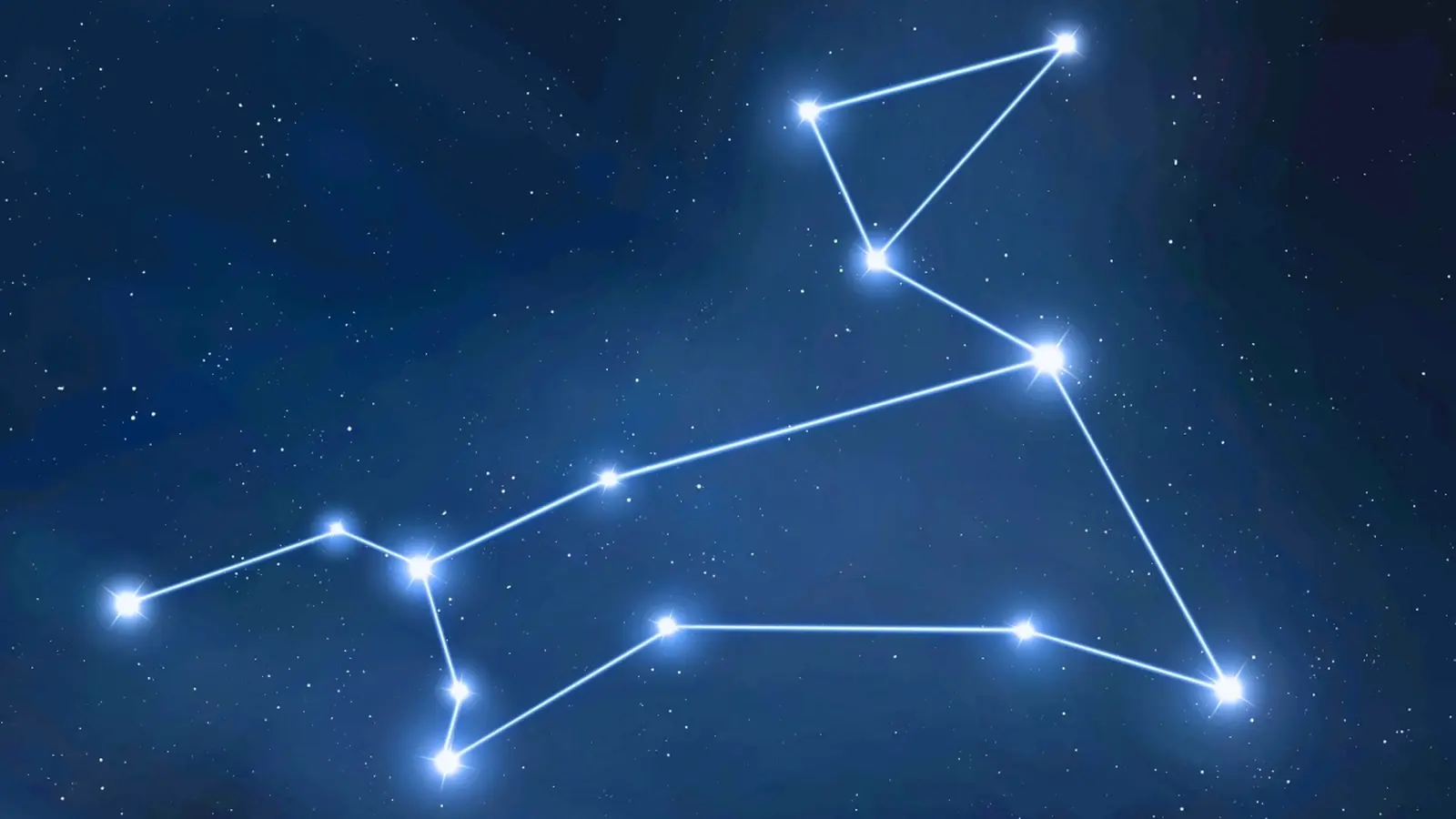
About 4.5 million years ago two hot, massive stars – now part of the Canis Major constellation – swept past the Solar System close enough to alter the local interstellar environment. New simulations suggest their intense ultraviolet light helped ionize the tenuous gas that surrounds our Sun, leaving fingerprints that scientists can still measure today.
A close stellar encounter and why it matters
Astrophysicists traced the motions of nearby stars and modelled the neighborhood of the Sun over the past few million years. They found that two B-type stars — Epsilon Canis Majoris and Beta Canis Majoris — likely passed within about 32 light-years of the Solar System roughly 4.4–4.5 million years ago. At that distance these blue-white stars would have been dramatically brighter than anything in our sky today; Michael Shull of the University of Colorado Boulder notes that "these two stars would have been anywhere from four to six times brighter than Sirius is today, far and away the brightest stars in the sky."
Although those stars have since drifted outward to their current positions some 400–500 light-years away, the study argues their ultraviolet output would have ionized atoms in nearby interstellar clouds as they passed. Ionization occurs when energetic photons knock electrons free from atoms, producing charged particles detectable in modern observations.
Ionized pockets inside the Local Bubble
Our Sun and planets sit inside a low-density cavity of the Milky Way called the Local Bubble. Within that bubble, however, are small, denser patches known as the local interstellar clouds — roughly 30 light-years across — that envelope the Solar System today. Observations show an unexpectedly high degree of ionization in these clouds: about 20% of hydrogen atoms and up to 40% of helium atoms appear to be charged rather than neutral.
Those ionization fractions imply strong sources of high-energy photons in the recent past. Known candidates — for example, the hot plasma on the Local Bubble's rim or nearby supernova remnants that helped carve the bubble — could not fully explain the measured levels. To close the gap, researchers ran simulations incorporating moving stars, drifting clouds, and evolving radiation fields. The results indicated at least six contributors to the present ionization state: boundary plasma emission, three hot white dwarfs, and the Canis Major stars Epsilon and Beta Canis Majoris.
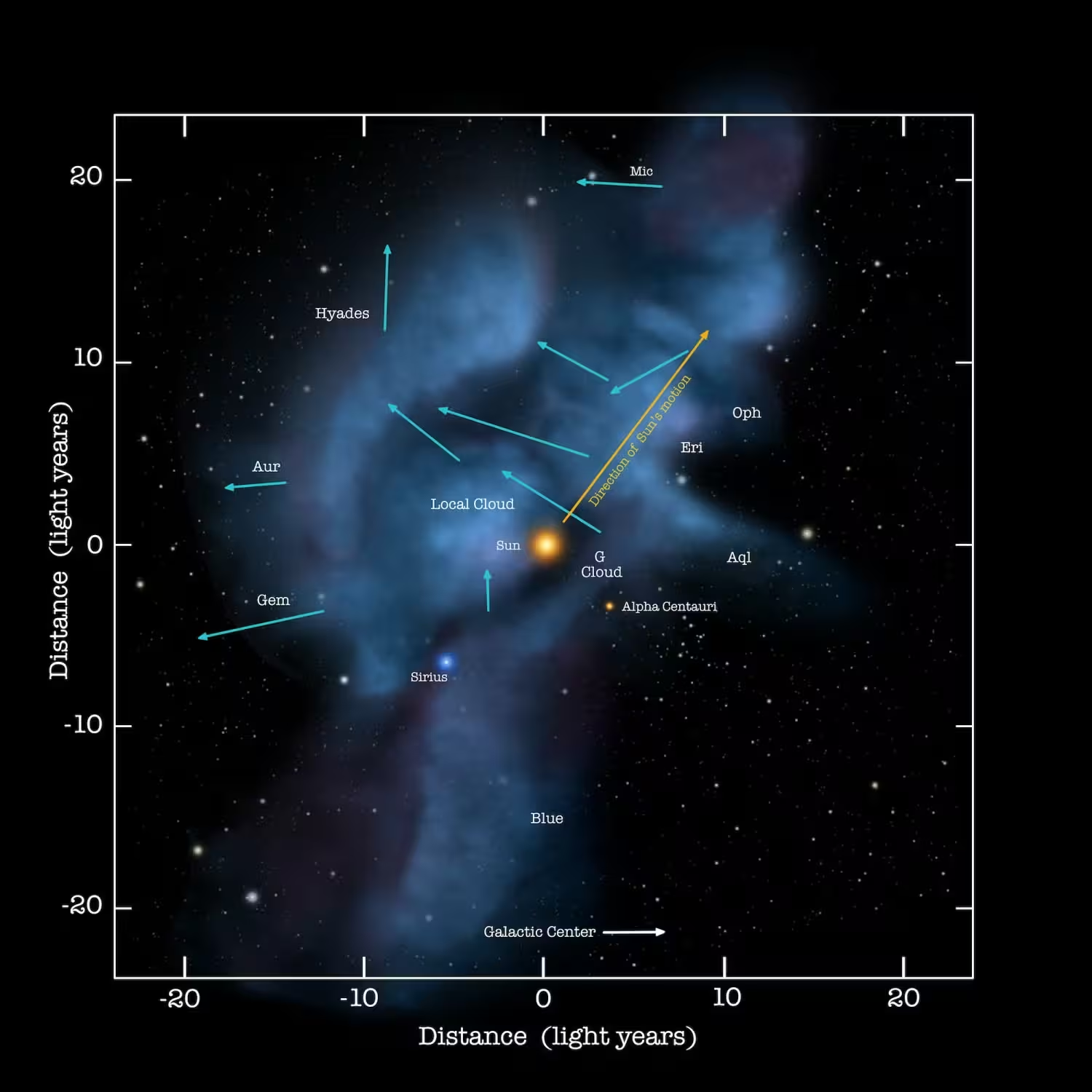
A diagram of the local interstellar cloud
What the simulations reveal about timing and mechanisms
The models treat the local space as a dynamic jigsaw: the Sun orbits the galaxy, nearby stars migrate, and gas clouds shift. When the team ran the clock back several million years, the combined ultraviolet flux from those six sources matched the ionization levels we detect today. B-type stars such as Epsilon and Beta Canis Majoris are especially effective ionizers because their surface temperatures and ultraviolet output are much larger than the Sun's. As they moved through the region, their radiation would have carved a trail of hot, ionized gas within the local clouds.
Ionization is not permanent. Over time, free electrons recombine with ions and return atoms to neutral states. The persistence of the elevated ionization therefore constrains when the ionizing events occurred — consistent with a passage a few million years ago rather than something much older.
Implications for the Solar System and future environment
For now, being inside the local interstellar clouds provides some buffering: those clouds help moderate the conditions of the interstellar medium that the heliosphere (the Sun's protective bubble) encounters. But the Solar System is moving relative to the clouds, and estimates suggest we could leave this pocket in less than 2,000 years. When that happens, the heliosphere may encounter different interstellar densities and radiation fields, with potential knock-on effects for cosmic-ray penetration and space-weather conditions at the edge of the heliosphere.
The study was published in The Astrophysical Journal and highlights how transient stellar encounters — even relatively distant ones — can leave long-lived imprints on the local galactic environment.
Expert Insight
Dr. Elena Ramirez, an astrophysicist who studies the heliosphere, comments: "This work nicely demonstrates how the local galactic ecosystem is shaped by moving stars as well as by explosive events. A passing B-type star doesn't need to be extraordinarily close to make a measurable difference — its ultraviolet radiation can travel far and alter the charge state of hydrogen and helium that we now observe. That helps explain puzzling ionization numbers and gives us a clearer picture of the Solar System's recent galactic history."
Understanding these processes improves how scientists interpret interstellar measurements taken by spacecraft and ground-based instruments, and refines predictions for how the heliosphere will react as the Sun continues its path through a changing galactic neighborhood.

“My work centers on sustainability, energy, and environmental science — examining how innovation can lead to a greener future.”

Discussion
Leave a Comment