
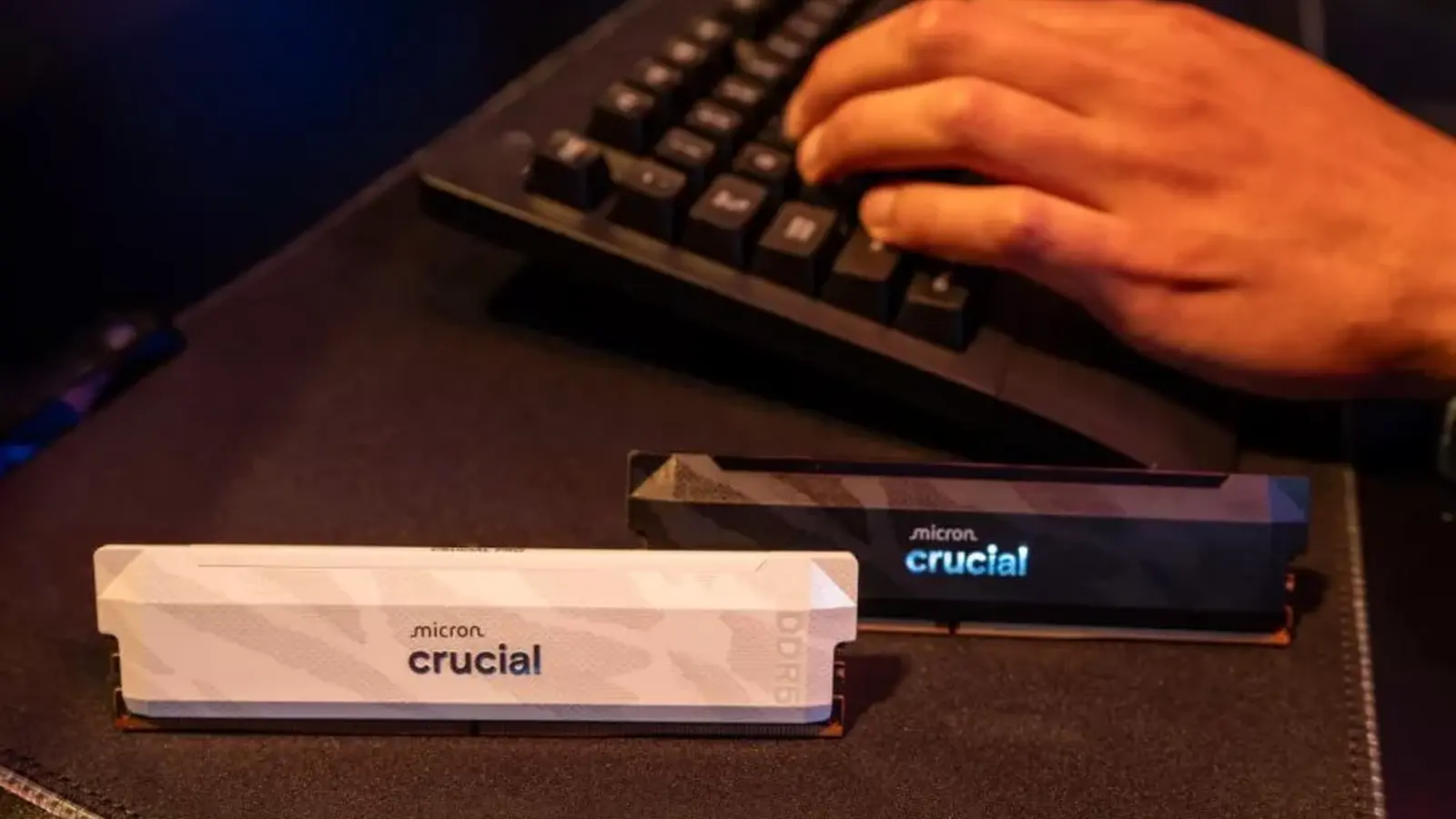
Micron has announced it will retire its consumer-facing Crucial brand to focus on supplying high-capacity memory to rapidly growing AI customers. The move signals a major shift in the global memory market as accelerating demand from artificial intelligence projects reshapes priorities for semiconductor manufacturers, supply chains, and product portfolios.
What Micron plans and why it matters
Crucial, long known for affordable SSDs and DRAM kits favored by PC builders, enthusiasts, and hobbyists, will be phased out as Micron reallocates manufacturing capacity and engineering resources toward enterprise and hyperscale buyers. The company says that exiting the consumer segment will enable it to improve supply reliability and deepen support for "large, strategic customers in fast-growing segments" — a clear reference to organizations building massive AI training and inference infrastructure requiring high-bandwidth, high-capacity memory systems.
Think of data centers ordering multi‑gigabyte and terabyte-scale memory modules by the thousands on predictable cadence contracts. That reality is already emerging: an oft-cited example is OpenAI’s reported procurement arrangements with SK Hynix and Samsung to produce as many as 900,000 DRAM units per month for the Stargate project. Contracts and procurement at that scale put enormous pressure on global DRAM wafer allocation, test and assembly capacity, and finished goods inventory, and they naturally shift factory priorities away from smaller-volume consumer products such as desktop DIMMs and SATA/NVMe SSDs.
For Micron, reallocating capacity means not only shifting wafer starts but also directing test, burn-in, and packaging lines toward server-class DIMMs (RDIMM, LRDIMM), registered and load-reduced modules, as well as high-bandwidth memory (HBM) and custom high-density modules for accelerators and AI servers. It also implies concentrating research and development, firmware teams, and product validation efforts on enterprise reliability, error-correcting code (ECC) capabilities, thermal management, and multi-chip stacking required by AI datacenter customers. Strategic prioritization of these enterprise-grade products changes the competitive landscape for consumer memory vendors and for the DIY market that depended on Crucial for cost-effective components.
Immediate effects on PC builders and makers
For end users, small system integrators, and independent PC builders, losing Crucial is a meaningful disruption. The brand has historically offered competitively priced DDR4 and DDR5 modules, NVMe and SATA SSDs, and solid warranty and support that helped keep do-it-yourself builds and entry-level systems accessible. Analysts and supply-chain observers warn that removing a major budget-focused OEM could tighten an already constrained retail market, creating higher street prices, reduced promotional availability, and fewer entry-level part choices for integrators such as CyberPowerPC, Framework, boutique system builders, and even single-board computer vendors who depend on affordable memory modules to keep overall product costs down.
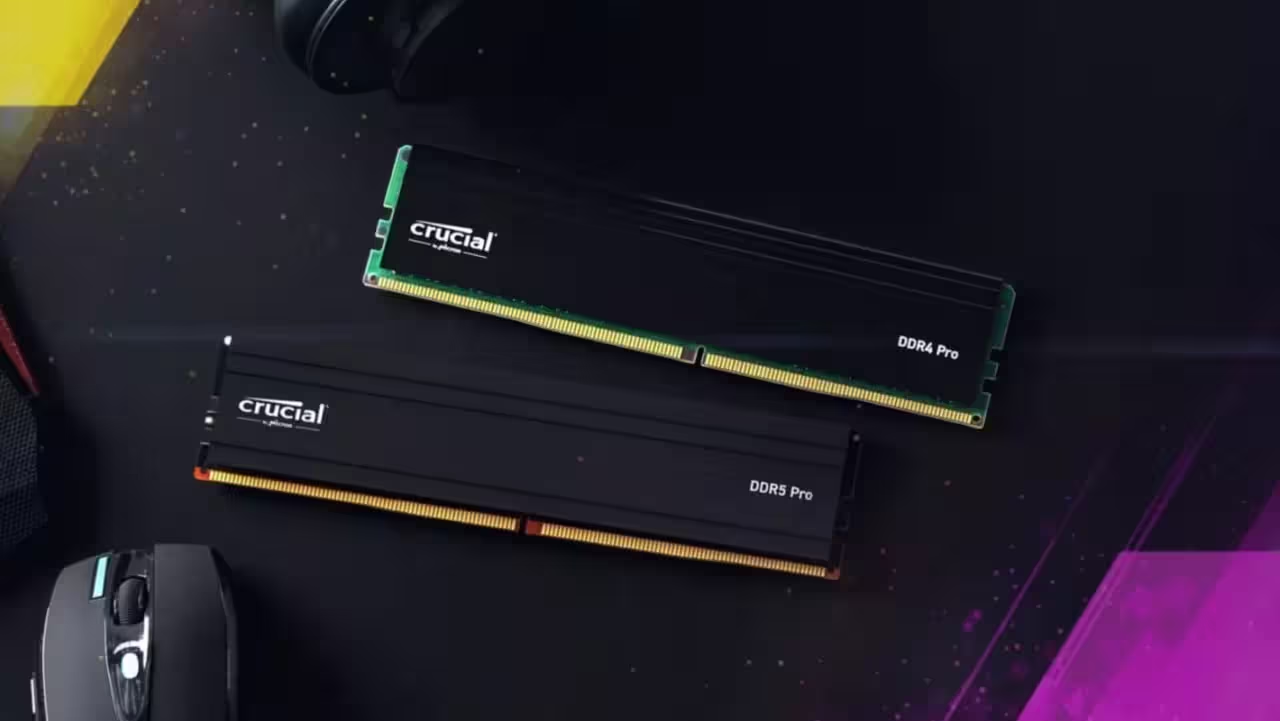
- Micron will continue selling Crucial-branded products through the end of February 2026 and honor warranties and after-sales support during that period; this transition window gives retailers and consumers time to plan purchases or migrate to alternative suppliers while warranty coverage remains in force.
- Retailers, system integrators, and aftermarket channels may experience shortages of low-cost DRAM modules and budget SSDs sooner rather than later, which could push up prices on entry-level components or prompt vendors to ship systems with reduced memory configurations to preserve margins.
- OEMs such as HP, Dell, and others have already signaled contingencies in similar supply scenarios—raising prices, modifying default memory SKUs, or shifting to component sourcing from competitors—so buyers should expect possible cost adjustments or altered spec sheets if supply pressures persist.
Why AI demand changes how memory is made
AI training workloads and large language models consume enormous quantities of high-speed memory and benefit from high memory bandwidth, large capacity per socket, and consistent, validated performance across long production runs. Unlike consumer DDR modules, many enterprise memory products are manufactured in long-term, high-volume contracts that require predictable throughput, extended qualification cycles, and dedicated assembly and test capacity. Those enterprise modules — including ECC DIMMs, load-reduced modules (LRDIMM), registered DIMMs (RDIMM), and HBM stacks used in accelerators — are designed for sustained throughput, error resilience, and thermally dense datacenter environments.
When manufacturers prioritize those enterprise customers, the downstream effect is a reduction in the proportion of wafer fabrication, assembly, and testing capacity allocated to retail and consumer-targeted goods. This reallocation is a major factor behind recent DRAM price fluctuations, longer lead times for certain capacities and frequencies, and the scarcity felt by both consumers and small companies seeking affordable memory upgrades. In addition to raw production shifts, the economics of memory manufacturing favor large, predictable purchase orders: contract terms reduce inventory risk for suppliers and justify capital investments in advanced packaging and multi-die stacking that are primarily useful for hyperscale AI deployments.
So what should users expect? In the near term, anticipate more frequent price volatility for budget-tier memory and storage, particularly on DDR4/DDR5 modules and mainstream NVMe SSDs. In the medium term, expect a reshaped vendor landscape where consumer-focused options are narrower and enterprise channels expand, possibly leading to consolidation among aftermarket brands. For PC enthusiasts who relied on Crucial’s value proposition, alternatives exist — from established competitors like Kingston, Corsair, ADATA, and Patriot to direct retail from Samsung and SK Hynix — but these alternatives may be relatively more expensive, subject to different warranty terms, or harder to source during heavy enterprise procurement cycles.
What Micron promises and the road ahead
Micron frames the decision as a strategic reorientation: concentrating investments, production, and product development on market segments exhibiting the fastest growth and the most demanding technical requirements. The company pledges to keep Crucial-branded products available until February 2026 and to maintain warranty and after-sales support during that transition. After the announced phase-out, expect Micron to increasingly dedicate production lines, supply agreements, and R&D efforts toward high-capacity memory solutions for AI datacenters, cloud service providers, and hyperscale operators that require dense memory footprints, advanced error correction, and consistent throughput.
For the global hardware ecosystem, the change serves as a concrete reminder that AI-driven demand is not a distant trend — it is actively reshaping manufacturing priorities, supply chains, and product portfolios right now. Whether you are building a home rig, managing an OEM product line, running a colocation facility, or planning server refreshes, the memory market’s next chapter will be defined by scale, bandwidth, and enterprise priorities. Stakeholders should re-evaluate procurement strategies, consider longer lead times and contractual commitments for critical components, and explore alternative suppliers or refurbished markets to mitigate near-term disruptions.
Technical and operational implications are broad: datacenter architects will increasingly specify server memory with higher capacity per DIMM, robust ECC, and compatibility with accelerator interconnects; procurement teams will pursue multi-year supply agreements that include capacity guarantees and priority manufacturing slots; and consumer-focused brands may need to reposition with niche value offers or specialty products to remain viable. Over time, we may also see secondary market dynamics evolve, with used enterprise parts and certified pre-owned modules offering temporary relief for cost-sensitive buyers, albeit with different warranty and compatibility considerations.
For end users looking for concrete next steps: track Crucial inventory notices and retail warnings, compare warranty and support policies among alternate suppliers, and consider whether a short-term upgrade or postponement makes sense given evolving prices. For system integrators and OEMs, now is the time to engage with multiple memory suppliers, negotiate longer-term contracts where appropriate, and analyze total cost of ownership for different memory architectures (DDR4 vs DDR5, ECC vs non-ECC, RDIMM/LRDIMM vs UDIMM) in light of shifting availability. Ultimately, the prioritization of AI memory by major manufacturers like Micron is likely to accelerate innovation in high-density packaging, memory controller design, and system-level memory architectures — but it will also create transitional friction for consumer markets that previously relied on broad retail access to affordable modules.

“I love exploring gadgets, apps, and trends that redefine how we connect, work, and play in a digital world.”

Discussion
Leave a Comment