
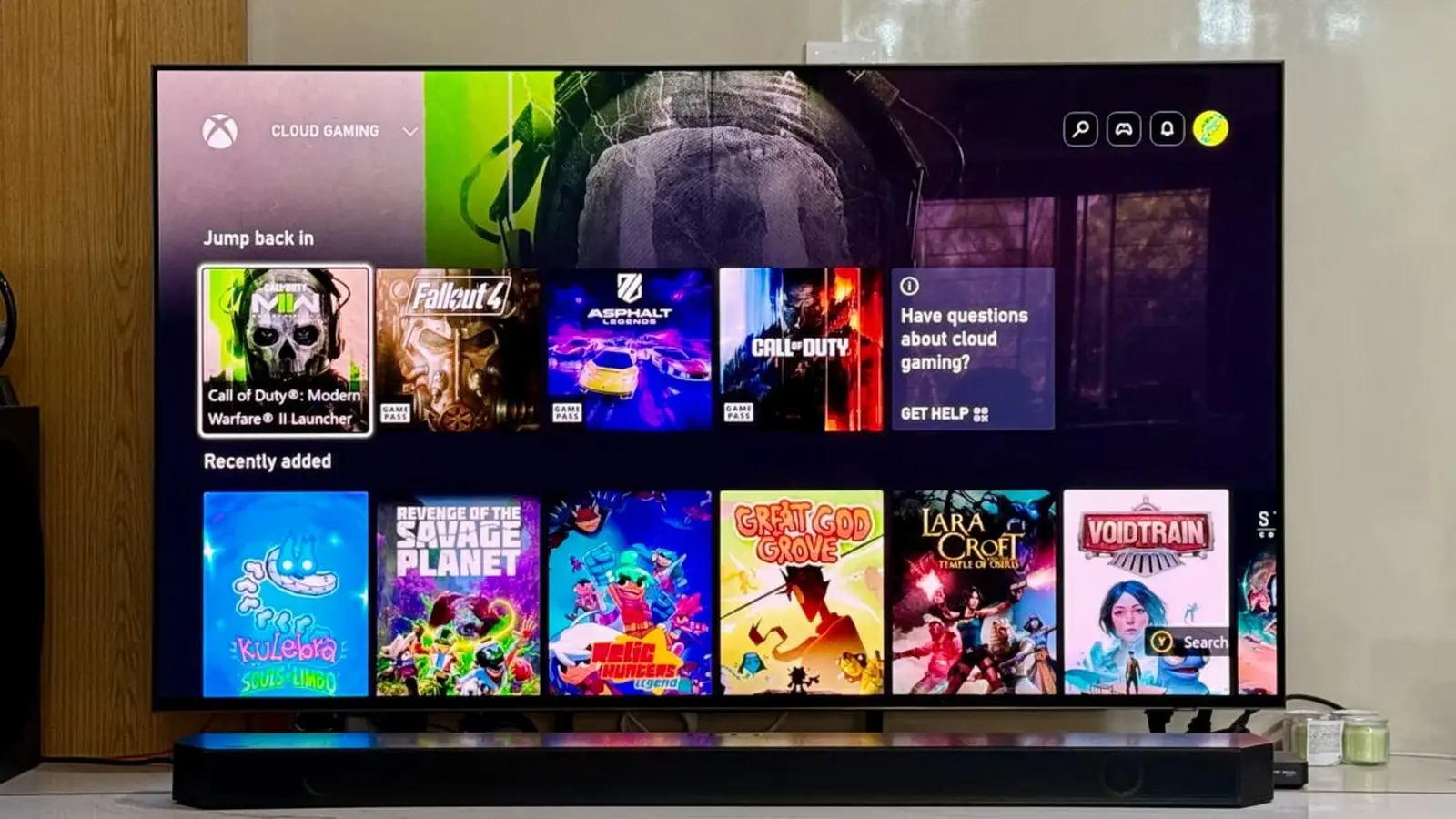
Samsung appears ready to broaden its OLED TV lineup in 2026 — not by one or two models, but by three additional SKUs. A spare-parts database lists six model codes, hinting at new sizes, mixed panel sourcing, and a wider range of price points. This move would mark another step in Samsung's OLED strategy as the company pushes to compete more aggressively in the premium TV market, addressing both mainstream and enthusiast buyers with a mix of QD-OLED and WOLED technology.
Six models, not three: what the leak reveals
Since Samsung re-entered the OLED market in 2022, the range has grown slowly: one model in 2022, two in 2023, and three in both 2024 and 2025. Now the brand's internal database shows model numbers for 2026 as S82H, S83H, S85H, S90H, S95H and S99H — suggesting Samsung plans to add the S82H and S83H below the existing mid-tier and to position the S99H above the S95H as a new flagship. If confirmed, this would expand Samsung's OLED portfolio to six distinct SKUs and offer a clearer segmentation strategy spanning entry, mid, and high-end segments.
Background and historical context
OLED adoption by Samsung has been measured. After exiting direct OLED manufacturing and then returning to the consumer OLED TV space, the company has taken a cautious approach, often prioritizing innovation such as QD-OLED while preserving product differentiation. The steady rollout of multiple models across consecutive years reflects a strategy that balances technology investments with market testing. With 2026 potentially seeing six SKUs, Samsung appears ready to accelerate that expansion to address different screen sizes, price brackets, and user preferences.
Naming conventions and what they hint at
The model codes — S82H, S83H, S85H, S90H, S95H and S99H — follow Samsung's familiar alphanumeric pattern. Typically, higher numbers correlate with more premium features, larger panel sizes, or newer technology. The appearance of S82H and S83H below the S85H implies a deliberate push into lower price points or smaller screens, while the S99H suggests a top-tier flagship variant that will likely focus on peak brightness, color performance, and advanced processing. For consumers watching the Samsung OLED 2026 lineup, these model numbers are a first, useful indicator of Samsung's segmentation strategy.
Expected timeline and market positioning
Parts database leaks like this frequently precede formal product announcements by several months. If Samsung maintains a similar cadence to prior years, these models could be announced at major trade events or through scheduled press releases ahead of the 2026 retail season. The presence of diverse SKUs signals Samsung's intent to target multiple market segments — from buyers seeking affordable OLED TV sizes to those demanding flagship-level performance. This multi-tier approach could influence retail promotions and competitive pricing throughout the year.
Panel line-up and screen sizes: the specifics
Available details point to mixed panel sourcing. The S82H is expected to cover sizes from 48 to 77 inches, and the S83H may span 48 to 83 inches — both reportedly using LG Display's WOLED panels. The flagship S99H is listed in 55-, 65-, 77- and 83-inch variants; the 55–77-inch models are said to use Samsung Display's QD-OLED panels, while the 83-inch S99H would use LG's WOLED, similar to the S95H. This combination of suppliers and sizes suggests Samsung is optimizing supply chain flexibility while preserving differentiated features at different screen sizes.
Size breakdown and variant mapping
Breaking down the likely sizes gives a clearer view of how Samsung may position each SKU. The S82H and S83H covering 48-inch entry points are notable because 48-inch OLEDs have historically provided a balance of living-room and bedroom suitability while also attracting gamers and PC users. The S85H and S90H appear to remain in the mid-tier range (likely covering 55-inch to 77-inch sizes), while the S95H and S99H are positioned as premium and flagship lines focusing on advanced picture processing, higher brightness, and wider color gamuts. The inclusion of an 83-inch WOLED in the S99H lineup mirrors the current trend of offering very large OLED screens for home theater enthusiasts who still value deep blacks and uniformity over extreme peak brightness.
Supply relationships: LG Display and Samsung Display
Using both LG Display's WOLED and Samsung Display's QD-OLED panels reflects existing industry dynamics. LG Display is one of the major WOLED suppliers for multiple TV brands, known for manufacturing large volumes and for panels that excel in black level uniformity and cost efficiency. Samsung Display's QD-OLED brings quantum dot color enhancement to the OLED stack, improving color volume and peak brightness. By combining sources, Samsung can manage supply risk, negotiate pricing, and tailor product capabilities to specific models, ultimately giving the company more control over price segmentation across the OLED TV lineup.
Why Samsung is mixing WOLED and QD-OLED
Combining LG's WOLED and Samsung's QD-OLED lets Samsung tailor costs and performance across the range. WOLED panels typically offer strong blacks and are cost-effective for larger inventories, while QD-OLED delivers higher peak brightness and punchier colors for enthusiasts. That split helps Samsung serve both budget-conscious buyers and those seeking top-tier picture quality. From an engineering and commercial perspective, mixed sourcing is a pragmatic response to panel availability, manufacturing yields, and the need to compete with rivals on both value and premium metrics.
Technical contrasts: how WOLED and QD-OLED differ
WOLED (White OLED) uses a white OLED emitter with color filters to produce red, green, and blue subpixels. This design historically provides excellent black levels and uniformity, but can be limited in peak brightness compared to quantum-dot-enhanced approaches. QD-OLED stacks an emissive blue OLED layer with quantum dot color converters that produce vibrant reds and greens, yielding higher color volume and often better HDR performance. In practice, QD-OLED panels can deliver more impactful highlights and a more vivid color palette, while WOLED remains a strong option for consumers prioritizing contrast and overall picture consistency.
Practical implications for picture quality
For consumers, the trade-offs translate into different viewing experiences: QD-OLED models typically excel at daytime viewing where higher peak brightness helps maintain highlight detail in bright scenes, and they may exhibit a slightly broader color gamut. WOLED sets remain exceptionally good in dark-room viewing due to deep blacks and consistent panel behavior. Samsung's mixed strategy would therefore allow it to position QD-OLED where brightness and color pop are key selling points and WOLED where cost efficiency and deep contrast are more important. For HDR content, QD-OLED may display highlights more convincingly, while WOLED can still deliver excellent overall tone and cinematic blacks.
What this means for consumers and the market
Adding entry-level and premium models expands buyer choice. A new S82H could make Samsung OLED more accessible at smaller sizes, while the S99H flagship aims at high-end buyers who prioritize peak performance. For the industry, more SKUs means stiffer competition with LG and other TV brands that supply or use OLED panels. Retailers could offer a wider variety of OLED televisions that meet different household needs, from gaming and streaming to dedicated home theaters.
- More price tiers may boost OLED adoption among mainstream buyers.
- Mixed panel sourcing gives Samsung flexibility on cost and performance.
- A distinct flagship (S99H) could sharpen Samsung's claims in brightness and color against rivals.
Consumer buying guide: choosing among Samsung's OLED models
When Samsung releases a broader 2026 OLED range, buyers should consider several factors: room brightness, viewing habits, desired screen size, and budget. Gamers often prioritize low input lag and high refresh rates; many OLEDs already support these features, but buyer attention to specific gaming performance metrics remains important. Movie enthusiasts will care about black level, color accuracy, and processing features like dynamic tone mapping and advanced upscaling. For everyday TV watching and mixed-use households, a mid-tier model such as an S85H or S90H may hit the right balance between cost and performance. For buyers focused on HDR and maximum visual impact, QD-OLED-equipped S99H variants could be the preferred choice.
Market impact and competitor dynamics
Samsung's plan to expand its OLED lineup is likely to intensify competition with LG, Sony, and other manufacturers that either use LG Display panels or produce their own OLED variants. LG has a well-established WOLED supply and a large portfolio of OLED models, while Sony often emphasizes image processing and color calibration. By diversifying panel sourcing and expanding model choices, Samsung may pressure rivals on price and feature parity, particularly if the S82H brings a competitively priced 48-inch OLED to market. This could accelerate OLED adoption in mainstream channels such as big-box retailers and online marketplaces.
Retail strategies and pricing expectations
More SKUs allow retailers to run special promotions and bundle offers that target specific buyer segments. Entry-level OLEDs can be used as loss leaders to attract customers to stores or websites, while flagship models can be positioned with extended warranties, calibration services, or audio package bundles. Pricing will depend on panel costs, feature sets, and campaign timing; however, mixed sourcing should give Samsung options to moderate prices on WOLED-based models while commanding premium pricing for QD-OLED flagships.
Imagine a 48-inch Samsung OLED that pairs the company's smart TV features with more attainable pricing — that's precisely the kind of choice this expansion promises. Keep in mind these details come from a parts database leak rather than an official Samsung announcement, so specifications and model placements could still change. Until Samsung publishes formal specifications and press materials, consumers and retailers should treat the database leak as a strong indicator rather than definitive confirmation.
Still, the early picture is clear: by expanding to six OLED models in 2026, Samsung aims to capture a broader slice of the OLED TV market with more sizes, price points, and a hybrid approach to panel technology. The company’s strategy aligns with broader industry trends in TV panel sourcing, where flexibility and diversification help manufacturers manage supply constraints, improve time-to-market, and optimize product portfolios for different consumer segments.
For tech-savvy buyers and early adopters, the 2026 Samsung OLED line could offer tangible improvements in HDR performance, color accuracy, and smart-TV features. For mainstream buyers, the prospect of more entry points into OLED ownership — particularly at practical sizes like 48-, 55-, and 65-inch — may finally tip the balance away from LCD-based alternatives. Whether Samsung will lean on its Tizen smart platform, upgraded processors, or new picture-enhancement algorithms to distinguish each SKU remains to be seen, but history suggests software and processing will play a key role in perceived value across models.
In short, the potential expansion of Samsung's OLED TV range represents a meaningful development for consumers tracking OLED TV prices, display technology, and the balance of performance versus cost. As competition heats up, expect innovation in panel technology, picture processing, and feature sets, all of which will make OLED TVs more attractive to a wider audience in 2026 and beyond.
Ultimately, whether you're prioritizing a bright, color-rich QD-OLED experience or the deep blacks and consistency of WOLED, Samsung's reported 2026 lineup expansion could give buyers a clearer set of choices. Keep an eye on official Samsung announcements and trusted reviews to evaluate model-by-model performance, calibration capabilities, and value propositions as the new OLED TVs are formally unveiled.

“I cover emerging technologies, digital innovation, and the intersection of tech and everyday life. My goal is to make complex trends accessible and inspiring.”

Discussion
Leave a Comment