

Dietary molecules that prime cells for healthier aging
Researchers at the University of Basel have uncovered that specific nutrients found in the diet of the microscopic worm Caenorhabditis elegans activate a mild cellular stress response that ultimately promotes healthier aging rather than damage. Researchers at the University of Basel have found that certain nutrients can trigger a mild stress response in nematodes, an effect that unexpectedly promotes healthier aging rather than harm.
As human populations live longer, scientists increasingly distinguish between lifespan (how long we live) and healthspan (how many of those years are lived in good physical and cognitive condition). Diet is a central determinant of healthy aging. The Basel team shows how particular dietary RNA molecules—double-stranded RNAs present in bacterial food—can stimulate protective quality‑control pathways, reduce toxic protein aggregation and extend healthspan in worms.
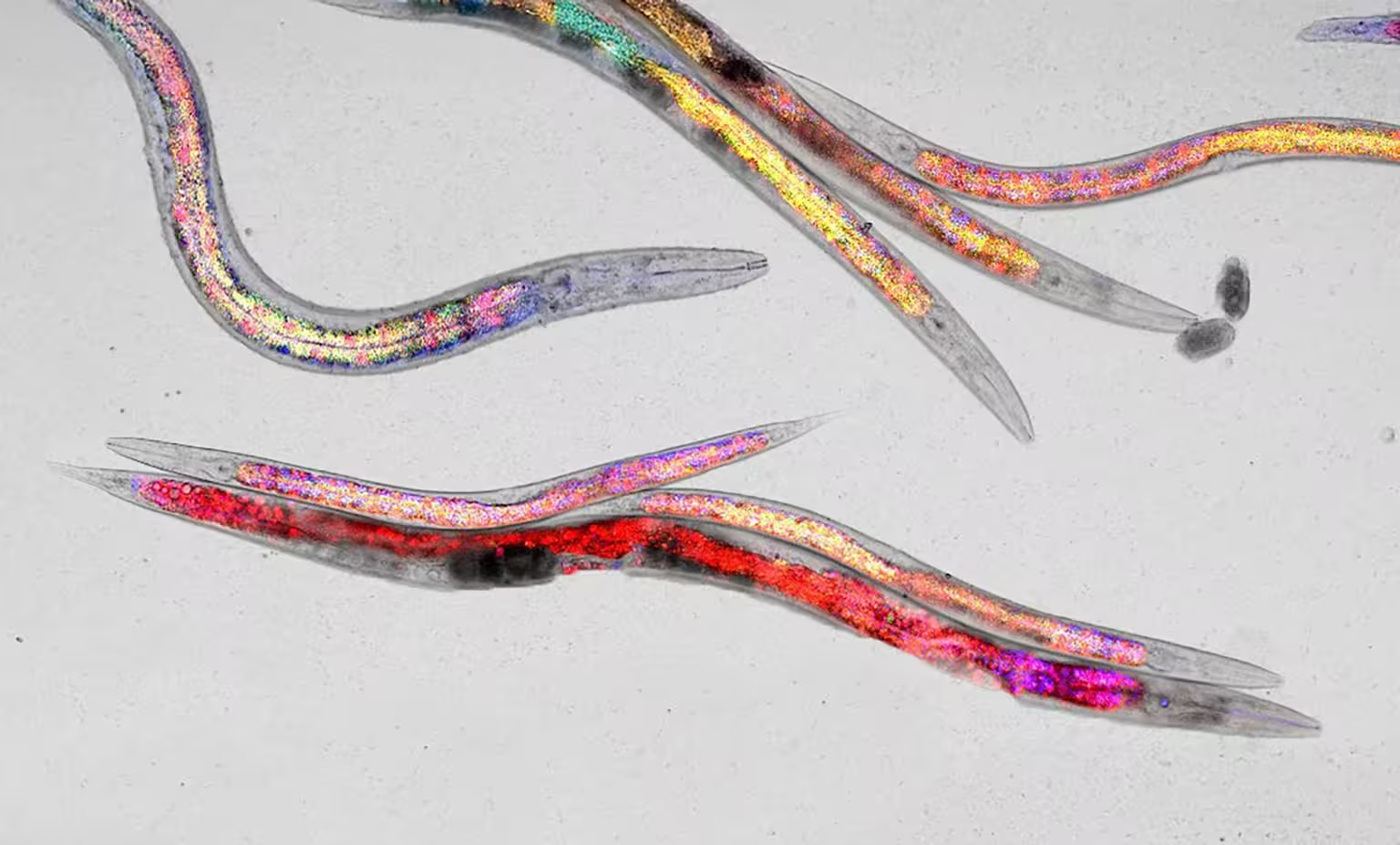
A balanced diet keeps the nematode C. elegans (pictured) fit and healthy in old age.
Scientific background: protein aggregation, autophagy and aging
As organisms age, cellular protein quality control declines. Misfolded or damaged proteins can accumulate and clump into aggregates that interfere with cellular function. Such protein aggregation is implicated in several age-related conditions, including muscular decline and neurodegenerative diseases like Alzheimer’s and Parkinson’s. Autophagy, the conserved cellular “self-eating” recycling pathway, helps clear damaged proteins and organelles. Enhancing autophagy is a known route to improved cellular maintenance and extended healthspan in multiple model organisms.
The Basel study connects diet-derived RNA to these conserved maintenance pathways. The team found that when nematodes consume bacteria containing specific double-stranded RNA species, those RNAs are absorbed in the gut and trigger a low-level stress signaling cascade. Rather than causing harm, this hormetic (beneficial stress) response strengthens cellular quality control, including autophagy, which then reduces harmful protein aggregates.
Experiment design and key findings
Researchers led by Spang used the well-established C. elegans model to monitor activity, protein aggregation and tissue health across the worm lifespan. The worms’ natural diet—bacteria—contains double-stranded RNA molecules. The investigators showed that these dietary RNAs are taken up through the intestine and activate protective pathways that operate beyond the gut, affecting muscle and other tissues.
Emmanouil Kyriakakis, the study’s first author, summarizes the mechanism: the absorbed RNAs produce a systemic quality-control response that improves handling of damaged proteins. The researchers reported their results in Nature Communications. They demonstrated that worms exposed to the balanced, RNA-containing bacterial diet remained more active and exhibited fewer protein aggregates in old age, indicating an extended healthspan though lifespan per se was not the only metric measured.
Mechanistic insights
The protective effects depended on autophagy activation: dietary RNAs elevated baseline autophagic flux, improving clearance of misfolded proteins and slowing cellular decline. Importantly, the gut-to-tissue communication observed indicates that nutritional signals can prime distant organs by mobilizing organism-wide stress responses, not just local intestinal defenses.
Implications for human aging and future research
These findings reinforce the concept that specific dietary components can tune endogenous maintenance mechanisms. While C. elegans is a powerful genetic and aging model, extrapolation to humans requires caution. The molecular players—RNA sensing, autophagy, protein aggregation—are highly conserved, making the results biologically plausible across species, but differences in physiology and diet complexity mean direct translation needs careful testing.
Potential future directions include identifying which RNA species confer the strongest protective effect, defining the receptors and signaling cascades in more detail, and testing whether analogous mechanisms operate in mammalian models. If similar pathways exist in humans, targeted dietary interventions or therapeutics that mimic the beneficial hormetic signal could reduce the burden of age-related proteinopathies.
Expert Insight
"This study highlights how modest, well-timed cellular stress can recalibrate maintenance systems to preserve tissue function with age," says Dr. Lena Hartmann, a fictional cellular biologist specializing in proteostasis. "The gut acting as a sensor and communicator to protect distant tissues is a compelling angle that aligns with growing evidence for gut-brain and gut-muscle axes in aging research. Translating these findings will require identifying human-relevant dietary molecules and safe ways to induce beneficial stress without harm."
Conclusion
The University of Basel study adds to a growing body of evidence that diet does more than supply calories: it provides molecular cues that shape cellular resilience. In C. elegans, dietary double-stranded RNAs trigger a hormetic stress response that activates autophagy, reduces protein aggregation and extends healthspan. Whether similar dietary RNAs or their functional analogs can be harnessed in humans remains an open and promising research avenue, with potential to inform nutritional strategies and therapies to preserve function with age.

“My work centers on sustainability, energy, and environmental science — examining how innovation can lead to a greener future.”

Discussion
Leave a Comment