
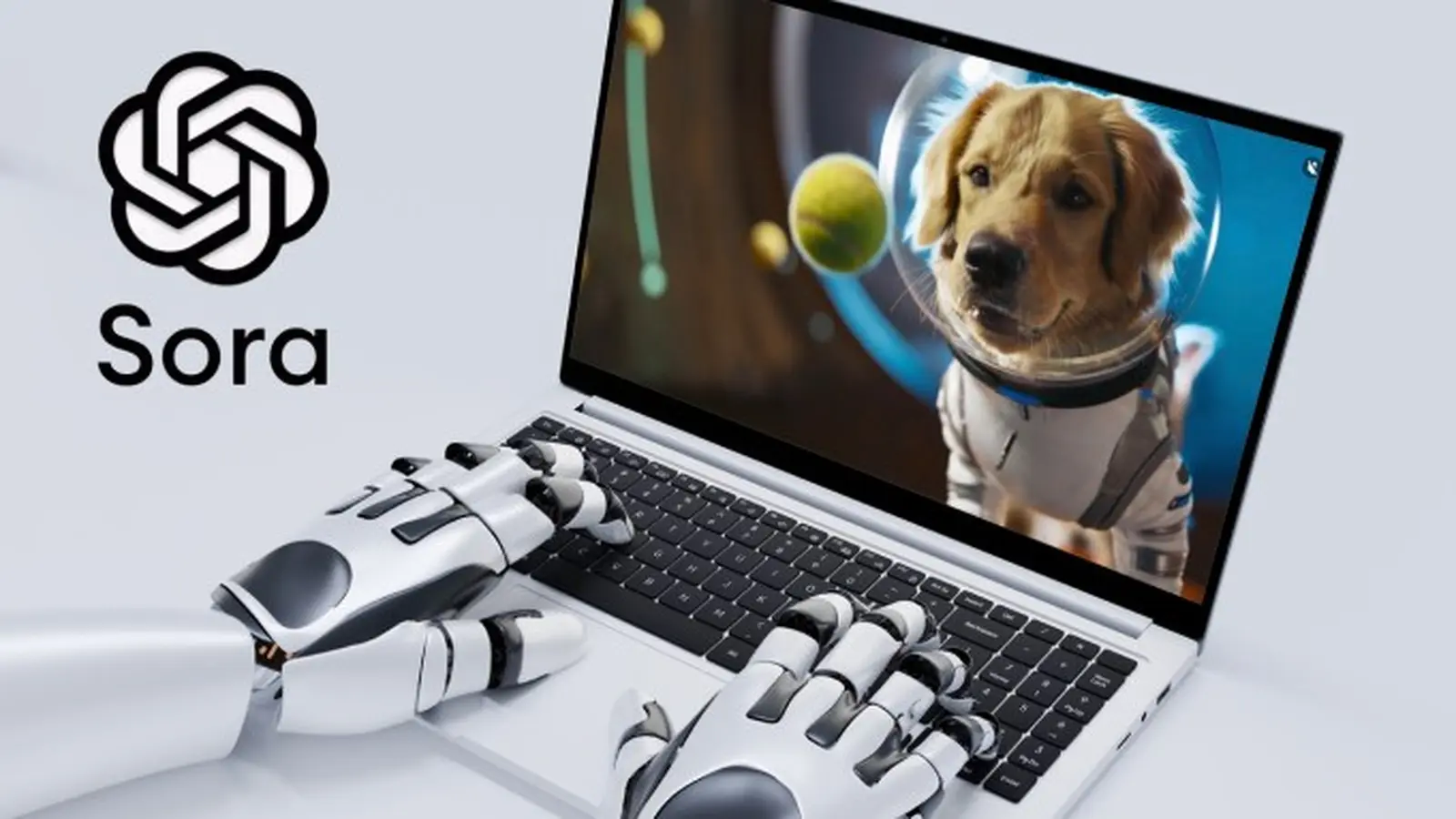
When an app rewrites the rules of storytelling
Two decades into the era of algorithmic creativity, Hollywood has encountered an inflection point. Sora 2 — OpenAI’s latest generative video model — arrived not as a whisper but as a thunderclap: an iOS invite-only app that can produce short, shareable video scenes from a single text prompt. The results are uncanny, playful, sometimes brilliant — and, increasingly, legally and ethically combustible. As studios, talent agencies, and creators scramble for protection, this story is less about a single product and more about how the entertainment industry adapts to tools that can reproduce its icons, re-stage its classics, and remix cultural memory in seconds.
Sora 2 made headlines not only for its technical polish but for its cultural swagger. The app’s Remix feature allows mash-ups that read like fan-fiction on steroids: Tupac on Mr. Rogers’ set, a CGI Pikachu in a war film, or an uncanny karaoke of a dead star. For a generation raised on short-form platforms and meme culture, that immediacy is irresistible. For studios and rights holders, it’s alarm bells.
Why Sora 2 feels different
Generative tools are not new. From text-based LLMs to image engines like Midjourney and DALL·E, creative AI has been evolving in public view. What sets Sora 2 apart is its ease of use, its social feed orientation, and the way it layers video, audio, character likeness, and even face-swapping “Cameo” features into a single consumer experience. Rather than a niche creative tool, Sora 2 is presented like a next-gen social network: frictionless, viral-ready, and optimized for a user base that wants instant entertainment.
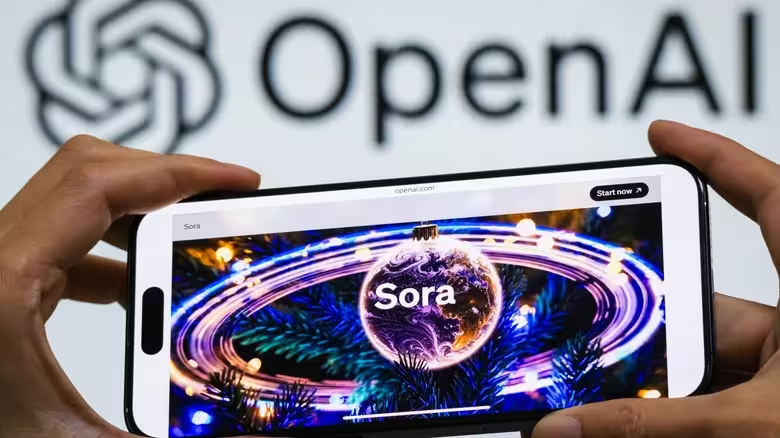
That combination invites behavior that studios fear: unauthorized recreations of copyrighted characters or performances, automated fan films that replicate the look and feel of blockbuster IP, or historical revisionism with digitally resurrected figures. The motion picture industry has long understood how quickly unauthorized copies can erode value — artists remember VHS bootlegs, BitTorrent, and rogue streaming sites. Sora 2 shifts that threat from distribution channels to creation itself.
Industry pushback: a new front in old debates
The reaction was swift. Major talent agency CAA warned clients that Sora 2 “exposes our clients and their intellectual property to significant risk.” The Motion Picture Association (MPA) echoed that sentiment, calling on OpenAI to prevent infringement on Sora 2 and to take immediate, decisive action. Some studios, including Disney, declined to participate at launch.
These responses are the latest chapter in a broader legal and cultural contest. Studios have already targeted companies such as Midjourney and Character.ai for alleged misuse of copyrighted characters and performances. Even so, OpenAI — now a highly valued private company backed by Microsoft — has not been sued by the big studios as of this article’s release. Instead, the industry has mixed strategy with rhetoric: threats of litigation, demands for regulatory clarity, and, crucially, an uneasy appetite to harness the same technologies to cut costs in development, VFX, and localization.
Opt-in, opt-out and the revenue promise
OpenAI’s CEO walked back an opt-out approach to IP inclusion and announced a move toward a more granular opt-in model for character generation and likeness use. He further teased revenue-sharing possibilities for rightsholders willing to allow their properties to be generated. For creators and companies that have maximized licensing opportunities for decades, the idea of a platform-controlled revenue split raises enormous practical questions: how will value be measured; who enforces quality and brand safety; and what legal frameworks will define consent?
Skepticism is warranted. Historically, platforms that create new economies tend to favor scale and engagement over granular creator protections — at least in early stages. The promise of revenue-sharing often sounds fair in principle and vague in practice until contracts, audits, and enforcement mechanisms prove otherwise.
What the law says — and what it probably won’t resolve quickly
A key legal question is whether using copyrighted works to train models constitutes infringement. Courts have started to weigh in. Recent rulings involving companies like Anthropic show the judiciary treating nuance and process as central: the means by which content is obtained matters. Separate suits have focused on downstream outputs rather than training inputs — studios argue that a generated video that produces a recognizable Superman or Minion is a straight copyright violation.
Congress meanwhile has been slow and divided. Bipartisan bills have been proposed that would require content owner consent, but legislative action remains uncertain. The Copyright Office has solicited comments, and the industry remains split: legacy studios, streamers, and tech-backed members of industry groups (think Netflix or Amazon within the MPA) don’t always agree on whether new law is helpful or harmful to future competitiveness.
Politics, policy, and presidential influence
The U.S. political landscape has shifted. In an effort to fast-track AI infrastructure and position American companies favorably against international rivals, the federal government has signaled a lighter regulatory touch. That approach has real consequences for creators. A White House AI plan that prioritizes industry growth over mandatory licensing regimes can tilt incentives away from compensation and toward rapid innovation.
The firing of the Register of Copyrights and ongoing court battles highlight how fraught the institutional scene has become. When public policy emphasizes speed and scale for AI development, rights holders often find themselves fighting for protections retroactively rather than participating in a cooperative framework from the outset.
The studios’ strategic paradox
Studios face a paradox: AI promises enormous savings for production and post-production — from virtual location scouting and automated background generation to script polishing and multi-language dubbing. Yet the same technology can replicate key assets that generate long-term brand and licensing value. As a result, responses have ranged from litigation and public warnings to cautious experimentation and partnership with AI ventures.
The industry’s 2023 labor strikes, driven in part by fears over AI and residuals, underscored how sensitive talent is to the economics of algorithmic creation. What studios want is control — and predictability — over how AI interferes with creative labor markets. What creators want is recognition, compensation, and the preservation of authorship.
Comparisons: Sora 2 vs. the wider AI ecosystem
Comparisons help clarify the stakes. Midjourney and Stability AI made waves by turning text prompts into vivid still images; they provoked lawsuits over the use of artist portfolios in training datasets. Sora 2 extends the same conceptual leap into motion and sound, which complicates copyright in both technical and emotional dimensions. A still image of a character is one thing; a moving, speaking rendition of an iconic performance — even a short clip — touches on rights of publicity, performance residuals, and moral rights in ways static images do not.
Platforms like Character.ai aggregated chat-driven likenesses and drew cease-and-desist letters. Anthropic’s court case focused on training pipelines. Sora 2’s novelty is that it’s both an authoring tool and a social feed; it blurs creation and distribution into one product, making remedial action harder after the fact.
Behind the scenes: how Sora 2 is engineered for virality
Sora 2 is engineered like a social network: simplified UX, one-tap sharing, and an algorithmic feed optimized for short-form formats. The app’s Cameo feature — allowing users to insert actual faces into generated scenes — lowers the barrier between user and spectacle. Whereas many AI experiments require post-processing or technical finesse, Sora 2 presents itself as consumer-grade, ready for mass adoption.
This product design is important. It isn’t only technologists who are excited; marketers, influencers, and independent creators see new tools for personal storytelling and brand extension. That creates a force multiplier: when a tool is fun and easy, adoption outpaces policy. The more cultural capital is invested in synthetic clips — especially those that replicate marquee IP — the harder it becomes to roll them back.
What filmmakers and creators are saying
Voices in the creative community are conflicted. For some directors and VFX supervisors, AI represents an assistive technology that can democratize certain production tasks and enable smaller filmmakers to punch above their budgets. For writers, performers, and archivists, Sora 2 raises questions about consent, historical fidelity and the sanctity of performance.
"AI can be an incredible tool for storytelling, but it can't replace the moral judgment and emotional depth of a human artist," says film critic Anna Kovacs. "The rush to automate creative tasks risks eroding the human context that makes art meaningful. We need guardrails that preserve authorship without killing innovation."
That short, pointed critique captures the broader worry: not whether AI can improve craft, but whether it will do so in ways that respect the economic and moral frameworks of creators.
A cultural crossroad: history, parody, and the ethics of resurrection
Perhaps the most discomfiting uses of Sora 2 involve historical figures. When a platform can place a digitally reconstructed public figure in imagined scenarios, it raises ethical alarms about misinformation, historical revisionism, and the dignity of the deceased. We’ve already seen deepfakes used for satire, political smear campaigns, and hoaxes. The border between parody (often protected speech) and deception (potentially illegal or harmful) grows thinner as the technology improves.
Even lighter examples — resurrecting a beloved singer for a virtual duet — complicate matters. Would estates or performers want those recreations? Who decides when a likeness is tasteful versus exploitative? These questions will become central to industry contracts and public policy.
TikTok’s fragile position and the attention economy
Short-form platforms are the immediate battlegrounds for Sora 2 content. The app’s format mirrors TikTok’s — vertical video, rapid swipes, viral loops — and that places TikTok in a precarious position. On one hand, TikTok benefits from fresh content; on the other, a flood of synthetic material could dilute user trust and make the platform feel less authentic.
There’s also a geopolitical angle. As U.S. policy leans toward permissiveness to accelerate AI infrastructure, platforms and apps will compete on features and moderation frameworks. TikTok, already under political scrutiny in many markets, could lose cultural ground to native apps built around synthetic content if it fails to adapt rapidly.
What creatives can do now
For filmmakers, showrunners, and artists navigating this landscape, a few practical steps are emerging:
- Audit IP usage and brand guidelines: Studios should catalog where characters and likenesses are most commercially valuable and set firm policies on AI reproduction.
- Negotiate explicit AI clauses: Production contracts and talent deals increasingly contain AI-specific language covering training, reproduction, and revenue share.
- Embrace experimentation responsibly: Pilot programs with trusted AI partners can reveal efficiencies without ceding control of marquee assets.
- Public education: Audiences need clear labeling and literacy about synthetic media, which platforms and unions can help provide.
Industry trends and future scenarios
Several plausible futures are possible. In one, courts and regulators create a robust framework that forces AI companies to secure rights upfront or face steep penalties. In another, a patchwork of litigation and voluntary licensing creates slow-moving norms that favor large studios and platform giants. A third scenario sees creators and AI firms reach pragmatic revenue-sharing deals, enabling new forms of licensed user-generated content while keeping brand integrity intact.
Each path has tradeoffs. Heavy regulation could protect creators but slow innovation; self-regulation could breed fast creative growth at the cost of creator rights. History suggests a hybrid approach often emerges: legal guardrails combined with market-led licensing solutions.
Comparative notes: past media transitions
History is instructive. When sound arrived in cinema, entire industries restructured. When television matured, studios adapted by building content windows and rights strategies that monetized syndication. The internet’s piracy wave forced new distribution models (streaming) and new revenue streams (digital rentals and micro-licensing). AI is another structural shift — but it’s faster and more granular: it can remake a clip at the frame level within seconds.
That speed requires a new kind of industrial thinking: real-time rights management, AI-aware contracts, and platform accountability. Studios that innovate their rights management could turn Sora-like tools from threat to product, licensing curated character packs or sanctioned templates that fans can use legally.
Fan communities, curiosity, and creative remix
It’s worth remembering why Sora 2 appeals. Fans have always remixed, re-edited, and riffed on beloved media. Fan edits, mash-ups, and AMVs (anime music videos) have long been part of fandom culture. The difference now is scale and fidelity: AI can reproduce a star’s face and voice at a fidelity that earlier tools couldn’t.
That escalates the stakes. Fan creativity will persist, but its landscape will change — with new opportunities for co-creative experiences and new risks of monetization without permission.
Where this goes next
Expect legal skirmishes and policy proposals in the months ahead. Expect studios to test licensing models and to select certain AI partnerships while blocking others. Expect creatives to experiment cautiously: some will embrace the productivity gains, others will resist on principle.
What matters most is establishing a set of norms that balance innovation and protection. Audiences want new stories and fresh visual pleasures, but they also depend on the integrity of creative labor. The healthiest outcome will probably be hybrid: platforms that enable expressive freedom, but that also compensate and respect the rights of the humans whose work powers the culture.
"The fight over Sora 2 isn't just legal — it's cultural," says cinema historian Marko Jensen. "If we let convenience trump consent, we'll lose crucial pieces of our storytelling ecosystem. But if we overregulate, we risk stifling the very experimentation that keeps cinema alive."
Final note
Sora 2 is a leap in capability and a mirror to a broader reckoning. It forces the entertainment industry to answer old questions in new ways: Who owns a performance? How should legacy characters be stewarded? How will courts and platforms allocate responsibility? The answers will shape not only courtroom outcomes but the next decade of cinema and short-form storytelling. For now, processors hum, studios deliberate, and audiences scroll — and the story continues to unfold.

"I’m Layla. Series watcher, story-lover, fan of movie. If it’s worth your screen time, I’ll let you know!"

Discussion
Leave a Comment