
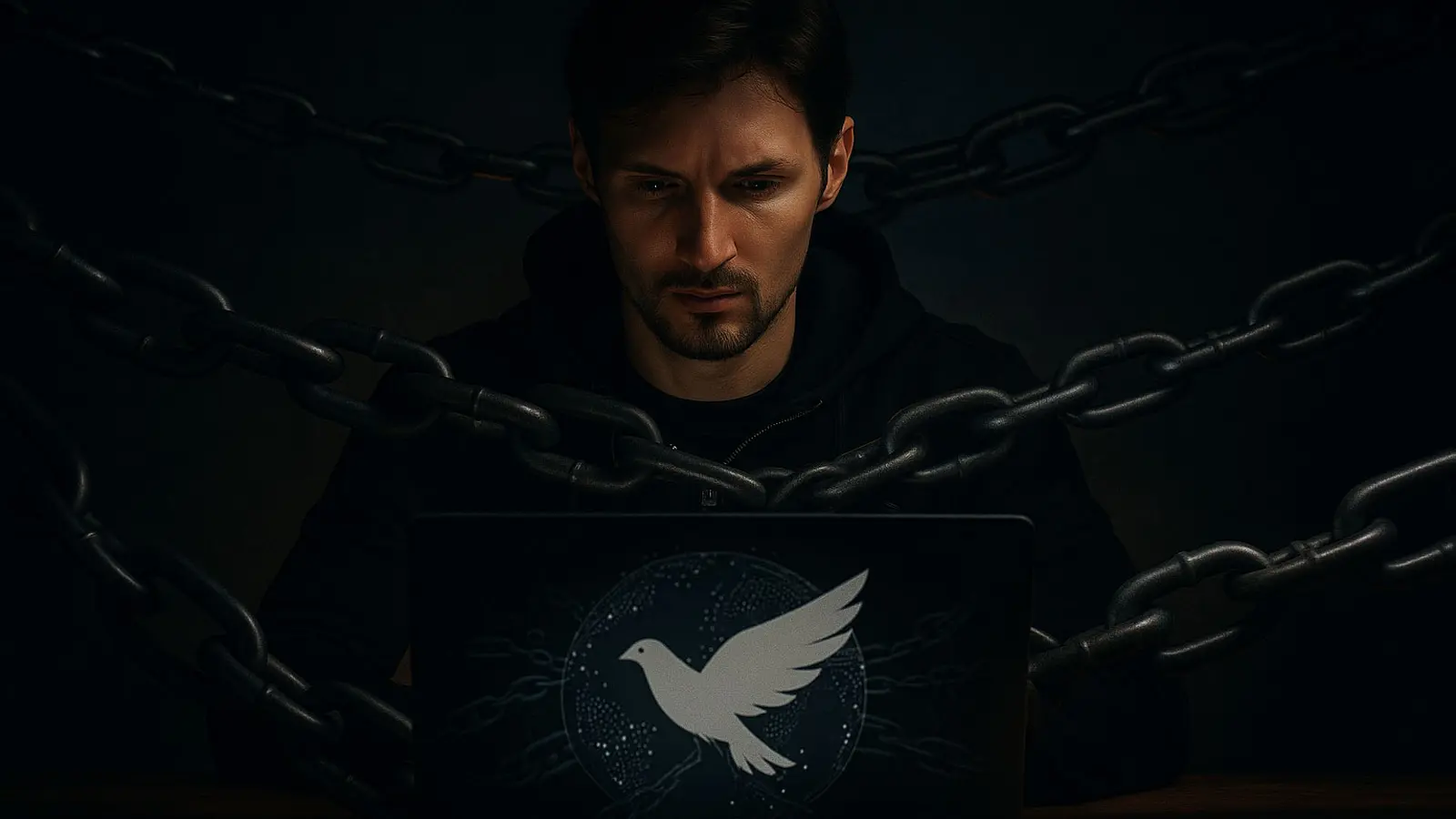
On his 41st birthday, the Telegram founder says he has nothing to celebrate, only a warning to share.
Pavel Durov, the enigmatic founder of Telegram and one of the most outspoken figures in global tech, turned 41 this week. But instead of posting a celebratory message, he shared a chilling reflection on the state of the internet — and the freedoms that are quietly slipping away.
A Birthday Message Turned Manifesto
“I’m turning 41,” Durov began, “but I don’t feel like celebrating.”
His short statement, published on his official Telegram channel, quickly went viral across social media. What began like a personal reflection soon turned into a manifesto — a warning about a world where freedom of speech and privacy are becoming relics of the past.
Durov wrote that his generation is “running out of time to save the free Internet built for us by our fathers,” arguing that governments and tech giants alike are transforming the digital world into a tool of mass surveillance and control.
From the UK to the EU: When Freedom Turns to Control
In his post, Durov accused once-free countries of sliding into a “digital dystopia.”
He pointed to policies such as digital IDs in the UK, mandatory age verification in Australia, and mass scanning of private messages in the European Union as signs of how the internet is being reshaped.
“Germany is persecuting anyone who dares to criticize officials online,” he wrote. “The UK is imprisoning thousands for their tweets. France is criminally investigating tech leaders who defend freedom and privacy.”
For Durov, these aren’t isolated events — they’re symptoms of a larger crisis: the erosion of digital liberty in the name of safety and compliance.
“Time Is Running Out”
Durov’s tone grows darker as he calls on his audience to wake up before it’s too late.
“A dark, dystopian world is approaching fast — while we’re asleep,” he warns.
“Our generation risks going down in history as the last one that had freedoms — and allowed them to be taken away.”
It’s not the first time Durov has sounded the alarm. For years, he has positioned Telegram as a bastion of privacy — refusing government requests for user data, rejecting censorship, and relocating the company several times to avoid state control. But this message was different: it felt less like defiance, and more like despair.
“We’ve Been Fed a Lie”
The most striking part of Durov’s statement comes near the end — where he directly blames modern culture for abandoning the principles that built the free internet in the first place.
“We’ve been made to believe that the greatest fight of our generation is to destroy everything our forefathers left us — tradition, privacy, sovereignty, the free market, and free speech,” he wrote.
He called this shift “a path toward self-destruction — moral, intellectual, economic, and ultimately biological.”
It’s a line that feels more philosophical than technical, more human than corporate. And perhaps that’s what makes it resonate.
The Bigger Picture: Durov’s Digital Rebellion
Durov has always walked the thin line between entrepreneur and activist.
Once hailed as “Russia’s Zuckerberg,” he founded the social network VKontakte before being forced out in 2014 after refusing to hand over user data to Russian authorities. Since then, he has become something of a digital nomad — creating Telegram, moving its headquarters repeatedly, and vowing never to compromise user privacy.
That stance has made him both a hero to privacy advocates and a target of governments worldwide.
Yet, his latest post suggests something deeper than policy or politics — a sense of existential urgency about what the internet is becoming.
Freedom vs. Surveillance: The New Digital Battle
Durov’s warning echoes the growing tension between privacy and regulation.
While governments justify tighter digital control in the name of child safety, disinformation, or national security, critics argue that such laws create an infrastructure of surveillance that will be impossible to reverse.
The introduction of digital IDs, AI-powered content monitoring, and data retention laws means that privacy — once a default right — is becoming a privilege granted only when convenient.
Why His Message Matters
Coming from almost anyone else, such a statement might sound like dystopian exaggeration.
But from the man who built one of the only global platforms still resisting government influence, it hits differently.
Durov’s Telegram has over 900 million users and remains banned in several countries for refusing to hand over encryption keys. His commitment to privacy has cost him both business opportunities and political safety — yet he continues to double down on the principle that freedom is worth the risk.
That’s what gives his warning weight: it’s not marketing; it’s conviction.
A World at a Crossroads
In a world where social media has become a marketplace of algorithms and outrage, Durov’s voice feels almost nostalgic — a reminder of a time when the internet truly was free.
But nostalgia isn’t enough. As he puts it,
“We are running out of time.”
If his fears prove right, this generation may not just lose the fight for privacy and free speech — it may forget why those things ever mattered.
Pavel Durov didn’t celebrate his birthday this year.
Instead, he lit a warning flare — for the internet, for freedom, and for all of us who take both for granted.
Whether you agree with him or not, one truth remains:
The battle for digital freedom is no longer theoretical — it’s already happening, quietly, behind every login screen.

“I cover emerging technologies, digital innovation, and the intersection of tech and everyday life. My goal is to make complex trends accessible and inspiring.”

Discussion
Leave a Comment
Comments
No comments yet. Be the first.