
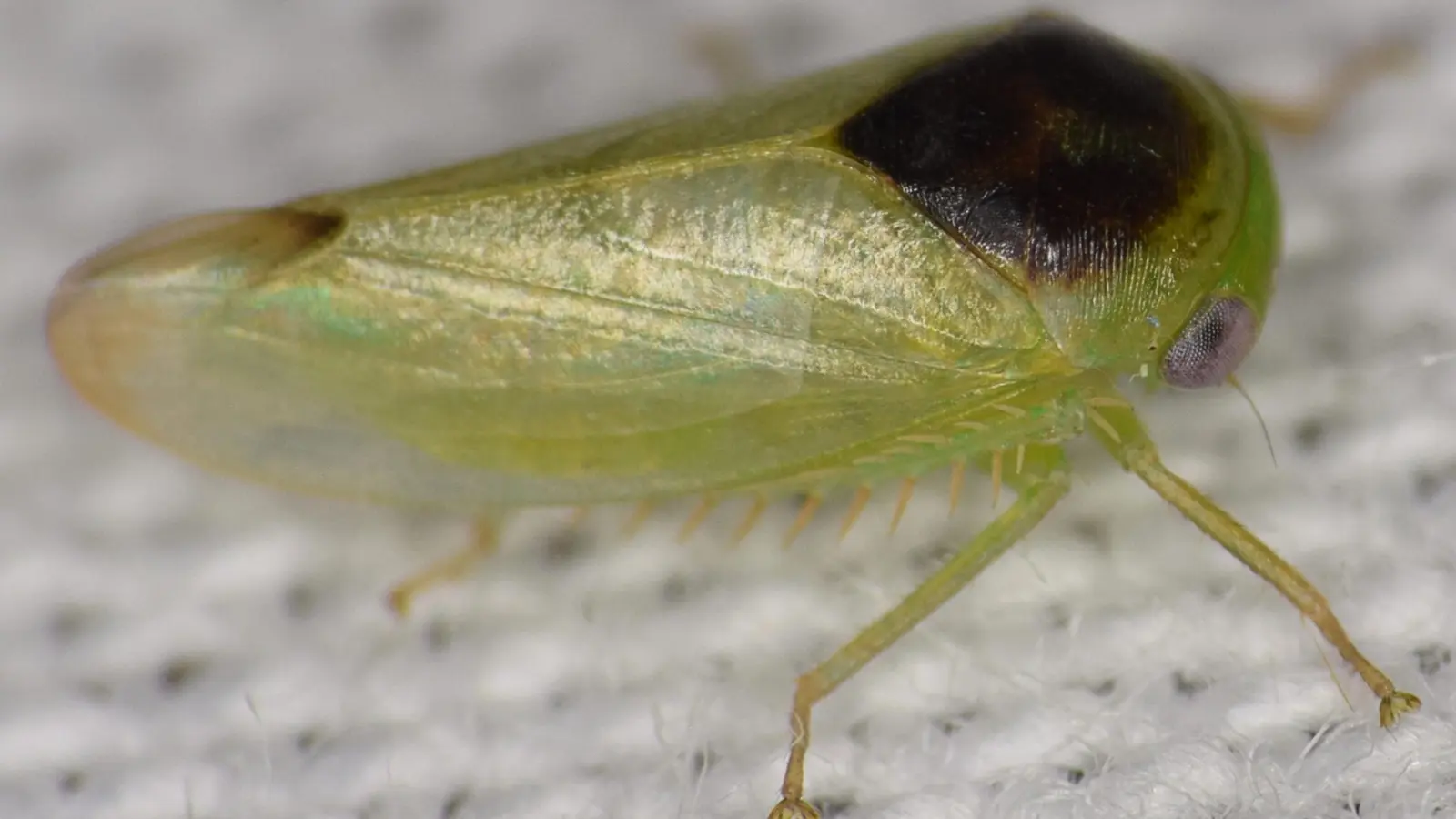
A Cambridge-based entomologist has identified seven previously unknown species of frog-like leafhoppers in Uganda’s montane rainforest, expanding our knowledge of biodiversity in a little-studied insect group. The discovery highlights how targeted fieldwork and careful morphological analysis still reveal new life even in well-surveyed regions.
Fieldwork in Kibale: how the new species were collected
Dr. Alvin Helden of Anglia Ruskin University (ARU) discovered seven new species within the leafhopper genus Batracomorphus while sampling at elevations above 1,500 m in Kibale National Park, Uganda. The insects were attracted to light traps set at night in the rainforest canopy and understory, a standard method for surveying nocturnal and crepuscular insects that are otherwise hard to spot.
These leafhoppers are striking in their frog-like posture: green bodies, large eyes, and long hind legs folded alongside the abdomen, ready to spring. The genus name Batracomorphus literally means 'frog-shaped' in Greek, a nod to both appearance and jumping motion. Until Dr. Helden’s work, only 375 species of Batracomorphus were described worldwide, and no new African records had been published since 1981.

Dr. Alvin Helden of Anglia Ruskin University carrying out fieldwork at Kibale National Park in Uganda. Credit: Anglia Ruskin University
Why careful anatomy matters: identifying sibling species
Visually, many Batracomorphus species look almost identical to the untrained eye. Helden’s investigation relied on painstaking lab work to examine fine morphological characters, particularly the insects' genital structures. In many insects, and leafhoppers in particular, reproductive organs are species-specific and provide reliable diagnostic features – a so-called 'lock and key' system where male and female parts must match precisely for successful mating.
Because these genital structures are sclerotized (hardened) and conserved across individuals of a species, they effectively prevent interbreeding with close relatives. That biological specificity is why taxonomists prioritize genital morphology when describing cryptic species that cannot be separated by color or size alone.

Batracomorphus ruthae – one of the seven new species of leafhopper discovered by Dr. Alvin Helden of Anglia Ruskin University. Credit: Dr. Alvin Helden, Anglia Ruskin University
Ecological role and wider significance
Leafhoppers are herbivores that feed on plant sap and can be agricultural pests in some contexts, but they also play important roles in natural ecosystems. They are a food source for birds, spiders, and predatory insects, and their presence and diversity can indicate the health of plant communities. Discovering new species improves baseline biodiversity data that conservationists and ecologists use to prioritise habitats for protection.
Beyond ecological implications, the discovery is personally meaningful for Dr. Helden. Several of the new species were given names derived from Greek descriptors of their morphology or location, while one species, Batracomorphus ruthae, was named in memory of his mother, Ruth, who supported his early interest in science and gave him his first microscope.

Batracomorphus pardos – one of the seven new species of leafhopper discovered by Dr. Alvin Helden. Credit: Dr. Alvin Helden, Anglia Ruskin University
Formally published in the journal Zootaxa, these descriptions close a knowledge gap for African Batracomorphus and underline the value of combining traditional taxonomic skills with persistent fieldwork. As tropical forests face ongoing pressure from climate change and land-use conversion, continued surveys and species descriptions are vital to document and preserve insect diversity before it is lost.

“The cosmos has always fascinated me. I write about space missions, astronomy, and the technologies pushing humanity beyond Earth.”

Discussion
Leave a Comment