
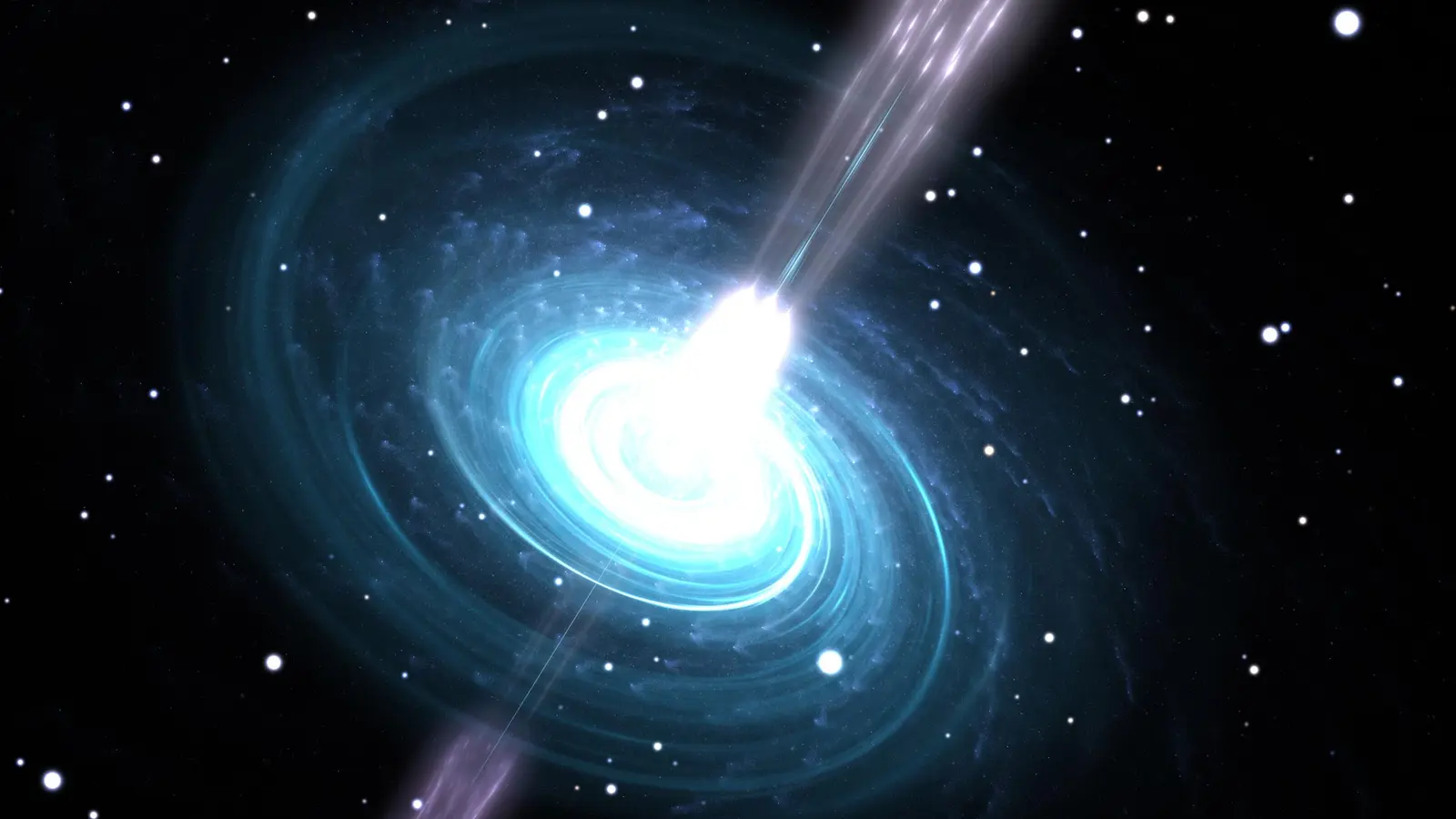
After a decade of fading, the neutron star known as NGC 7793 P13 (P13) suddenly flared back to life, brightening by more than 100 times in X-rays. This dramatic comeback offers a rare window into supercritical accretion—the extreme feeding process that powers some of the brightest X-ray sources in the universe.
A sudden reawakening and why it matters
P13 sits in the spiral galaxy NGC 7793, roughly 10 million light-years from Earth. It is classified as a pulsating ultraluminous X-ray source (PULX), a rare type of object where a neutron star—an ultra-dense stellar remnant—accretes matter so rapidly that its X-ray output can rival or exceed that of small galaxies. Astronomers tracked P13 with high-sensitivity X-ray observatories including XMM-Newton, Chandra, NuSTAR and NICER. Long-term archival data from 2011 through 2024 revealed dramatic changes: a faint phase around 2021 followed by a rapid rebrightening beginning in 2022 and reaching peak luminosity by 2024—over two orders of magnitude higher than the low state.

The image that combines data from X-ray, optical, and Hα line observations. NGC 7793 P13 is located away from the galactic center of NGC 7793. Credit: X-ray (NASA/CXC/Univ. of Strasbourg/M. Pakull et al.); Optical (ESO/VLT/Univ. of Strasbourg/M. Pakull et al.); Hα (NOAO/AURA/NSF/CTIO 1.5 m)
Why is this important? Supercritical accretion—sometimes called super-Eddington accretion—occurs when inflowing gas supplies energy at rates beyond classical limits set by radiation pressure. Understanding how matter can continue to fall onto a compact object under those conditions challenges current models of accretion physics, radiation transport, and the geometry of the inflow. P13's sudden 100× X-ray surge provides an empirical testbed for those theories.
Tracking long-term variability and spin behavior
Beyond brightness, P13 reveals another telling property: its rotation. As material is funneled along the neutron star’s strong magnetic field onto the magnetic poles, it produces accretion columns that emit pulsed X-rays. Observations show P13 has a rotation period near 0.4 seconds and an overall spin-up trend—the pulsar is getting faster. Crucially, the team found that during the rebrightening phase the acceleration rate of the spin (the spin-up slope) roughly doubled and persisted through 2024. In other words, when the X-ray luminosity climbed, so did the torque from accreting material.

When gas is pulled in by the intense gravity of a compact object such as a neutron star or a black hole, a process known as accretion, it releases energy in the form of electromagnetic radiation. Advances in high-sensitivity telescopes have revealed sources that shine with exceptionally powerful X-ray output.
That link between luminosity and angular momentum is a key diagnostic: it implies that changes in mass transfer rate from the binary companion or reconfiguration of the magnetosphere directly influence both the radiative output and the torque applied to the star. Detailed pulsation analysis indicates that the height of the accretion column changes across the decade-long flux modulation—taller columns during the bright state, shorter during the faint state—altering the beaming and local radiative transfer in ways that affect observed luminosity and pulse profiles.

During the bright phase, the accretion column is tall, while during the faint phase, it becomes shorter. Credit: Marina Yoshimoto (Ehime University)
Implications for supercritical accretion and ultraluminous sources
P13’s behavior strengthens the idea that supercritical accretion can be highly dynamic on multi-year timescales. For models of ultraluminous X-ray sources (ULXs), the observations suggest that changes in accretion geometry—column height, magnetic coupling radius, and the degree of radiation beaming—can produce order-of-magnitude swings in observed luminosity. The doubled spin-up during rebrightening is particularly informative: it ties accretion torque directly to the same episodes that produce extreme X-ray output, offering constraints on mass-accretion rates and angular momentum transfer in super-Eddington regimes.
Practically, these results highlight the value of coordinated, long-term monitoring with complementary instruments. Soft X-ray sensitivity (XMM-Newton, Chandra) combined with hard X-ray coverage (NuSTAR) and high-cadence timing (NICER) allowed researchers to map luminosity, spectral changes, and pulse timing across more than a decade—precisely the baseline needed to reveal the connection between spin and flux.
Expert Insight
"P13 gives us a natural laboratory for supercritical accretion," says Dr. Lila Armitage, an astrophysicist specializing in compact binaries. "Seeing the spin-up rate increase as the source brightens confirms that the system is delivering more than just photons—it's delivering angular momentum. That tight coupling is a cornerstone for models that aim to explain the brightest X-ray sources in nearby galaxies."
Conclusion
NGC 7793 P13’s dramatic reawakening and the correlated change in spin-up rate provide rare, direct evidence that links X-ray luminosity, accretion geometry, and angular momentum transfer in a supercritically accreting neutron star. Continued monitoring and targeted theoretical work will be essential to translate these empirical trends into a robust physical picture of how matter survives, funnels, and radiates in the most extreme accretion environments known.

“My work centers on sustainability, energy, and environmental science — examining how innovation can lead to a greener future.”

Discussion
Leave a Comment