
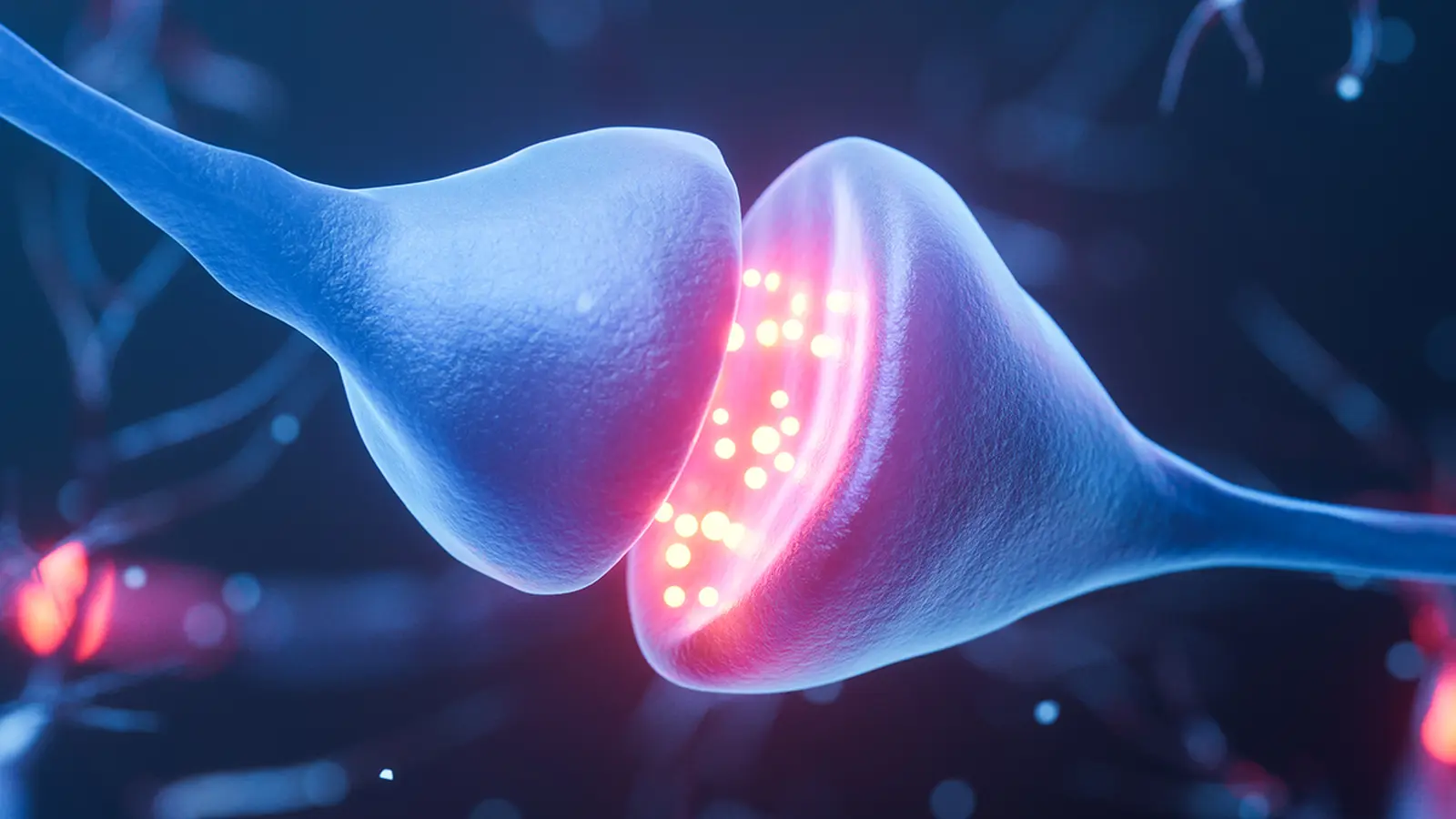
Researchers have developed a high-speed tissue-freezing method that captures brain cells in the act of signaling, opening a new window onto synaptic processes that occur in fractions of a second. The technique—nicknamed "zap-and-freeze"—lets scientists study how neurons package, release, and reclaim the tiny vesicles that carry chemical messages, with potential relevance for disorders such as Parkinson's disease.
Freezing signals at millisecond speed
The core idea is simple but technically demanding: electrically stimulate neurons and then freeze the tissue under high pressure within milliseconds, arresting dynamic events so they can be examined with electron microscopy. Applied to human brain slices removed during neurosurgical procedures and to mouse tissue, the method preserves cellular architecture while capturing transient steps in synaptic transmission.

The researchers imaged cell activity milliseconds after stimulation
Synapses communicate through neurotransmitter-filled vesicles that fuse with the presynaptic membrane to release their cargo, then must be recycled so the neuron can keep firing. Many aspects of that cycle happen too quickly to resolve with conventional light or fixed-tissue imaging. Zap-and-freeze bridges that gap by providing snapshots of membrane trafficking and vesicle dynamics at sub-second timescales.
What the team found
Using zap-and-freeze on slices from mice and from human patients, the group detected evidence of ultrafast endocytosis—vesicle retrieval that completes in under 100 milliseconds after stimulation. This rapid recycling pathway appears to be conserved between species, strengthening the case for using mouse models to study human synaptic biology.
At a molecular level, the investigators implicated a splice variant of a key GTPase, dynamin1xA, as essential for this ultrafast endocytic route. Dynamin proteins help pinch off membrane to re-form vesicles; the new data suggest that specific isoforms are required for lightning-fast recycling at active synapses.
Why this matters for disease research
Faulty synaptic transmission and impaired vesicle recycling are implicated in neurodegenerative conditions such as Parkinson's disease, where progressive neuron loss and dysfunctional signaling are hallmarks. By visualizing synaptic membrane dynamics directly in human tissue, scientists can compare healthy activity with patterns from diseased brains and look for early disruptions in vesicle trafficking.
Johns Hopkins cell biologist Shigeki Watanabe, lead on the study, notes that the conserved mechanism between mouse and human tissue supports translational research: understanding synaptic failures in model systems may point to therapeutic targets relevant to people.
Methods, samples and ethical considerations
The technique requires rapid access to fresh tissue and coordination with surgical teams. In the reported work, samples were taken from patients undergoing brain surgery for lesions; consent and ethical approvals were obtained for research use. Future studies will aim to include tissue donated by patients with Parkinson's disease who undergo invasive procedures, with appropriate permissions, to directly assess disease-related synaptic changes.
Beyond the practical challenge of obtaining human tissue, zap-and-freeze depends on precise timing between stimulation and cryofixation, specialized high-pressure freezing equipment, and downstream electron microscopy to resolve membrane morphology at nanometer scales.
Implications and next steps
Short-term, zap-and-freeze provides a new assay for basic synaptic physiology—identifying proteins and steps in vesicle recycling that operate on very fast timescales. Longer term, mapping how ultrafast endocytosis is altered in Parkinson's and other brain diseases could reveal intervention points to slow or prevent synaptic failure.
Complementary approaches—such as live-cell super-resolution imaging, optogenetic stimulation, and molecular perturbations—can be combined with zap-and-freeze to correlate functional readouts with high-resolution structural snapshots. That multimodal strategy will improve mechanistic understanding and help validate potential drug targets.
Expert Insight
"Capturing synapses in motion is a major advance," says Dr. Laura Chen, a neurophysiologist not involved in the study. "Methods like zap-and-freeze give us a more complete picture of how neurons sustain rapid signaling. For conditions like Parkinson's, seeing exactly which steps break down may be the key to rational therapies rather than trial-and-error approaches."
While translating these findings into treatments will take time, the combination of human tissue data, conserved mechanisms across species, and new molecular leads such as dynamin1xA provides a promising roadmap for synapse-focused research in neurodegeneration.

“My work centers on sustainability, energy, and environmental science — examining how innovation can lead to a greener future.”

Discussion
Leave a Comment