
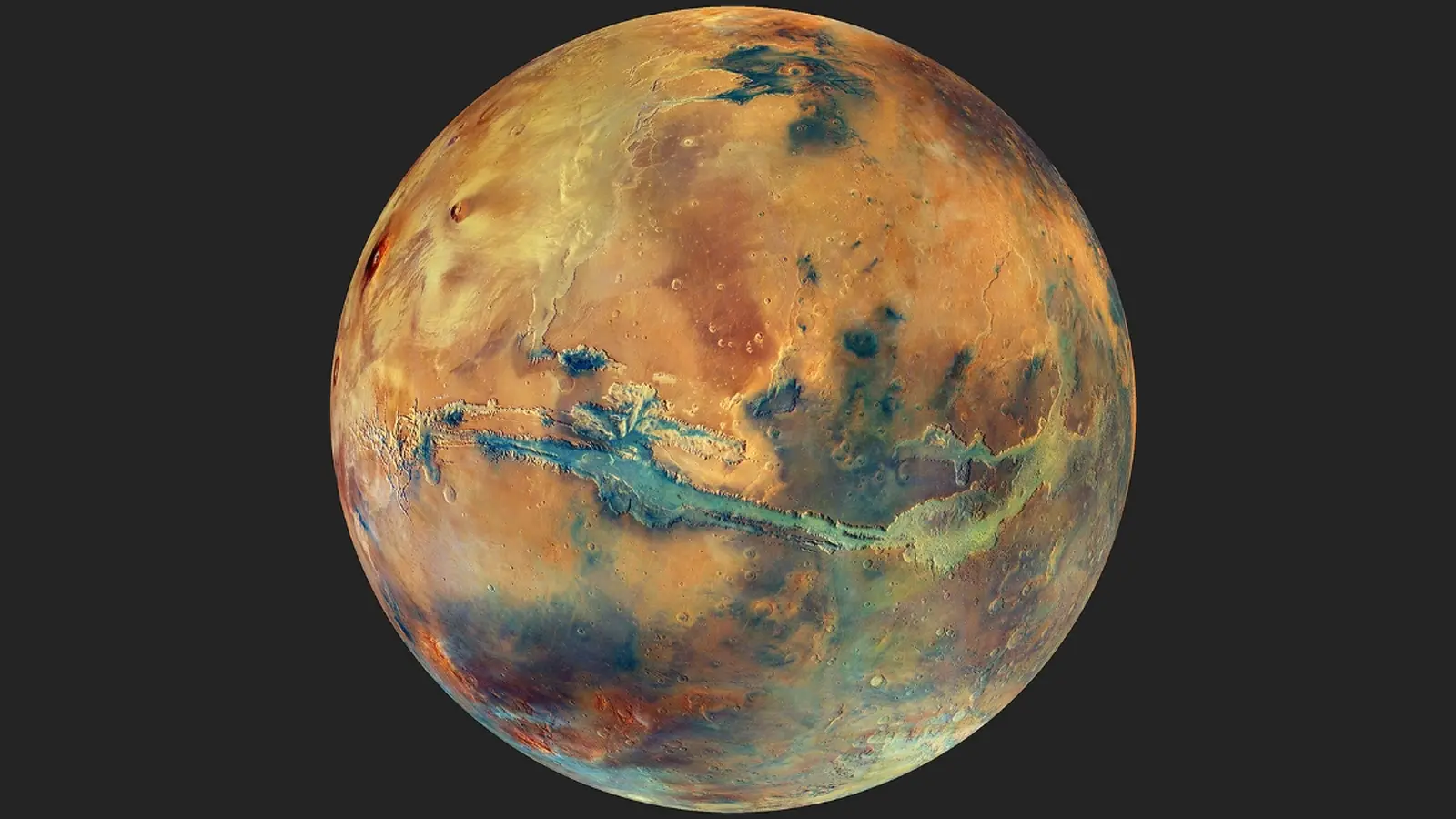
As human and robotic missions push farther into the Solar System, reliable timekeeping beyond Earth becomes a critical piece of infrastructure. Precise, scalable clocks and synchronization systems will support communications, positioning, and navigation for upcoming lunar programs and the first crewed Mars landings.

The orbits of Mars and Earth, with the seasons in red and blue, respectively
Why precise time matters beyond Earth
On Earth, coordinated time underpins everything from GPS to internet routing. Off-world, the physics of orbits, signal delays and varying local environments complicate simple time transfer. For missions to the Moon and Mars, maintaining an agreed temporal framework is essential for mission planning, rendezvous operations, autonomous navigation of rovers, and reliable communications between spacecraft, ground stations and surface assets.
Toward autonomous interplanetary time synchronization
Researchers argue that developing scalable, autonomous timekeeping infrastructure now will pay dividends when human explorers arrive. That includes designing clocks that can be synchronized across large light-time delays and building protocols that let spacecraft and habitats maintain a common time even when Earth-based references are intermittent or unavailable.

Practical building blocks
- High-stability atomic clocks adapted for spaceflight.
- Time-transfer protocols tolerant of long signal delays and outages.
- Navigation systems that fuse local measurements with synchronized timestamps.
As one project lead notes, developing interplanetary navigation concepts today prepares the path for future surface operations even if the full deployment of rovers and human footprints on Mars may take decades. Another researcher observes that the current decade offers an unprecedented opportunity: commercial and national lunar plans paired with Mars ambitions make now the right moment to build these temporal frameworks.
The study presenting these ideas appears in The Astronomical Journal and outlines a roadmap toward "autonomous interplanetary time synchronization"—a phrase that captures both the technical challenge and the operational need for next-generation space exploration.

“My work centers on sustainability, energy, and environmental science — examining how innovation can lead to a greener future.”

Discussion
Leave a Comment