
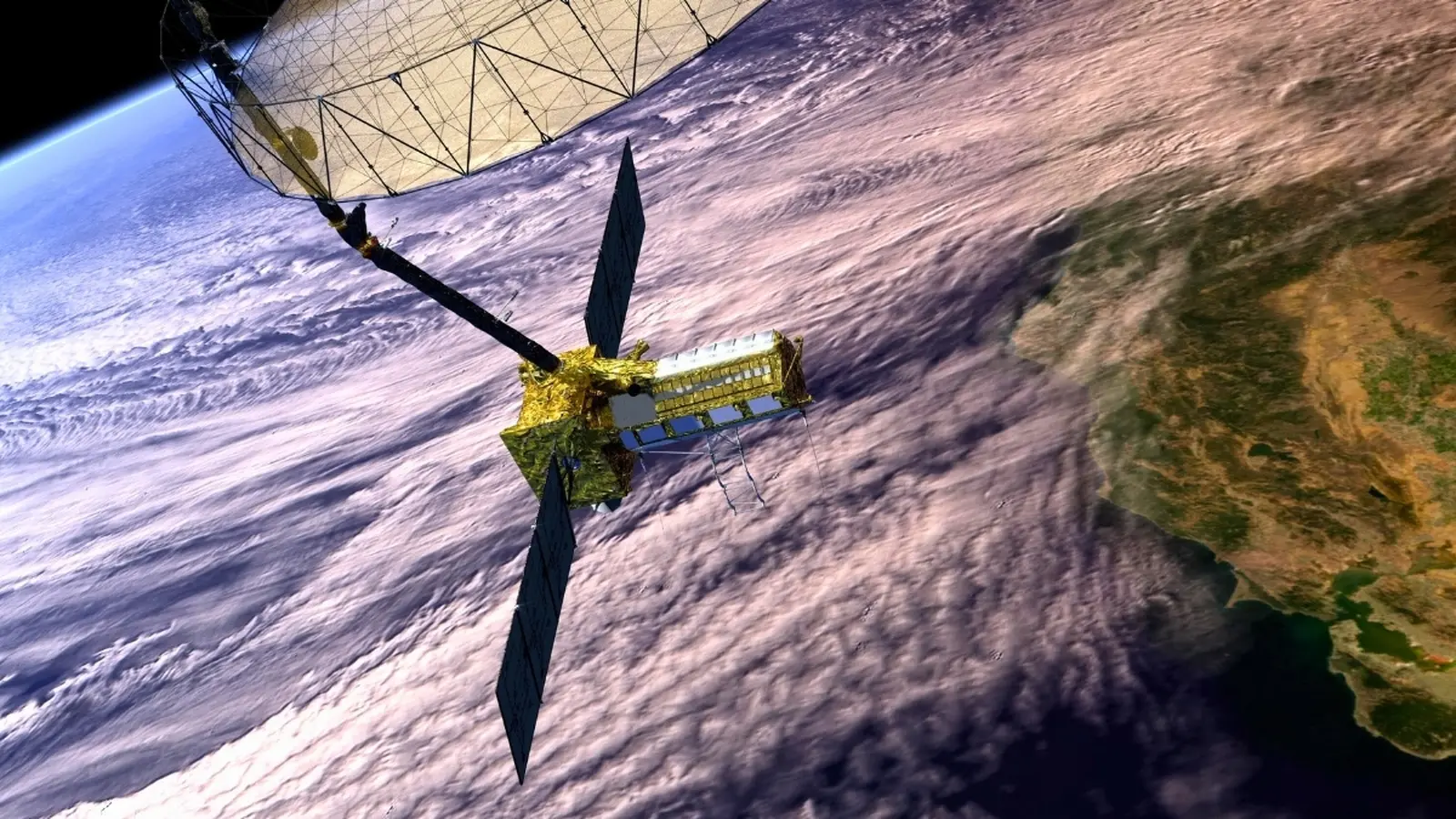
Satellites watching Earth over two decades have produced an unexpected picture: seasons do not march in lockstep across our planet. Researchers at UC Berkeley used 20 years of remote sensing to map when ecosystems reach their seasonal peaks and found startling mismatches — even between neighboring landscapes that sit at the same latitude or elevation.
A patchwork of seasonal timing and how the map was made
The new study synthesizes 20 years of satellite observations to estimate the average seasonal growth cycles of land-based ecosystems globally. Rather than treating seasons as simple calendar boxes — winter, spring, summer, fall — the research tracks phenology: the timing of biological events such as leaf-out, peak vegetation growth and senescence. The resulting global map identifies where the local seasonal rhythm diverges strongly from neighboring areas.
Remote-sensing satellites record signals tied to vegetation activity (often summarized by indices like NDVI or other greenness metrics). By analyzing long-term patterns, the team pinpointed the timing of seasonal peaks across diverse biomes, from temperate forests to deserts, and produced what the authors call the most comprehensive phenological timing map yet. The printed map accompanied the Nature paper and includes detailed regional patterns (Terasaki Hart et al., Nature, 2025).
Examples: neighboring places on different seasonal beats
Some mismatches are dramatic. Arizona’s Phoenix and Tucson lie only about 160 kilometers (99 miles) apart, but their annual water cycles run on different schedules. Tucson receives most of its rainfall in the summer monsoon, while Phoenix typically gets more rain in January. That timing difference shifts plant growth, insect emergence and urban ecological dynamics.

Across the globe, the five Mediterranean-climate regions — California, central Chile, the Mediterranean Basin, South Africa’s Cape region and southern Australia — show another striking pattern. Forest growth in these zones often peaks nearly two months later than in many other ecosystems, despite similar seasonal temperature ranges. These timing offsets also show up in agriculture: flowering, pollination windows and harvest timing can vary dramatically across short distances, which has real economic and ecological consequences.
Researchers note a vivid agricultural example in Colombia, where coffee farms separated by a single day’s drive over mountain ranges can have reproductive cycles as out of sync as regions in opposite hemispheres. When neighboring populations of the same species reproduce at different times, interbreeding may be reduced. Over many generations, such asynchronies can promote genetic divergence and ultimately contribute to speciation — a major driver of biodiversity.
Why seasonal asynchrony matters for ecology and climate
Seasonal timing controls resource availability: when leaves appear, when fruits ripen, when pollinators are active. If those schedules differ across adjacent habitats, food webs and competitive relationships shift. The Berkeley map shows that many of the strongest asynchronies occur in biodiversity hotspots — places where varied seasonal rhythms may help sustain a mosaic of niches and thus higher species richness.
There are also policy and modeling implications. Many ecological and climate projections still rely on simplified seasonal assumptions that treat broad regions as having a single, uniform seasonal calendar. That approach misses fine-scale variation that can alter crop yields, disease dynamics, and the timing of conservation interventions such as controlled burns or species translocations.
Arctic microbes and a changing seasonal baseline
Related research highlights another example of how timing and changing conditions matter. In October, researchers sampling beneath Arctic sea ice discovered thriving communities of non-cyanobacterial diazotrophs (NCDs) — nitrogen-fixing bacteria that do not photosynthesize. While studies have not yet confirmed active nitrogen fixation in all cases, the fringes of Arctic sea ice appear to host higher abundances and activity of these microbes.
As Arctic ice continues to retreat with warming, the distribution and activity of such nitrogen fixers could change marine nutrient dynamics. More nitrogen fixation can boost algal growth, potentially drawing down more atmospheric CO2 into biomass and altering marine food webs — impacts that should be folded into climate and ecosystem models, researchers argue.
Expert Insight
"This map reframes how we should think about seasonality," says Dr. Maya Ribeiro, a fictional climate ecologist and science communicator. "It's not just a curiosity: timing drives ecological interactions. For conservation planning and climate adaptation, you need to know not only what the climate is, but when biological processes happen. Local mismatches can amplify vulnerability or create unexpected refuges for species."
Dr. Ribeiro adds, "Integrating high-resolution phenology into ecological forecasting will improve predictions for agriculture, biodiversity outcomes and even public health — for instance, by refining models of vector-borne disease seasonality."
Implications for research, agriculture and policy
The Berkeley team's map opens new research directions. Evolutionary biologists can explore how seasonal barriers shape gene flow; conservationists can refine protected-area design to account for asynchronous resource pulses; and agricultural planners can better anticipate localized growing seasons as climates shift. Satellite-derived phenology can also guide ground-based monitoring efforts to prioritize where temporal mismatches are greatest.
Ultimately, the study is a reminder that Earth’s rhythms are complex. Treating seasons as uniform across even nearby locations can obscure critical ecological processes. As climate change reshapes timing worldwide, fine-scale maps of seasonal timing — grounded in long-term satellite records — will become essential tools for science, agriculture and policy.
Conclusion
Seasons are not a single global metronome but a patchwork of regional calendars that influence life in subtle and profound ways. By mapping those calendars from space, scientists can better predict ecological outcomes, design smarter conservation strategies and improve climate models that aim to protect both nature and human systems.

“My work centers on sustainability, energy, and environmental science — examining how innovation can lead to a greener future.”

Discussion
Leave a Comment