
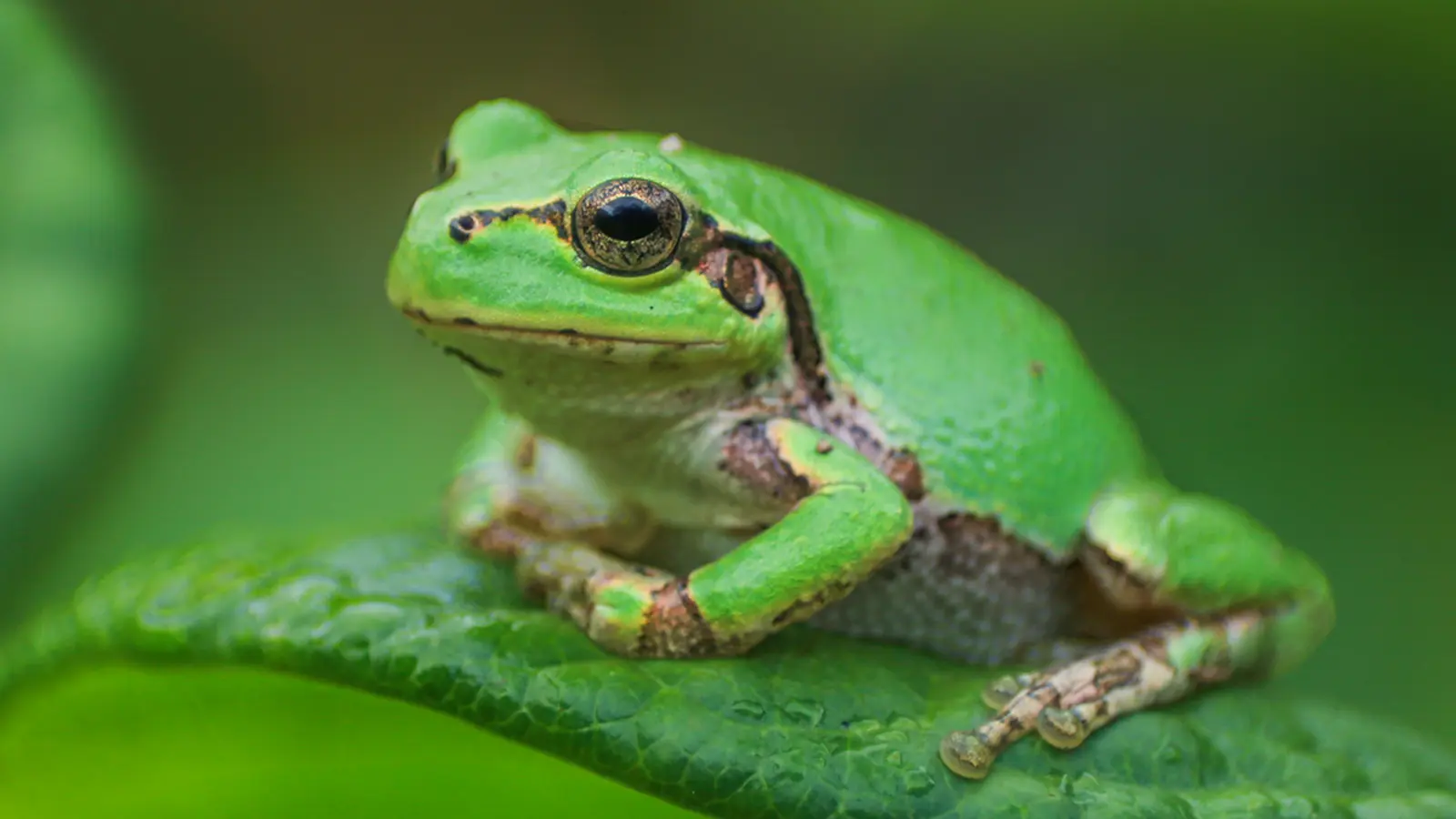
Researchers have identified a strain of gut bacteria from the Japanese tree frog that can trigger dramatic tumor regression in mice, pointing to a surprising new direction for cancer therapy research. One bacterial strain, Ewingella americana, not only reduced tumors but eliminated them entirely in treated animals, while also provoking a lasting immune response.
From pond microbiomes to anti-cancer candidates
Amphibians and reptiles are notable for their low incidence of cancer, a fact that prompted scientists at the Japan Advanced Institute of Science and Technology to search these animals' gut microbiomes for therapeutic clues. The team collected bacterial isolates from frogs, newts and lizards and shortlisted 45 strains for laboratory testing. Nine of those strains showed measurable tumor-suppressing effects in mouse models — but one stood out above the rest: Ewingella americana, isolated from the Japanese tree frog (Dryophytes japonicus).
Unlike many experimental agents that only slow tumor growth, a single dose of E. americana led to complete disappearance of established tumors in treated mice. When the researchers reintroduced cancer cells to those animals 30 days later, tumors failed to develop for at least another month, suggesting a durable protective effect rather than a temporary suppression.
How the bacteria attack tumors and boost immunity
Follow-up analyses indicate E. americana uses a two-pronged approach. First, it targets tumor tissue directly under the low-oxygen (hypoxic) conditions common within solid tumors; second, it stimulates the host immune system. Treated animals showed increased activity of key immune cell types — T cells, B cells and neutrophils — which are central to anti-tumor immune responses. In short, the bacterium appears to both weaken the tumor microenvironment and enlist immune cells to finish the job.

The bacteria seem to enlist the help of immune cells to fight cancer.
Researchers hypothesize that E. americana evolved adaptations to survive in oxygen-poor environments, a trait that lets it persist and act inside tumors where immune function and chemotherapy efficacy are often suppressed. That ecological insight — learning from organisms adapted to extreme microenvironments — underscores the untapped potential of biodiversity for drug discovery.
Safety signals from these preliminary animal studies are encouraging. The bacterial strain was rapidly cleared from bloodstream, produced no lasting organ toxicity in treated mice, and outperformed several standard options, including the chemotherapy drug doxorubicin, in tumor-shrinkage assays. Still, the authors caution that E. americana can cause infections in humans under some conditions, so safety will be a central concern for any move toward clinical trials.
Implications, next steps and challenges
The team plans additional experiments to test E. americana across different cancer types and in combination with other therapies, as well as to refine delivery methods. Key questions remain: Can the bacterial effect be replicated in larger animals and humans? Which molecular factors produced by E. americana drive the immune activation and direct tumor effects? And can those factors be isolated or engineered into safer, standardized therapeutic products?
Bacterial cancer therapies are not purely speculative — one live bacterial therapy is already used to treat some bladder cancers — but translating a frog-derived strain into a human treatment will require rigorous safety testing and likely modification to mitigate infection risks. The research, published in Gut Microbes (Iwata et al., 2025), emphasizes both the promise and the caution necessary when moving from laboratory animals to people.
Expert Insight
"Finding a bacterium that both attacks tumors and ramps up adaptive immunity is rare and exciting," says Dr. Elena Park, a cancer immunologist not involved in the study. "The ecological strategy of organisms adapted to hypoxic niches — like some amphibian gut microbes — offers a fresh lens for therapeutic design. But harnessing live bacteria will require careful balancing of efficacy and safety, or isolating the active molecules for drug development."
Conclusion
The discovery of Ewingella americana's anti-cancer activity in mice highlights the value of exploring diverse microbial ecosystems for novel therapies. While translation to human medicine is distant and complex, the study opens a new avenue for immunotherapy and tumor-targeting research — one that may eventually expand the toolbox for treating stubborn cancers. Conservation of biodiversity, the authors note, is not only an environmental imperative but a strategy for preserving prospects for future medical breakthroughs.

“The cosmos has always fascinated me. I write about space missions, astronomy, and the technologies pushing humanity beyond Earth.”

Discussion
Leave a Comment