

When people lose weight they typically shed both fat and muscle. New laboratory research suggests that pairing weight loss with aerobic exercise can protect – and even rejuvenate – skeletal muscle at the molecular level, preserving metabolic function despite a significant calorie shortfall.
How the study was run: a tightly controlled test of exercise plus calorie cut
Researchers recruited ten healthy, physically fit young men and put each participant through two five-day laboratory trials. In one trial they ate enough to maintain body weight; in the other they faced an extreme energy deficit, consuming 78% fewer calories. Across both trials, participants performed a 90-minute session of low- to moderate-intensity cycling three times during the five-day period.
Throughout each trial the team sampled blood to monitor glucose, ketones, free fatty acids and hormones linked to energy balance and preservation. They also collected muscle biopsies before and after each test period and applied dynamic proteomic profiling to measure the production and abundance of hundreds of muscle proteins. This allowed the investigators to map—at the protein level—how human skeletal muscle responds when exercise is maintained while calories are sharply restricted.

Inside the muscle: more mitochondria, less collagen
Over five days in the severe energy deficit, participants lost roughly 3 kg and exhibited steep drops in hormones such as leptin, triiodothyronine (T3) and insulin-like growth factor 1 (IGF‑1)—classic signals that the body is switching to an energy-conserving state. Yet the muscle tissue itself mounted a notable, and somewhat unexpected, adaptive response.
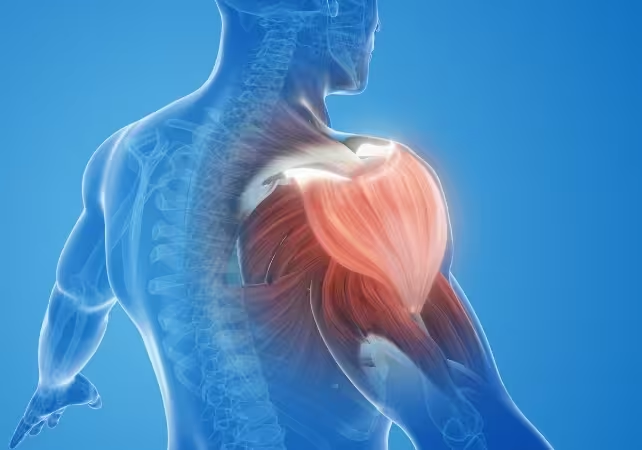
Two molecular signatures stood out. First, the abundance and synthesis rates of mitochondrial proteins rose. Mitochondria are the cellular power plants that turn fats and carbohydrates into usable energy; increased mitochondrial protein content and production generally indicate improved metabolic efficiency and endurance capacity at the tissue level. Second, the amount and creation of collagen and collagen-related proteins fell. Collagen contributes to structural stiffness and accumulates with age, so reduced collagen expression aligns with a less fibrotic, more flexible muscle matrix.
Taken together, those shifts resemble a more youthful, metabolically resilient muscle profile. In short: even when the whole organism shows signs of energy scarcity, exercised muscle appears to prioritize its energy-producing machinery while dialing back proteins associated with stiffness and decline.
Why this matters: real-world implications
These findings matter in several contexts. For people using weight-loss drugs such as Wegovy or Ozempic, or those following calorie-restricted diets, muscle loss is a major concern because skeletal muscle helps regulate blood sugar, maintain mobility and support long-term metabolic health. The study suggests that structured aerobic exercise during weight loss may preserve muscle quality even when overall mass declines.
Athletes also face a familiar dilemma: many sports favor lower body weight while demanding high training loads and power output. The data indicate that muscle remains responsive to exercise stimuli during energy deficits and may prioritize functional proteins that sustain movement efficiency. That said, this small, short-term study does not resolve how chronic deficits affect performance or injury risk over months or seasons.
Older adults—who are more vulnerable to sarcopenia (age-related muscle loss)—may particularly benefit if exercise during weight loss helps maintain muscle quality. Preserving mitochondrial function and limiting excess collagen deposition could support mobility and metabolic health as people age.
Evolutionary perspective: why muscles fight to stay ready
It may seem paradoxical that an energy-hungry tissue like muscle would invest resources when calories are scarce. One explanation lies in our evolutionary past: for hunter-gatherers, maintaining the ability to move efficiently during food shortages—walk, forage and hunt—was a survival advantage. An organism that shut down muscle function when hungry would struggle to find food. The protective and selective maintenance of muscle energy pathways may therefore be a deep-rooted adaptation.
Expert Insight
"This study highlights the plasticity of human muscle," says Dr. Elena Martin, an exercise physiologist at the Institute for Human Performance. "Even with a strong calorie deficit, muscle cells can reallocate resources to maintain mitochondrial capacity and limit fibrotic changes. For clinicians and coaches, the practical message is clear: structured aerobic activity during weight-loss phases may preserve the functional quality of muscle, not only its mass."
Scientific context, methods and future directions
The use of dynamic proteomic profiling is a key strength of the work. Unlike gene-expression studies that measure RNA, proteomics directly tracks proteins—the molecules that carry out cellular tasks—revealing whether a tissue is actually producing the machinery needed for energy conversion, repair or structural change. Muscle biopsies remain the gold standard for these measurements, though they are invasive and generally limit sample sizes.
This experiment was intentionally short and extreme: five days with a 78% calorie reduction in a small cohort of young men. That design provides a clear signal about acute molecular responses, but it leaves important questions open. How would women, older adults, people with obesity or those with chronic conditions respond? Do the proteomic shifts translate into preserved or improved functional performance—strength, endurance, balance—over longer periods? And how does exercise type matter: would resistance training produce different protective effects compared with aerobic work?
Future studies should compare weight loss with and without exercise, test more realistic and sustainable calorie deficits, include diverse age and sex groups, and pair molecular profiling with performance testing. There is also scope for identifying blood-based biomarkers that reflect muscle quality so clinicians could monitor responses without repeated biopsies.
Conclusion
This controlled laboratory study provides encouraging evidence that exercising while losing weight may do more than blunt muscle loss: it appears to shift the internal makeup of muscle toward greater mitochondrial capacity and less age-linked collagen accumulation. Those molecular changes are consistent with a younger, more metabolically efficient tissue. While broader and longer-term studies are required, the current findings reinforce a practical recommendation: incorporate structured aerobic activity into weight-loss plans to protect muscle quality and metabolic health.

“My work centers on sustainability, energy, and environmental science — examining how innovation can lead to a greener future.”

Discussion
Leave a Comment