
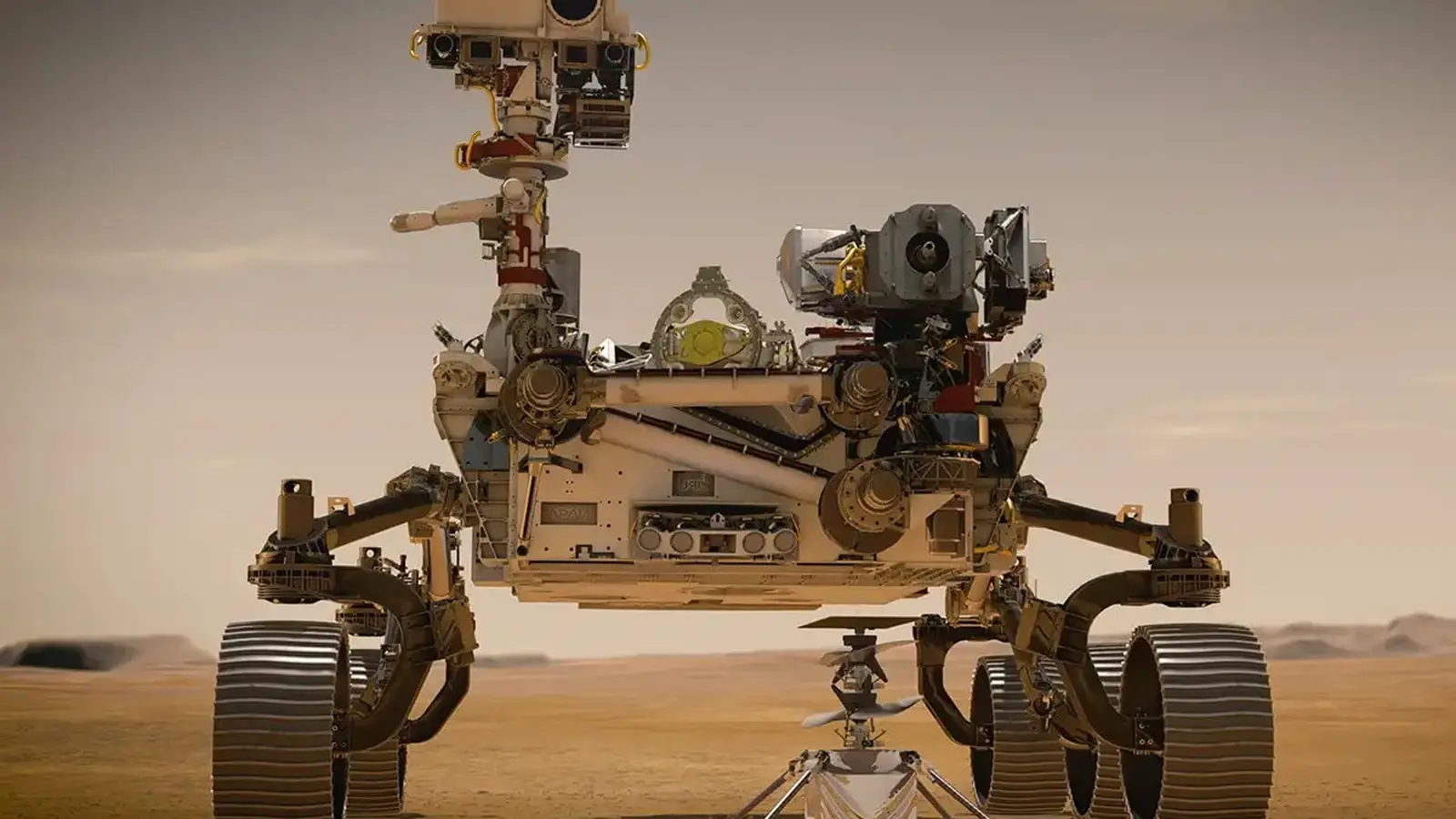
Perseverance: a tank-like rover still going strong
NASA’s Perseverance rover — a car-sized, six-wheeled explorer — is proving its designers’ confidence right. Launched to hunt for signs of ancient life on Mars, the rover was only expected to complete its primary science goals in one Martian year (about 687 Earth days). But from the start it was built with longevity in mind, and as of December 2025 the Jet Propulsion Laboratory confirms the vehicle is fit to operate for years more.
The rover has been working in Jezero Crater for nearly five years and has driven almost 25 miles (40 km) across ancient lakebeds and rivers that are prime targets for biosignatures. After rigorous durability testing using an Earth-side twin, NASA now estimates Perseverance has at least another 37 miles (60 km) of driving left — and enough braking life for the mission to continue through at least 2031.

What keeps a Mars rover rolling? Think automotive durability
Perseverance isn’t an ordinary vehicle, but many of the engineering concerns read like an extreme off-road SUV spec sheet: traction, wheel actuators, suspension resilience, braking performance, and the ability to traverse uneven, rocky terrain without tipping or getting stuck. Engineers have been testing exactly those systems on OPTIMISM — the Operational Perseverance Twin for Integration of Mechanisms and Instruments Sent to Mars — a ground replica used as a living testbed.
Key findings from those tests:
- Rotary actuators that turn the wheels remain certified for at least 37 more miles of driving under Martian-like loads.
- Brake system assessments are ongoing, but current projections push operational life to at least 2031.
- Structural and electronics health checks show the rover’s chassis, motors and instruments remain robust after nearly five years in operation.
If you’re used to reading car reviews, think of this as a fleet durability program: a manufacturer runs a twin vehicle through accelerated cycles to predict wear and schedule maintenance. The space equivalent helps mission planners know when to risk long drives or focus on local science.
Autonomy that channels modern ADAS — but tuned for Mars
Perseverance’s navigation system — Enhanced Autonomous Navigation (ENav) — is a major reason the rover can travel so far with minimal human micromanagement. ENav scans the ground roughly 50 feet (15 meters) ahead and decides the safest path forward, directing steering and motion without constant commands from Earth.
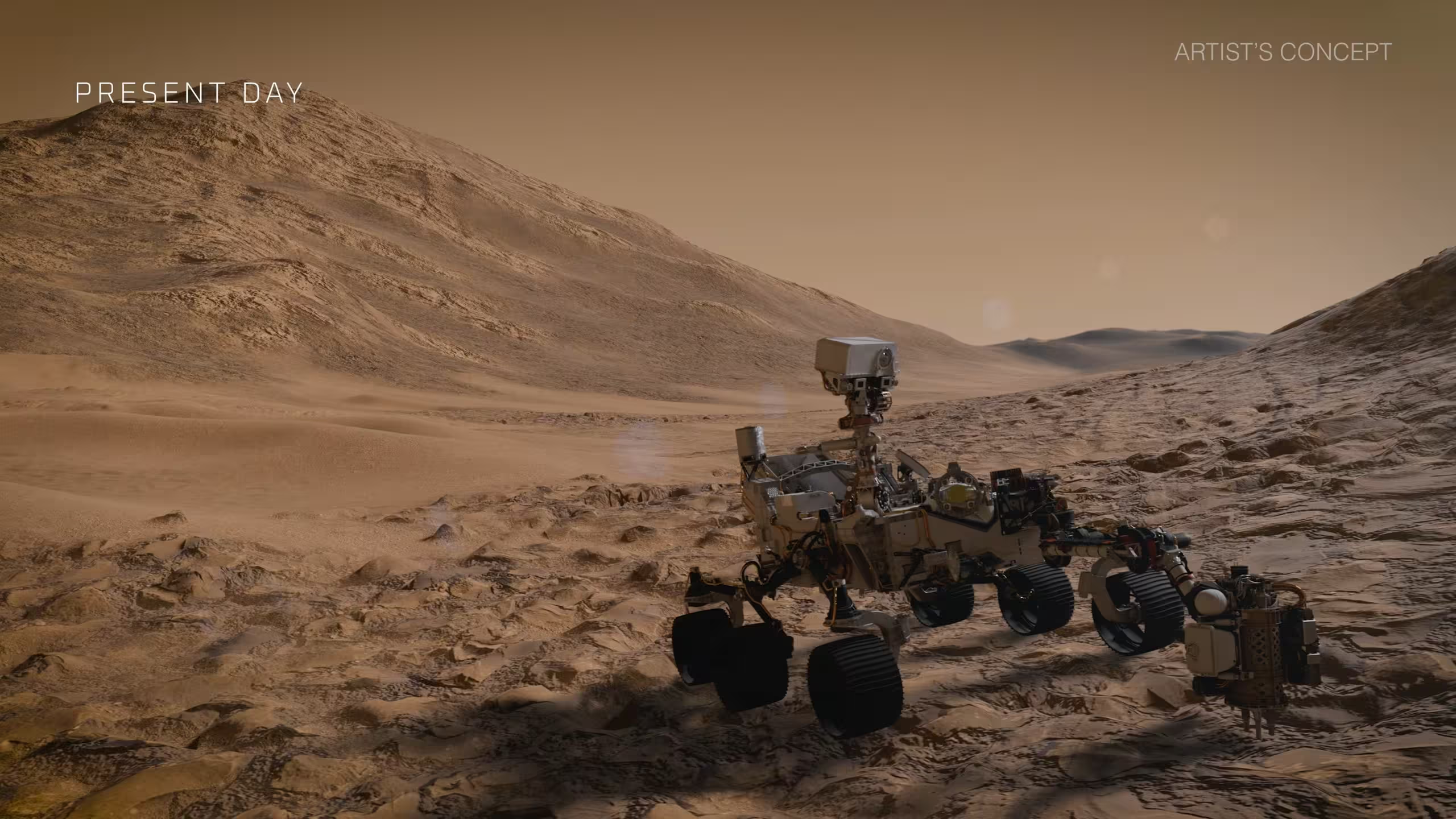
There are clear parallels to automotive advanced driver assistance systems (ADAS) and autonomous driving tech:
- ENav assesses each wheel independently against terrain elevation — akin to torque-vectoring and selective traction control on high-end off-roaders.
- It can route around clusters of obstacles without having to slow to a crawl, improving average speed and mission efficiency.
- About 90% of the rover’s driving over the last five years has been performed autonomously, a figure that underlines how mature the system has become.
For car enthusiasts, ENav reads like a purpose-built off-road autopilot: high situational awareness, per-wheel decisions, and conservative path planning to avoid tipping or immobilization. The system’s success is also a signal to auto engineers: robust autonomy can thrive even in unstructured, risky environments.
Design and performance highlights
- Configuration: six-wheel drive, with each wheel featuring independent steering and actuation.
- Size: roughly car-sized, optimized for stability and scientific payloads rather than speed.
- Traversed distance (Dec 2025): ~25 miles (40 km) within Jezero Crater.
- Projected remaining travel: ≥37 miles (60 km), based on OPTIMISM actuator testing.
Perseverance trades top speed for reliability. Where a consumer SUV might prioritize comfort and fuel economy, the rover prioritizes redundancy, radiation-hardened electronics, and mechanical simplicity where possible — all hallmarks of long-lived engineering.
Science on the move: sampling, minerals, and tantalizing signs
The rover’s current route is toward a site called Lac de Charmes, where it will spend a year collecting rock cores. Recent work in the Margin Unit, on Jezero’s inner rim, yielded three promising samples. Scientists describe them as windows into how Mars’ deep interior interacted with surface water and atmosphere — interactions that may have created habitable conditions in the distant past.
Among the discoveries:
- Olivine: typically forms at high temperatures deep within a planet and indicates geological processes from Mars’ interior.
- Carbonates: minerals that can trap and preserve organic signatures over geologic timescales.
- A high-profile sample from Cheyava Falls revealed traces of organic carbon, sulfur, oxidized iron (rust), and phosphorus: all potential energy sources for microbes.
These findings are exciting but not definitive proof of past life. Perseverance’s caches and analytical instruments are building a compelling case, and with years still ahead, the mission may yet deliver the breakthrough the planet-hunting community hopes for.
Lessons for the automotive and tech sectors
Perseverance offers practical lessons that auto makers and suppliers can borrow:
- Build for endurance: materials and actuators tested for decades of wear produce better long-term value than short-term performance gains.
- Use digital twins and ground replicas, like OPTIMISM, to accelerate failure-mode analysis and refine maintenance plans.
- Treat autonomy as a mission enabler: conservative, per-wheel decisions and redundancy beat high-speed autonomy in harsh environments.
Quote: "Perseverance shows how conservative engineering, coupled with advanced autonomy, can extend operational range far beyond initial expectations." — an approach any automaker aiming for true off-road durability would respect.
Where the rover goes next
With remaining mobility and working instruments, Perseverance will continue sampling and scouting Jezero’s geology. Every additional mile it drives is more than science: it’s another validation of mission-grade vehicle design that automotive engineers can appreciate. Whether you follow cars for suspension tuning or for the latest EV range figures, there’s a shared fascination here: efficiency, reliability and autonomy — engineered to last in the toughest environments.
Perseverance may have started as a life-hunting science vehicle, but its ongoing performance reads like a case study in durable vehicle engineering. If the mission keeps collecting data at its current pace, the question of whether Mars once hosted life may shift from "if" to "when."

“The cosmos has always fascinated me. I write about space missions, astronomy, and the technologies pushing humanity beyond Earth.”

Discussion
Leave a Comment