
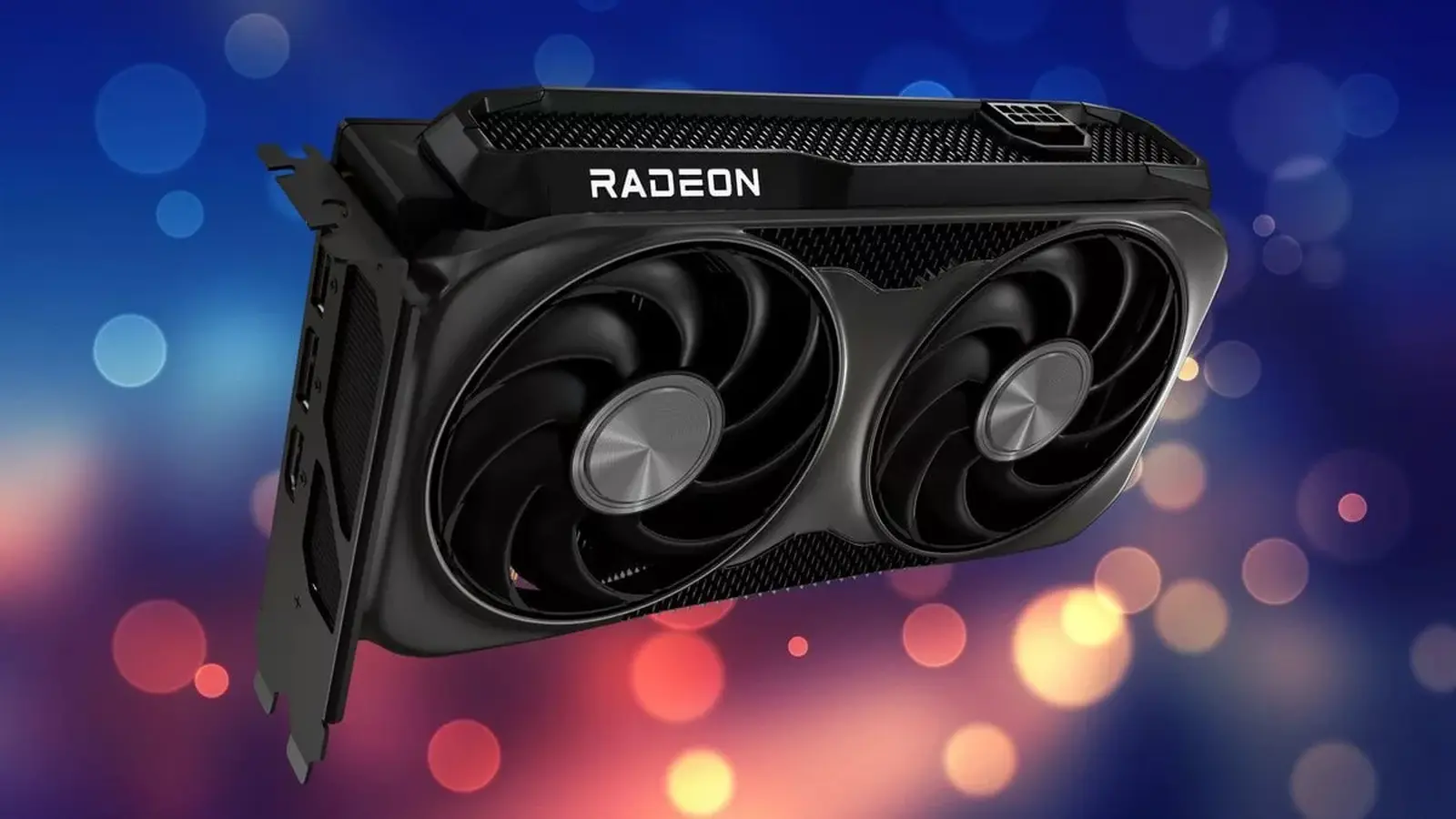
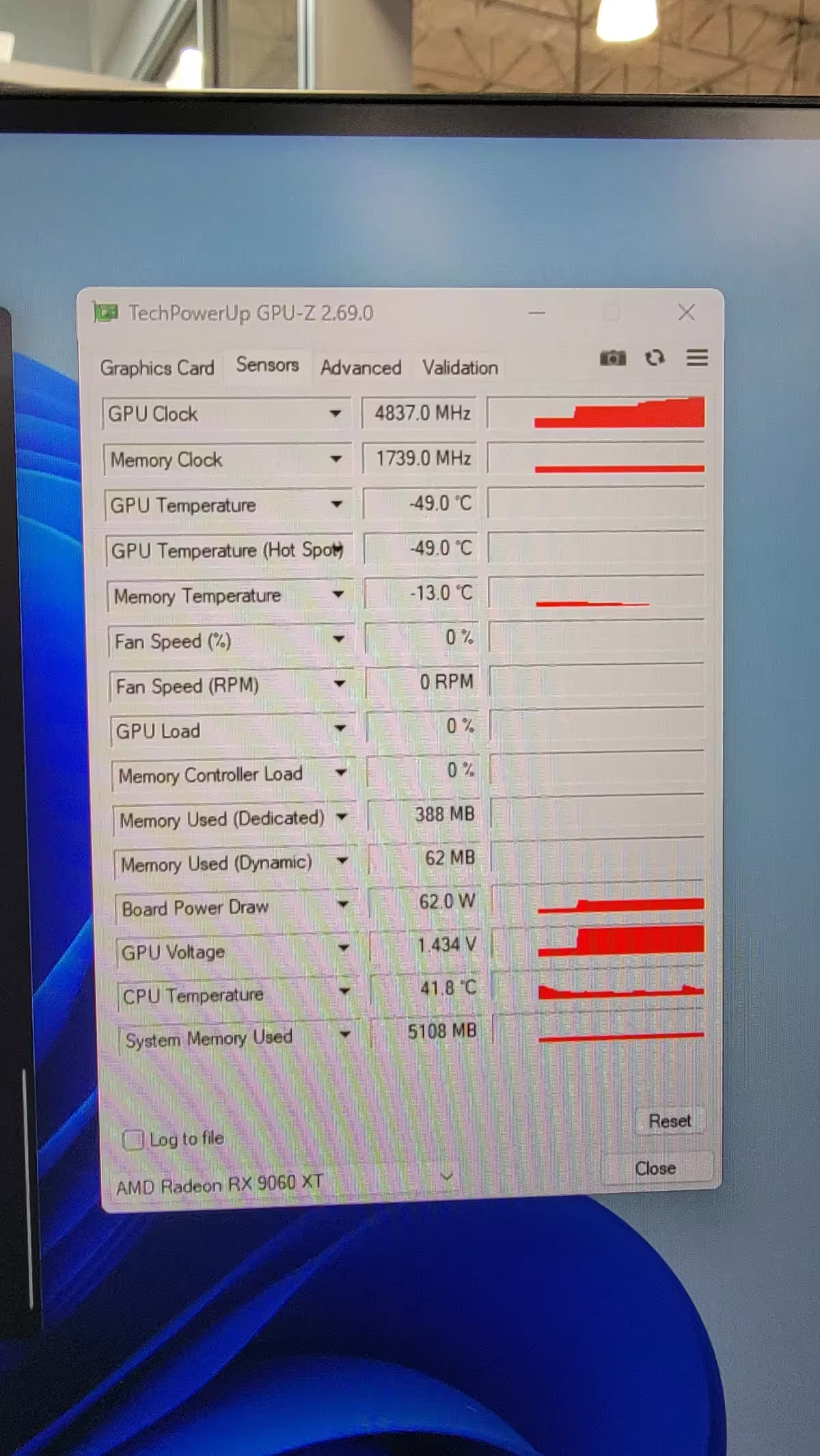
AMD has set a new world record for GPU clock frequency by pushing a Radeon RX 9060 XT to 4837 MHz, a result the company announced on LinkedIn. The card, introduced in 2025 at a price of $299, reached the peak frequency during an overclocking attempt tied to the opening events for a new Micro Center store in Austin, Texas.
The result was shared by Jack Hoin, AMD's senior officer for computing and graphics, who worked with professional overclocker Bill Allorsen and other members of AMD's overclocking team and recorded the attempt that surpassed the previous 4789 MHz mark.
How the team reached 4837 MHz and what it shows
The overclock was achieved using liquid nitrogen cooling. AMD's team removed the card's standard cooler and fitted a vessel to hold liquid nitrogen to manage the extreme heat generated at such high frequencies. A photograph from the session shows the GPU temperature at minus 49 degrees Celsius when the frequency hit 4837 MHz, and the company noted the actual chip temperature may have been lower than what the card's sensors could register.
The image also reported GPU utilization at zero percent. AMD has not said how long the card ran at 4837 MHz, and it is not clear whether the card could sustain that frequency while running games or other heavy workloads.
This is not the first time the RX 9060 XT has reached unusually high frequencies. Bill Allorsen and another overclocker using the alias SoonHo set the prior record in June 2026 with the same model, and both efforts are documented in the World Overclocking Records museum.
Why the 9060 XT was used instead of a higher-end model
AMD used the RX 9060 XT rather than the more powerful RX 9070 XT because the 9060 XT ships with a higher factory boost clock. AMD lists a maximum boost frequency of 3130 MHz for the RX 9060 XT versus 2970 MHz for the RX 9070 XT. Part of that difference reflects chip size: the Navi 44 GPU in the RX 9060 XT has 32 compute units, while the 9070 XT uses a larger chip with 64 compute units. Typical power consumption also differs markedly, with the 9060 XT rated at 160 watts and the 9070 XT at 304 watts. A smaller, lower-power chip can be easier to cool when pushing extreme frequencies, which helps explain why AMD chose the 9060 XT for this record attempt.
Even so, reaching a frequency more than 54 percent above the card's listed maximum boost does not imply a corresponding increase in game frame rates. AMD and the overclocking team have limited data on stability and real-world performance at that frequency, and the company has not claimed any practical gaming benefit from the record attempt.

“I love exploring gadgets, apps, and trends that redefine how we connect, work, and play in a digital world.”

Discussion
Leave a Comment
Comments
No comments yet. Be the first.