
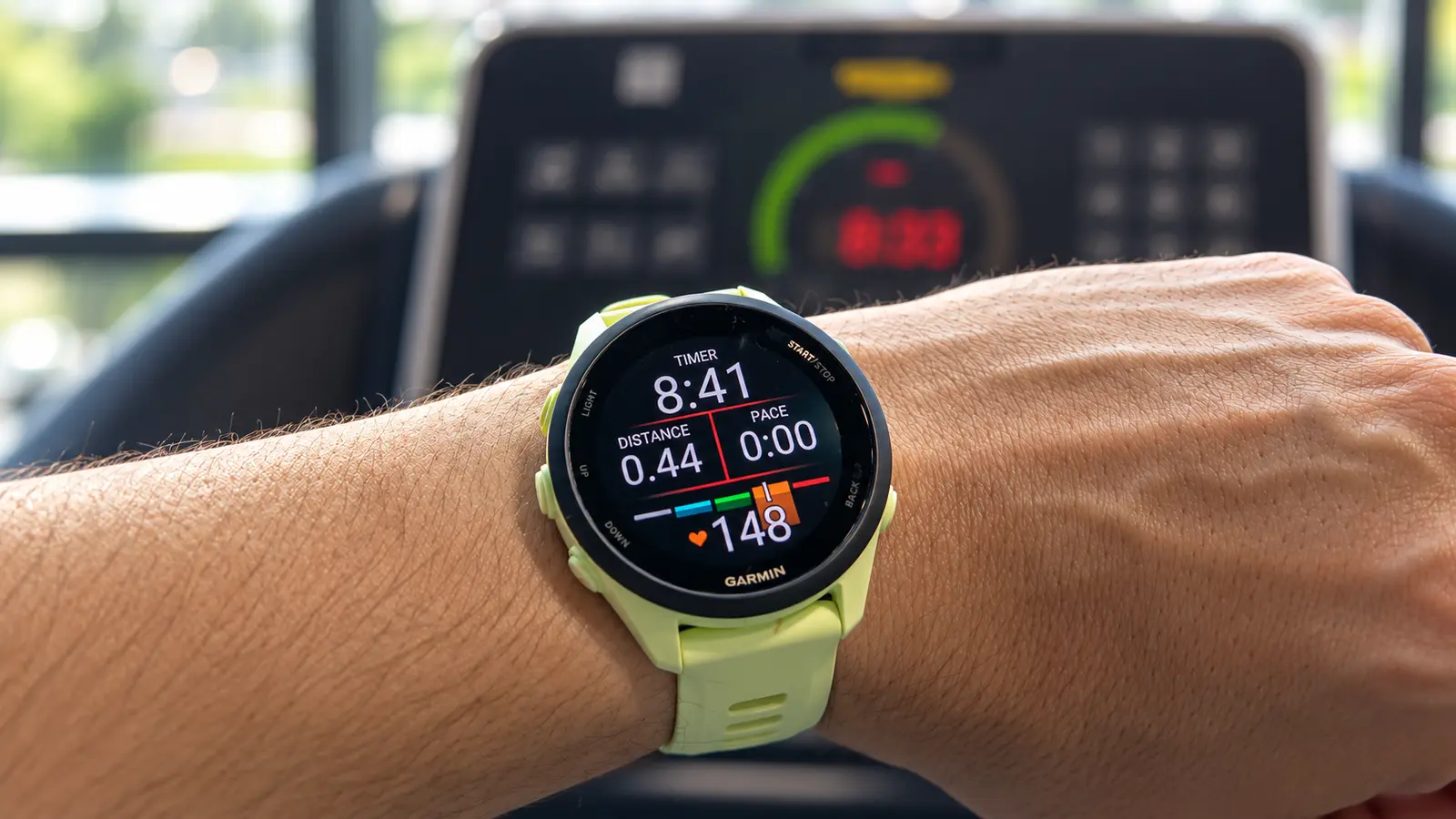
Some smartwatches are very good at interrupting a meeting to remind you to stand up. Ask them to help with a proper training plan, though, and they have rather less to say. The Garmin Forerunner 70 approaches things from the other direction: first, it wants to know how far you ran, how much strain your training is creating, and whether you are ready for the next session. Then, if there is time, it will show you your messages too.
That difference is the key to understanding the Forerunner 70. It sits at the more affordable end of Garmin’s running watch range, but its training features go well beyond counting steps and estimating calories. An AMOLED display, lightweight design, training readiness insights, and course navigation make it a serious option for runners. Meanwhile, the absence of offline music, multi-band GPS, and a barometric altimeter reminds us that Garmin still draws a line between its cheaper and more expensive models.
The important question is not how many features the Forerunner 70 has. It is whether those features suit your training and expectations.
Garmin supplied the light green watch used in this review.
.avif)
Garmin Forerunner 70: Key Specifications
| Specification | Garmin Forerunner 70 |
|---|---|
| Dimensions | 42.6 × 42.6 × 11.9mm |
| Weight | 40g |
| Display | 1.2-inch AMOLED touchscreen, 390 × 390 pixels |
| Controls | Five physical buttons and touchscreen |
| Strap | 20mm silicone strap with quick-release fittings |
| Water resistance | 5 ATM; suitable for pool swimming |
| Heart rate sensor | Fourth-generation Garmin Elevate |
| Positioning | Built-in GNSS with GPS Only and All Systems modes; no multi-band GPS |
| Accessory connectivity | Bluetooth and ANT+ for compatible sensors |
| Sports profiles | More than 80 |
| Navigation | Course following; no full offline maps |
| Music | Phone music controls; no onboard music storage or standalone playback |
| Contactless payments | Not supported |
| Launch list price | $249.99 in the US; €249.99 in Europe |
Physical specifications, display details, and battery ratings are based on Garmin’s published specifications. Prices are launch list prices rather than live retail offers.
Design: Lightness Is Part of the Function
The Forerunner 70 is not trying to impress you with a metal body or luxury watch styling. Its polymer construction, including a fibre-reinforced case, serves a more practical purpose: keeping weight down and making the watch comfortable to wear for long periods. For something you wear while running and sleeping, that is a sensible priority.
That comfort made a real difference to me at night. I could sleep with the Garmin on my wrist without much thought, whereas the Huawei and Samsung smartwatches I had used previously often ended up being taken off before bed.
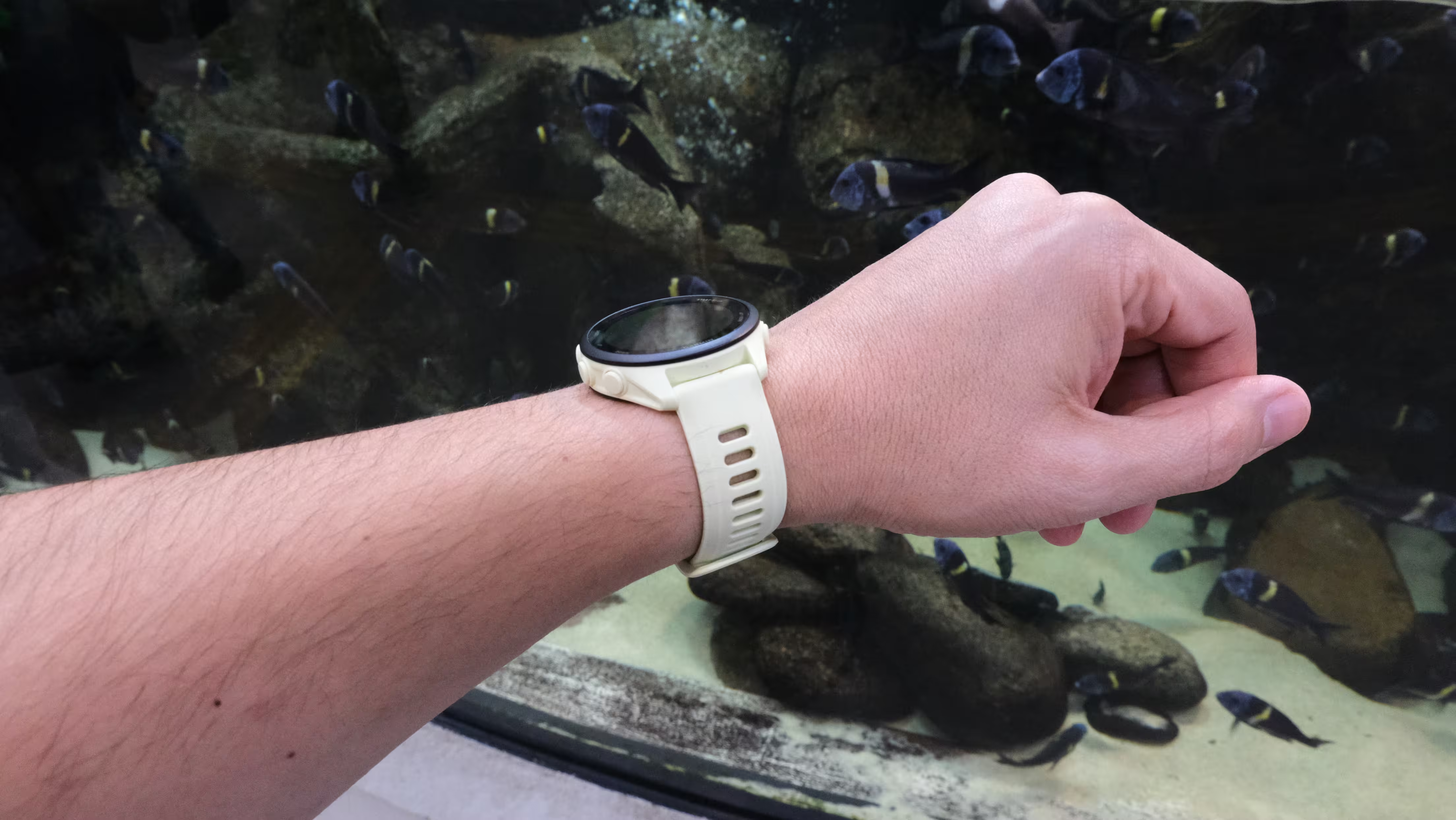
At 40g and roughly 43mm across, this is a compact watch. Those dimensions are welcome on smaller wrists, although Garmin offers only one case size. On a larger wrist, it looks more understated, and the display naturally has less room for information than a bigger watch.
The 20mm strap uses a small quick-release lever. It is a simple detail, but a useful one: changing straps does not tie you to a fully proprietary fitting. The display is protected by chemically strengthened glass, which should not be confused with sapphire or a promise of scratch immunity.
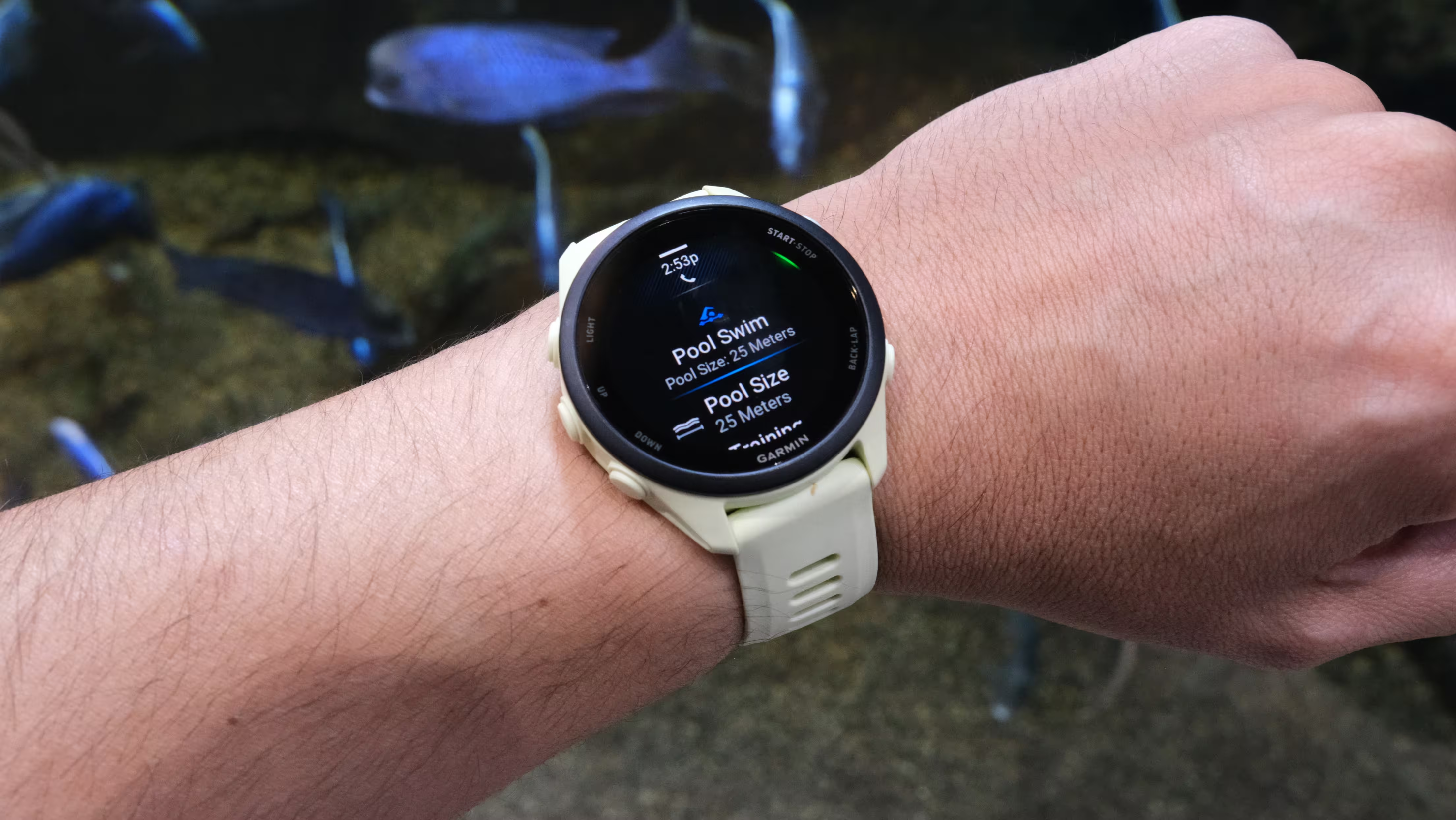
The 5 ATM rating covers everyday use and pool swimming. The equivalent “50 metres” figure is not an invitation to take it diving to that depth. There is also an important distinction on the software side: pool swimming is supported, but there is no dedicated open-water swimming profile.
Display and Buttons: A More Modern Face
The most obvious change from the Forerunner 55 is the move from a MIP screen to an AMOLED touchscreen. The 1.2-inch panel has a resolution of 390 × 390 pixels, giving colours and charts a much more appealing appearance.
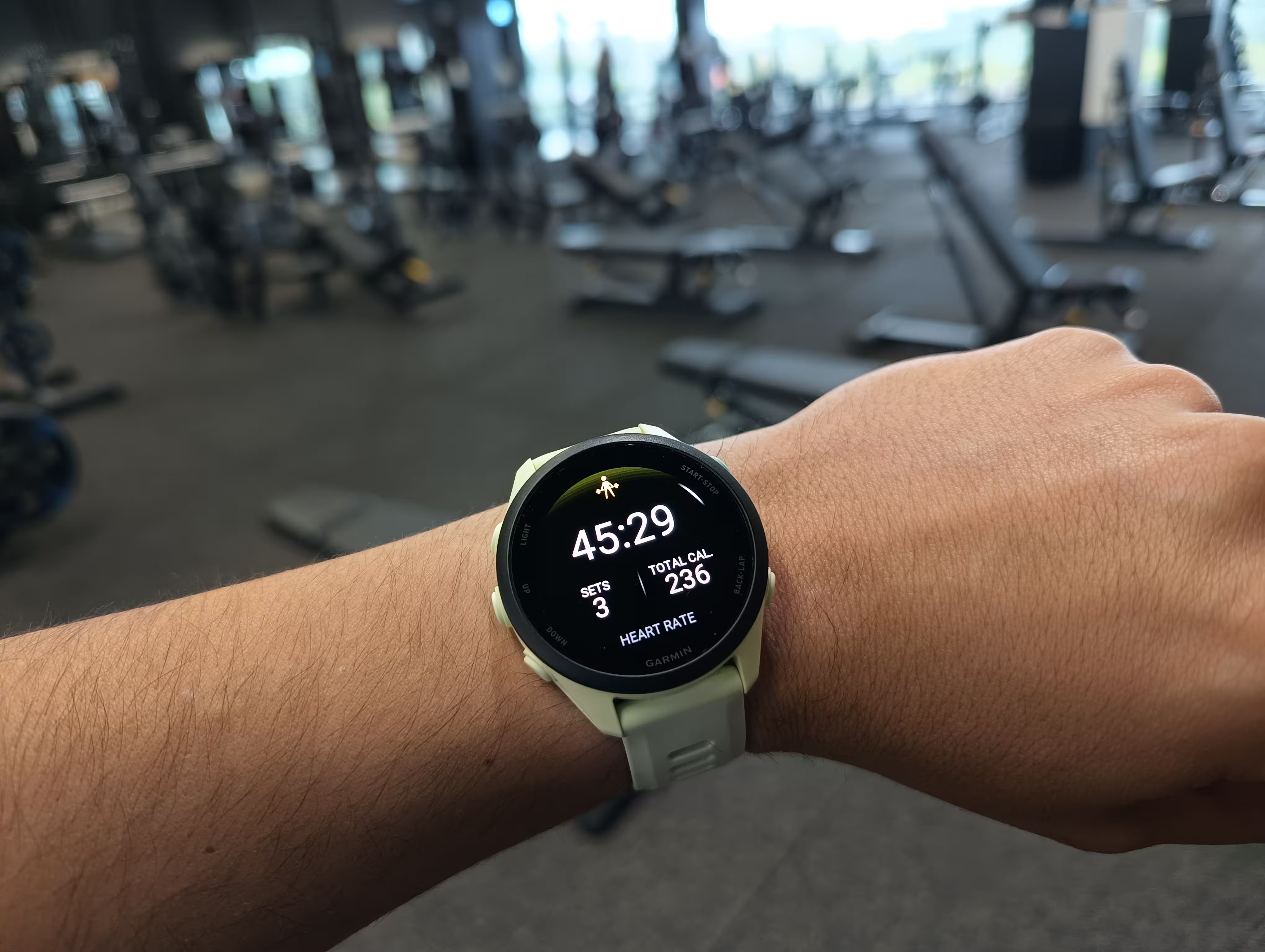
For a running watch, however, looks are only part of the story. Being able to check your heart rate, elapsed time, and pace at a glance matters more. The small display works well for a few key measurements, but filling it with too much information makes it harder to read. You can show up to eight data fields, although three or four large numbers are usually more helpful during a run than a miniature dashboard.
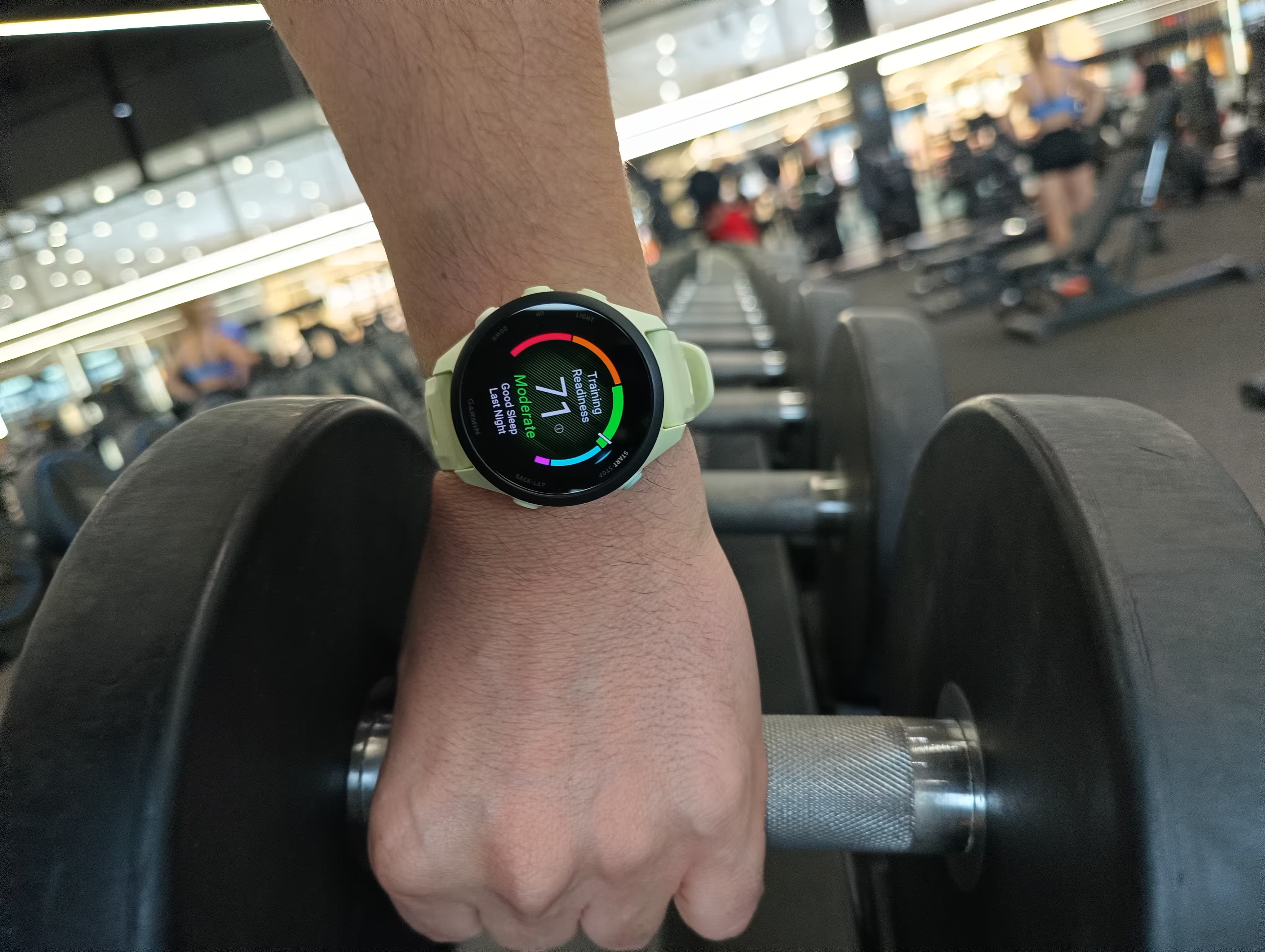
An always-on display is available too. It is convenient, but the battery pays for that convenience. If you want longer intervals between charges, waking the screen with a wrist gesture makes more sense.
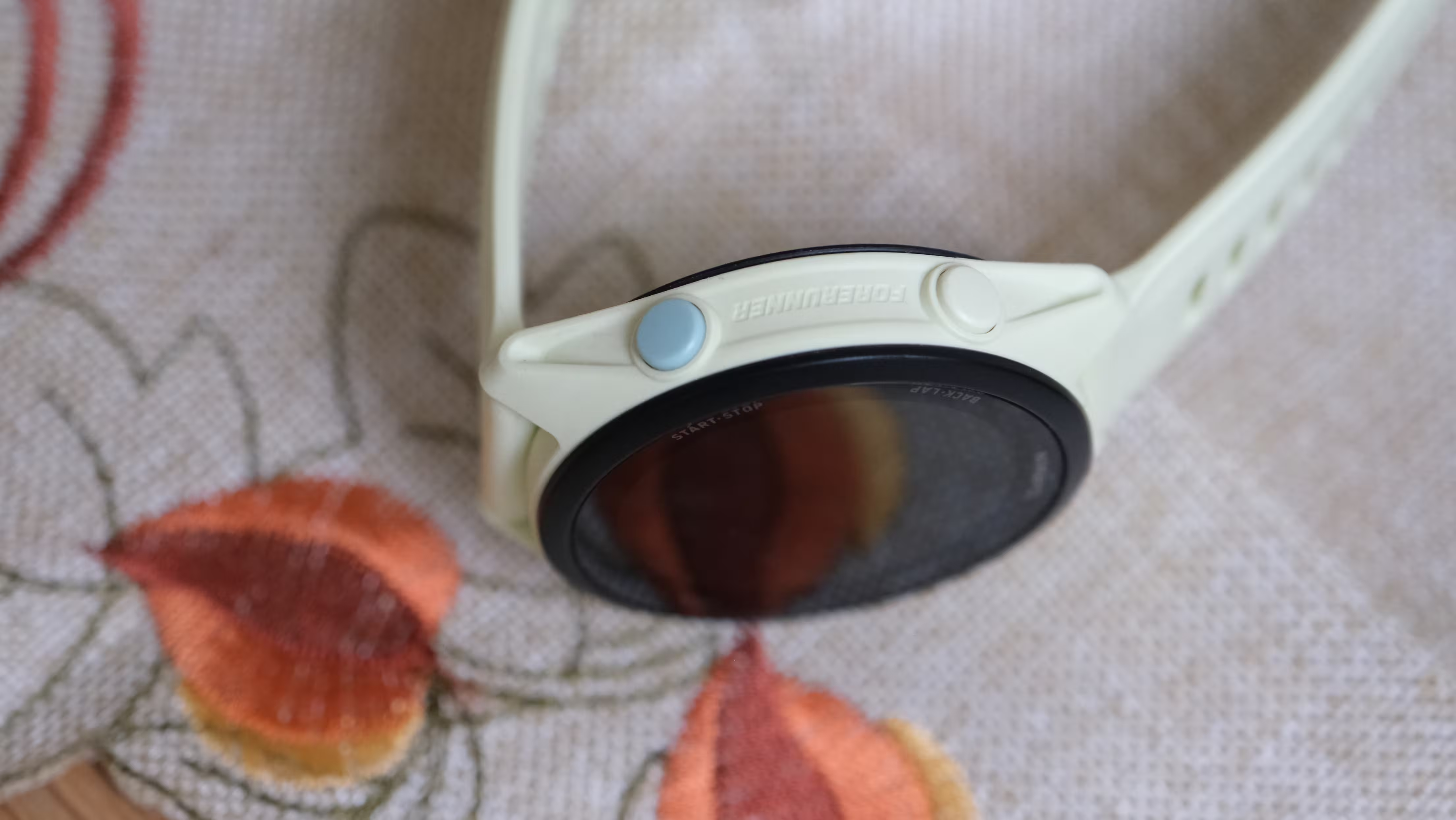
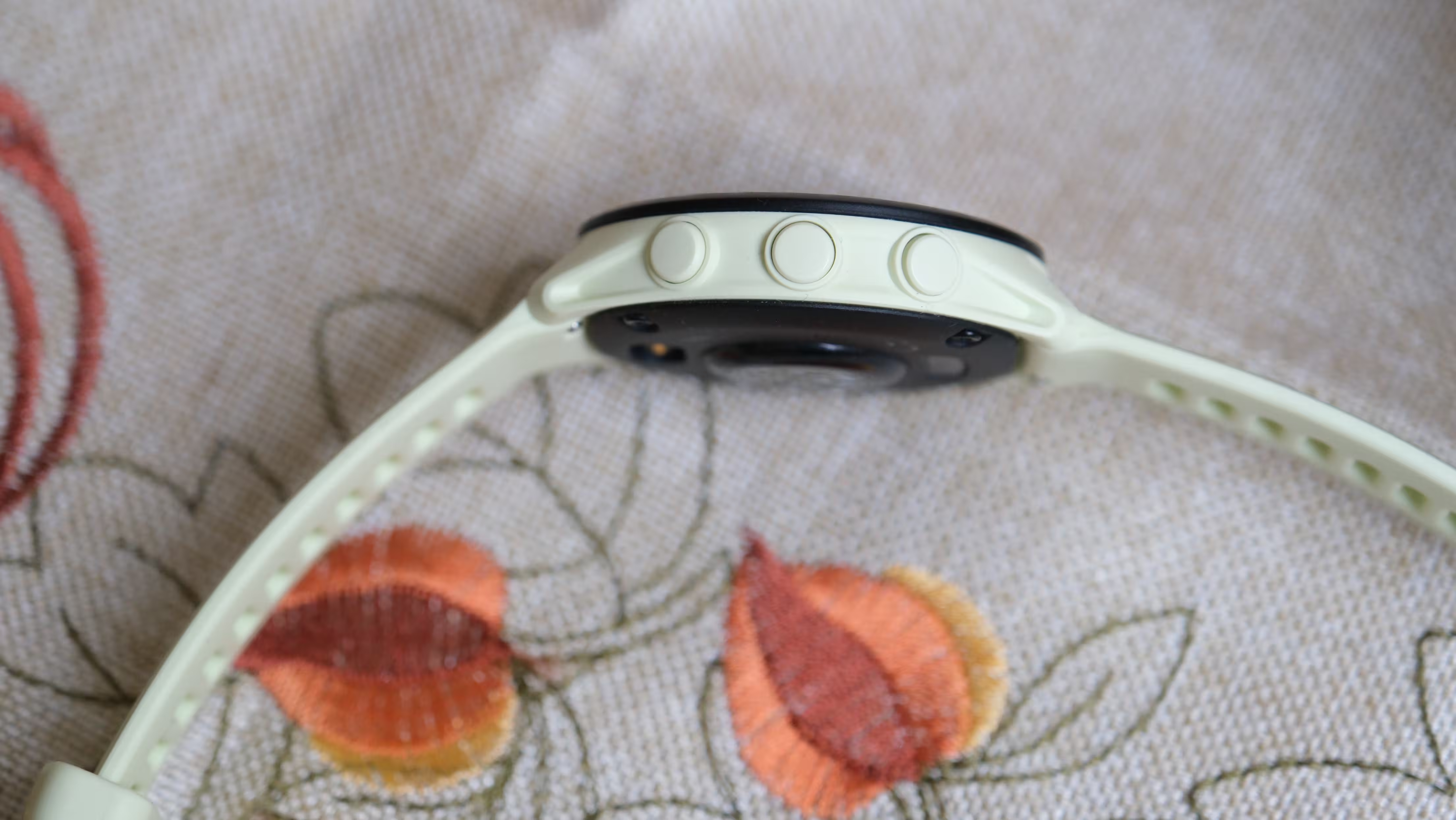
Fortunately, Garmin has not sacrificed buttons in the pursuit of a more modern look. There are three on one side and two on the other, giving you physical controls during exercise. Touch works well for everyday browsing, but buttons still earn their place when your hands are sweaty, you are wearing gloves, or it is raining. Recording a lap should not become a test of finger accuracy.
 |  |
Interface: The Value Goes Beyond the Hardware
The Forerunner 70 uses Garmin’s newer interface, and the changes go beyond moving a few icons around. Activity settings, adjustable text sizes, customisable data pages, and the ability to organise glances make it a flexible system. Configuring many activity settings from your phone also saves you from doing everything on a small screen.
Garmin Connect sits at the centre of the experience. Activities, sleep, heart rate, and training trends come together in one place. The value grows over time: a single heart rate reading tells you relatively little, but changes in that reading alongside your training volume and sleep can build a more useful picture.
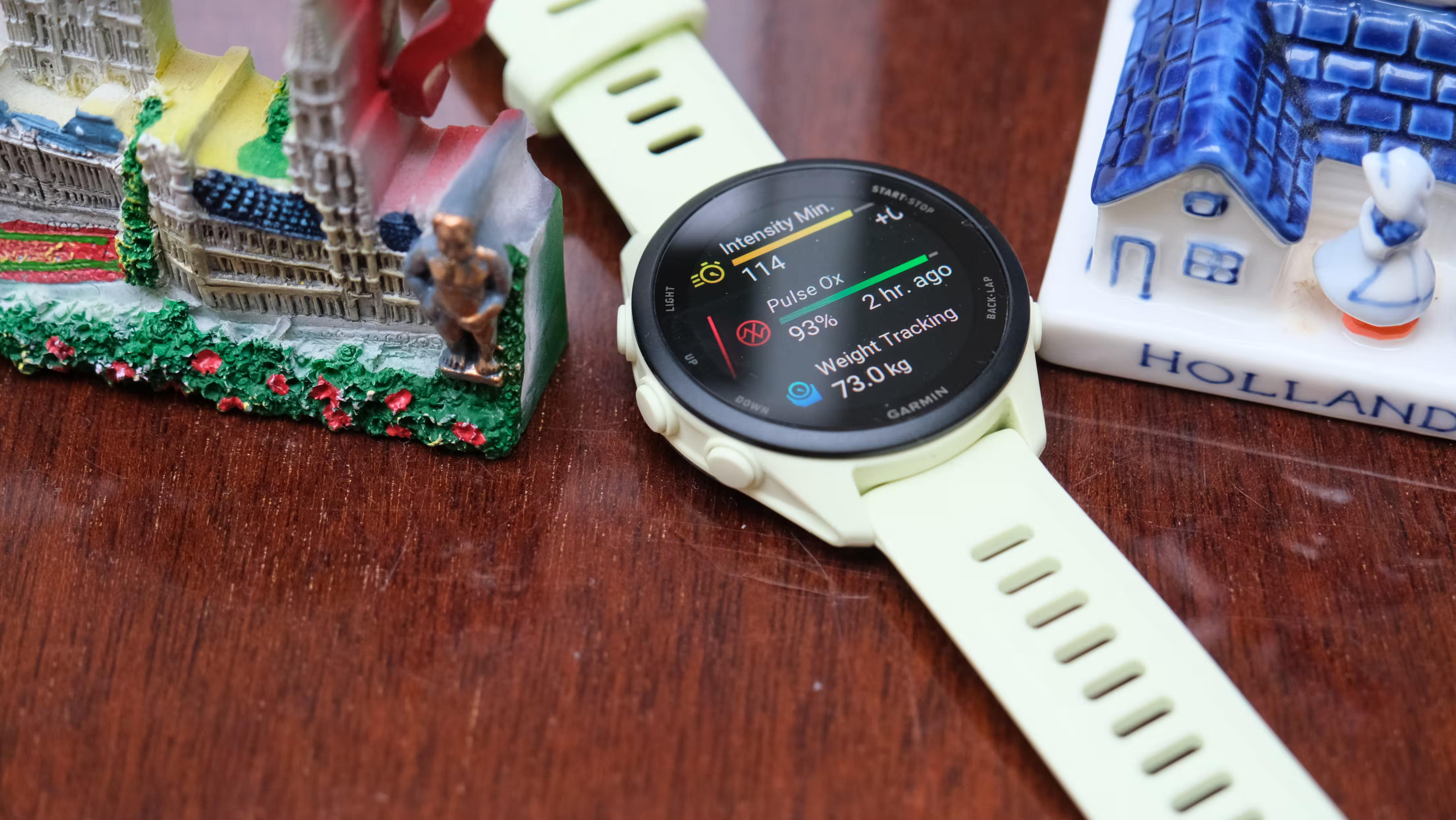
The morning report offers a quick overview of your sleep and the day ahead, while the evening report helps you review the day and prepare for rest. There are also everyday tools such as a calendar, timer, calculator, alarms, and access to Connect IQ. You do not need to enable everything. Removing things you rarely use can make the watch much easier to live with.
Buying a Forerunner is therefore about more than buying sensors. Part of the price pays for software that turns their readings into something useful. If you only ever check your step count, a substantial part of that value will go unused.
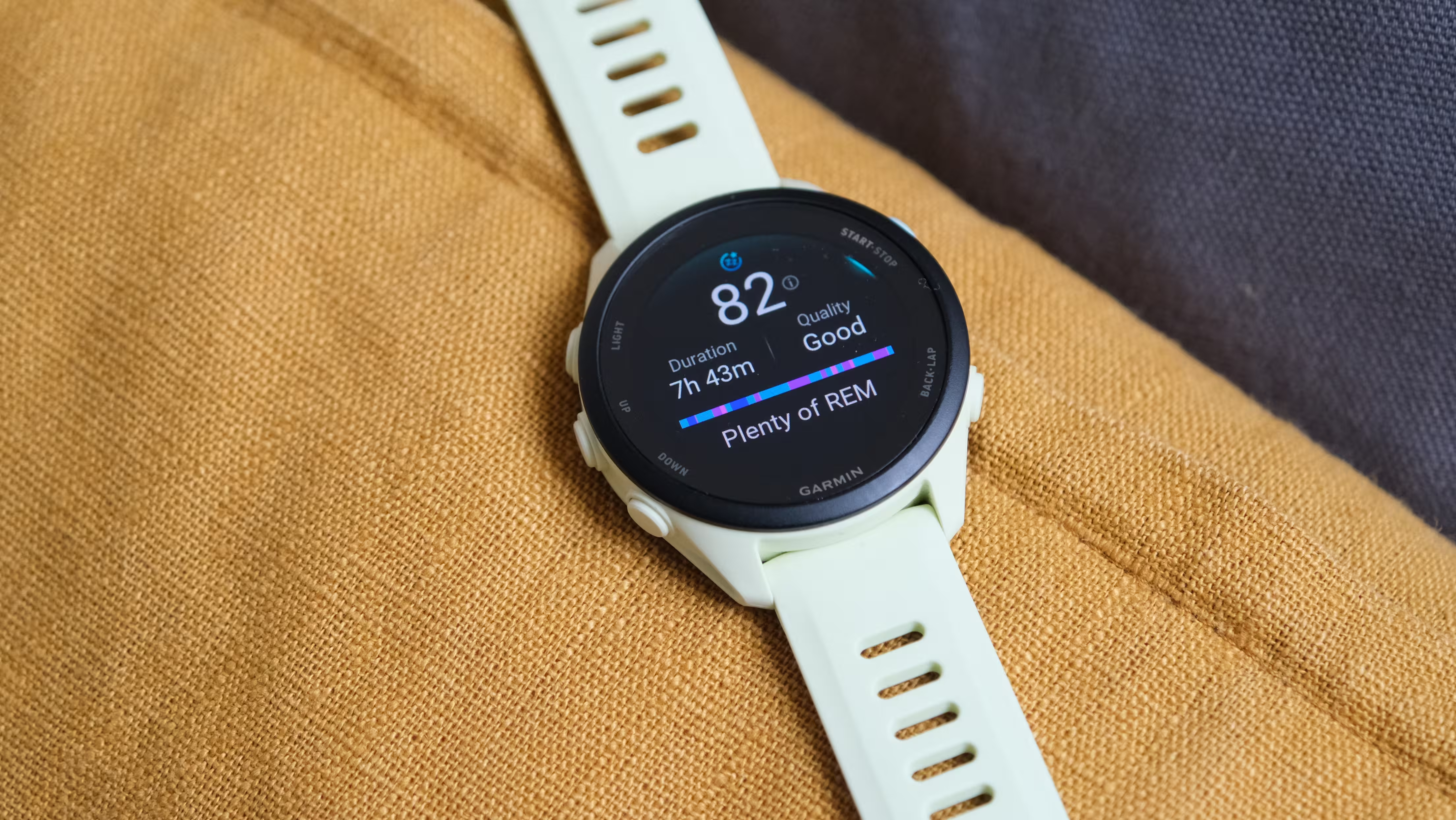
There is a learning curve, though. Between the small display and the amount of information Garmin provides, getting the layout right can take a few days. Once I had it arranged to suit me, I found myself increasingly drawn to it. The information was useful enough to make me want to keep the watch on and select the appropriate activity mode for the exercise I was doing.
Training and Recovery: Where the Forerunner 70 Gets Serious
The watch’s strongest feature is its collection of training analysis tools. Features that once helped justify buying a more expensive model are now available further down the range.
The terminology can feel overwhelming at first, so it helps to look at the question each feature is trying to answer.
| Feature | What it helps you understand |
|---|---|
| Training Readiness | Estimates your readiness to train using factors such as sleep, recovery, HRV, and training load |
| Training Status | Assesses how your training relates to changes in fitness |
| Acute Load | Tracks accumulated training strain over the recent period |
| Load Focus | Shows how training load is distributed across different intensity and training-effect categories |
| Recovery Time | Estimates how long you need before another hard workout |
| VO₂ Max | Estimates aerobic fitness; it is not a direct laboratory measurement |
These tools make the Forerunner 70 more than a stopwatch with GPS. They can help you notice when hard sessions are getting too close together, easy running is disappearing from your schedule, or you are expecting peak performance after several poor nights of sleep.
The scores should not have the final word, however. Low readiness is not a medical diagnosis, and a high score does not mean you need to chase a personal best. Their best use is alongside longer-term trends, your training plan, and how your body actually feels. However clever the watch becomes, it is not the one running in your shoes.
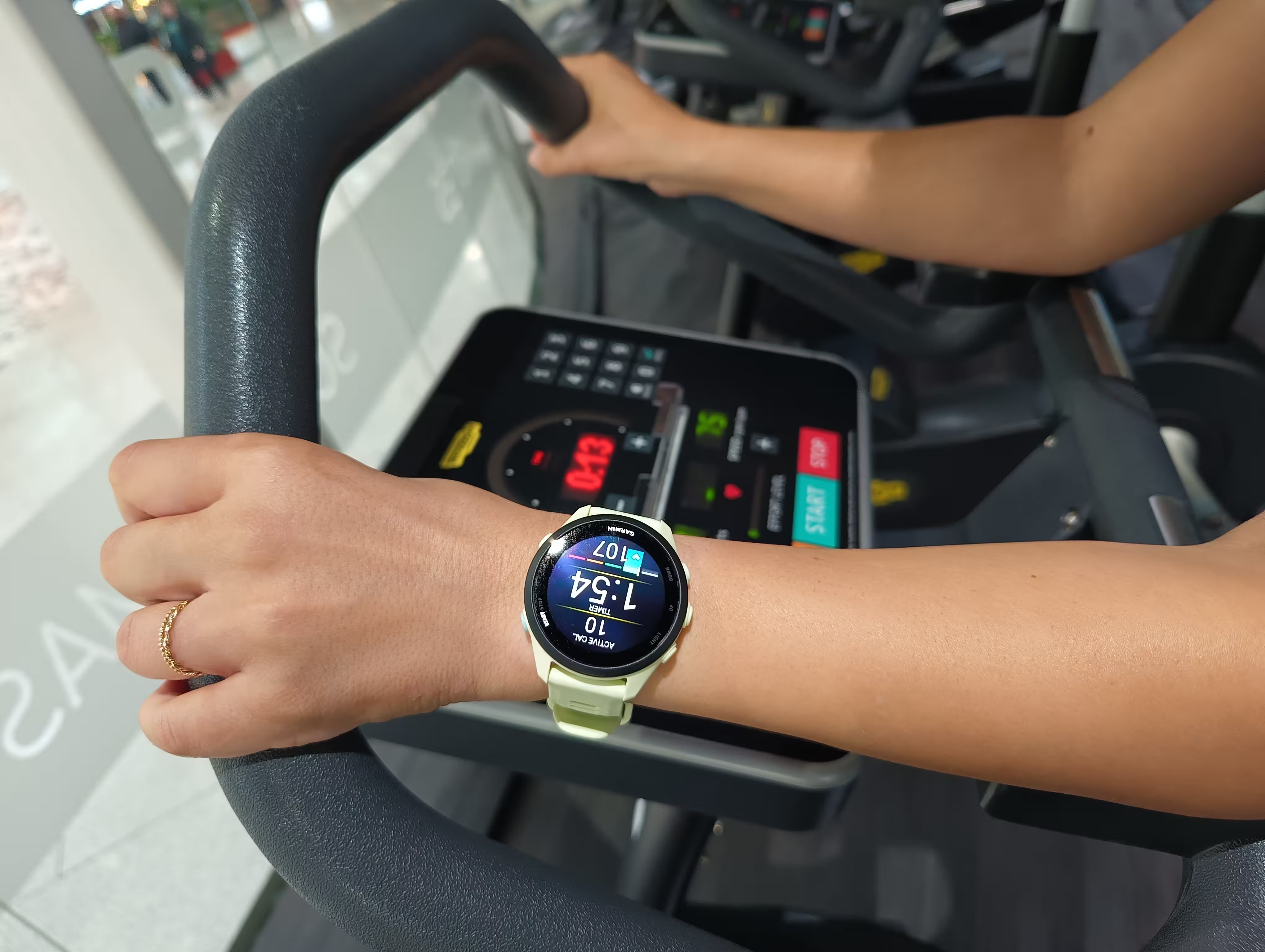
Wrist-based running power and running dynamics provide more information for runners who want to look beyond time and distance. Those figures can be useful, but adding another number to your screen does not automatically improve your training. You first need to know what you intend to do with it.
Quick Workout: When You Have Time but No Plan
One of the more practical features is the ability to create a quick workout around the time you have available and your preferred intensity. Tell the watch how long you have and how hard you want to work, and it offers suitable options with guidance through the session.
Its value lies in reducing the effort between deciding to exercise and actually starting. If a free half-hour appears in your day, you do not need to build a workout from scratch on your phone.
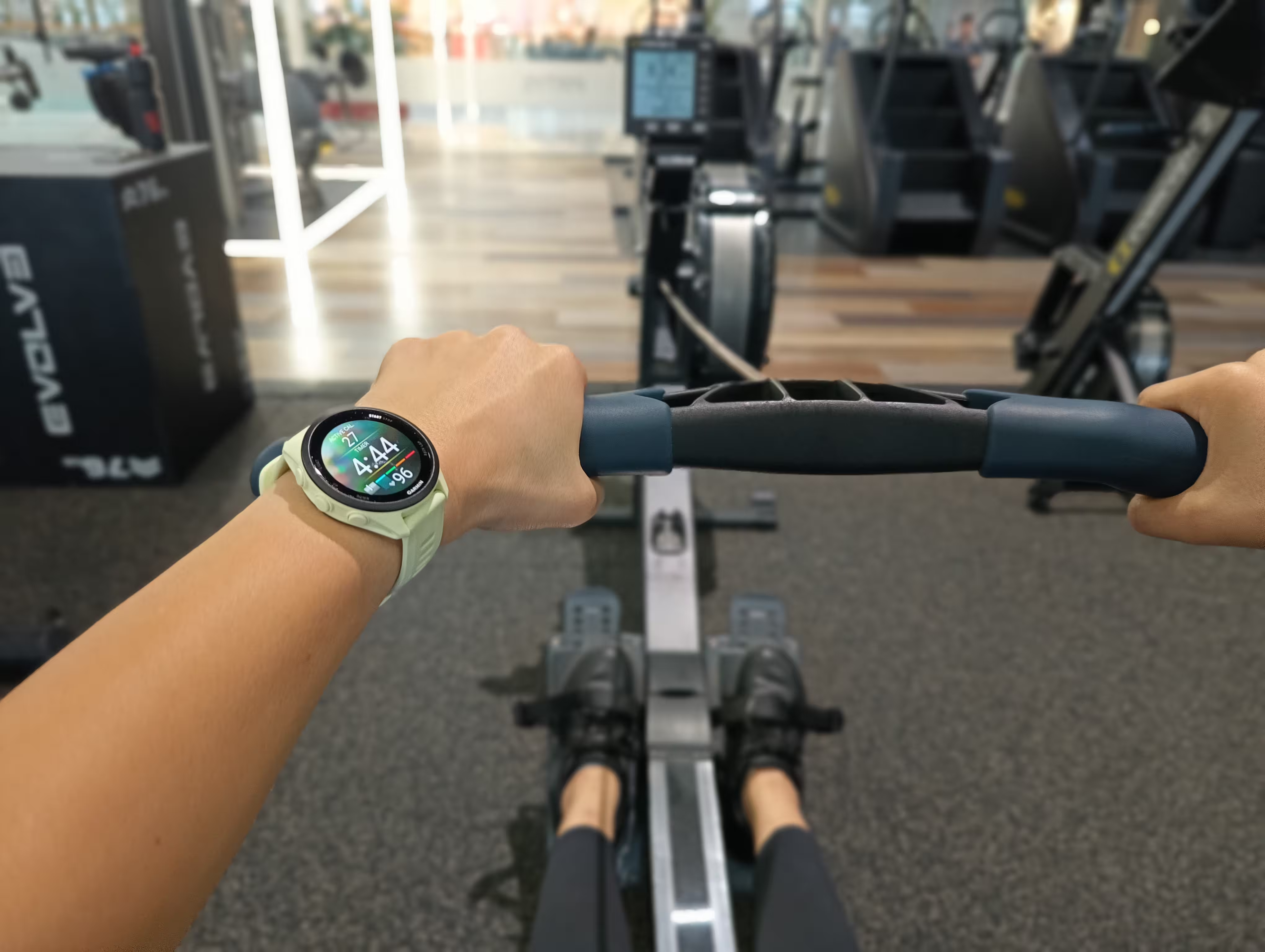
Quick Workout is not the same thing as daily suggested workouts, though. Daily suggestions take your activity history and recovery into account. Quick Workout puts more emphasis on the duration and intensity you choose. Selecting a harder option does not necessarily make it the right session for that day.
Pace targets also need context. The same pace on a flat route, a steep climb, or a hot afternoon will not place the same demands on your body. Adjusting a workout to match the conditions is sensible training, not failure.
Alongside this, Garmin Coach and daily suggested workouts provide a more structured path towards improvement. Run/walk options also support a gradual start. That gives the watch relevance both to beginners and to runners working towards a specific distance, such as a 10K or marathon.
GPS and Heart Rate: Sensible Expectations Matter
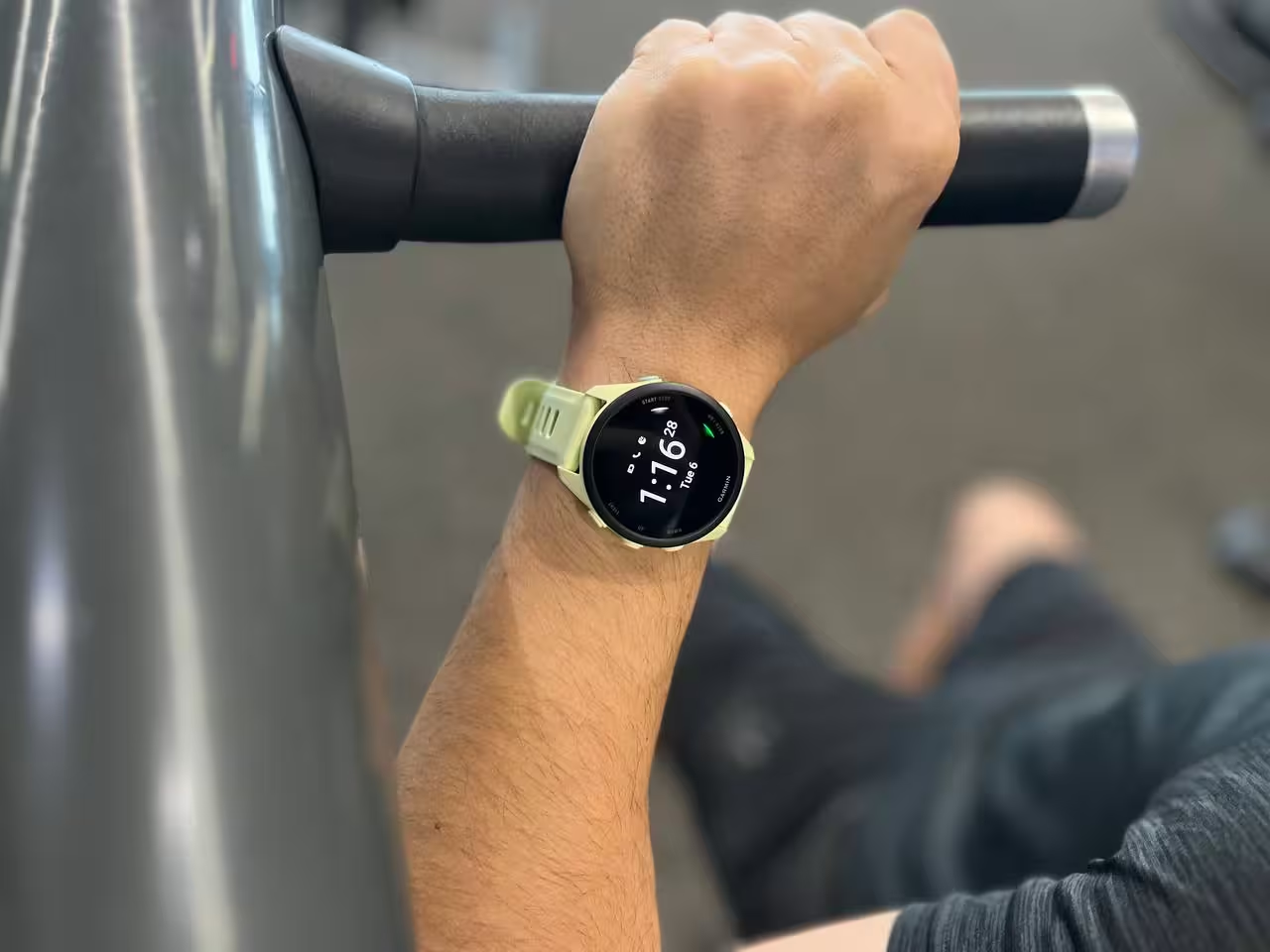
The Forerunner 70 does not need your phone’s GPS to record a route. It has its own receiver and can use multiple satellite systems. That is different from multi-band reception, which is not available here.
The absence of multi-band GPS does not automatically make it a poor running watch. Antenna design, data processing, and your surroundings also affect the result. Its positioning capabilities make it a promising option for ordinary urban running and open routes, but you should not assume it will always match a multi-band watch between tall buildings or in other challenging locations.
Total distance alone is not enough to judge GPS performance. How well the recorded track follows corners, how far it drifts from the actual route, and the stability of live pace all matter. Two watches can finish with similar distances without having tracked every part of the run equally well.
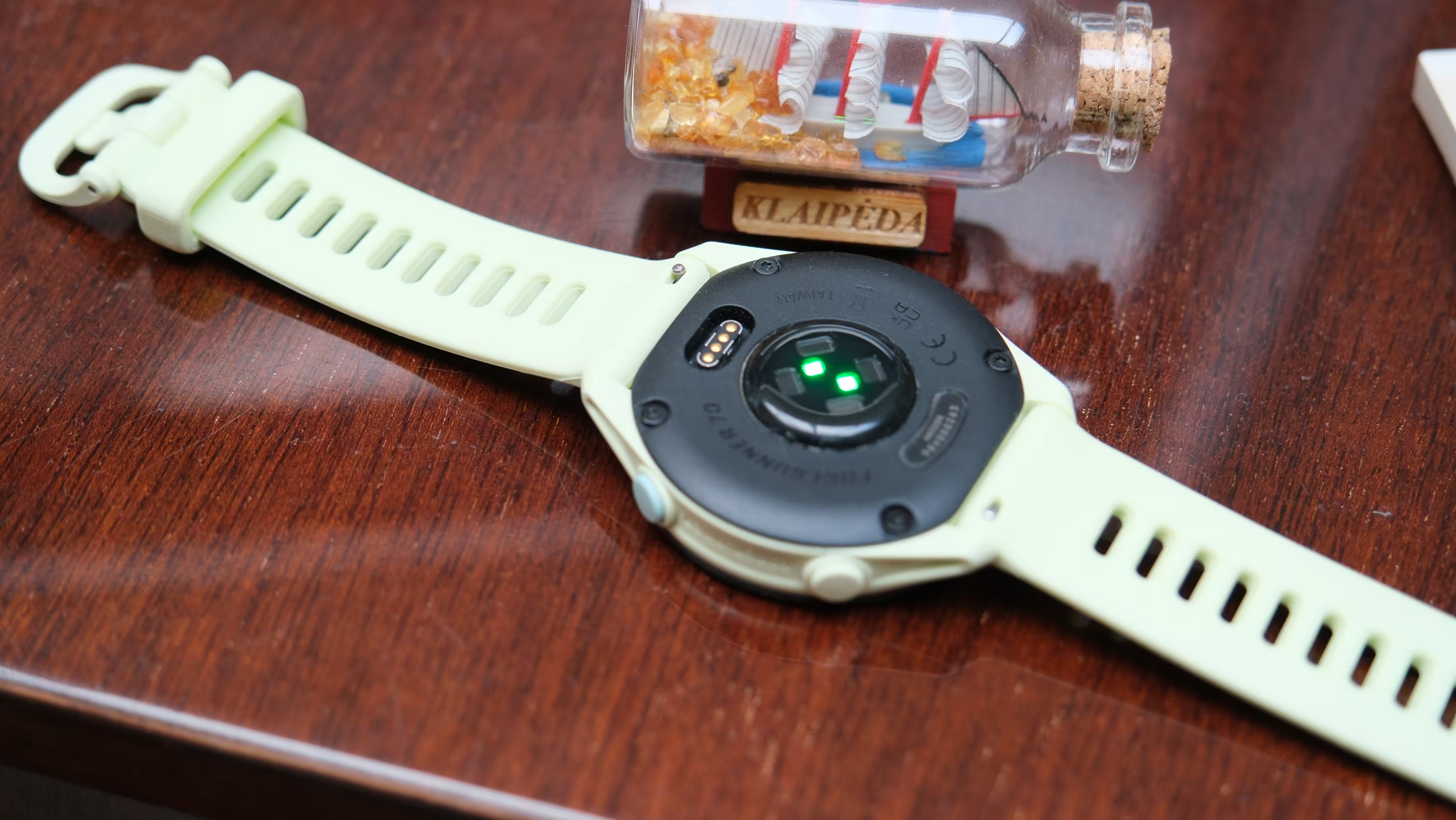
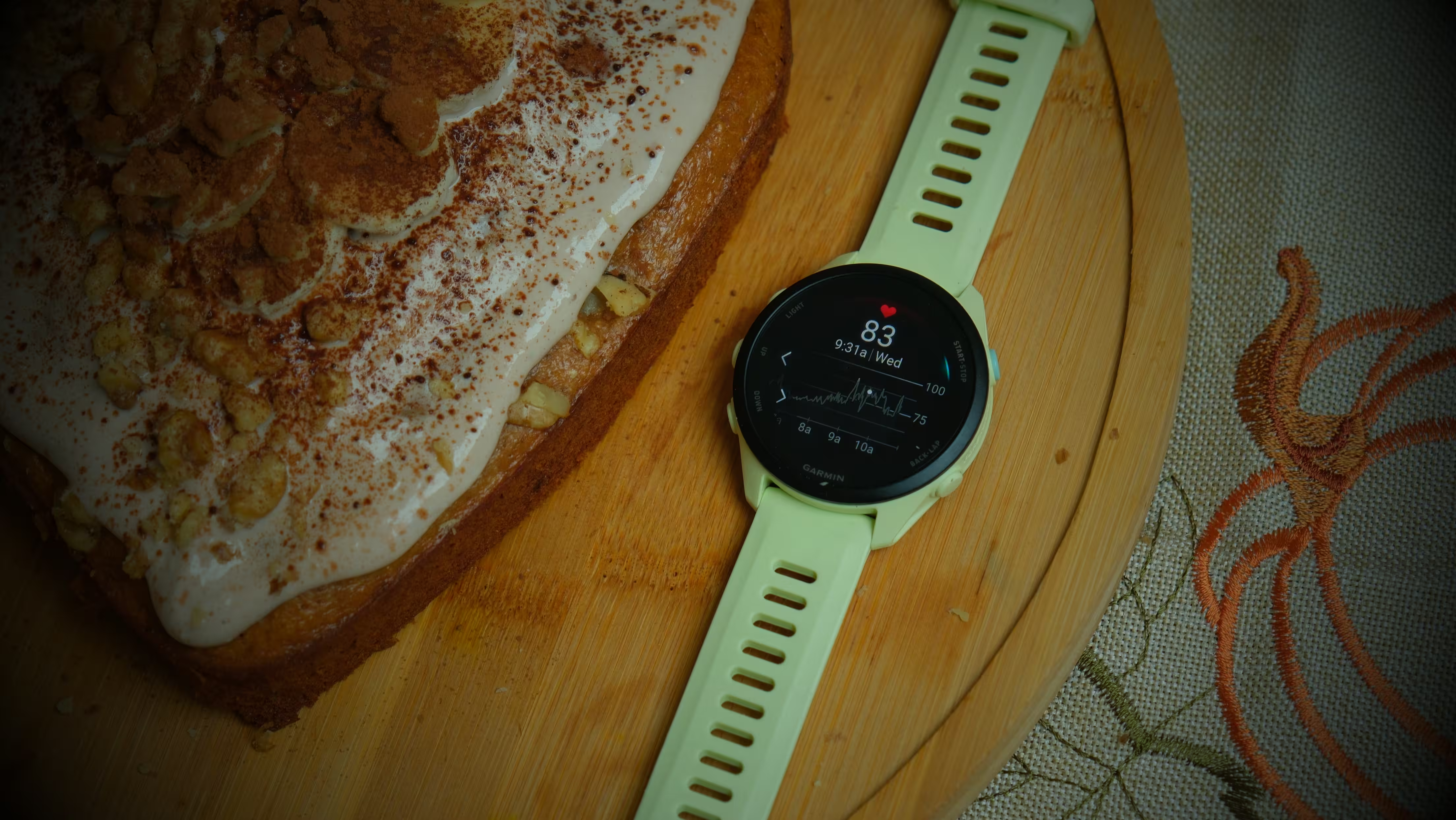
On the back is Garmin’s fourth-generation Elevate optical heart rate sensor. It provides a capable foundation for daily monitoring and steady running, although it is not Garmin’s latest sensor hardware. Sudden changes in effort and substantial wrist movement can still introduce delays or errors, as they can with other optical wrist sensors.
If accurate heart rate tracking is central to your workouts, support for a compatible Bluetooth or ANT+ chest strap is valuable. You can change the source of your heart rate data without replacing the watch itself.
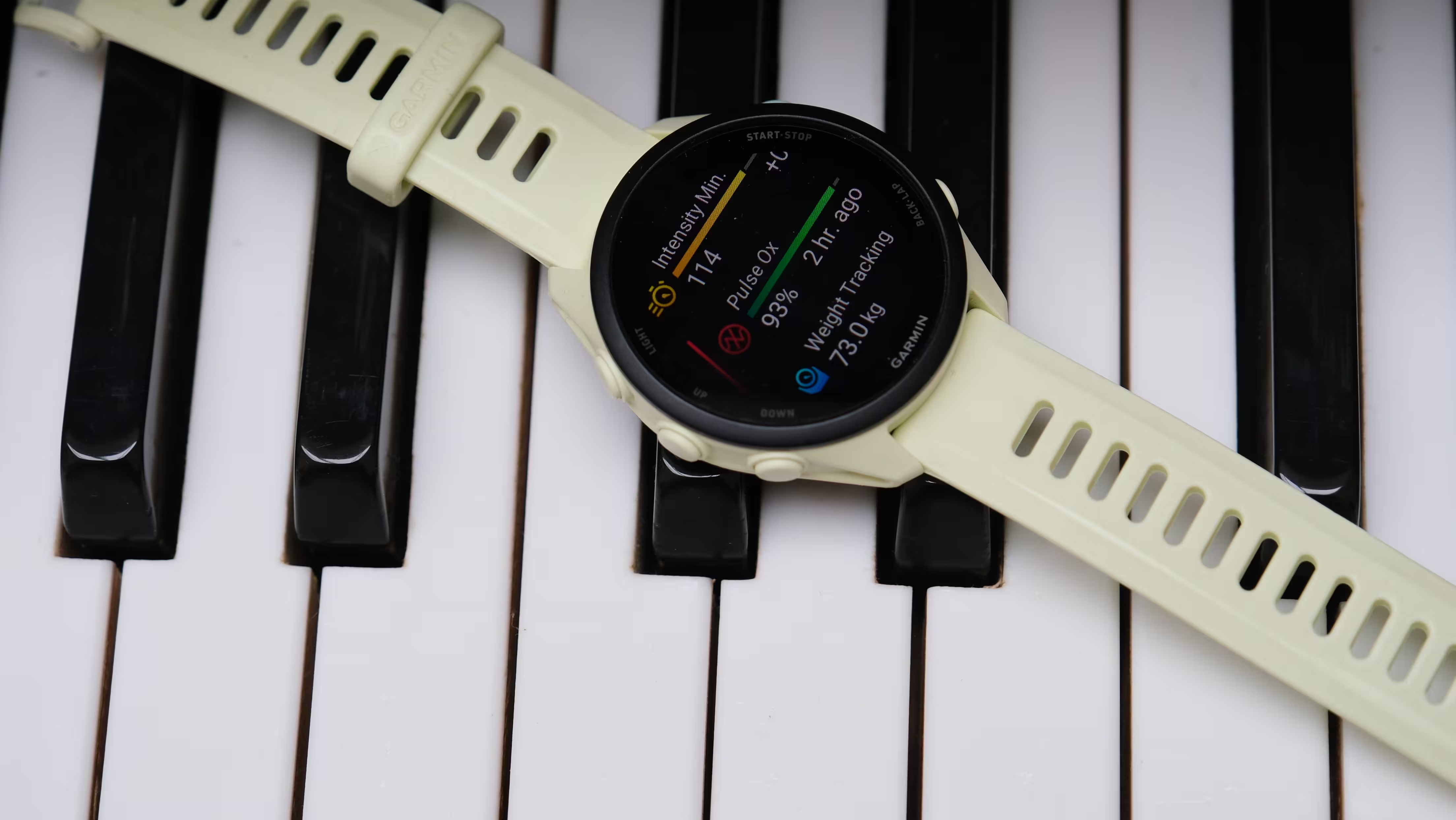
It is also worth keeping activities separate when judging performance. Good readings during a steady run do not automatically translate into equally good results during weight training, cycling, or every other sport.
Navigation and Other Sports: Plenty of Choice, with Limits
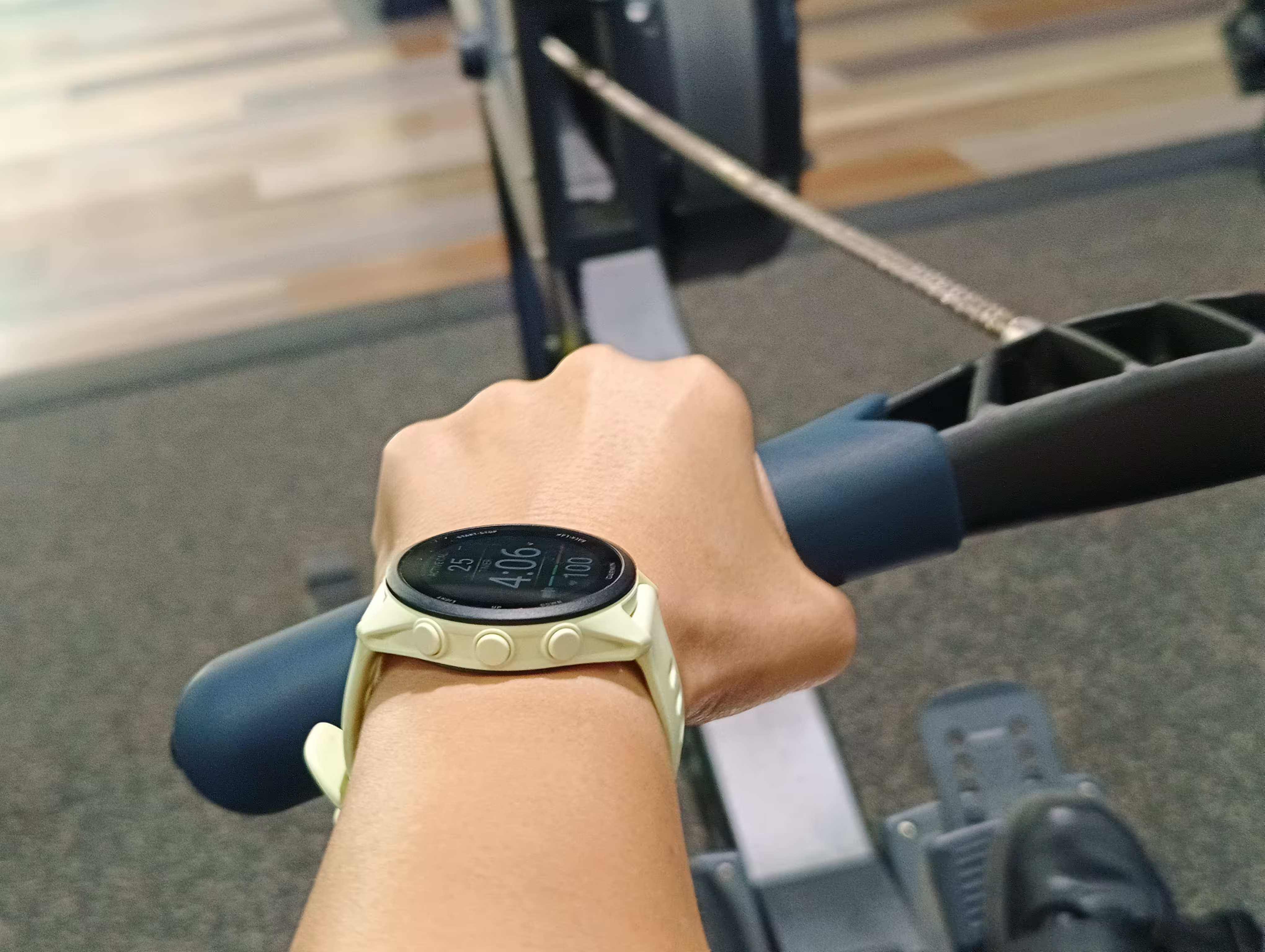
With more than 80 activity profiles, the Forerunner 70 reaches beyond running. Cycling, strength training, cardio, pool swimming, and different forms of running all have a place. If you combine running with gym sessions, having those activities together in one training history is useful.
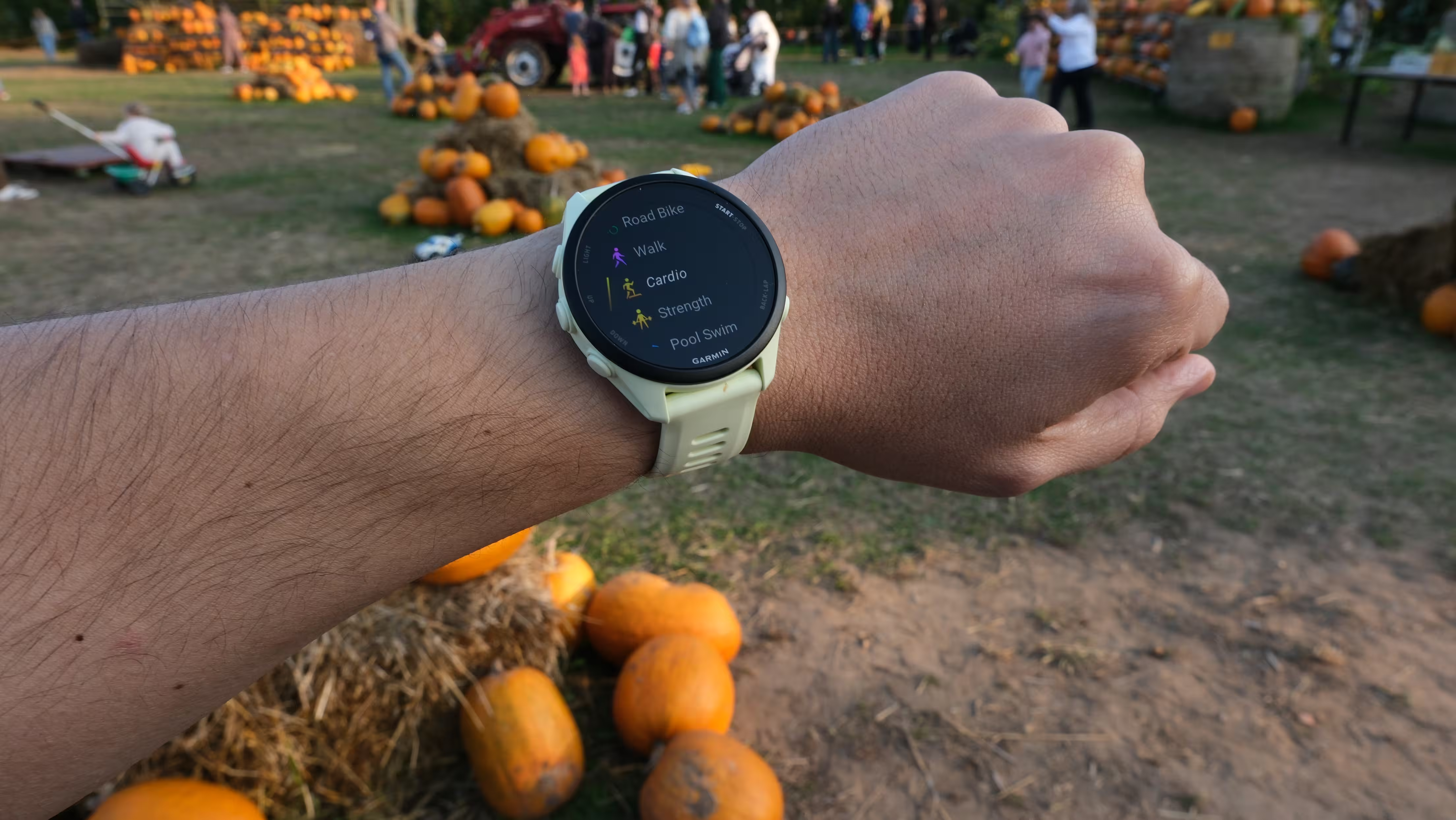
However, a long list of profiles does not mean every sport receives a full set of specialist features. This is not a complete triathlon watch. It lacks an open-water swimming profile and does not support cycling power meters or the corresponding advanced smart trainer connections.
Compatible speed and cadence sensors, heart rate straps, and selected Varia lights and radars are supported.
For navigation, you can transfer a course created or imported in Garmin Connect and follow it on the watch. A course line, relevant alerts, and return features can help you stay on a planned route. What you do not get is a full offline map showing the surrounding area. Following a line and seeing all the nearby streets and trails are different experiences.
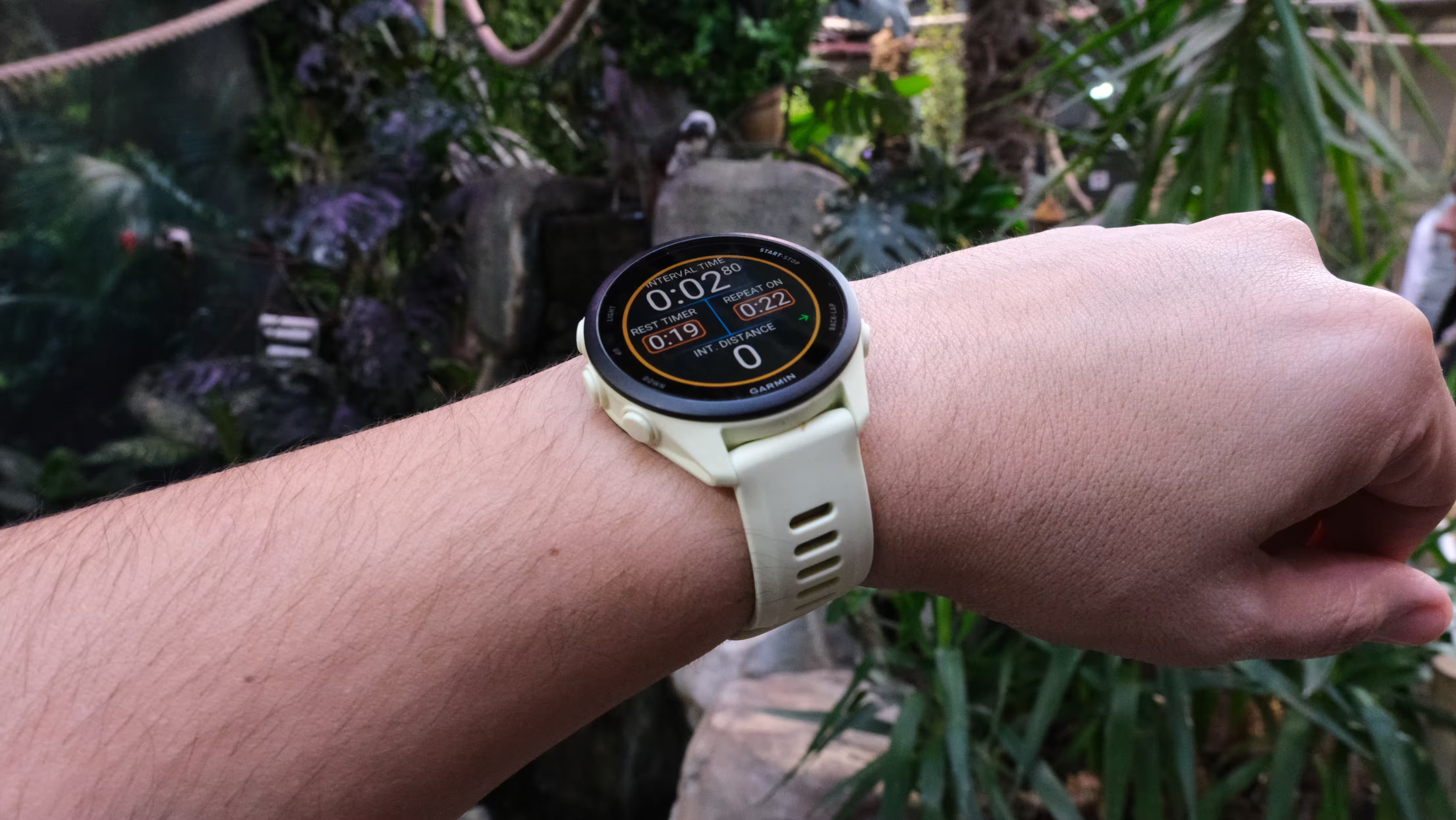
PacePro helps you plan pacing over a course or target distance. It is a useful way to stop the excitement of the start line from spending all the energy you wanted for the finish. Some ultrarunning tools, including rest-time management, are also present, although they do not remove the hardware limitations.
For hillier routes and outdoor adventures, the missing barometric altimeter is particularly relevant. Elevation information derived from satellite positioning can fluctuate more, so it should not be treated as equivalent to a dedicated altitude sensor. On a run around the park, that may make little difference. On a route with substantial climbing, it matters more.
Health and Sleep: Pay More Attention to Trends Than Scores
Daily heart rate, stress, respiration rate, HRV, blood oxygen, and Body Battery form much of the experience outside exercise.
Body Battery combines activity, stress, and rest to estimate your available energy. Fortunately, reaching zero does not mean you shut down like an empty watch.
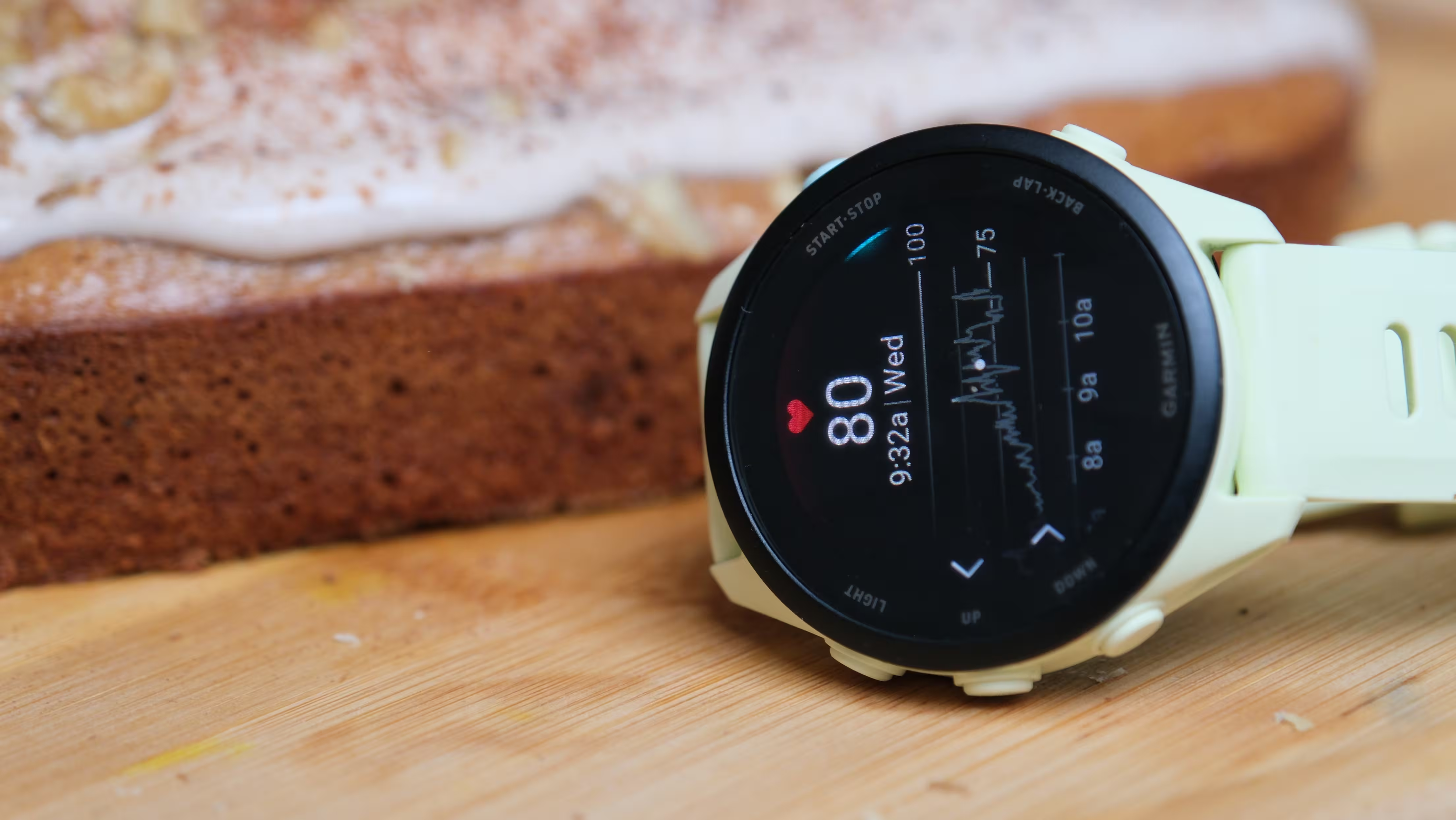
Sleep tracking includes duration, estimated stages, a sleep score, nap detection, and Sleep Coach. The morning report brings that information together without making you dig through menus.
The lightweight design matters just as much here as it does during a workout. You only collect overnight data if you can comfortably keep the watch on. For me, wearing this one quickly became second nature.
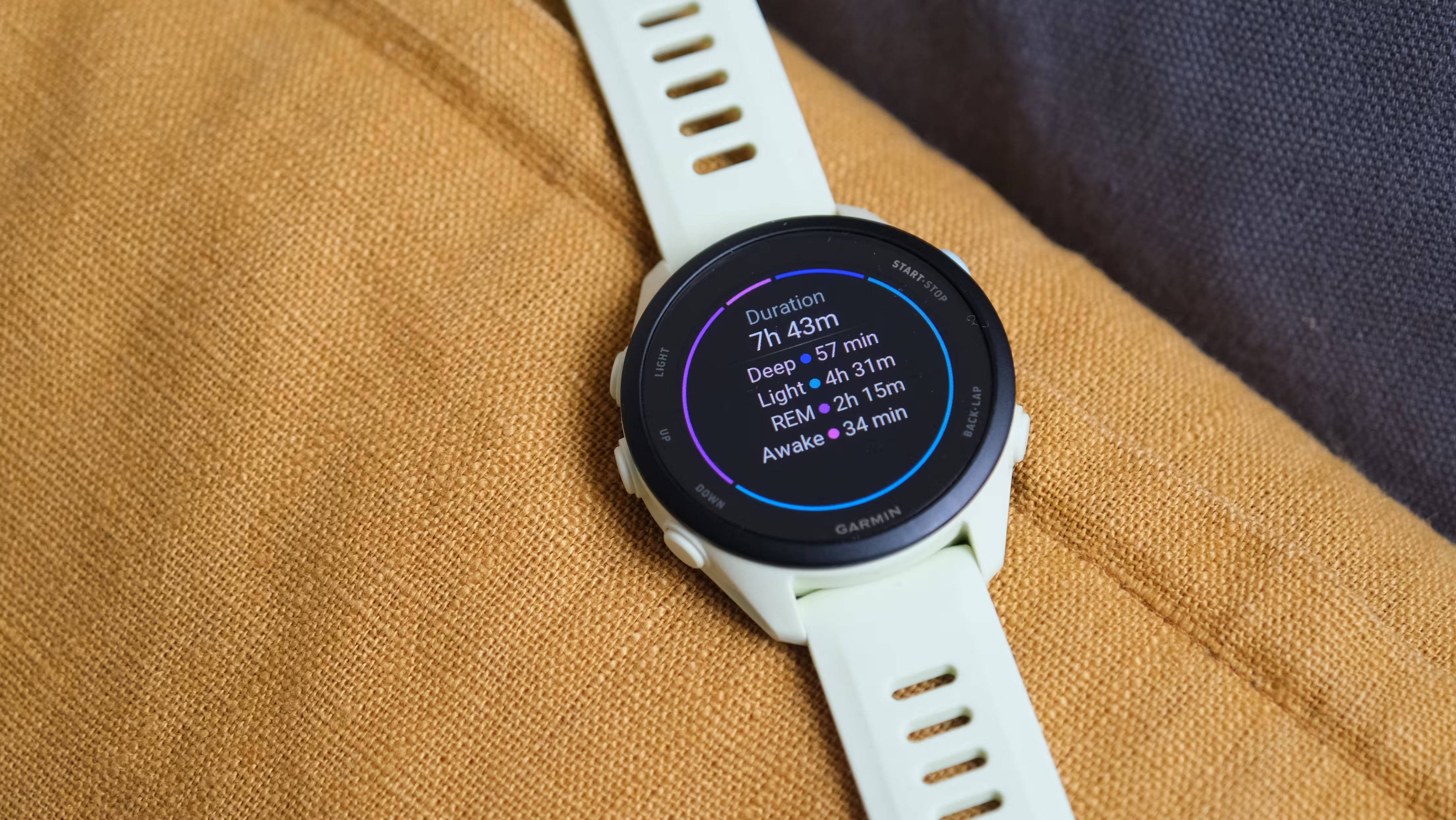
The important part is how you interpret the results. Estimated sleep stages are not equivalent to a specialist sleep assessment, and one night or one score is rarely enough to draw a useful conclusion. Changes from your own usual pattern are more informative, such as a rising training load appearing alongside shorter sleep and weaker recovery indicators.
Lifestyle logging and Health Status support that focus on trends. Still, the watch is not a medical diagnostic device. There is no ECG or skin temperature measurement on this model either. Judge it by the features it actually offers, rather than everything available elsewhere in Garmin’s range.
Smart Features: Your Phone Still Has a Role
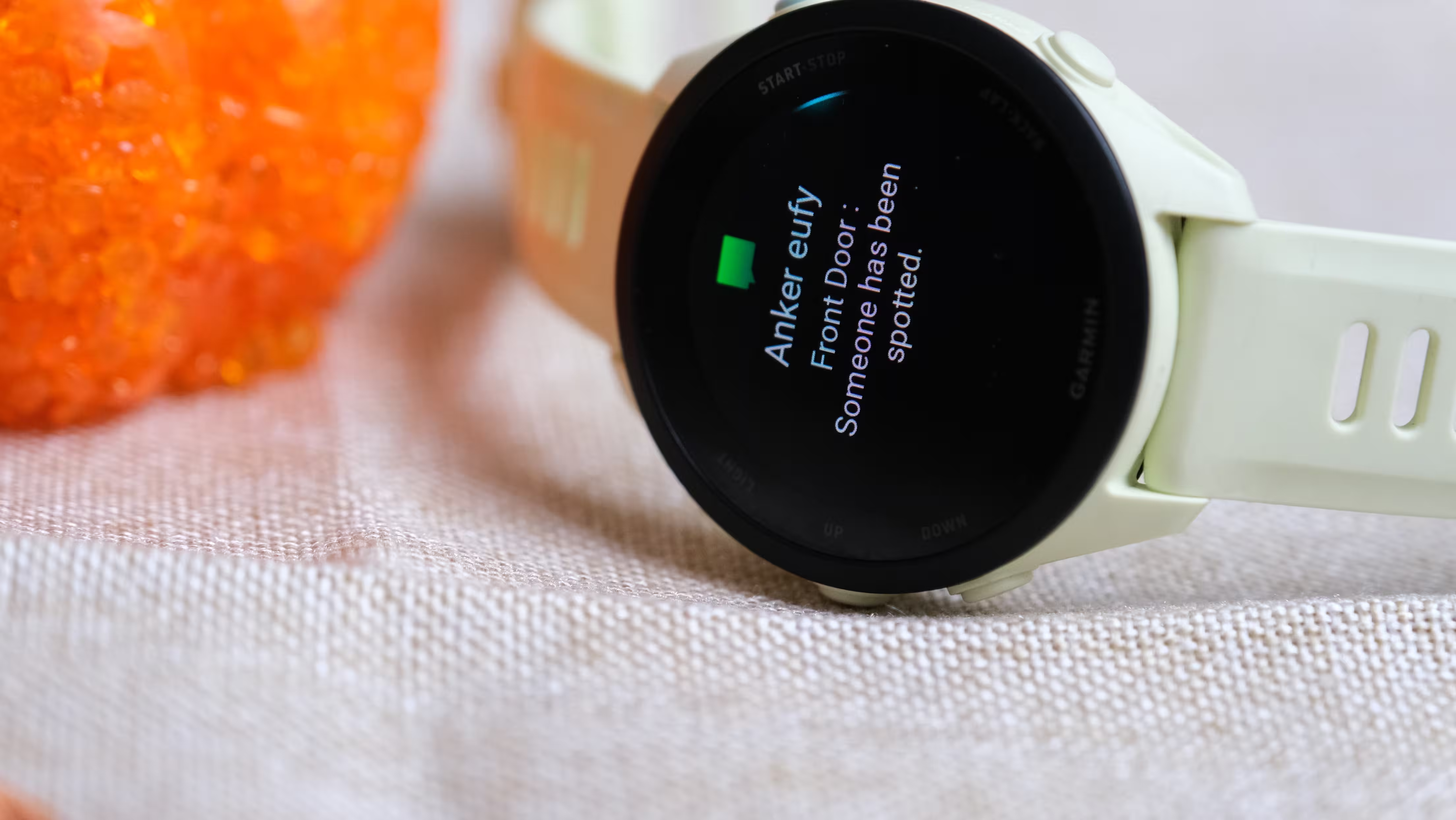
The Forerunner 70 works with Android phones and iPhones, showing notifications, calendar information, and weather. You can also control music playing on your phone.
The key limitation is that you cannot store music on the watch and listen independently through headphones. If leaving your phone at home is part of the appeal of running with a watch, that omission could matter.
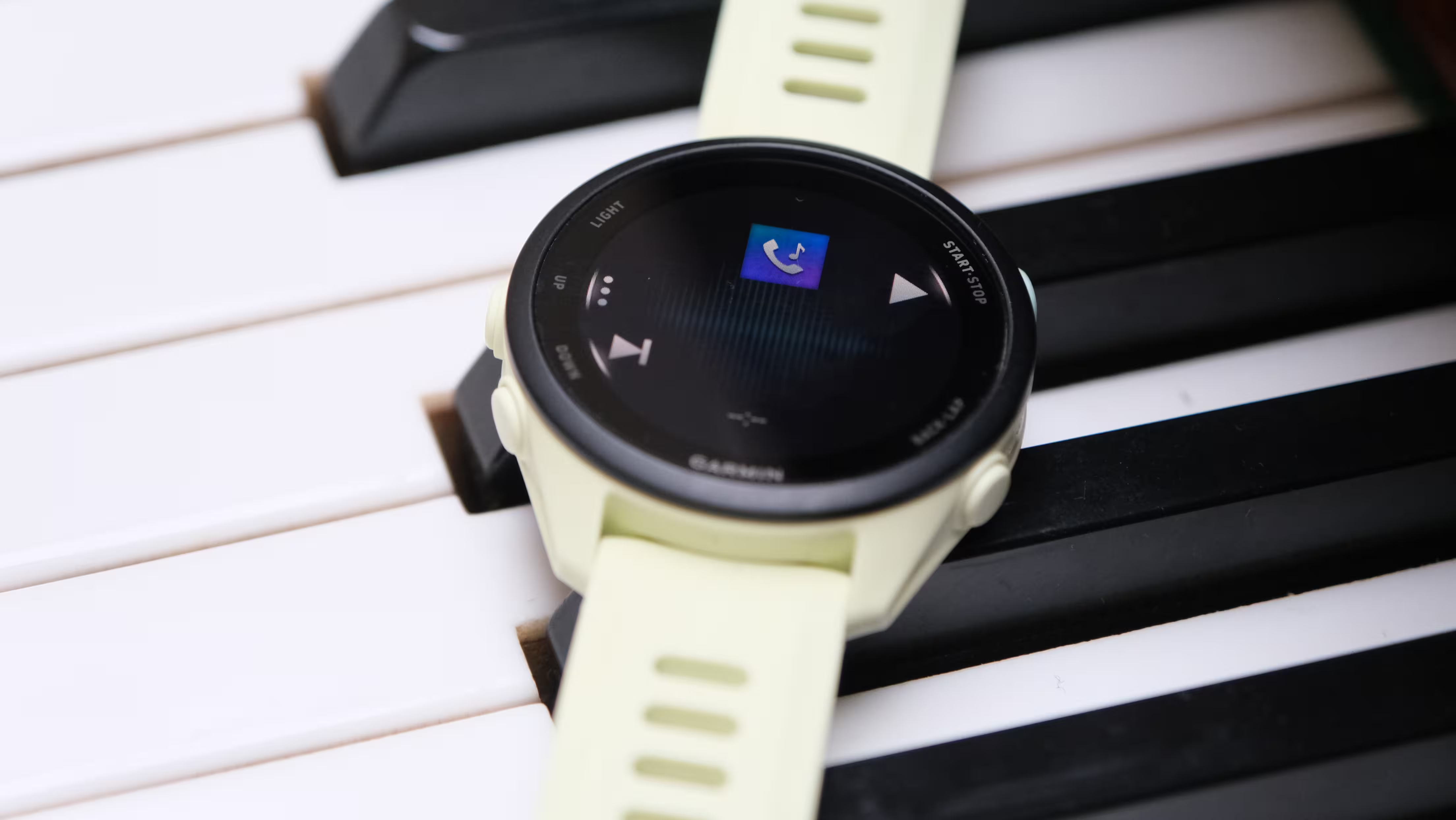
There is no speaker and microphone for calls, either. Seeing an incoming call alert is not the same as answering it from your wrist. Messaging features also depend on the connected phone’s operating system, so Android and iPhone users should not expect every detail to work identically.
Garmin Pay is absent. If you regularly use contactless payments during a run or want to buy a coffee without carrying your phone or wallet, that is a practical compromise. If you never pay with your watch, it is unlikely to affect your decision.
Safety features such as LiveTrack, assistance, and incident detection during supported activities require a compatible connected phone and the necessary connectivity. The Forerunner 70 does not have its own cellular connection. Built-in GPS can record where you are without a phone, but sharing that location with someone else requires a way to send it.
Battery and Charging: Your Settings Shape the Result
Garmin publishes several battery figures, each tied to a particular operating mode.
| Usage mode | Claimed battery life |
|---|---|
| Smartwatch mode | Up to 13 days |
| Smartwatch mode with always-on display | Up to 5 days |
| Battery Saver watch mode | Up to 28 days |
| GPS Only activity recording | Up to 23 hours |
| All Systems activity recording | Up to 16 hours |
“Up to 13 days” does not mean nearly two weeks with the display always on, daily GPS workouts, and every monitoring feature enabled. Garmin’s own five-day always-on rating shows the difference.
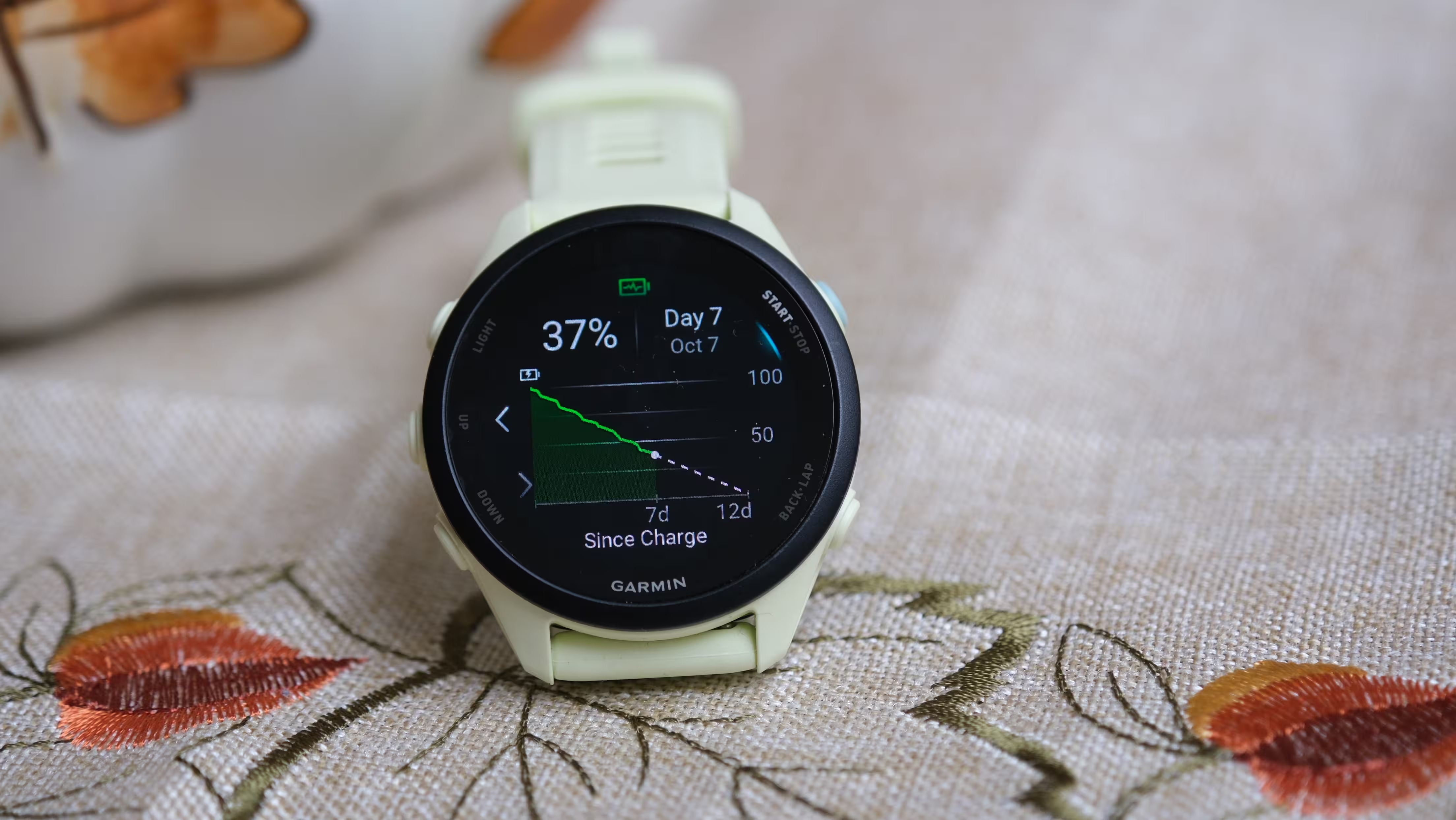
Brightness, workout frequency and duration, blood oxygen monitoring, and connected sensors all affect consumption.
Around 10 days is a more useful everyday expectation with a suitable mix of settings, rather than a guaranteed minimum. The Forerunner 70 is not a battery endurance champion, especially if you expect a full week of heavy use with the display always on.
The battery usage tool is a helpful addition. Instead of seeing only the remaining percentage, you can examine consumption and identify demanding settings. Sometimes switching off a feature you barely use makes more sense than buying a more expensive watch for its larger battery.
Charging uses Garmin’s proprietary connector, so a compatible cable still belongs on your travel checklist. Exact charging times and endurance need to be considered alongside the settings used; headline figures cannot account for every routine.
Value: Who Is It Right For?
At its launch list price of €249.99 in Europe and $249.99 in the US, the Forerunner 70 offers a relatively accessible route into Garmin’s more serious training features. “Affordable” describes its position within the Forerunner family. It does not mean everyone will consider it a cheap purchase.
Most of my phone notifications appeared on the watch, and the text was easy to read. Delivery was not always consistent, particularly with incoming call alerts. That may also depend on the phone, its operating system, and connection settings, so it is something to check with your own setup.
Within Garmin’s range, the obvious comparison is the Forerunner 170. Its higher launch price brings additions such as contactless payments, a barometric altimeter, and broader cycling support. For independent music playback, you need the Music version, rather than simply any model carrying the 170 name.
If running is your priority and those extras are not important, much of the training functionality you need is already available on the 70.
Outside Garmin’s range, the Coros Pace 4 is another relevant option, particularly if multi-band GPS and triathlon training are priorities. Its presence makes it difficult to call the Forerunner 70 the best choice for everyone. Garmin’s appeal lies in its combination of training analysis, everyday health tracking, a configurable interface, and touchscreen controls backed by five physical buttons.
For a runner who wants to move beyond recording distance and start understanding their training, this watch deserves serious consideration. If you care more about calls, wrist-based apps, and entertainment, or need specialist triathlon or mountain features, another model may suit you better.
Pros
- Lightweight, compact design with a standard quick-release strap
- AMOLED touchscreen backed by five physical buttons
- More extensive training and recovery analysis than the Forerunner 55
- Quick Workout, Garmin Coach, and daily suggested workouts
- Standalone route recording and support for following planned courses
- Compatible sports sensor connections and a broad set of daily monitoring tools
Cons
- No multi-band GPS or barometric altimeter
- No full offline maps, open-water swimming profile, or complete triathlon mode
- No onboard music, wrist-based voice calls, or Garmin Pay
- Only one case size, with a relatively small display for data-heavy screens
Our Verdict: Entry-Level Does Not Have to Mean Basic
The Garmin Forerunner 70 shows that useful training analysis does not always require the most expensive watch in the display cabinet. Its low weight, modern screen, and tools for training readiness, load, and guided workouts make it appealing to a wide range of runners. “Entry-level” says more about where it sits in the range than how experienced its owner needs to be.
If you want full maps, phone-free music, a barometric altimeter, or specialist triathlon features, it will not cover everything. Equally, if you only care about message alerts and step counts, much of what you are paying for will go unused.
Our view is that the Forerunner 70 makes sense for someone who wants to train more consistently, understand their progress, and accept a few hardware compromises in return.
It will not run for you. But it can help you understand why some days are right for pushing the pace, while on others, the smarter decision is to slow down.
Related Posts


“Some times I write about breakthrough startups, digital ecosystems, and how innovation is changing the way we build businesses.”

Discussion
Leave a Comment
Comments (1)
Wow, didn't expect Garmin to push serious training tools at this price! Lightweight and sleep-friendly sounds ideal, but no music or altimeter is a bummer, hmm.