
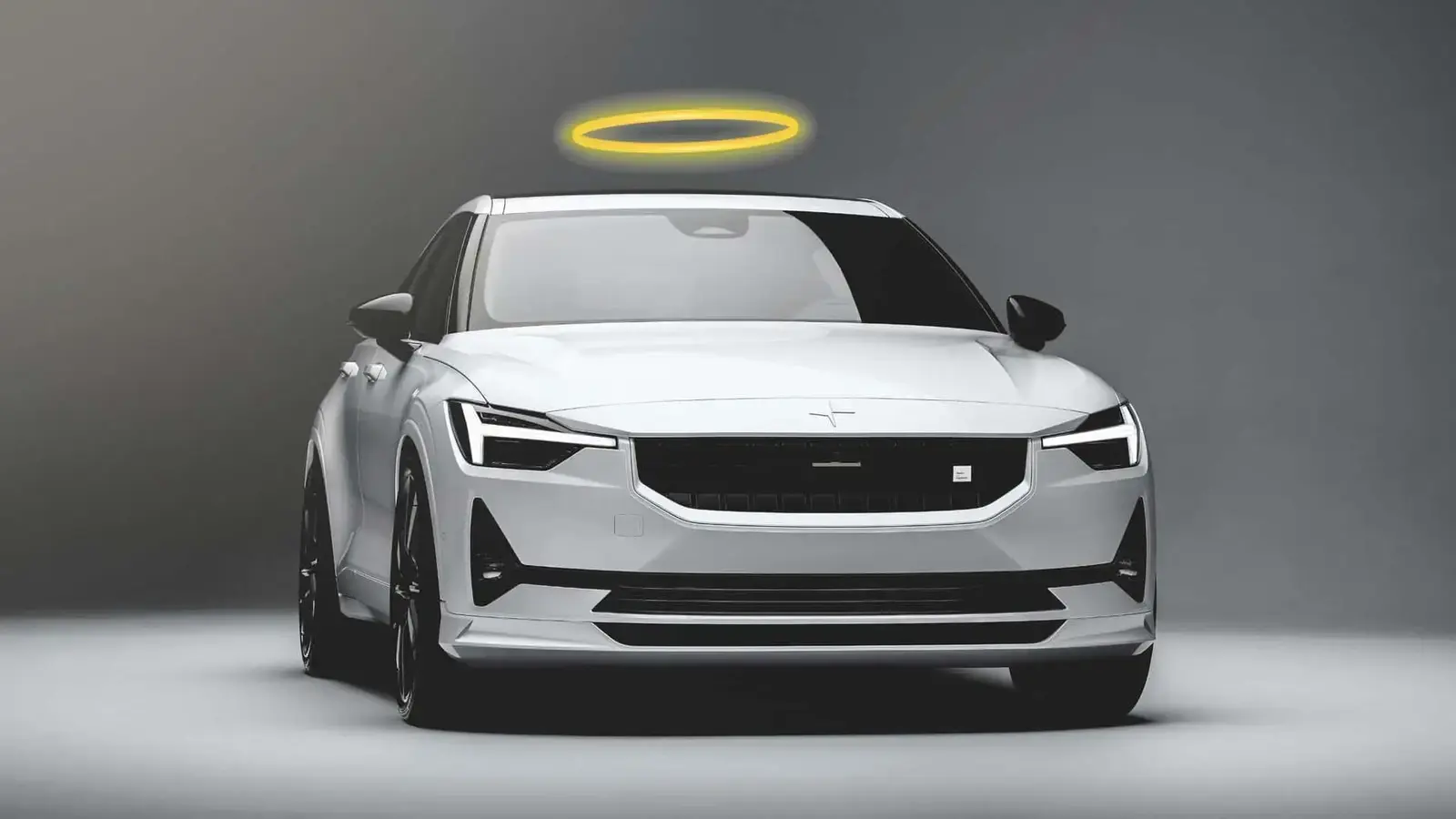
EV shake-up: why so many models are disappearing from 2026 lineups
The electric vehicle market is going through a reality check. After years of growth and headline-grabbing launches, automakers are quietly pruning lineups, pausing production, and shelving once-ambitious projects. The causes are familiar: softer-than-expected consumer demand, shifting government policy and tariffs, higher costs, and persistent questions about public charging infrastructure and total cost of ownership. The net effect is that several EVs once expected for 2026 either won’t arrive in the U.S. at all or are being delayed indefinitely.
This story is a snapshot of that retrenchment. Some of these moves are strategic pauses tied to tariffs and production economics; others are full cancellations driven by weak sales or shifting priorities. Below we walk through the most notable electric cars and trucks that won’t make it to the 2026 model year as originally planned, explain why, and outline what it means for buyers and the broader EV market.
Quick highlights
- Automakers are responding to a cooling EV market and evolving government incentives.
- Tariffs on China-made models and other cost pressures are prompting production pauses and cancellations.
- Some flagship electrified projects (including high-performance and heavy-duty models) have been delayed or reformulated.
Major EVs that won’t make it to 2026 (model-by-model)
Acura ZDX — Acura’s first EV cut after one year
The Acura ZDX was supposed to be Honda’s luxury brand making a strong, early electric statement. Instead, after just one model year, Acura is discontinuing the ZDX in North America. Built on shared GM architecture and offering a base range of roughly 313 miles and a 499-horsepower Type S variant, the ZDX delivered competitive numbers on paper.
.avif)
Why it failed to stick: the ZDX looked and felt too much like a rebadged sibling — critics pointed to its Chevrolet Blazer roots — and overall driving impressions were described as competent but uninspiring. Sales were decent in absolute terms (Acura sold several thousand units), but not enough to justify continuing investment in a crowded luxury EV field.
Chevrolet BrightDrop Zevo 400 / Zevo 600 — BrightDrop brand shuttered
BrightDrop’s purpose-built electric delivery vans were one of the more specialized entries in the EV space, intended for commercial fleets rather than the consumer market. Even so, Chevrolet and GM ultimately pulled the plug on BrightDrop in October 2025 after repeated production pauses and disappointing demand.
.avif)
Key issue: fleet ordering cycles and total-cost-of-ownership analysis moved slower than GM hoped. With high up-front costs and limited infrastructure for some fleet operators, BrightDrop couldn’t scale quickly enough.
Dodge Charger SRT Daytona “Banshee” — high-horsepower halo canceled
One of the most talked-about casualties is a proposed halo version of Dodge’s electric Charger: the triple-motor, roughly 900-horsepower SRT Daytona “Banshee.” According to internal sources, that top-tier electric muscle car is no longer moving forward.
.avif)
This decision reflects a hard truth: muscle-car buyers still prize the visceral sound, feel, and heritage of big V-8s. The standard electric Daytona has struggled with critical response, resale values, and buyer interest — making a hyper-power halo model a risky gamble.
Ford F-150 Lightning — full EV production paused in favor of EREV
In a major strategic pivot, Ford announced it would stop producing the fully electric F-150 Lightning and instead launch an extended-range electric vehicle (EREV) version with a gasoline generator in 2027. The Lightning name will live on, but the new truck blends an electric drivetrain with an onboard gas generator to stretch range — Ford quotes combined figures up to 700 miles.
.avif)
Why the change? Range anxiety and charging gaps remain primary objections among pickup buyers, and many fleet and rural customers prize long range without extended charging stops. The EREV configuration aims to pair electric driveability with combustion-backed range — a compromise that reflects current buyer preferences in key segments.
Genesis Electrified G80 — a beautifully made but niche EV
The Genesis Electrified G80 was praised for build quality and refinement, with driving manners likened to a well-made alternative to mainstream luxury EVs. But sales were limited: a mid-size electric luxury sedan from a non-German, non-Japanese-luxury marque struggled to find wide appeal.
.avif)
Highlights: around 282 miles of range, 385 hp, elegant interior and ride quality. Still, poor marketing, selective availability, and crowded luxury EV competition pushed Genesis to remove the e-G80 from the U.S. lineup.
Maserati MC20 Folgore — Maserati shelves electric supercar project
Maserati canceled its planned MC20 Folgore, an electric variant of its mid-engine supercar. The MC20 facelift arrived as the MCPura earlier in the year, and Maserati appears to have decided not to pursue a battery-electric supercar version for now.
.avif)
Supercar electrification is uniquely difficult: adding battery weight undermines handling and packaging, and buying behavior for hypercars still favors internal-combustion drama and sound. Maserati’s step back may be tactical — preserving brand character until battery and powertrain technology better suit its driving DNA.
Mercedes-Benz EQB — small luxury electric SUV exits North America
The EQB quietly disappears from North American showrooms after the 2025 model year. Positioned as an entry-level Mercedes EV with roughly 250 miles of range, the EQB failed to win broad attention amid Mercedes’ wider electrification shuffle.
.avif)
Mercedes’ EV strategy has been uneven in the U.S., and trimming lower-volume models like the EQB helps focus resources on more profitable, high-profile vehicles.
Mercedes EQE and EQS (sedans and SUVs) — U.S. sales paused
More strikingly, Mercedes paused U.S. deliveries and orders for EQE and EQS sedans and their SUV siblings. The cars continue to be sold in other markets, but American buyers face closed order books for the time being.
.avif)
Design direction (some buyers dislike the pill-shaped styling), complex in-car tech (Hyperscreen and software issues), and the cost pressures of premium EV development all contributed to the pause.
Nissan Ariya — production paused for 2026
The Ariya, Nissan’s stylish crossover with an advertised range near 289 miles, will be paused in the U.S. for 2026. The Ariya was made in Japan and exposed to import tariffs that have cut into its price competitiveness.
.avif)
Nissan says the 2026 Leaf — offering over 300 miles of range at a much lower price point — will be a primary focus for the company, signaling a shift toward volume-oriented, value-driven EVs.
Polestar 2 — an indefinite break from the U.S. market
Polestar’s compact EV sedan, produced in China and long touted as a premium alternative to the Tesla Model 3, has been removed from Polestar’s U.S. new-car shopping tools due to tariff pressures. The Polestar 2 still appears on some pages, but only pre-owned sales are actively supported in the U.S.
.avif)
Despite a 2024 refresh that added range and improved charging, the economics of China-made models plus weaker demand led to an indefinite hiatus.
Porsche flagship SUV (K1) — delayed and reprioritized
Porsche’s big electric SUV project, codenamed K1 and envisioned as a seven-seat flagship on a 900-volt architecture for ultra-fast charging, has been delayed. Porsche will introduce gas-only and plug-in hybrid variants first, pushing the fully electric version further back.
.avif)
Engineering an electric seven-seat Porsche that retains the brand’s driving character is a tall order; cost and timing pressures have forced a rethink.
Ram electric pickup — fully electric Ram shelved
Stellantis confirmed it is no longer actively developing the all-electric Ram pickup that was announced years ago. The EV truck was repeatedly delayed and is now shelved, with the Ram 1500 REV name (originally intended for the EV) being reallocated to a plug-in hybrid truck instead.
.avif)
Pickups are an especially challenging EV segment because buyers demand towing, payload, durability, and range — all of which raise engineering and cost hurdles.
Volkswagen ID.7 — U.S. launch canceled
The electric Volkswagen sedan ID.7 was planned for the U.S. but will not be introduced here. VW cited the “ongoing challenging EV climate” as the reason, even though the ID.7 remains available in Europe and China.
.avif)
VW continues to rationalize its global EV rollout to focus on the most profitable markets and models.
Volkswagen ID. Buzz — production paused for 2026
The charming ID. Buzz electric van will not be produced for model-year 2026 in the U.S.; Volkswagen plans to sell remaining 2025 inventory as 2026 models and restart production in 2027. The break is a production and allocation pause rather than a permanent cancellation — but the short-term outlook is uncertain.
.avif)
What’s driving these cancellations and pauses?
Several recurring themes explain why automakers are pulling back:
- Demand normalization: Early EV adoption was driven by early adopters, generous incentives, and enthusiasm. That early tailwind has slowed.
- Tariffs and build location: Vehicles built in China or subject to new tariff regimes face price pressure. That directly affected Polestar, Nissan Ariya, and other imports.
- Charging infrastructure and range expectations: Many mainstream buyers remain cautious about charging access and long-distance usability, especially for trucks and fleet customers.
- Profitability pressures: EV margins on some small-volume models are thin, so automakers are prioritizing high-volume or high-margin programs.
- Market fit and buyer psychology: Some segments — like muscle cars and certain luxury niches — still prefer combustion technology for reasons of heritage, sound, and emotional appeal.
What this means for buyers and the industry
For consumers: the immediate consequence is a narrower new-car EV choice in some segments and more variability by region. Buyers who were waiting for specific models may need to consider alternatives: plug-in hybrids, EREVs (like Ford’s new Lightning approach), or ICE-powered models. For fleet operators and businesses, manufacturers are offering more hybrid or gas-extended options that prioritize total range and uptime.
For automakers: these cancellations are an alignment exercise. Companies are reallocating capital to the most promising platforms, controlling inventory risk, and focusing on EVs that can deliver acceptable margins and buyer interest. In some cases, “pause” means the product will return once tariffs change or demand improves.
Short-term outlook and what to watch in 2026–2027
Expect the following trends over the next 12–24 months:
- More EREV and hybrid solutions in segments where pure BEVs struggle (especially pickups and fleet trucks).
- A growing role for larger automakers to consolidate EV investments onto fewer, scalable platforms.
- Potential returns by some paused models if battery costs drop, tariffs ease, or charging infrastructure improves.
- Higher emphasis on software, charging speed (800–900V architectures), and integrated customer services to justify premium pricing.
Bottom line
The wave of canceled and paused EV projects for the 2026 model year is a corrective phase, not a reversal of electrification. Automakers are recalibrating product plans to match buyer behavior, regulatory environments, and margin realities. For buyers, the takeaway is clear: pick the EV or hybrid that best matches your real-world needs—range, charging access, and total cost of ownership—rather than waiting indefinitely for a particular marquee model that may never arrive.
In other words: the EV revolution is far from over, but the rollout will be slower and more pragmatic than the hype cycle suggested a few years ago.
"Automakers are moving from experimentation to hard economics — and that means fewer niche electric models for now."
Quick reference: 15 EVs and projects not making 2026 as planned
- Acura ZDX — discontinued in North America
- Chevrolet BrightDrop Zevo 400 / 600 — BrightDrop brand ended
- Dodge Charger SRT Daytona Banshee — halo model canceled
- Ford F-150 Lightning (full BEV) — paused; EREV planned for 2027
- Genesis Electrified G80 — removed from U.S. lineup
- Maserati MC20 Folgore — electric supercar canceled
- Mercedes-Benz EQB — U.S. sales ended
- Mercedes EQE / EQS (sedans & SUVs) — U.S. production paused
- Nissan Ariya — paused for 2026 (under review for 2027)
- Polestar 2 — indefinite break from U.S. new-sales market
- Porsche flagship K1 SUV — delayed and reprioritized
- Ram electric pickup — fully electric truck shelved
- Volkswagen ID.7 — U.S. launch canceled
- Volkswagen ID. Buzz — production paused for 2026
Whether you’re shopping for a new EV, tracking automaker strategy, or following the electrification narrative, 2026 will be a year of regrouping. The winners will be those models and brands that align product, price, and charging ecosystem with real-world buyer needs.

“Cars are evolving faster than ever. I cover electric vehicles, smart mobility, and the future of transportation worldwide.”

Discussion
Leave a Comment